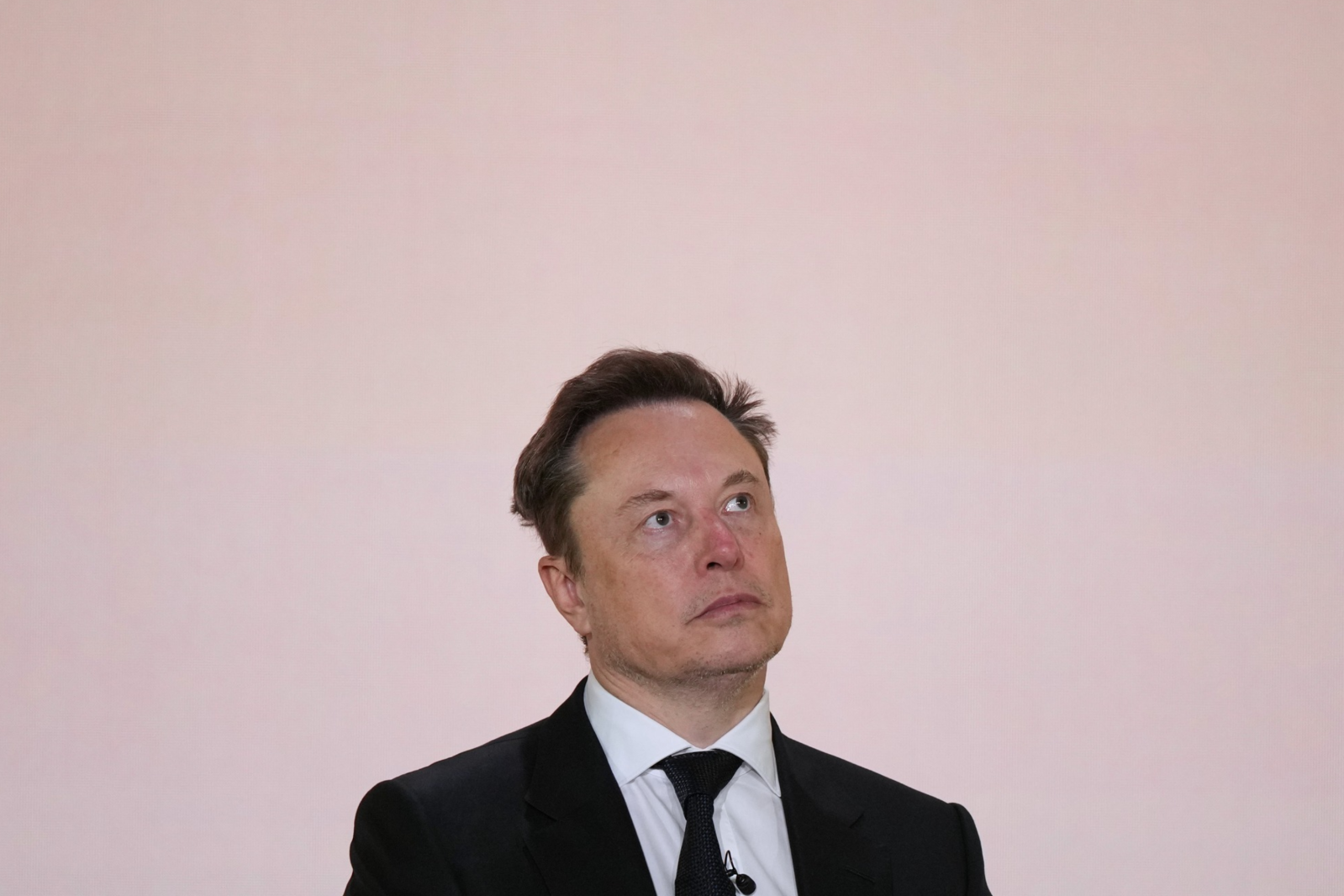
On a per-dollar basis, the near-trillionaire Elon Musk’s attempts to influence the 2026 elections appear to be one of the midterms’ most conspicuous—or at the very least, expensive—losses.
A far cry from 2024 and early 2025, when Musk’s sway was considered beyond doubt, and when his rhetorical backing was credited with the ascendance of the billionaire’s favored parties in the United Kingdom and Germany.
These political powers appeared to culminate in the election of Donald Trump to a second term, after Musk poured over $291 million into the president’s campaign and those of other Republican candidates.
Read More on Politics
But with even more wagered on the 2026 midterms and no electoral payoff of which to boast, developments in both the U.S. and abroad point to the declining power of his personal brand of billionaire politics.
Half-a-Billion Down the Drain
2026 made Musk the largest single-cycle donor in American history, according to Federal Election Commission (FEC) records, with the SpaceX and Tesla CEO giving over $445 million to the GOP as of mid-October.
This included $216 million into his own America PAC for field operations and voter turnout campaigns and $168 million for the Senate Leadership Fund, the main Republican super PAC focused on Senate elections. Musk also used several vehicles to transfer these funds into key contests, such as the Elon Musk Revocable Trust and United States of America Inc.
And records show over $200 million was devoted to races in Musk’s adopted home state of Texas, and to backing the failed campaigns of Attorney General Ken Paxton for Senate and the incumbent Governor Greg Abbott for reelection.
All this occurred alongside a steady drumbeat of pro-Republican and generally conservative messages posted by Musk to the X platform which he owns—including one claiming that the “fate of Texas and America is at stake” if voters failed to side with Paxton over the Democrat James Talarico.

This is despite Musk pledging, in May of last year, to do “a lot less in the future” in terms of political spending.
And to many ahead of the election, the historic levels of spending by Musk—unphased by the spirit of campaign finance limits—displayed the impunity with which billionaires now act in the U.S. political scene.
“My overall impression of this midterm is that it demonstrates the collapse of campaign finance law,” Michael Kang, a Northwestern Pritzker School of Law professor, told Newsweek days before Election Day. “Elon Musk’s extraordinary spending in a midterm election, as well as that of other billionaires, demonstrates not just the current levels of wealth inequality and hyperpartisanship, but also how campaign finance regulation no longer really limits the use of money in campaigning.”
But the surprising victories of Talarico and gubernatorial candidate Gina Hinojosa—the first Democrats to win a Senate seat and governorship since 1988 and 1990—indicate that, even in unprecedented sums, money cannot buy elections.
“Guess my election-interfering space lasers didn’t work this time,” Musk posted to X on Wednesday.
Ciara Torres-Spelliscy, a professor of law at Stetson University College of Law, told Newsweek that “billionaires and their kissing cousins, millionaires, have a mixed record in getting the political outcomes they want.”
Torres-Spelliscy pointed to Michael Bloomberg’s $1 billion bid for the presidency in 2020. However, she said that the ultrawealthy “provided financial support to many of the individuals who are currently in power including the presidency, the Speaker of the House and the Majority Leader of the Senate.”
“But it is worth remembering that big political spending can backfire as certain voters may be repulsed by a billionaire or a large corporate political spender appearing to attempt to buy an election.”
Elements of this emerged in the Texas races; Paxton’s loss was made doubly damning for Musk, as Talarico explicitly framed the contest as one in which unwarranted billionaire influence was on the ballot.
“We just showed that a politics of division is no match for a politics of love,” Talarico said in his victory speech on election night. “And we just sent a message to every billionaire mega donor, every trillionaire mega donor, every corrupt defender of this broken political system in this state, in this country. Power belongs to the people.”
Musk’s Waning Global Sway
The Democratic wave in the House and Senate to many underscored voters’ anger with the Trump administration and its domestic and foreign policies—something Musk’s support was unable to overcome.
But the midterms and Musk’s role in them echoed developments in other nations in recent year—whose voters, court and lawmakers have increasingly rejected rather than folded to pressure from the world’s richest man.
In 2024, Musk publicly defied court orders concerning alleged “digital militia” accounts on X. He promised to reactivate these, prompting an investigation from Brazilian Supreme Court Justice Alexandre de Moraes.
X said it would be shutting down operations in the country over the dispute, but the company ultimately complied and blocked the accounts.
As well as clashing with the Brazilin government and President Luiz Inácio Lula da Silva’s administration over content moderation, Musk has since displayed support for the Bolsonarism political movement and its contemporary figurehead, Flávio Bolsonaro.

But despite seemingly weak odds following the first round, grassroots mobilization propelled Lula to victory over Bolsonaro in the October 2026 election.
“In Brazil, Musk went to war with the Supreme Court in 2024 and lost…X was blocked for about forty days, he paid the fines and complied,” said David Nemer, Associate Professor in the Department of Media Studies at the University of Virginia.
“Two years later Lula was just reelected, and the pressure the Trump administration put on Brazil on behalf of U.S. platforms helped turn platform regulation into a question of national sovereignty, which strengthened the government rather than weakened it,” he told Newsweek.
The United Kingdom
Musk had for years offered rhetorical backing to the Reform party and right-wing causes in the U.K. more generally.
Initially, Musk’s promotion of the party and its leader Nigel Farage appeared to coincide with its growing prominence in the British political scene. Reform won parliamentary representation in the 2024 general election, before making record gains in the 2025 English local elections. The party was backed, as well as inspired, by Musk. Farage said he wanted “a DOGE in every county,” a reference to the advisory agency Musk spearheaded for the first months of Donald Trump’s second term.

But Musk’s allegiances have since shifted. The billionaire is now backing the Reform offshoot Restore Britain and its chief Rupert Lowe.
“Only Restore Britain can save Britain,” Musk posted to X in June. “It is the only way.”
Farage has in response warned that Musk could “split” the British right—a thesis now with some tangible electoral evidence.
The ruling Labour Party beat Reform in an October 29 by-election by razor-thin margins—874 to 872—with Restore Britain grabbing 6.9 percent of the vote.
“Vote Restore, get Labour,” Reform’s deputy leader said after the results.
Farage’s party has also been battling polling slips and scandals over foreign donations in recent months. Despite Musk’s support, surveys currently put support for Restore at around four percent.
Not only has he failed to crown a winner or mount another successful challenge to the country’s two-party system, Musk’s shifting preferences have, according to Nemer, “fractured the right instead of consolidating it.”
Europe
Comparable cases have emerged across the continent.
Musk frequently praised former Hungarian Prime Minister Viktor Orbán and his demography-focused agenda. This included in the lead-up to the April 2026 general election, in which an opposition coalition took out Orbán’s Fidesz party and ended his 16-year reign. Musk blamed the loss on foreign interference and the Hungarian American billionaire George Soros.
In July, Musk called Marine Le Pen “France’s last hope” ahead of the country’s presidential elections in 2027.
But Le Pen’s National Rally party has downplayed rather than amplified this endorsement. Spokesman Laurent Jacobelli was quoted as saying: “What matters isn’t the opinion of people abroad. It’s the opinion of the French people.”
2026 was not an uninterrupted succession of losses for the billionaire.
The Musk-backed Alternative for Germany (AfD) achieved 44 percent of the vote and won September’s Saxony-Anhalt state election, after which their candidate thanked the billionaire for his support.
But Nemer told Newsweek that the common theme has been that Musk’s European endorsements “made noise and produced more controversy than votes.”
And considering this alongside the U.S. midterms, Nemer said the real lesson for billionaires is that “spending buys attention and organization, and it also buys scrutiny.”
“Once voters can name the person paying for the ads, the money starts working against the candidate,” he said. “Musk is the extreme case because he made himself the most-visible billionaire in politics. Visibility is what voters punished.”
Contact Newsweek editors on this story: John Fitzpatrick and James Debens
Register for our November 10 discussion, ‘Newsweek Webinar: How the Politics of AI Could Shape Midterms,’ which will examine how AI policy played in key races, data centers, lobbying and the political lines that emerged.