HESS Belgium is developing its retrofit business alongside support for around 330 Exqui.City buses operating across Europe.
Following HESS Belgium’s establishment as a service and expertise centre, bringing together former Van Hool employees after the manufacturer’s bankruptcy, we wanted to explore how the team came together and what comes next. We spoke with Geert Van Hecke, former Head of Sales Public Transport in Van Hool and now HESS Key Account Manager International & Manager HESS Belgium, about the operation’s origins and its plans beyond completing the Paris TZen vehicles.
Our first pillar is the continued support for the 330 Exqui.City buses in operation around Europe. We carry out interventions across Europe, in Norway, Sweden, France and other countries. However, of course, that’s not how you can build a sound business. That’s why the second pillar is focused on local maintenance, particularly specialised maintenance for buses. Customers can send their buses or coaches to us for major repairs, such as on the chassis, or for software updates. The third pillar is the one we would like to develop further: larger projects involving retrofits and modernisation.
Geert Van Hecke, HESS Key Account Manager International & Manager HESS Belgium
A whole team from Van Hool to HESS… Belgium
Let’s start with the origins of HESS Belgium. How did the former Van Hool team become part of HESS, and how did this cooperation begin?
It all started immediately after the bankruptcy of Van Hool in April 2024. I was in Paris for the inauguration, when we delivered the first Tzen buses. In the same week, it was announced that we had gone bankrupt and we all lost our jobs. It was quite an emotional week.
Luckily, I had a lot of good contacts. First of all, with the customer, whom I contacted, and I felt that they were really looking forward to receiving the buses. I also had good personal contacts with KIEPE Electric, which was doing the drivetrain, and Alstom, which was responsible for the charging infrastructure.
I also contacted HESS’ CEO Alex Naef, whom I had respected a lot in the past because we had been tough competitors in Paris, Brisbane and actually everywhere.
You were competing with very similar products, particularly on projects involving electric buses and charging infrastructure.
Yes. When it came to projects involving charging infrastructure and so on, HESS was always a very tough competitor. I contacted a few of my former colleagues and said: “Guys, are you interested in continuing? Why don’t we try together?”. We met many times in a bar in Lier, close to the Van Hool plant. We found that we could bring together a lot of good people. Then I called Alex Naef and said: “Alex, I think we can bring a team together. We can do it, we can finish this project and even do more.”
Of course, 25 people are just a group of people. But we needed an industrial partner behind us, with financial strength and engineering capabilities. Because, in the end, Paris was looking for buses, but also for a long-term commitment, let’s say 20 years. You’re not just buying a bus. You’re buying much more than a bus. Alex came to Belgium and we quickly reached an agreement. He saw the opportunity, but also the challenge, because it was a real challenge. He basically said: “You guys in Belgium try to manage things there, get everything fixed, and I’ll take care of the rest.” He then negotiated with VDL, which, after taking over parts of Van Hool, was very much focused on certain strategic activities, especially coaches.
HESS Belgium is located about 10 kilometres away from the old Van Hool site. We have a completely new facility there, which we have developed for ourselves. We bought a lot of equipment from the curator of Van Hool. We used this equipment to complete the TZen buses for Paris, and then we moved it to the new building. But we also bought a new overhead crane, a new inspection pit, a new paint booth and other equipment. So HESS also invested in new facilities. It’s a combination of equipment purchased from the Van Hool bankruptcy estate and new investments.
Geert Van Hecke, HESS Key Account Manager International & Manager HESS Belgium
Were those 25 people previously transferred from Van Hool to VDL, or had they all lost their jobs following the bankruptcy?
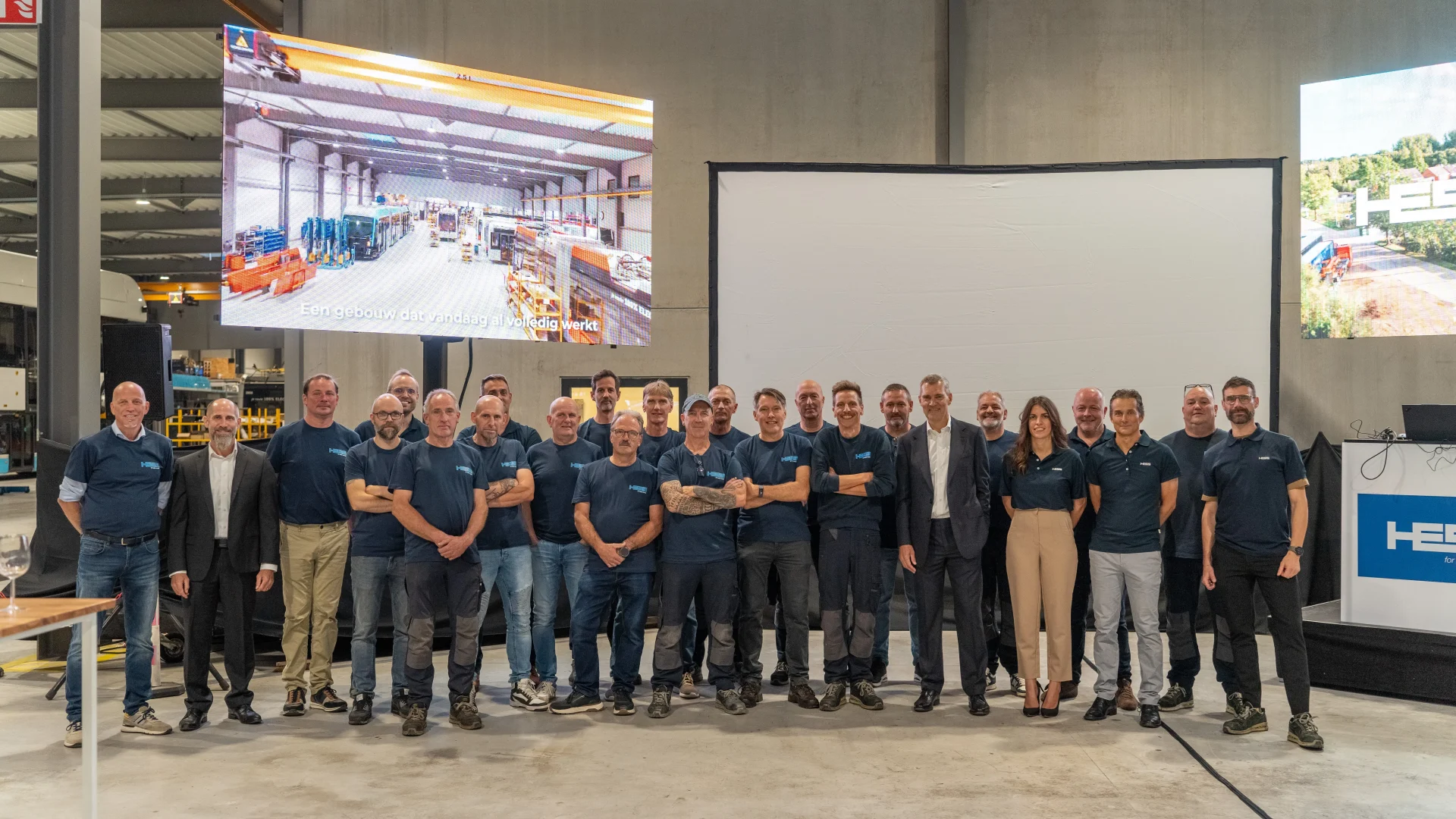
All these people were at home. They were all former Van Hool employees. Some of the people who joined us were already in final negotiations with other companies, because the best technicians always find opportunities. But they were very happy when we called them. Now, altogether, we have five people in management and administration, and 25 technicians.
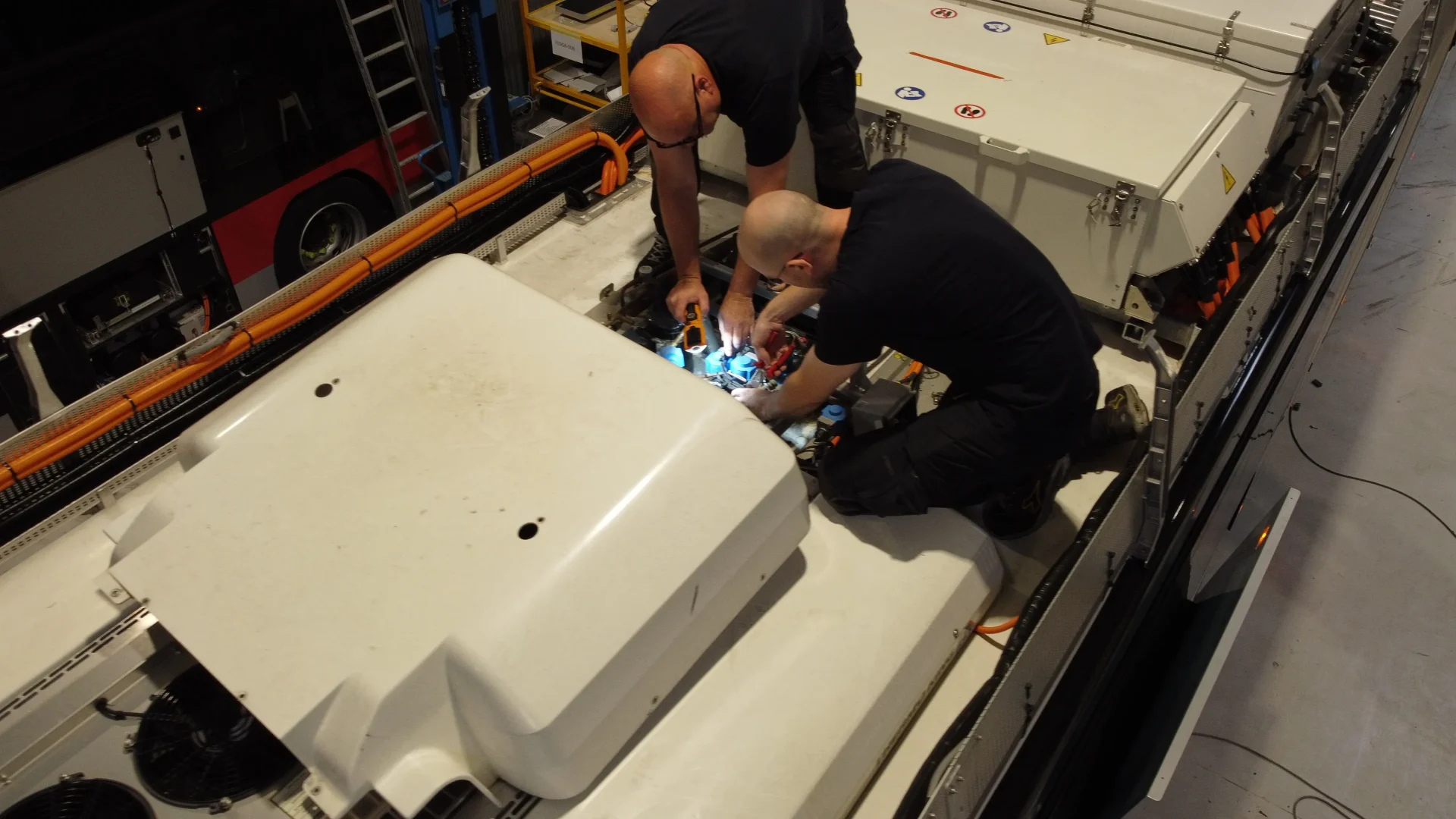
The first months were definitely difficult. Some suppliers were not willing to supply parts because they had also lost money in the bankruptcy. But after a lot of discussions and meetings, everybody eventually started supporting us. Then you reach a certain point when everything clicks and the machine starts running. That happened after a few weeks, and people became enthusiastic. We had a really good year building those buses for Paris. We also always had people in Paris to support the project locally, where we finalised the remaining obligations and testing.
Geert Van Hecke: “HESS Belgium today is much more than the TZen project”
Van Hool went bankrupt in April 2024. When was HESS Belgium actually founded?
It was founded in June 2024. Immediately after the bankruptcy, when Alex Naef agreed to support the project, we founded HESS Belgium because we needed a financial and legal basis for our activities. However, I’d like to stress that HESS Belgium today is much more than the TZen project.
We’ll come to the company’s activities in a moment. First, where is HESS Belgium based? Is the new facility located at the former Van Hool site?
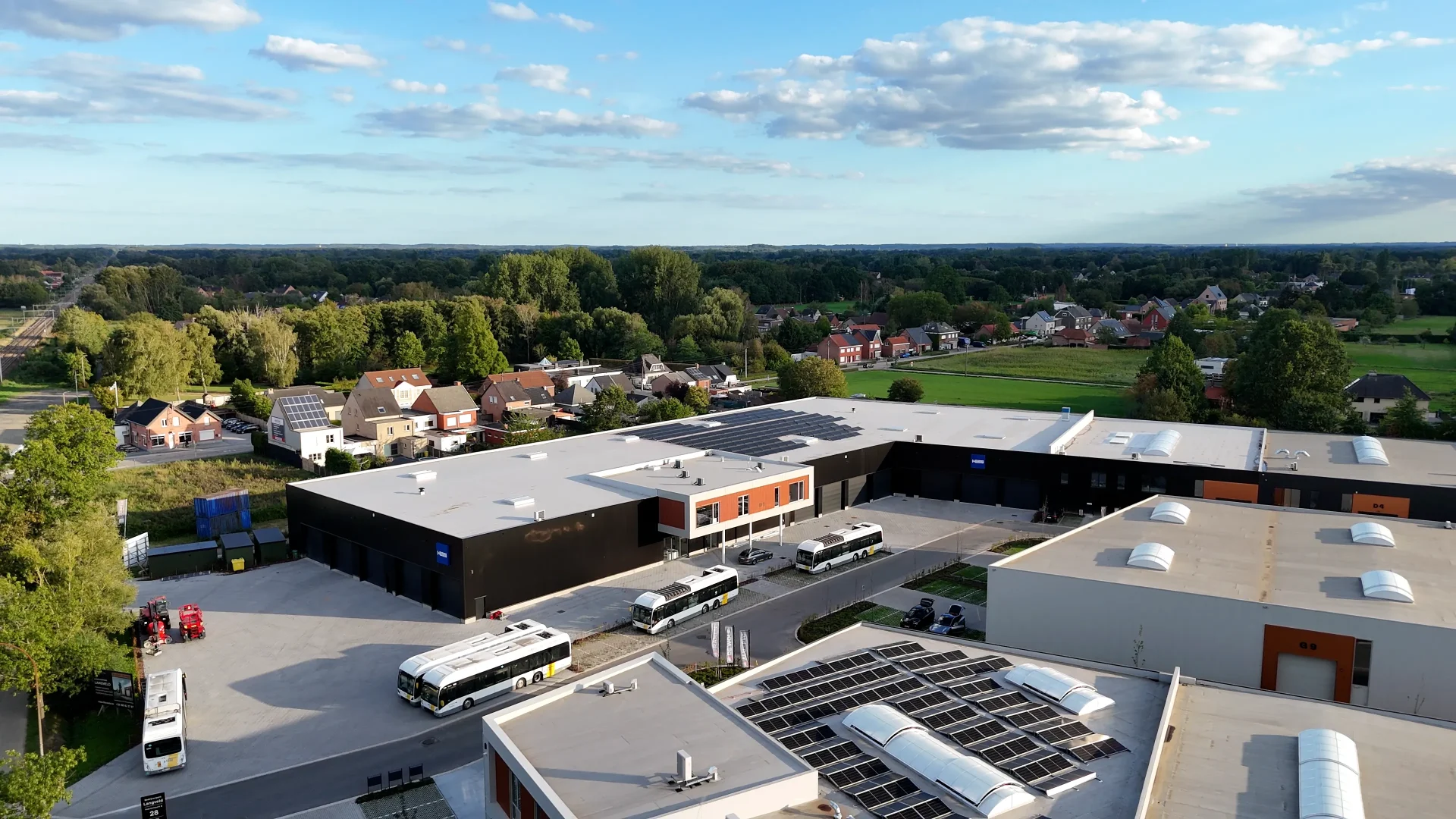
We are about 10 kilometres away from the old Van Hool site. Van Hool was based in Koningshooikt, and we moved around 10 kilometres further away, a little more in the direction where most of our employees live. We have a completely new facility there, which we have developed for ourselves.
What about the equipment and machinery? Did HESS purchase them from the former Van Hool operation, or is everything new?
It’s a combination. We bought a lot of equipment from the curator of Van Hool. We used this equipment to complete the TZen buses for Paris, and then we moved it to the new building. But we also bought a new overhead crane, a new inspection pit, a new paint booth and other equipment. So HESS also invested in new facilities. It’s a combination of equipment purchased from the Van Hool bankruptcy estate and new investments.
And how many buses can the new facility accommodate? What is the current volume of activity?
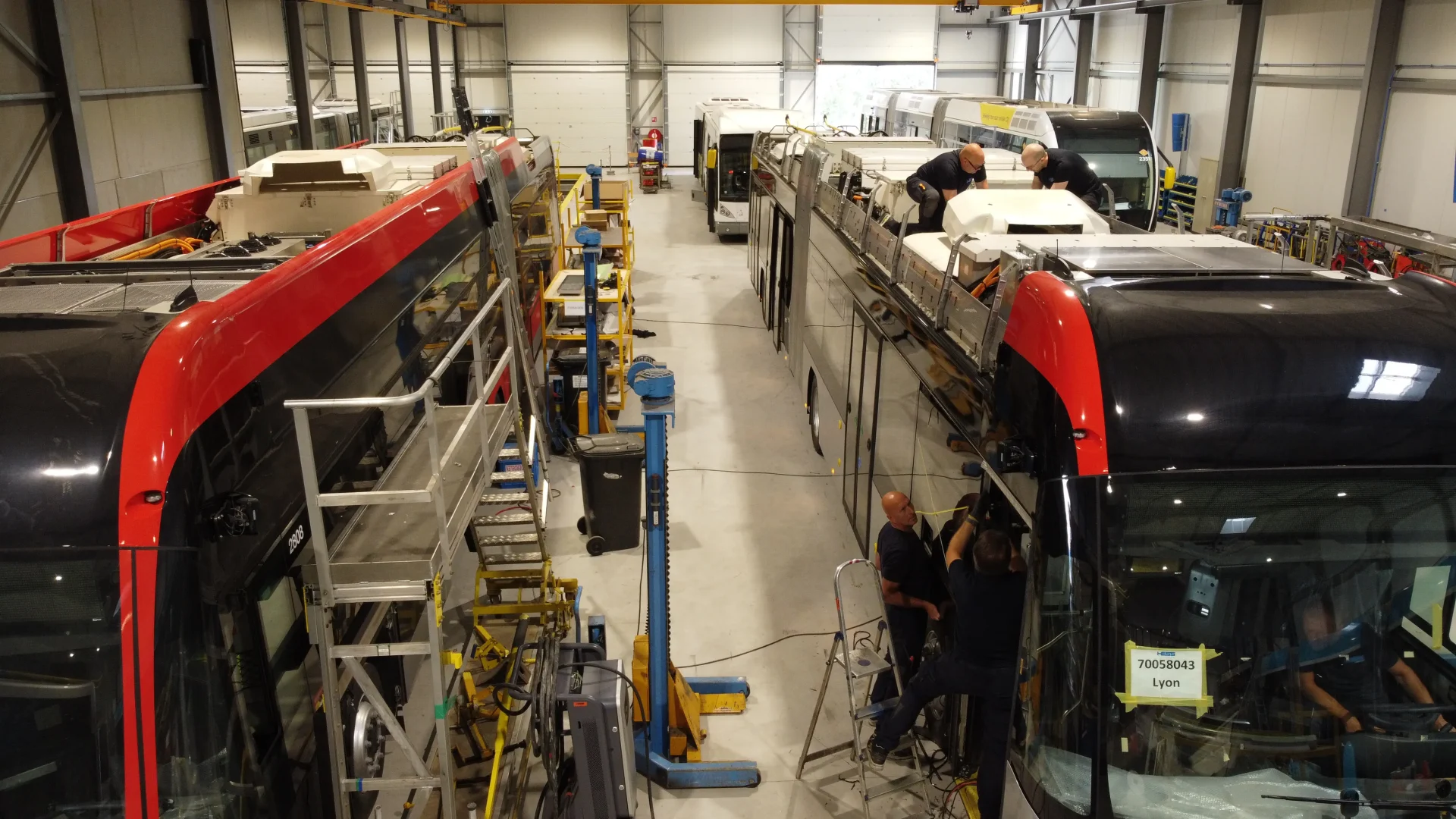
The only number I can give you is that, on average, we have room for between 15 and 20 buses in our new building.
25 people are just a group of people. But we needed an industrial partner behind us, with financial strength and engineering capabilities. Because, in the end, Paris was looking for buses, but also for a long-term commitment, let’s say 20 years. You’re not just buying a bus. You’re buying much more than a bus. Alex came to Belgium and we quickly reached an agreement.
Geert Van Hecke, HESS Key Account Manager International & Manager HESS Belgium
Going back to your earlier point, you mentioned that HESS Belgium has become much more than the TZen project. How did the activities evolve after the completion of the Paris buses?
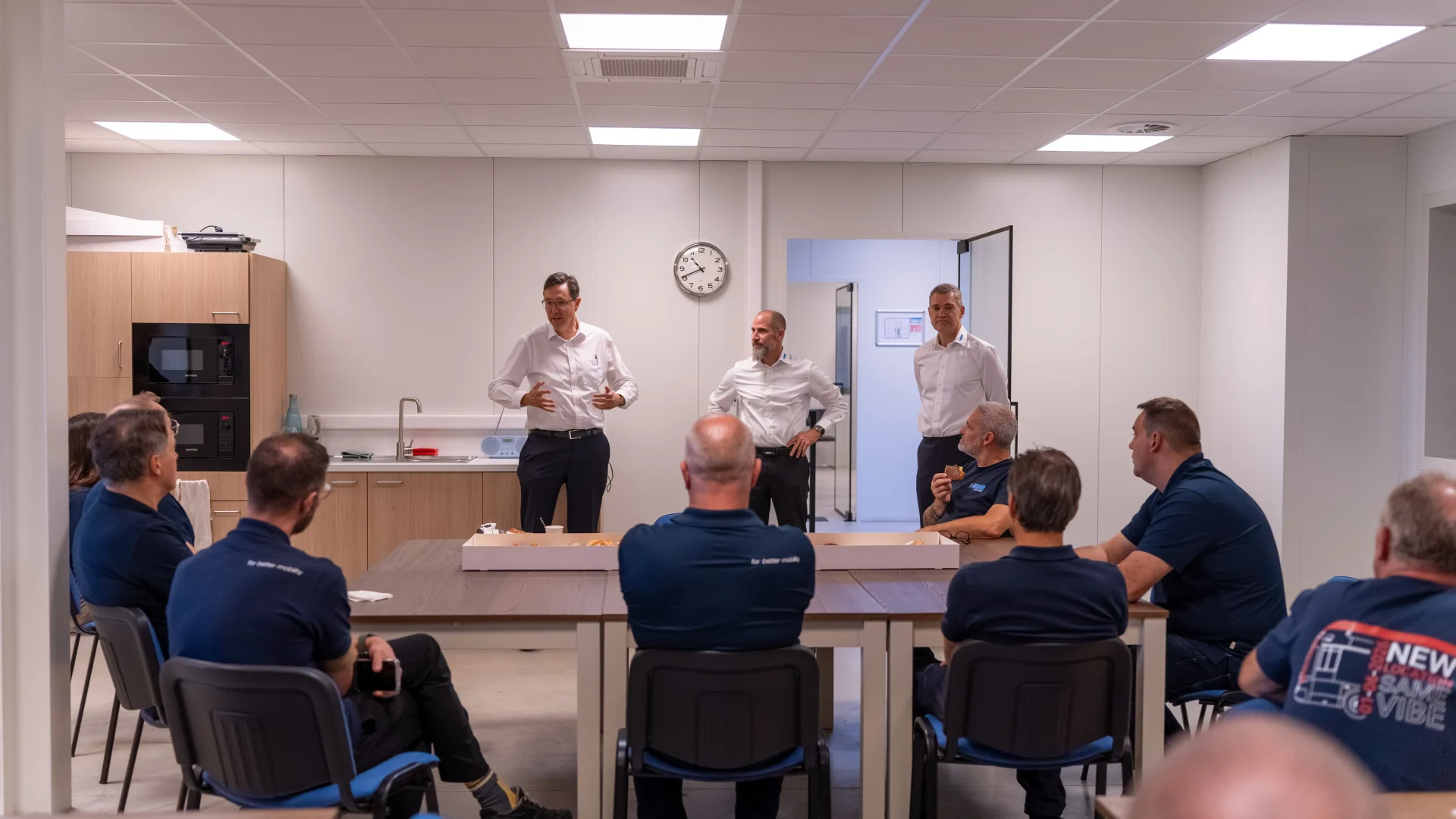
During the year we were working on the Paris buses, my team and I were already thinking about what we would do after Paris. Because we could deliver the project, but we didn’t want to lose our jobs again. The initial focus was on completing the Paris buses and then providing maintenance for Van Hool Exqui.City vehicles in Europe.
But what happens after those servicing activities? What is the longer-term strategy for HESS Belgium?
Unfortunately, we cannot build Van Hool buses anymore. Building Exqui.City buses is over and out. There is no engineering office anymore here in Belgium.
So what can we do? Becoming part of the HESS Service Division, led by Fabian Hänggi, was in that respect an important step for us. Fabian gave us a lot of support and visited us regularly. We developed a strategy, drawing on the knowledge and experience of the wider HESS Service group, and together with Fabian we decided to become an expertise center working on buses. We are specialised in Van Hool buses, but we can also work on other brands because we have the people and the competencies.
We now have a new building with all the facilities, and we will be active in three pillars.
HESS Belgium, a strategy relying on three pillars
Which are these three pillars?
The first pillar is the continued support for the 330 Exqui.City buses in operation around Europe. We carry out interventions across Europe, in Norway, Sweden, France and other countries. We are doing that with our own team. Operators want to run them for another 10 or 15 years, and in Paris even for another 20 years. But, of course, that’s not how you can build a sound business.
That’s why the second pillar is focused on local maintenance, particularly specialised maintenance for buses. Customers can send their buses or coaches to us for major repairs, such as on the chassis, or for software updates. So that’s the local business we do.
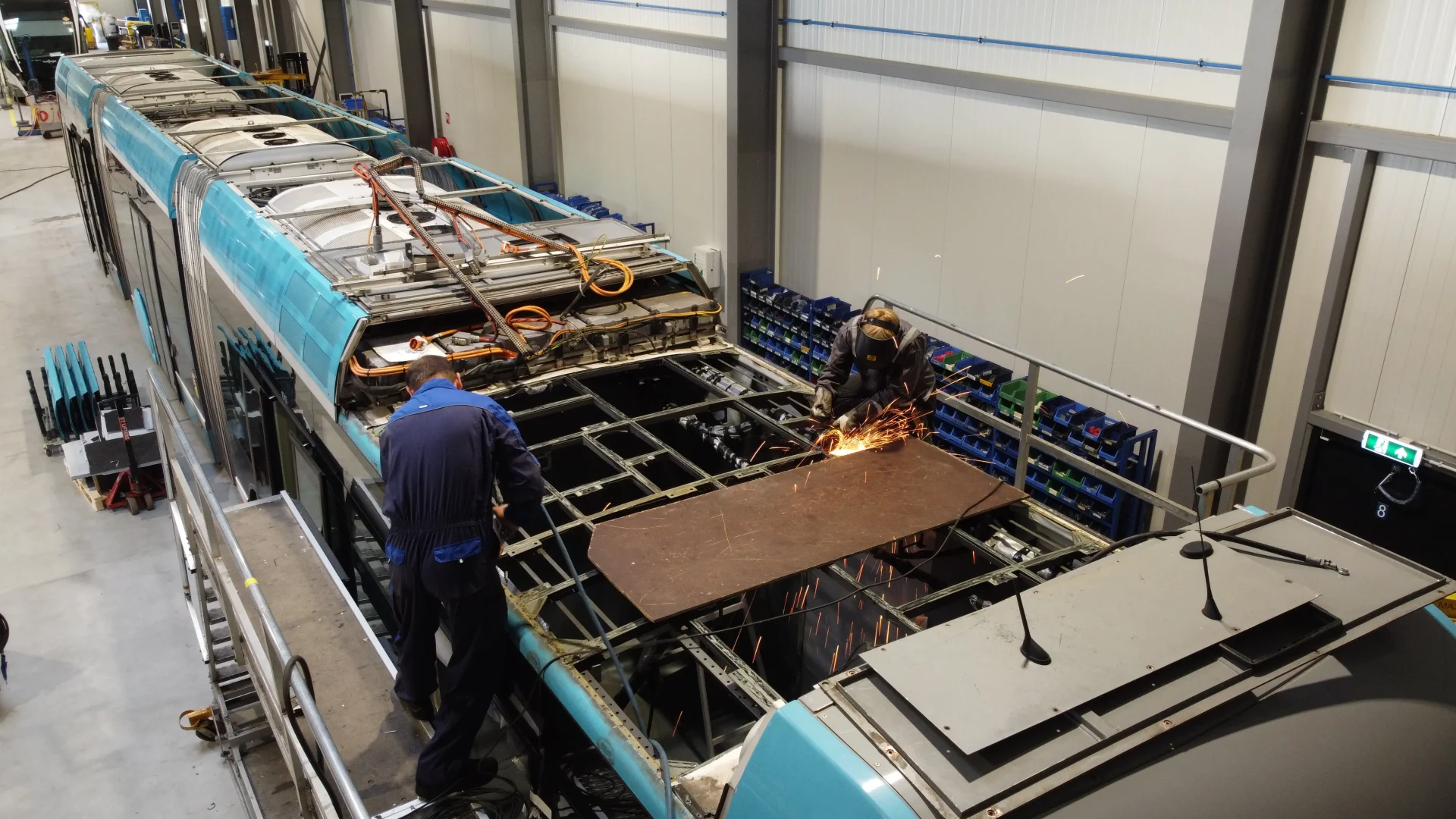
The third pillar is the one we would like to develop further: larger projects involving retrofits and modernisation.
Very often, in fact, customers want to operate their buses for longer or make them greener. In the end, a bus represents a major capital investment. If you can operate your buses for 25 years instead of 15, you save money. Or if you can install more battery capacity on your bus, you can operate it in a greener way.
That’s what we can do. We are already working on some retrofit projects where we replace batteries with batteries from another manufacturer or with better batteries. Hopefully, we can develop more of these larger projects.
Looking at the roadmap, what is the timeline for developing these three business pillars?
The first and second pillars are already up and running, although the local business can be developed further. For the retrofit business, we would like to do more. We already have our first reference projects. We have completed the first battery replacements and the first repairs on electric buses.
We will use these references to explain better to existing customers what we can do, as we need to develop more opportunities and go out and talk to customers. That’s something I will start doing over the next few months.
A team that already needs to be expanded
Is the current HESS Belgium organisation sufficient to develop the third pillar, or do you expect the team to expand?
We need to expand the team. We are now 25 people, and all our employees are former Van Hool employees. The good thing is that they have a lot of experience. But many of our people are over 50 years old. The next step is to grow to 35 or 40 people. This time, we would like to recruit younger people, bring them into the company and train them in all the necessary skills. We are already in contact with several technical schools in the area.
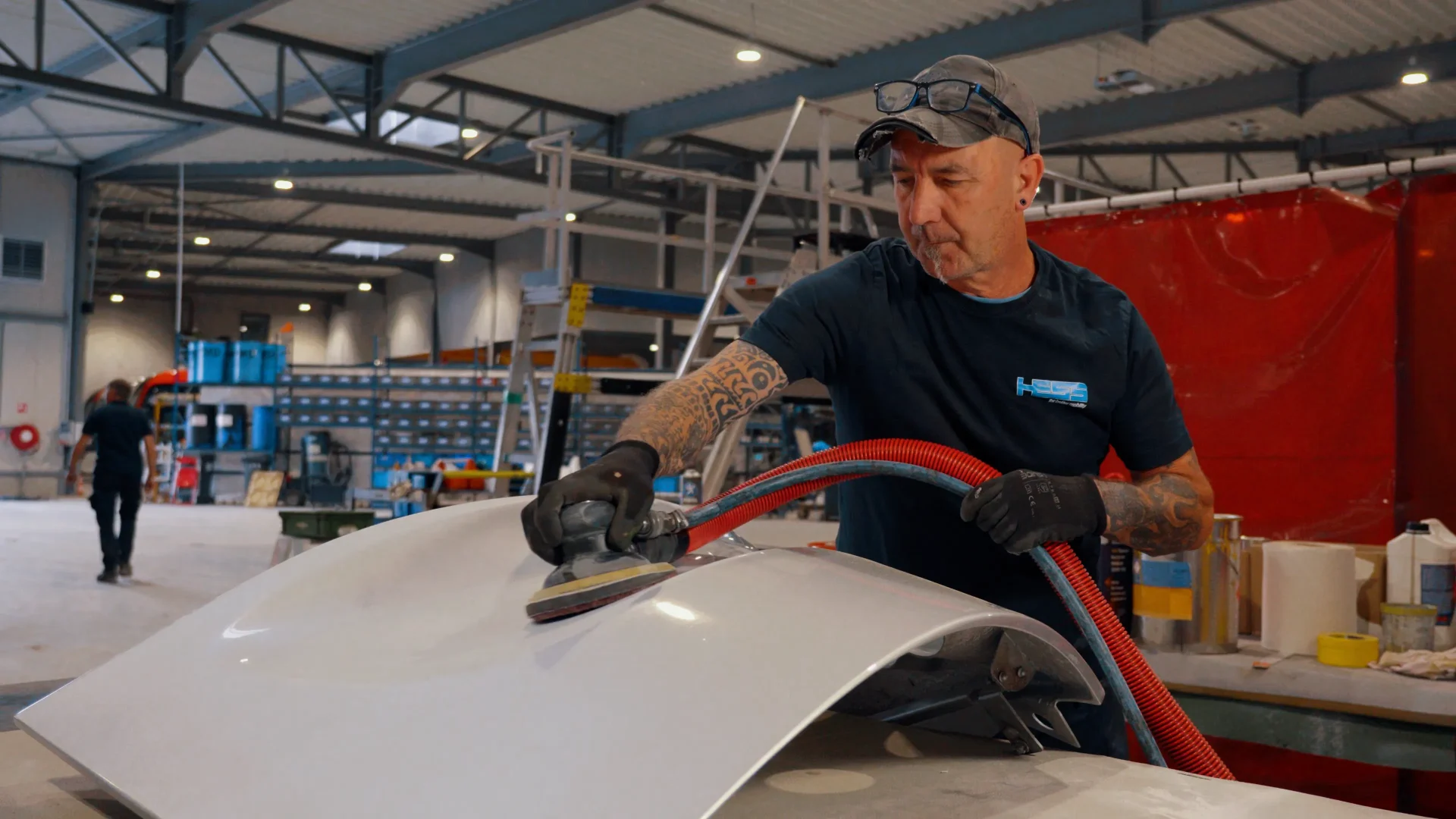
They will send people for traineeships, and we hope to recruit the best of them. That’s our next development. Because we want to be here for the long term.
Being part of the HESS service division also helps us develop our skills. We can learn from other workshops and factories in the group. Some of our technicians have already trained in Switzerland, learning how to carry out complex repairs on badly damaged buses.
Looking at the wider HESS strategy, the Group has also taken over KIEPE’s trolleybus technology activities. HESS Belgium appears to follow a similar approach, with specialised operations preserving specific technical capabilities…
HESS recognised the strategic importance of preserving this expertise and supporting customers over the long term. If you look at all the Exqui.City buses, or tram-buses, operating around the world, we are only a small team of 25 people, but we have a lot of expertise. If you take that expertise away, all these projects will run into trouble sooner or later, because nobody will be able to support them. So this small team has enormous leverage. It’s the same with KIEPE. Look at the leverage HESS has achieved through these relatively small takeovers.
Our business is a niche business, but it’s core business for us: light rail-like buses, electrification and trolleybuses. It’s a fantastic leverage. And customers will appreciate it in the end, because we haven’t left them without support.
These are relatively small acquisitions, but they can have a significant strategic impact on important parts of the business. It’s like playing chess. You move a few pieces, but in the end, the overall impact on the business is very significant.