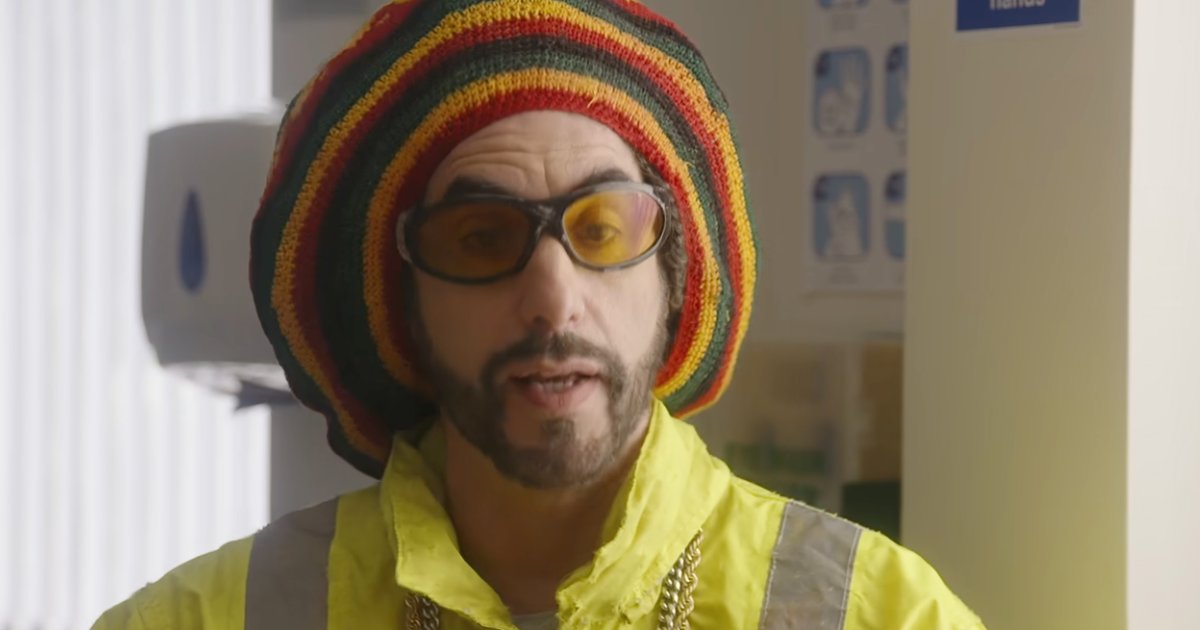
Sacha Baron Cohen has offered a lengthy defense of his new Ali G movie. This comes after the film, titled Ali G: Who Iz I?, has received backlash for enforcing racist stereotypes.
Ali G: Who Iz I? is scheduled to be released in United States theaters on October 23, 2026. With this marking Baron Cohen’s feature directorial debut, the movie sees the Borat star reprise his role as Ali G, a character he originally played on Channel 4’s The 11 O’Clock Show and Da Ali G Show. The character previously had a 2002 movie titled Ali G Indahouse.
There’s been much controversy surrounding Ali G: Who Iz I? ever since the project was announced. While some believe the character is used as a satirical method of exposing other people’s racism, others think Baron Cohen disguises harmful and offensive tropes as comedy.
In a new piece for The Times, Baron Cohen acknowledged that Ali G is “outdated” and “problematic.” That, however, is “ the very reason” why Baron Cohen decided to bring Ali G back in 2026.
“The world he’s returned to is, in many ways, worse than the one he left 20 years ago,” Baron Cohen wrote. “All the prejudices my characters are designed to expose haven’t just lingered—they’ve metastasized. They’re fueled by the greatest propaganda machine in history—social media—and now by its monstrous child, AI.”
What else did Sacha Baron Cohen say about the new Ali G movie?
Baron Cohen also wrote, “I’ve always designed my characters and comedy as vehicles to expose prejudice, bias, and stupidity, though I realize not everyone sees them that way. Ali G is a white imbecile—a delusional cultural appropriator—who steals the fashion and lyrics from his favorite gangsta rap and dancehall idols, from Compton to Kingston. The joke is on him, and on the predominantly white male establishment who take him seriously enough to believe that HBO would hire the stupidest man in the world as an interview host. Like a good bouffon, he undermines that establishment—not the culture he loves and borrows from.
“I admit that most of my humor is indeed juvenile. That’s because satire works best not when it preaches, but rather when it lives among the laughter. Then, once you walk out of the theater or switch off the TV, it makes you think.
“…after the credits roll, it’s up to all of us to decide what comes next. If our pluralistic democracies are going to survive, we need to create societies where we stop the hate and tolerate those different from us—no matter who they are, where they come from, whom they love, or how they pray. Because the only way out of this mess is to treat everyone with what Ali G has always preached: Respect.”