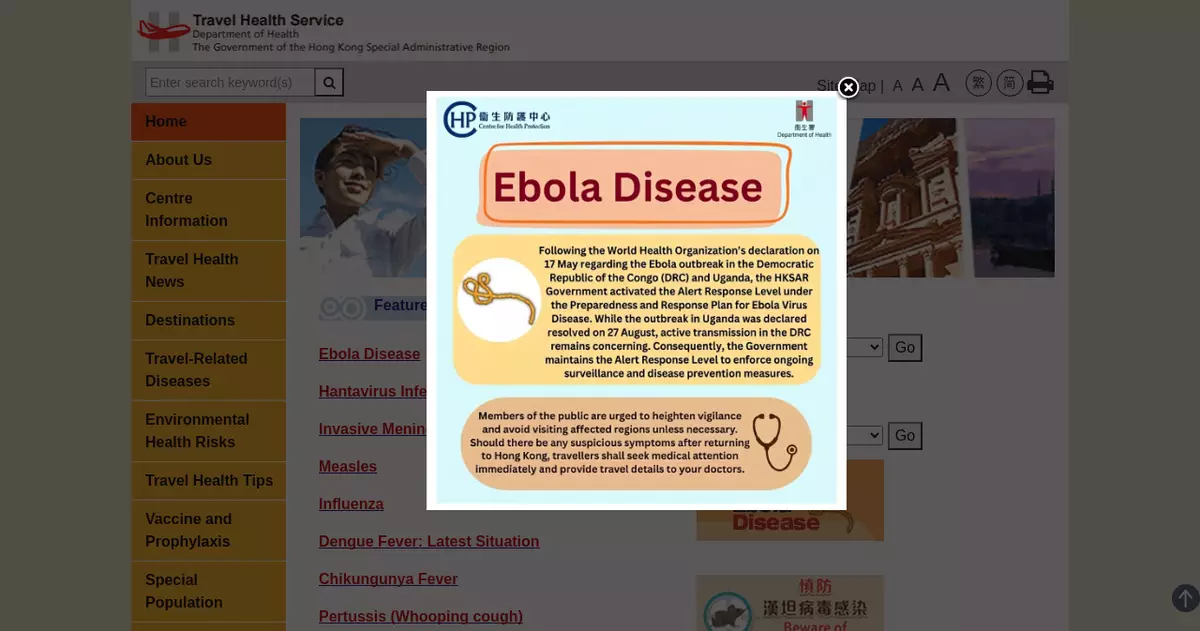
DH reminds public to take appropriate preventive measures against measles amid outbreaks in multiple countries due to low vaccination rates
Due to ongoing measles outbreaks in multiple countries around the world caused by low vaccination rates, the Centre for Health Protection (CHP) of the Department of Health (DH) today (November 3) reminded members of the public planning to travel abroad to visit the DH’s Travel Health Service webpagebefore departure to check if their destination has a high incidence of measles or an outbreak. They should take appropriate preventive measures, such as ensuring they had received two doses of the measles vaccination, and maintain good personal and environmental hygiene at all times. International students in affected countries should also review their vaccination records. If they are unsure whether they had received two doses of the measles vaccination, they should arrange to get vaccinated as soon as possible to prevent infection. As the winter break will soon begin in some countries, and students studying abroad will return to Hong Kong, the CHP urged the public to remain vigilant and seek immediate medical attention if they feel unwell. They should also report their symptoms and travel history to the healthcare workers before their appointment so that appropriate infection control measures can be implemented at the healthcare facilities to prevent a community spread. Schools should also remain vigilant to reduce the risk of infectious disease transmission on campus.
Measles is an endemic infection in many parts of the world. So far this year, the United States (US) has recorded more than 4 800 cases of measles, more than double last year’s total. The situation remains out of control in the US. Pennsylvania and New York have reported measles-related deaths, and none of the deceased had received the measles vaccination. In Asia, Indonesia, Bangladesh, Laos and the Philippines have also experienced measles outbreaks due to low vaccination coverage.
“Overseas cases mainly affected individuals who were unvaccinated or had an unknown vaccination status, underscoring the importance of maintaining a high vaccination rate and herd immunity. Under the Hong Kong Childhood Immunisation Programme and its immunisation services provided by the DH’s Maternal and Child Health Centres and the School Immunisation Teams, the overall immunisation coverage in Hong Kong has been maintained at a very high level. This has enabled Hong Kong to successfully maintain its measles-free status to date, even amid measles outbreaks in many parts of the world. As evidenced by the findings on vaccination coverage of primary school students and the territory-wide immunisation surveys conducted regularly by the DH, the two-dose measles vaccination coverage has remained consistently high, well above 95 per cent. The local seroprevalence rates of measles virus antibodies reflect that most of the people in Hong Kong are immune to measles. On the whole, the risk of a large-scale outbreak in Hong Kong is low. However, as a city with a high volume of international travel, Hong Kong still faces the potential risk of measles importation. Locally, a small number of people who have not completed a measles vaccination (such as non-local born people, including new immigrants, foreign domestic helpers, overseas employees and people coming to Hong Kong for further studies) are still at risk of being infected and spreading measles to other people who do not have immunity against measles, such as children under 1 year old who have not yet received the first dose of measles vaccine,” said the Controller of the CHP, Dr Edwin Tsui.
A total of nine measles cases have been recorded in Hong Kong so far this year. Six were either imported cases or epidemiologically linked to imported cases. The remaining three were local cases. Among the imported cases, patients visited Indonesia, Pakistan and Vietnam during their incubation periods.
People born before 1967 could be considered to have acquired immunity to measles through natural infection, as measles was endemic in many parts of the world and in Hong Kong at that time. People born in or after 1967 who have not yet completed the two doses of measles vaccination or whose measles vaccination history is unknown, should consult their family doctors as soon as possible to complete the vaccination. For those who plan to travel to measles-endemic areas, if they have not been diagnosed with measles through laboratory tests and have never received two doses of measles vaccine or are not sure if they have received measles vaccine, they should consult a doctor at least two weeks prior to their trip for vaccination. Pregnant women and women preparing for pregnancy as well as children aged under 1 year who are not due for the first dose of the Measles, Mumps and Rubella (MMR) combined vaccine under theHong Kong Childhood Immunisation Programme, are advised not to travel to places with outbreaks of measles.
The incubation period of measles (i.e. the time from infection to onset of illness) is seven to 21 days. Symptoms include fever, skin rash, cough, runny nose and red eyes. If travellers returning from places with a high incidence or outbreak of measles develop relevant symptoms, they should wear a surgical mask, stay home from work or school, avoid crowded places and avoid contact with people without immunity, especially those with weak immune systems, pregnant women and children aged below 1. Those suspected to have been infected are advised to seek medical attention as early as possible and reveal their relevant contact history of measles to healthcare professionals.
For more information on measles, the public may visit the CHP’smeasles thematic page. Members of the public who are going to travel can visit the website of the DH’sTravel Health Servicefor news of measles outbreaks outside Hong Kong.
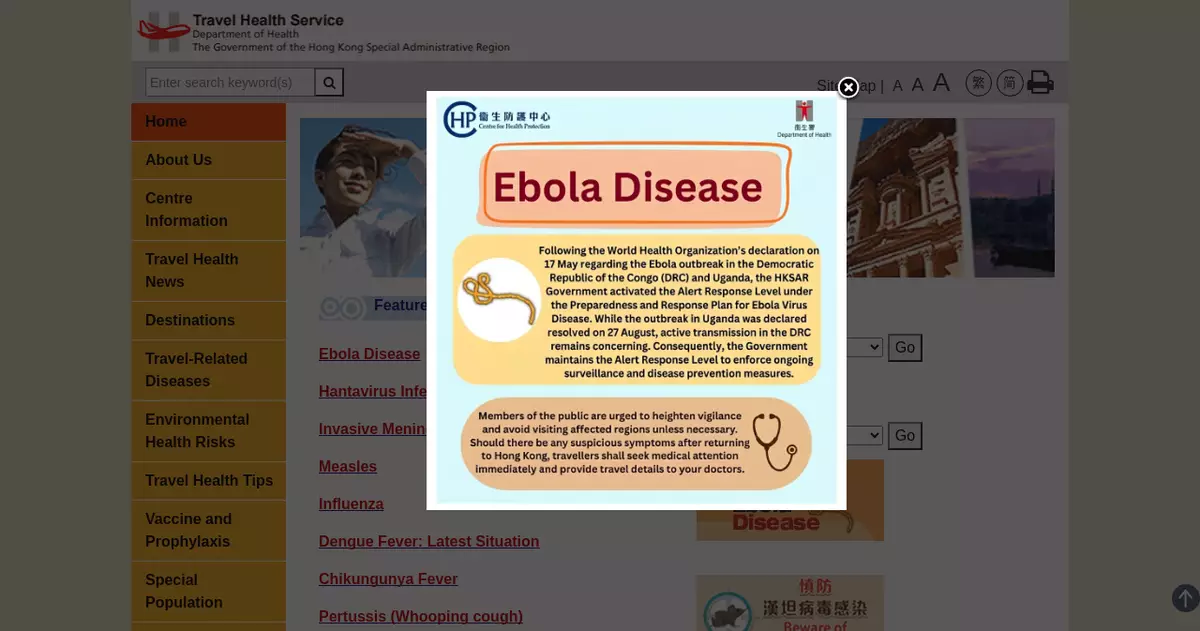
Source: AI-found images
SCED attends APEC Ministerial Meeting held virtually
The Secretary for Commerce and Economic Development, Mr Algernon Yau, last evening (November 3) attended the 37th Asia-Pacific Economic Cooperation (APEC) Ministerial Meeting held virtually through video conference.
Under the theme for APEC China this year – “Building an Asia-Pacific Community to Prosper Together”, Mr Yau at a discussion session highlighted that member economies must act together through enhanced dialogue and co-operation to achieve shared prosperity amid an ever-changing landscape and rapid technological advancement.
Citing digital transformation as an example, Mr Yau said that practical co-operation will continue to be required among member economies to harness their respective strengths in digital technologies in a people-centred and inclusive manner. Domestically, Hong Kong is strengthening its research capacity in frontier technologies, and launching programmes to promote public awareness and responsible use of AI. Hong Kong looks forward to sharing its experiences and engaging in mutual learning with other member economies in these areas.
Meanwhile, Mr Yau called on member economies to continue to strengthen connectivity in various areas, enabling the efficient flow of goods, services, capital, and people, while narrowing development gaps and creating opportunities for all sectors across the region. He added that any of the co-operation among member economies should continue to be guided by the Putrajaya Vision 2040 and the Aotearoa Plan of Action.
At another discussion session, Mr Yau shared his insights on how to enhance economic integration for new growth in the region. Noting that enhancing economic integration has been the core objective of APEC, he said that one of the directions is to continue to advance the Free Trade Area of the Asia-Pacific (FTAAP).
“As part of Hong Kong’s wider efforts to contribute to the FTAAP agenda, we have been actively seeking early accession to the Regional Comprehensive Economic Partnership. We welcome the establishment of the Accession Working Group for Hong Kong in September this year, and hope that our accession could inject fresh impetus into advancing the FTAAP agenda,” Mr Yau said.
Mr Yau also highlighted the importance of enhancing co-operation to deal with the seismic changes in the trade landscape. As technological advancement is increasingly transforming the conduct of international trade, deepening co-operation on this front is critical to promoting cross-border trade and investment. He said that to this end, Hong Kong fully supports the proposed Trade Digitalization Cooperation Framework as a guiding document for future co-operation.
In addition, Mr Yau stressed that the multilateral trading system must remain the foundation of regional integration and international trade. “We call on member economies to continue supporting the World Trade Organization (WTO)’s reform agenda, incorporating plurilateral initiatives into the WTO framework, finding a permanent solution for the moratorium on customs duties on electronic transmissions, and facilitating the Work Programme on Electronic Commerce,” he said.
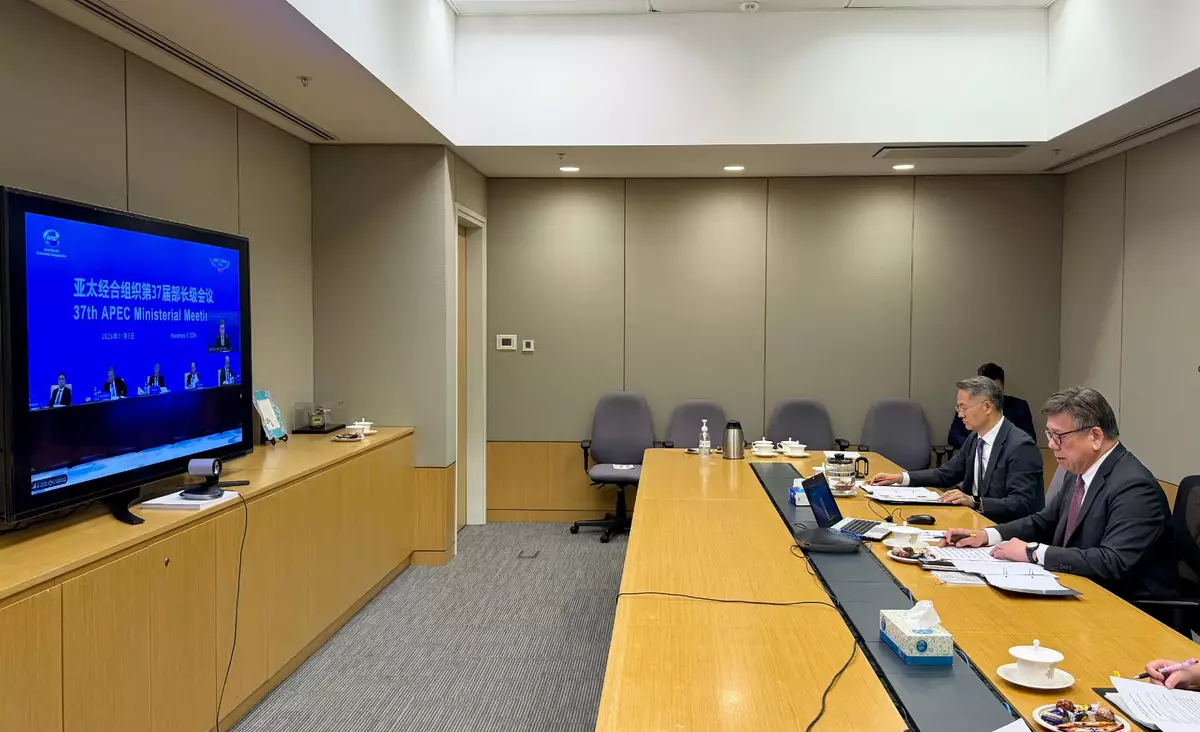
SCED attends APEC Ministerial Meeting held virtually Source: HKSAR Government Press Releases

