It may be hard to believe, given Prime Minister Mark Carney’s sky-high approval ratings and his government’s perpetual dominance in the polls, but the latest federal budget may finally be the end of his honeymoon with Canadians.
The 2026 budget allocates two thirds to tax breaks for major investors and corporations, with only a quarter allocated to improving the lives of struggling Canadians.
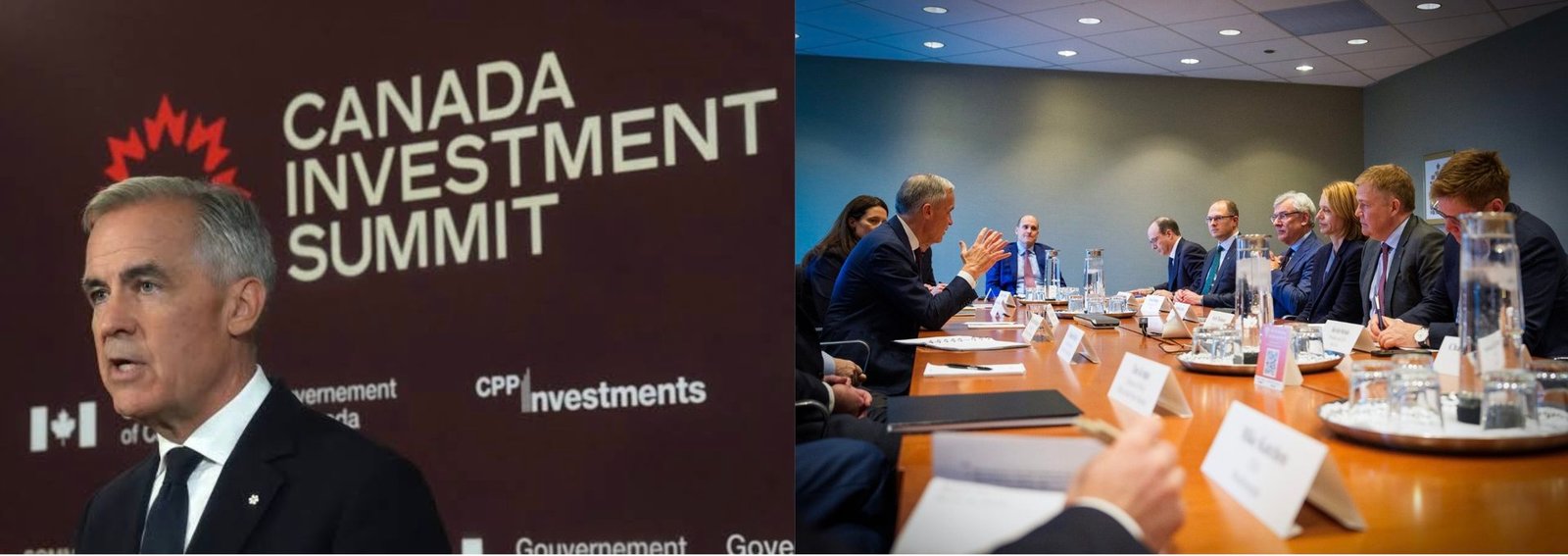
“Christmas has come early for big corporations in Canada,” said new NDP leader Avi Lewis, holding the 500-page document in Ottawa. “When I read this all I can think about is the wealth funds and private equity moguls that gathered in Toronto in September… It’s focused on them.”
With Carney focused on increasing corporate profits, this is the moment for a comeback of Canada’s NDP.
True, party fundraising still trails. And yes, the NDP has only five Members of Parliament in the House of Commons (a record low following last year’s devastating electoral defeat).
But with Carney now having abandoned the entire left side of Canada’s political spectrum, and fully transformed the Liberal Party into a right-of-centre vehicle — almost indistinguishable from the Conservatives — the NDP has an opportunity to win back disaffected voters and restore its former influence.
Pick almost any file, and you will find examples of Carney’s right-wing pivot, which the NDP, under its new leader, is well positioned to critique and contrast with its social-democratic vision.
Armed with ample ammunition to discredit the Liberals for exorcising what little progressive substance remained in the party, New Democrats can re-establish themselves as the true champions of middle-and working-class Canadians.
Pick almost any file, and you will find examples of Carney’s right-wing pivot, which the NDP, under its new leader, is well positioned to critique and contrast with its social-democratic vision.
On climate change, Carney has erased all the progress his predecessor, Justin Trudeau, made on reducing emissions. He eliminated the consumer carbon tax, weakened industrial carbon pricing, scaled back clean electricity rules, delayed stricter methane regulations, and removed the oil and gas industry’s emissions cap. More recently, he approved the Pacific Link Pipeline, a new heavy-emitting oil pipeline from Alberta through neighbouring British Columbia.
As a result of his craven concessions to Big Oil, Carney has now made it virtually impossible for the country to meet its climate targets.
On taxation, Carney has gone further than even traditional Liberals in prioritizing big business and the wealthy over the working class. Almost immediately after taking office, he reversed Trudeau’s modest capital-gains hike for high earners; shortly afterward, he scrapped the incoming digital services tax on U.S. tech giants. With his most recent tax code changes, which allow corporations to immediately write off capital investments, Carney has again shown he caters more to corporate elites than to everyday Canadians.

On foreign policy, Carney has been just as guilty of forsaking progressive ideals, including by currying favour with MAGA Republicans at the expense of Canadian autonomy. He backed the U.S.’s illegal kidnapping of Venezuelan President Nicolás Maduro; abstained from a special UN vote on the White House’s crushing fuel embargo on Cuba; and was among the first to support U.S. President Donald Trump’s war on Iran — a war, which let us not forget, has destabilized the Middle East, caused thousands of casualties, impoverished millions by driving up global gas prices, and is now so hated by Americans it led to the “blue tsunami” mid-terms.
What else?
He’s poured billions into the defence budget while slashing Canada’s already sparse foreign aid. He halted the expansion of Canada’s burgeoning pharmcare and childcare programs. And he’s refused to speak out against Alberta United Conservative Party Premier Danielle Smith for undermining Canada’s public health care system through new U.S.-style privatization measures.
Unions are understandably furious with him for passing legislation that curbs their right to strike and, before that, for cutting tens of thousands of federal public-sector jobs.
Indigenous leaders are similarly outraged by his government’s failure to consult properly before approving new projects. Meanwhile, immigration experts are alarmed by his government’s decision to limit the number of refugees entering the country and its cruel attempt to restrict their access to healthcare.
Despite his many regressive and damaging policies, Carney and his Liberal administration remain popular with a wide swath of the Canadian electorate. Why?
Eventually, the cost-of-living crisis and other issues, such as the climate emergency and an overburdened healthcare system, will overshadow the public’s anxieties about the president and the threat he poses to the country.
Some voters have been misled, likely by Canada’s corporate-owned press, into believing that a conservative course correction was needed after Trudeau’s nine and a half years in office, as if his tenure were a genuine example of left-wing government. Of course, it was anything but.
Most, however, have been so focused on the Canada-U.S. trade war and the White House’s annexation threats that they have been willing to give Carney a pass. For these voters, the top concern is defending Canadian sovereignty against Trump, and in their view, Carney has done a bang-up job.
While the prime minister has had a couple of commendable moments handling the president (his speech at last year’s Davos summit and his suspension of trade talks with U.S. officials late this summer are notable examples), he has been far more passive and placating than his “elbows-up” rhetoric suggests. He might not realize it, but he is vulnerable on this issue.
No matter his record managing Trump, Carney can’t distract voters forever. Eventually, the cost-of-living crisis and other issues, such as the climate emergency and an overburdened healthcare system, will overshadow the public’s anxieties about the president and the threat he poses to the country. Disappointed and disillusioned, some lefty Liberal voters may reconsider their allegiance. When they do, the NDP must be prepared to court them.
It won’t be easy. The Conservatives will be waiting on the sidelines, eager to poach them with disingenuous populist appeals — even as they maintain the same absurd adherence to austerity, climate neglect, and corporate profitability as Carney’s Liberals. In the 2025 election, the Conservatives showed they could persuade working-class voters, including union members, to support them. They could do so again.
However, if the NDP can offer voters an unabashedly leftist platform, addressing those fundamental affordability issues, it could win over a significant share of the electorate and, in turn, become an influential force in Parliament once more.
With so much at stake, the party cannot squander this unique opportunity in Canadian history; it must seize the moment to challenge and debunk its opponents’ failed neoliberal policies and hold them accountable for betraying all the Canadian voters who trusted them.
Wyatt James Schierman is a freelance writer from Alberta and a regular columnist with Loonie Politics. His writing has appeared in CBC, Canadian Dimension, rabble, the Toronto Star, and other media.