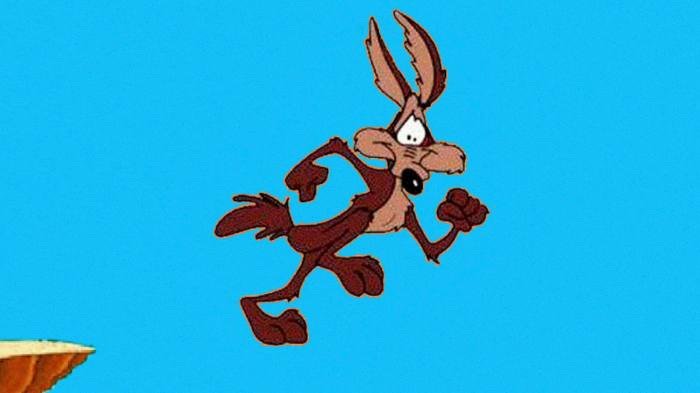
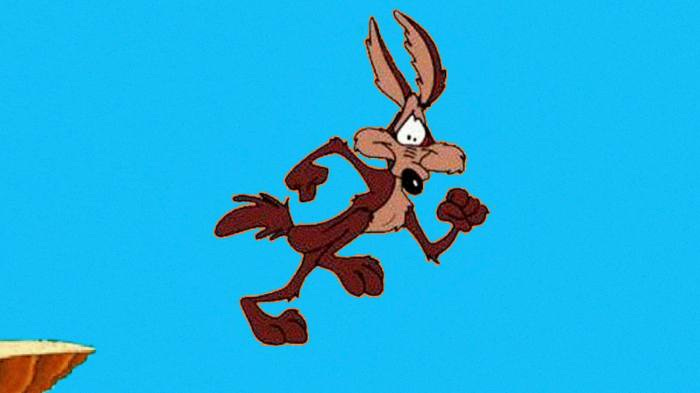
Has AI reached its Wile E. Coyote moment? Ever since the huge boom in AI-related capital expenditures, especially data centers, began, many observers have warned that this boom looks unsustainable. AI is a remarkable technology, which may yield big economic payoffs (although these payoffs still aren’t clear in the data.) But it’s doubtful whether the companies making these huge investments will be able to capture enough of those payoffs to compensate them for the enormous sums they are spending.
If these skeptics are right, we should expect that there will be a Wile E. Coyote moment: the investors and lenders who have been backing AI companies look down, realize that they have run off the edge of a cliff, and the boom plunges to the ground. Such sudden reckonings have happened many times in the past, notably with the bursting of the dot-com bubble in 2000 and the bursting of the housing bubble a few years later.
And in the past few weeks we’ve seen growing signs of nervousness about AI’s financial prospects. Prices of hyperscaler stocks are down 27 percent since their peak; the cost of insurance against default on AI-company bonds has soared. We don’t know for sure that this is a real turning point for the industry, but the vibes have definitely shifted.
Today’s primer won’t try to settle the hotly (and endlessly) debated question of whether AI really is a bubble, let alone whether this is the moment of truth. What I will focus on, instead, is a conditional question: If AI is a bubble, and that bubble is either bursting or likely to burst soon, what are the likely economic consequences? That is, as I’ll explain, a question we can address with a lot of historical evidence. For while AI as a technology is utterly new, burst bubbles have been a recurring economic theme for well over a century, and we know a lot about the macroeconomic aftermath of bubbles.
To preview my conclusions: a burst AI bubble will almost surely cause a recession. The depth of that recession is highly uncertain, although I favor the view that it will be worse than the slump at the end of the 1990s tech boom. But even if the recession is short and shallow, history and theory suggest that recovery from that slump will be painfully slow, that unemployment will remain elevated for multiple years.
Beyond the paywall, I’ll address the following:
1. A brief history of modern recessions
2. Why recovery from burst bubbles is slow
3. Comparing a possible AI bust to the dot-com recession
4. Why the policy response to an AI bust will probably be inadequate to prevent a painful recession