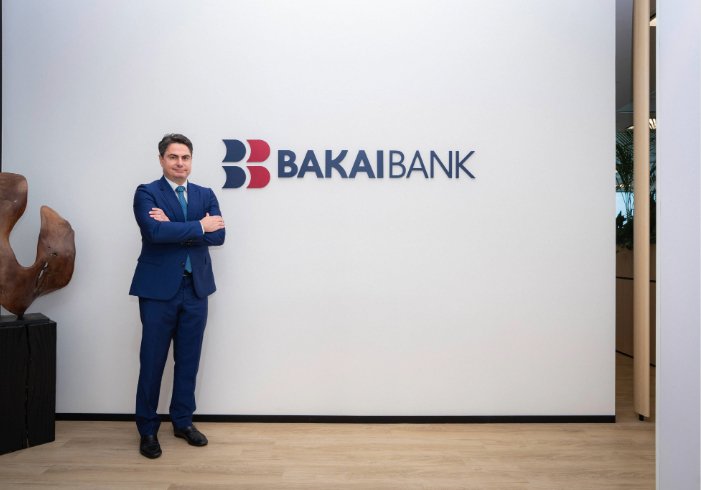
Kyrgyzstan’s Bakai Bank is aiming to meet untapped demand for financing trade between Central Asia and the Asia-Pacific region after opening a branch in Hong Kong, the chief executive of the new entity has said.
Bakai secured a restricted banking licence from the Hong Kong financial regulator last month, and said it is the first time a Central Asian bank has opened a branch in the Asia-Pacific region.
“We want to be known as the bank for Central Asia if you’re in Asia-Pacific, and the bank for Asia-Pacific if you’re in Central Asia,” CEO Andreas Meletiou told GTR.
“Trade finance is going to be front and centre of our proposition,” he said, adding the bank would offer an “entire suite” of trade products such as documentary credits, guarantees, open accounts financing and general working capital financing. It will also offer payments and foreign exchange services.
The bank brought in Nadeem Siddiqui from Barclays as head of trade finance last year.
From Hong Kong, Bakai plans to focus on Kazakhstan and Uzbekistan, Central Asia’s two largest economies, alongside its home market of Kyrgyzstan.
Goods trade between both countries and China has grown steadily this decade. Total Kazakhstan-China trade reached US$48.7bn in 2025, according to Chinese customs data, more than double the US$21.4bn reported in 2020.
Uzbekistan reported US$17.5bn of overall trade with China in 2025, compared to US$6.4bn five years earlier.

Meletiou said despite the opportunities – which include significant metals and mining activity in Central Asia – banks in Asia-Pacific typically have low appetite for Central Asian corporate and financial institution risk.
“The huge differentiation for us is that we do have the risk appetite, and we have the risk appetite where it doesn’t exist,” the former Abu Dhabi Islamic Bank and Standard Chartered banker said.
“What you have today is importers in Central Asia borrowing locally in general corporate purposes, in a very expensive local currency, and they’re making advance payments. That’s very inefficient for both the banks and the corporates. We will bring trade finance instruments which are much more capital-efficient for the banks and certainly much more cost efficient for the corporates.”
Bakai Hong Kong is already in discussions with commodity traders, primarily based in Singapore, who want banking support for trade with Central Asia, Meletiou said. The lender also plans to cater to firms active in the telecommunications, electronics and automotive-related sectors.
Bakai’s home market of Kyrgyzstan has seen gyrating trade volumes with China and some other countries since Russia’s 2022 invasion of Ukraine, with analysts and campaigners pointing to the country’s role as a conduit for trade with heavily-sanctioned Russia.
But Meletiou said the Hong Kong branch, along with its parent bank, will have “zero tolerance” of customers seeking to skirt sanctions.
“We are going to be very, very focused in our controls and the way we carry out our business to ensure that you know we are not used to facilitate sanctions evasion,” he said.
Compliance staff are included in the 40-odd people the Asia-Pacific branch has hired to date, which Meletiou said is close to a full complement of workers.
Under its restricted banking licence, Bakai is prohibited from providing retail banking services in Hong Kong. It also does not have to provide starting capital, but instead draws on the capital and liquidity of its Kyrgyz parent, which Meletiou said was ample.
Bakai has B stable ratings from Fitch Ratings and S&P, and received upgraded credit and counterparty risk ratings from Moody’s in October, according to the bank’s website.