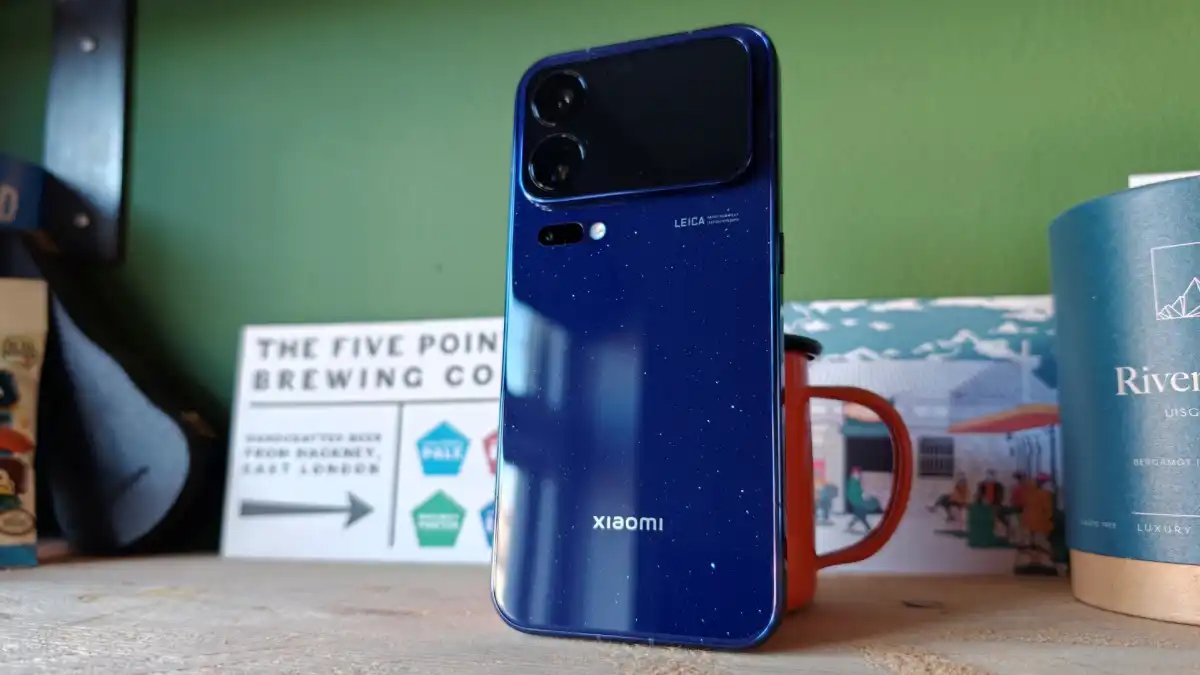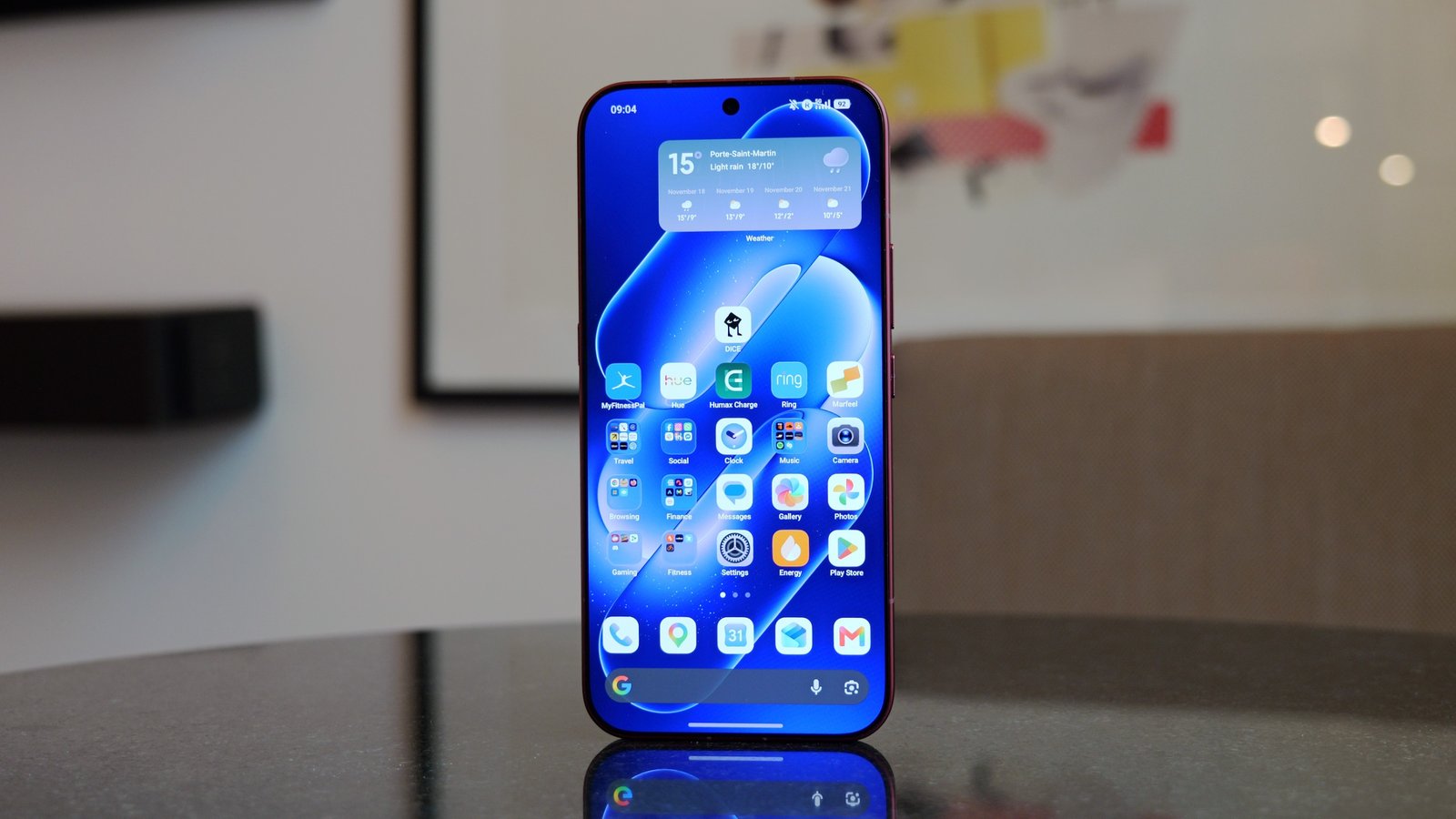
While Xiaomi is also imminently to enter the folding phones game, its latest flagship, the 18 Pro Max on review here, takes a different stance on the dual-display concept. Front-on, it looks like a typical flagship, but around the camera enclosure on its rear is a second, smaller display.
It’s not the first time Xiaomi has delivered such a feature, but it is the first time the brand has launched it into broader international markets – the previous 17 Pro and Pro Max models were skipped in the UK – suggesting it’s confident that now is the time to push a new flagship format, just as multiple displays are becoming more accepted.
However, I’ve seen other brands dabble in the dual-display concept before this Xiaomi take, some many years previous, and the idea never really took off. Once more it raises the question whether two displays are truly better than one – for the benefit of selfie camera shooting and at-a-glance use – or if the 18 Pro Max is simply over-maxxing its efforts.
Price & Availability
Unsurprisingly, adding a premium new feature to a flagship’s spec also brings a premium price tag. The Xiaomi 18 Pro Max will retail at £1399 in the UK for the base model (with 12GB RAM and 256GB storage), and €1599 in the Eurozone.
Note that you won’t find Xiaomi sold in the USA. The ‘international’ version also differs from the original Chinese handset’s spec, with a lower battery capacity (as is required to pass EU regulations).
Design & Displays
- 6.9-inch AMOLED main display
- 19.5:9 aspect
- 120Hz refresh
- 4000 nits peak
- 1208 x 2624 resolution
- Xiaomi Privacy Display
- 2.9-inch AMOLED rear display
- 120Hz refresh
- 4000 nits peak
- 596 x 976 resolution
- 8.4mm thickness, 235g weight
- IP68 dust- and water-resistant

(Image credit: Future / Mike Lowe)
Upon first pulling the Xiaomi 18 Pro Max from its box, it wasn’t the rear camera enclosure that I initially noticed. That’s because this large island-like protrusion doesn’t differ in shape compared to some key flagship competitors – and with this display switched off, it’s not overly prominent.
What’s more immediately apparent is the red hue of my review unit’s finish; a delightfully crimson paint job over the phone’s aluminium shell, delivering a very contemporary aesthetic – and looking different enough from Apple’s equivalent special edition finish to stand apart.
You’ll most likely end up slapping an official silicone case over it, though, as this will mitigate the camera island’s protrusion, and thanks to the case’s additional shock-adsorbent nature, ought to help prevent damage. The front display, just like the rear panel, is protected with Xiaomi’s Dragon Crystal Glass 3 – the brand’s own Corning Gorilla Glass alternative, ultimately.

(Image credit: Future / Mike Lowe)
Keeping attention to that rear display for a moment: it’s impressive that it echoes the flagship specification of the front equivalent, with high brightness and refresh rate being key specs that open the doors for lots of opportunity.
However, I just don’t feel that opportunity has been fully capitalised upon, as I simply didn’t find this display’s notifications, Calendar view, or other at-a-glance features especially useful for me. The one exception is how it serves selfie photography with far superior cameras – which is an obvious benefit.
The main display is the one I naturally used significantly more; a 6.9-inch panel across its diagonal, delivering a flagship feature set with variable refresh and an abundance of high-level features. It can be very bright, although its colour tuning is more muted than some contrasty, saturation-amped competitors.

(Image credit: Future / Mike Lowe)
There’s another major feature that also can’t be ignored in the Xiaomi 18 Pro Max: its Privacy Display. This is only the second time such a commercially available handset has offered such a feature, following on from Samsung’s Galaxy S26 Ultra handset at the beginning of this year.
The idea is clever: you can instruct the handset to ‘hide’ what’s showing when viewed from more acute angles, blacking out the screen either in full, on a per-app, or even per-area basis (for notifications or floating windows and such like). It’s a great premise.
Thing is Xiaomi hasn’t managed to deliver the ‘hiding’ aspect of this equation to anywhere near the same degree as Samsung. So that sees Privacy Display in the Pro Max bring limited benefit – I sometimes didn’t realise it was even on.
Xiaomi offers more context-specific use cases than Samsung, for sure, showing greater intelligence in its practicality – but in a hardware system that’s just not nearly as capable.
Performance & Battery
- Qualcomm Snapdragon 8 Elite Extreme Gen 6
- 12GB RAM (software-expandable to 16GB)
- 7050mAh capacity silicon-carbon battery
- 100W wired charging, 50W wireless

(Image credit: Future / Mike Lowe)
Xiaomi was among the first to commit to using Qualcomm’s Snapdragon 8 Elite Extreme Gen 2 chipset, as revealed at Snapdragon Summit earlier this year, opting for the most powerful hardware on the market to show off its flagship flex.
The RAM pairing is therefore a little paltry, at 12GB, but not a huge surprise in the current market – where supply and demand has seen prices skyrocket. It is possible to allocate a further 4GB through software, as Xiaomi’s HyperOS 4 caters for opening up some of the on-board storage to accommodate.
Either way, my day-to-day experience in using the 18 Pro Max – which has been my personal phone for a full week now – has never come up short in terms of power. Multiple apps, gaming, you name it, Iv’e had no issues in pure performance terms.

(Image credit: Future / Mike Lowe)
The software is an asterisk in relation to that experience, however, as I’ve found HyperOS 4 can sometimes clash a little with non-Xiaomi implementations. Google’s Gboard, for example, will often overlap the input text box so you can’t see what you’re doing, but such glitches aren’t always consistent.
There are plenty of positives from HyperOS 4, too, such as the option for 5×8 app icon displays, the implementation of floating windows, per-app battery controls, and the additional controls added for that rear display.
Having two displays does draw on the battery life somewhat more than your average, of course, but with a 7,050mAh battery capacity in this international model – down from the 8,500mAh in the Chinese model – there’s still plenty of juice in the tank per charge. I’ve been getting 16 hours of typical use with 25% remaining in a day.
Context is everything, though, and with big competition from Oppo’s Find X10 Pro Max, I find the Xiaomi’s battery life doesn’t have quite the same stamina. That’s part of the play in having that second display, ultimately, so I think buyers are going to see that feature as the key reason to buy or the key reason to not.
Cameras
- Leica triple rear camera system:
- Main (23mm): 200-megapixel, f/1.7 aperture, 1/1.28in sensor, dual autofocus, optical stabilisation (OIS)
- Tele (3.2x; 75mm): 200MP, f/2.4, 1/1.56in, OIS
- Wide (17mm): 50MP, f/2.4, 1/2.88in
- Selfie (21mm): 50MP, f/2.2, 1/2.88in

(Image credit: Future / Mike Lowe)
Mobile phone cameras have come such a long way, with the last couple of years showing off some really impressive camera suites. Xiaomi has partnered with Leica in the 18 Pro Max, promising top-tier optics and sensors – the headline being the main and telephoto are 200 megapixels apiece.
Zoom is a major feature of this device, with that 3.2x periscope zoom delivering a 75mm equivalent. That’s ideal for portrait shots, but also for capturing further away subjects as if they’re closer. Doubling down on digital zoom, the 6.4x can bring sharp results beyond what your eyes can even see – as shown in the zoom gallery, embedded below.
I’ve also been testing the 18 Pro Max in lower-light conditions, where it performs relatively well – so long as subjects aren’t moving. Just as I found with the Oppo Find X10 Pro Max, there’s a lot of processing that can’t really factor for motion in dim conditions.
I also find the Xiaomi exhibits more image noise in low-light shots, such as in the laser-lit club scene below. But when subjects are still, the pronounced detail from the main and tele lenses is certainly impressive – as a zoom lens like this is well beyond the current Apple and Samsung standards.
The wide-angle, at 50MP, still offers plenty of resolution, but is the biggest difference in the Xiaomi’s camera suite. Its results do look consistent within the wider zoom range, though, which brings assurance that you’ll be getting the results you want – regardless of whether shooting wide or zooming in.
But the biggest bonus in this whole camera setup is, indeed, that rear display. It makes taking selfies using quality cameras a breeze, plus you can gesture-control triggering a 3-second countdown with your hand to take the shot. If you’re a selfie fan, then this is where that rear display adds lots of clout.
Xiaomi 18 Pro Max review: Verdict

(Image credit: Future / Mike Lowe)
In the year when folding phone adoption has increased, the Xiaomi 18 Pro Max almost acts as the dual-screen bridge for those seeking an alternative, yet who aren’t quite ready for a foldable design.
Its dual-display design might be unconventional, but the real benefit is for selfie fans – as you can set up shots using its uncompromising camera suite. It’s those Leica cameras, in particular the zoom, that really set it apart from the Apple and Samsung establishment.
Add in a big battery – although one that’s beaten by the Oppo Find X10 Pro Max – plus heaps of power and you’ve got all the flagship mod cons for a quality experience. While a dual-screen design isn’t going to be for everyone, for selfie-lovers it’s a surefire step ahead.
Also Consider
In terms of similar camera setups, however, the Oppo Find X10 Pro Max is undeniable. There’s no rear display to be found here, but the trio of 200-megapixel lenses and Hasselblad support makes it the phone camera of the year. It’s costly, though.