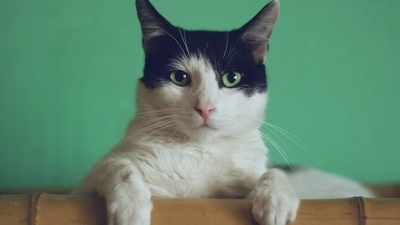
It had a microphone in its ear, a transmitter beneath its skin and an antenna woven into its fur. It was also supposed to be one of the Central Intelligence Agency’s (CIA) most unusual surveillance tools.
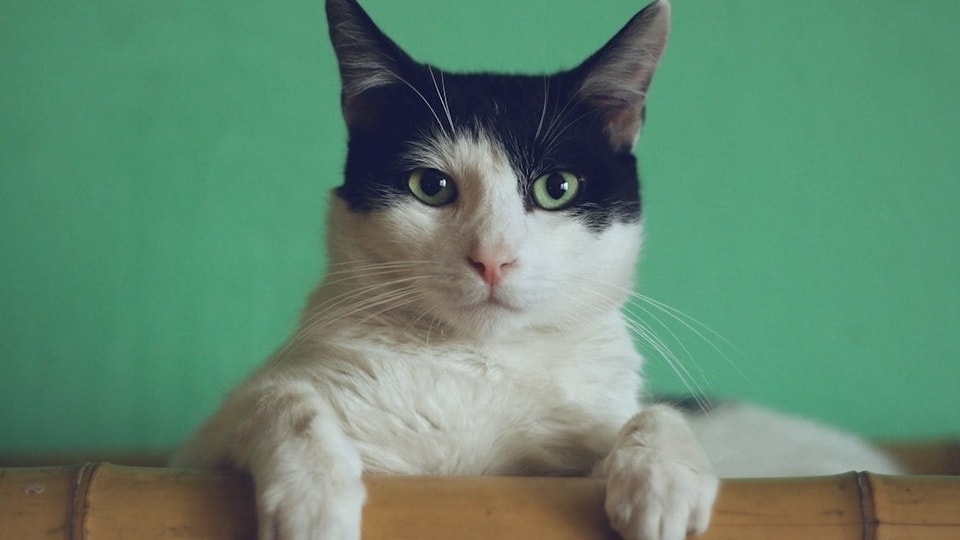
During the Cold War, the American intelligence agency experimented with turning a cat into a spy, hoping it could get close to unsuspecting targets and record their conversations. The operation had all the ingredients of a spy thriller, except that its central agent refused to follow instructions.
Known as Operation Acoustic Kitty, the project launched in 1964 and was designed to help the CIA monitor conversations between foreign agents and their Soviet handlers in public places. Park benches and other open spaces were among the locations where the agency hoped the animal could get close enough to record discussions that would otherwise be difficult to intercept.
The plan involved fitting the cat with specialised listening equipment that could transmit conversations to intelligence officers at a distance, according to the CIA. While the technology reportedly worked, controlling the animal proved far more difficult.
The experiment also gave rise to several stories, including claims that the cat was killed during a field test and that it suffered during the procedures. The CIA has since addressed these accounts, disputing some of the most widely circulated claims.
How the CIA planned to turn a cat into a spy
The CIA saw an opportunity in the cat’s ability to move around public spaces without drawing much attention. The animal could potentially approach people having sensitive conversations without making them suspicious.
According to the agency’s account, a microphone was implanted in one of the cat’s ears, a miniature radio transmitter was placed beneath its skin and an antenna was incorporated into its fur. The equipment was intended to capture nearby conversations and relay them to CIA operatives.
The project reportedly cost around $20 million, according to National Geographic. The CIA soon encountered a basic problem. Although the equipment functioned, the cat could not be reliably directed towards the people it was supposed to monitor.
The field test and the story of the cat hit by a taxi
One of the most persistent stories surrounding Acoustic Kitty concerns an alleged disastrous field test. A 2018 report by History.com said CIA staff took the specially equipped cat to a park to capture a conversation between two men sitting on a bench. Instead, the animal reportedly wandered into the road and was hit by a taxi.
The CIA has challenged this version of events. According to its account, the story originated from a former agency official who made a joke in 1979 about the cat being killed by a taxi or bus. The official later acknowledged that the remark was not intended to be taken seriously.
Was the CIA’s spy cat mistreated?
The unusual experiment also sparked claims that the cat had been subjected to cruel treatment while surveillance equipment was implanted in its body.
Some accounts described the animal as a ‘Frankenkitty’, a reference to ‘Frankenstein’ suggesting that the procedures had left it badly harmed.
The CIA rejected these claims, saying the devices were implanted and removed through low-risk microsurgical procedures under humane conditions similar to those followed in veterinary clinics. The agency maintained that the cat was unharmed.
Why Operation Acoustic Kitty was abandoned
The biggest obstacle was the animal’s unpredictable behaviour. During limited field tests, the cat moved wherever it wanted rather than going to the locations selected by CIA operatives.
This made it impossible to rely on the animal for the kind of precise surveillance the agency required. The project was eventually discontinued in 1967, and the cat was never used in an operational intelligence mission.
The CIA later acknowledged that the experiment was not practical for its specialised requirements.
From spy cats to cyborg insects
The CIA’s experiment was not the last time American researchers explored the possibility of using living creatures for technological purposes.
In 2006, the Pentagon’s Defense Advanced Research Projects Agency (DARPA) supported research into remotely controlled insects. Scientists at the University of California, Berkeley, developed a cyborg beetle whose flight movements could be influenced through electronic implants.
Their findings, published in October 2009 in Frontiers in Integrative Neuroscience, showed that researchers could use neural stimulation to start, stop and influence the beetle’s flight.