
COLUMBUS, Ohio—Tom Green had a wish list when he cast his vote in the Democratic Party’s midterm landslide last week: Tougher rules on AI data centers. Universal healthcare. Better job protections.

The 29-year-old software engineer helped elect Sherrod Brown to the Senate and Amy Acton to the governor’s office. Both Democrats pledged to stop energy-hungry AI data centers from raising consumers’ electricity bills. Brown aims to cap utility rate increases and control prescription-drug prices. Acton promises to forgive medical debt and deliver tax breaks to families.
The voters who powered the Democrats’ triumph in the midterms delivered a blunt message: Make the economy work for us. Now, Democrats must deliver.
Whether they can isn’t assured, despite the party’s pending control of the House and Senate. Many demands are beyond the reach of lawmakers to fix. The main tools of Congress, taxes and spending, are limited and slow-moving—and lawmakers still face Trump’s veto.
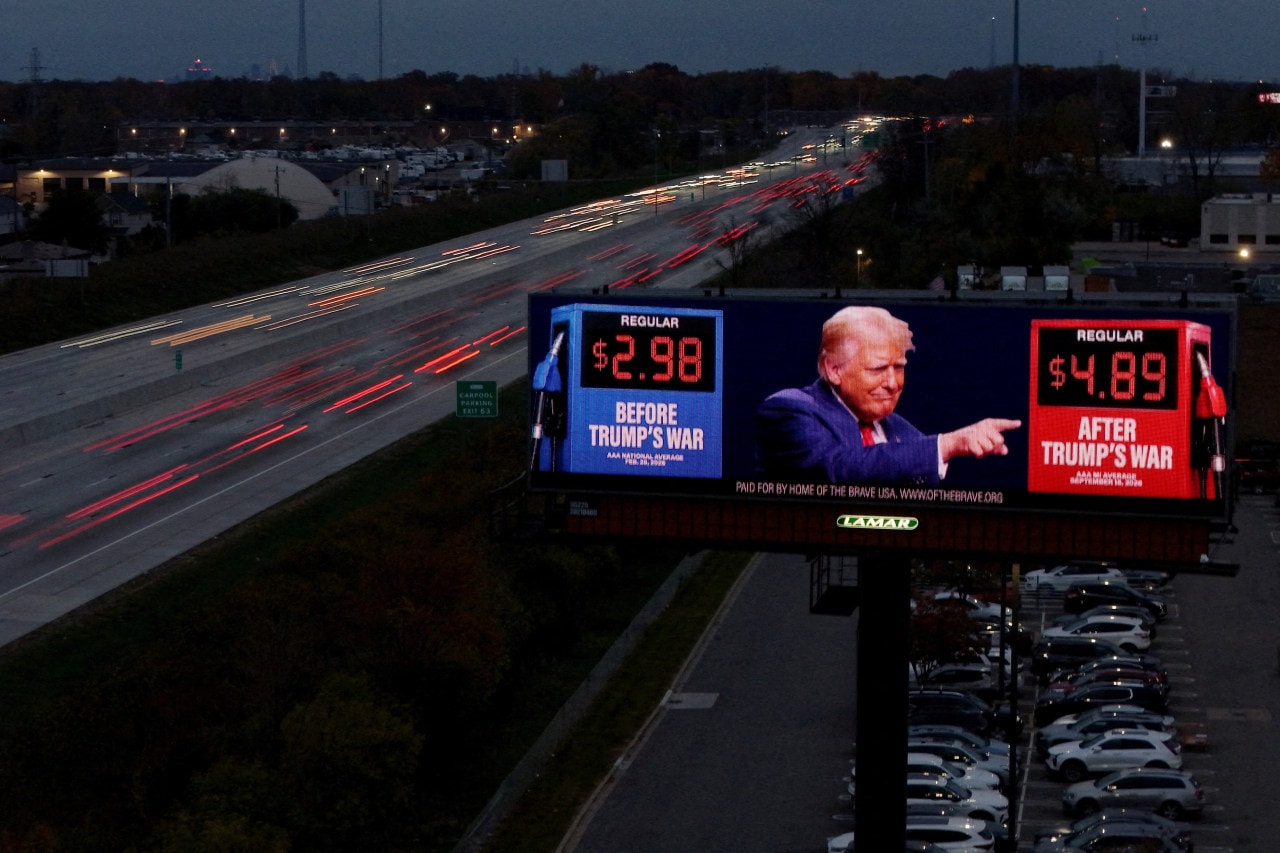
The new majority may struggle to stop the war in Iran, which has driven up energy prices in the months since President Trump’s decision to attack. Gasoline prices, largely set by global energy markets, could remain high even if the war ends.
In the Senate, Democrats are teeing up votes to repeal Trump’s tariffs on Canada, part of his global trade war that has contributed to rising prices. Yet they acknowledge that stricter limits to presidential tariff authority—which Trump has taken to its limits worldwide—could be vetoed and would likely have to wait for another administration.
Satisfying voter wishes also could have unintended consequences. Curbing data centers and slowing AI, for instance, might dent the U.S. economy, harming many of the same voters who want to rein them in. The Nasdaq plunged on Thursday, driven by investor fears that the new Democratic-controlled Congress will crush the AI boom that has powered the markets.
One of the first goals for House Democrats is reversing Trump’s cuts to Medicaid and Affordable Care Act subsidies, which were part of last year’s One Big Beautiful Bill, said Rep. Debbie Dingell (D., Mich.). She is huddling with fellow lawmakers about ranking their legislative priorities. “We’re going to have a 100-hour agenda, and a 100-day agenda” after Democrats take control of Congress on Jan. 3, Dingell said in an interview.
Expanding benefits, while providing immediate relief to struggling households, could goose inflation in the longer term, as well as add to the deficit if not offset with higher taxes.
The U.S. economy’s overall strength has failed to change the glum mood of Americans who are sharing little in its growth. A larger share of America’s growing national income has gone to investors, not to employees. The Labor Department reported that the proportion of economic output going to workers in salary and benefits is at its smallest share in data that go back 80 years.
Borrowing costs are high and, with mortgage rates around 7%, many would-be home buyers are locked out of a prized piece of the American dream. Those rates are heavily influenced by moves from the Federal Reserve, which raises rates to tamp down inflation or lowers them to boost employment. Right now, inflation is the problem, not unemployment, and investors expect rates to move higher.
Over the past three months, the U.S. has added an average of 137,000 jobs a month, and unemployment has remained low. Yet, hiring has cooled compared with past years, and millions of Americans can’t find full-time employment in their fields.

Green, the Ohio voter, was laid off from his $89,000-a-year job as a software engineer at a bank seven months ago. After sending out 500 résumés, he has been invited to only a dozen interviews—a common complaint among job seekers. He put his home-buying plans on hold and, without healthcare coverage, pays cash for his medications.
“The economy doesn’t seem great, at least from my perspective,” said Green, a Democrat.
‘Everything went up’
Democratic state lawmakers and elected officials around the U.S. might have more leeway than their congressional counterparts to set new policies on housing, wages, taxes and data-center development. Democrats won control of the governor’s seat and both houses of the state legislature in at least six states, including Michigan, Arizona and Nevada.
Newly elected Democratic governors Gina Hinojosa in Texas, Acton in Ohio, and Keisha Lance Bottoms in Georgia all campaigned on restricting data centers.
In Michigan, Jocelyn Benson successfully ran for governor on promises to lower costs, raise wages and end corruption. Benson plans to pass a $5,000 tax credit for caregivers, expand medical debt relief and establish a prescription-drug affordability board with the authority to approve price increases. Benson also wants to guarantee teachers a minimum starting salary of $60,000 a year, she said.
Simple math explains why affordability became a driving force in the midterm election. Inflation was 3.7% for the 12 months through September, lifted by surging gasoline prices from the Iran war, tariffs and price spikes tied to the AI boom, according to the Labor Department. Through October, average earnings rose 3.1%.
“For politicians, if you can make real wages rise consistently, that’s your path to victory and success,” said Don Schneider, a former economic adviser to congressional Republicans now at investment bank Piper Sandler. Relative to incomes, he said, prices have been rising “too fast for things that are really important to voters, like groceries and going out to dinner.”

There are two paths to help workers keep up with rising prices. One that Democrats have discussed is through higher minimum wages or making it easier for workers to form unions and gain more bargaining power.
The other path is lowering inflation so that price increases steal less of household paychecks. Beyond Democrats’ efforts to repeal tariffs and end the war in Iran, some economists argue for shrinking the federal budget deficit to lower inflation.
In Delaware County, Ohio, two friends, Kim Bell and Tiffany Weiser, said they backed Democrats partly in hopes they would end tariffs and help bring down the cost of groceries and other goods. Weiser, 51, said she gave up on renovating her front porch this summer because “the cost of wood and everything went up so much just from last summer.”
Democrats’ leverage to pass legislation is now increased because Republican survivors of the midterm rout will likely be more open to working with the majority, said Jared Bernstein, who was a top economic adviser to former President Joe Biden.
“I think a potentially impactful outcome of this election is the recognition by Republicans that tying your future to Trump is a losing strategy,” Bernstein said. “If that’s the case, I could perhaps see Republicans joining with Democrats on affordability issues.”

Michael Faulkender, who served as deputy Treasury secretary in the Trump administration last year, said that legislation now moving through Congress to streamline the permitting process for energy projects and other infrastructure shows the two parties can find some common ground on economic measures. The latest version of the bill, which could ease energy prices by boosting supply, represents a deal between Senate Republicans and Democrats.
“If you look at who negotiated the permitting reform, there’s quite a bit of ideological breadth,” Faulkender said. “It shows we can come to a compromise.”
High stakes
Even with a strong mandate, Democrats in Congress will have limited power to quickly make America more affordable.
The most powerful tool for fighting inflation belongs to Fed policymakers, who raised their benchmark interest rate by a quarter percentage point in September, pushing up borrowing costs. Many investors expect another increase next month, although they have recently pared back their bets on how high the Fed might bring rates next year.
David Conklin, a 61-year-old in Delaware County, Ohio, was a Democrat for many years but voted for an independent candidate during the 2024 presidential election because he didn’t like Trump or former Vice President Kamala Harris.

In the midterm election, he swung back to the Democrats to vote for Brown and Acton. He said he was motivated partly by Brown’s pledge to curb data-center construction. He also wants Democrats to end the war in Iran, but he isn’t sure they can.
Democrats will control both chambers next year, but Trump can veto legislation. Most bills require 60 votes to overcome a Senate filibuster, a tactic used to stall legislation. Democrats have so far won 54 Senate seats, and votes are still being tabulated for two others.
“I think it’s going to be really tough to move the needle,” said Sarah Bianchi, a strategist at Evercore ISI who held senior economic roles in the Obama and Biden administrations. “They don’t have 60 votes, and they have the president, who’s not going to sign everything. Even if those weren’t constraints, making things more affordable is actually really hard.”
Matt Molyneux, a 47-year-old handyman for commercial properties in the Davenport, Iowa, area, didn’t like cuts that Republicans made to the social safety net. Molyneux’s finances are in good shape now, he said. In the past, he said, he received food stamps and understands how important they are. That is what prompted him to vote after sitting out elections since 2020.
“I was one of those people, at one point in time, and I needed that help,” he said. “I want to make sure that keeps going.”
Christina Bohannan, one of the Democrats Molyneux voted for, said in an interview that reversing those cuts should be a priority for the new Congress. Voters shared their cost-of-living worries during her House campaign, she said.
“The Medicaid cuts are going to have potentially catastrophic effects on our hospitals here in Iowa,” said Bohannan, who expects some Republican lawmakers to support restoring the funds.
Some newly elected Democrats know firsthand how quickly they can lose their posts if they don’t deliver on their promises.
In 2022, Republican Jen Kiggans told voters in southeastern Virginia that she had a plan to fight inflation and lower the cost of living. They voted her into office that year and fired two-term Rep. Elaine Luria, a Democrat. On Tuesday, voters gave Luria her old job back.
That roller-coaster ride through four congressional campaigns has sharpened Luria’s understanding of the stakes, especially when it comes to pocketbook issues.
“Republicans broke their promises,” Luria said after her win last week. “I took back my seat from someone who went to Congress promising a lot of things, but who backed policies that made people’s lives a lot harder.”
Green, the Ohio voter, said he was counting on promises by Abdul El-Sayed, the newly elected Democratic senator from Michigan, to back Medicare for All, a single-payer national health insurance system. Republicans are dead-set against it.
“There has to be evidence that changes are being made or attempts at changes are being made,” Green said. Otherwise, he added, “I’m afraid the electorate will swing right back.”
Write to Matt Grossman at matt.grossman@wsj.com, Jeanne Whalen at Jeanne.Whalen@wsj.com and Gavin Bade at gavin.bade@wsj.com