“You go from having no time for anything or anyone to nobody phoning you. When you leave a team, it’s usually because the results aren’t good. You’ve been through a period of a lot of pressure, worry and stress — you go from there to being at home. You also go from sleeping two to three hours to sleeping for seven or eight.”
Javi Gracia, speaking to The Athletic from Malaga, the Spanish city where he lives, is discussing the peculiarity of being out of a job.
The 56-year-old Spaniard, who has managed 12 senior teams in five countries, has been out of work since resigning as Watford head coach on February 1 this year. Michael Carrick is now in a similar position after parting ways with Manchester United on Thursday.
Matt Bloomfield is another manager/head coach without a job, following his exit from Oxford United on June 20. For Bloomfield, this summer was the first time he was not involved in a pre-season, either as a player or coach, since 2000 — the year the now 42-year-old left school.
“You’re hard-wired to being so busy, so occupied and so driven, it’s actually quite hard to switch into ‘Laid-back dad’ mode,” he tells The Athletic from his Suffolk home. “I’m not sure there are many jobs where you can have two such contrasting ways of living when you’re either in work, or out of work.”
Why coaches getting fired is so common in soccer
Hannah Vanbiber and Rachael Tinde
Karl Robinson, who has taken charge of more than 800 matches, was another manager out of work at the start of the season. He was sacked by Salford City in early June, nine days after they lost to Notts County in the League Two play-off final at Wembley.
“When I’m in work, before it’s probably even got to 9am, I’ve answered a hundred questions,” he told The Athletic at an Oxfordshire pub in August. “The only questions I’ve got at the moment are, ‘What gym gear am I going to wear?’ and ‘What am I going to do in the gym?’ You’re looking for a problem to solve.”
Five months after his Salford dismissal, Robinson returned to the dugout on November 5, replacing Andy Woodman as Bromley manager. With Bromley bottom of League One, Robinson faces a huge challenge to keep them in the division. “It’s going to be an incredible task, but we all believe we can do it,” Robinson tells The Athletic on a wet November morning, shortly after joining the club.
Gracia and Bloomfield are still waiting for a route back in.
The Athletic spent the early months of the 2026-27 season speaking with Gracia, Bloomfield and Robinson to understand what life looks like for managers who are out of work and how they navigate their way back into employment.
Robinson and Bloomfield were frustrated at how things ended in their previous jobs. Both felt they deserved more time.
Robinson had joined Salford in early January 2024, with the club hovering above the League Two relegation zone. In what proved his third and final season in charge, they finished fourth and reached the fourth round of the FA Cup. However, having made the play-off final in May, they turned in a woeful display, losing 3-0. “Everything on that day was wrong,” Robinson says, shaking his head. Robinson, who was already busy preparing for the 2026-27 campaign, was sacked just over a week later.
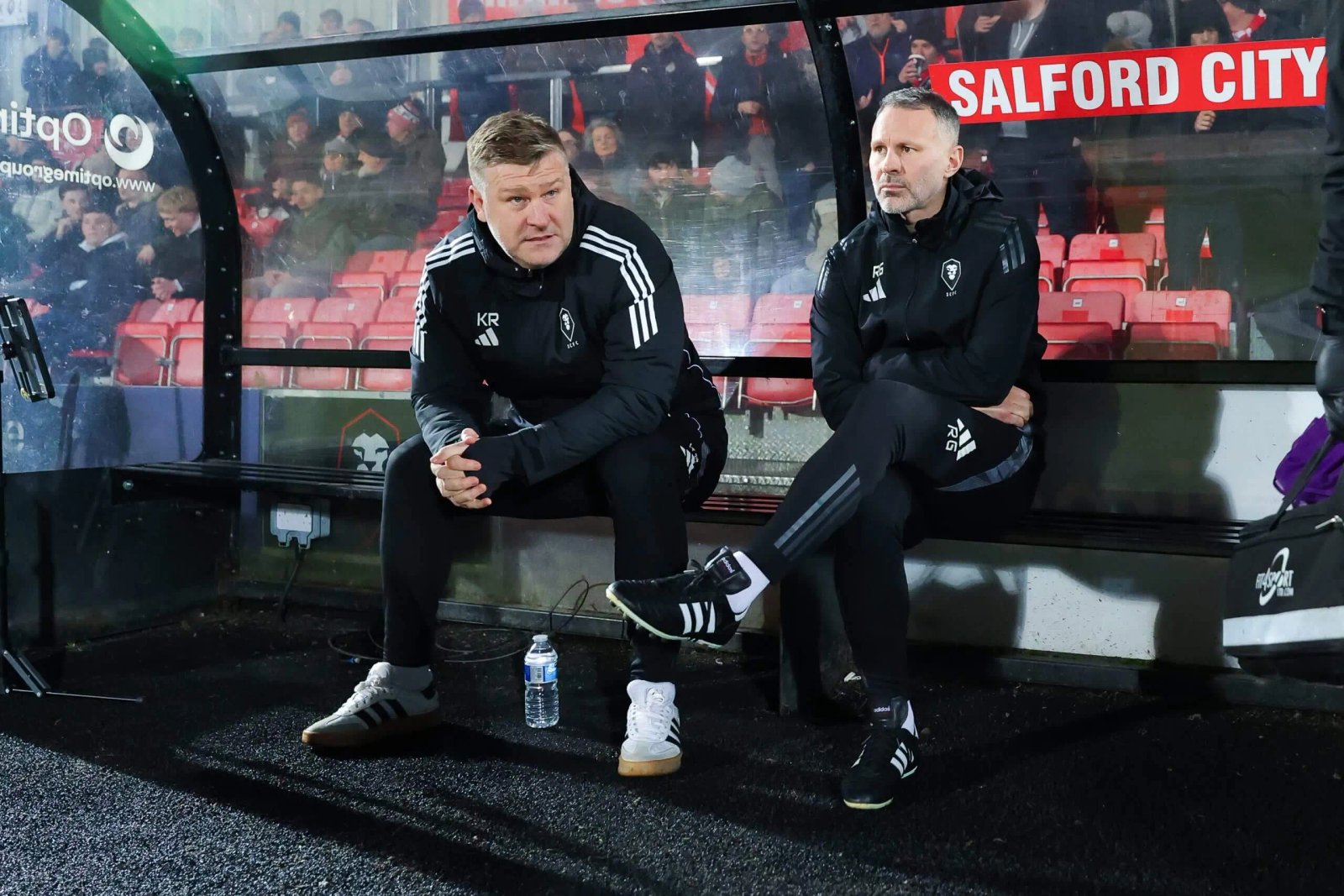
Karl Robinson during his time in charge of Salford City, alongside coach Ryan Giggs (James Gill – Danehouse/Getty Images)
“I was so angry, I hated football,” the 46-year-old says. “I said to Helen (his partner), ‘Listen, I’m really struggling with this’. That’s not like me.”
Similarly to Robinson, Bloomfield, hired by a struggling Oxford midway through last season, had also been gearing up for the new campaign when he learned he had lost his job. He had also started to look at potential places to live in the city with his family.
He was handed the news seven weeks after Oxford’s final game on May 2, a campaign in which they were relegated from the Championship, despite finishing 14th out of 24 in a table of results across Bloomfield’s 21 games in charge. The 42-year-old was replaced three days later with former Arsenal and Wales midfielder Aaron Ramsey.
“I’d had my time off (after the season) and I was ready to work,” he says. “You get yourself back into battle mode. You’re so driven to be successful that when that’s suddenly taken away from you, you are mourning the loss of that opportunity as well.”
Gracia’s situation was different. He resigned after just three months back at Watford last season, the club he previously managed in the Premier League and led to the FA Cup final in 2019.
“It was going back to a place where I felt loved,” he says. “But there are always difficulties at Watford for a manager. In this case, after spending a few months there and seeing that what we’d discussed before I went (back) wasn’t happening — namely strengthening the squad in January — and the squad was actually getting weaker in certain positions, I didn’t want to waste my time.
“I didn’t want anyone to feel misled, so I spoke to the players and decided to go home.”
There are some obvious benefits to being out of work. It gives managers a chance to rest, recharge, exercise and spend time with their families — something often sacrificed when they’re leading a team.
Bloomfield has been exercising regularly and enjoyed the novelty of playing a few games of cricket with his father over the summer, something he hadn’t done for 25 years.

Bloomfield is at home, waiting for his next opportunity in management (Matt Bloomfield)
He has also welcomed the chance to devote more energy to his daughters, aged 11 and nine. “The thing when you’re in a job is you might be here in body, but your mind is very often not,” he says. “So to be here and be present and to give them some time back, I’ve been able to eradicate a little bit of the dad guilt.”
However, it seems clear that all unemployed managers are restless.
As football obsessives, they spend much of their time poring over games, trying to make sure they feel sharp and ready when an opportunity comes their way.
“I wake up knowing which matches I’m going to watch that day, and there are a lot of them,” Gracia explains. “I’m constantly on my computer, watching different matches on TV — different leagues, teams that might interest me, different playing systems and tactical approaches from different leagues.”
He also keeps in regular contact with the assistants who follow him to every job he takes. These include assistant coach Zigor Aranalde, fitness coach Juan Solla and goalkeeping coach Inigo Arteaga.
Bloomfield is also a planner and has a detailed schedule in his diary for upcoming matches he wants to attend. But he is well aware that an out-of-work manager’s presence in the stands can raise eyebrows and bring speculation about their intentions.
“I would hate to think anyone would assume I was going to a game for anything untoward,” he explains. “So even if I don’t know the manager very well, I’d always try and make contact to say, ‘I’m going to be at the game’.”

Bloomfield gets to lots of matches while out of work (Kevin Hodgson/MI News/NurPhoto via Getty Images)
Similarly, when choosing which fixtures to go to, Robinson says he deliberately picks ones involving managers who are not under any pressure.
Bloomfield, who did a degree in journalism when he was 24, consumes football news and uses Wyscout, a database for football video and analysis, every day. “One of my strengths over the years is I am a bit of a football nut — I love the game,” he says.
During another chat over lunch at an Italian restaurant in London, Bloomfield says he wants to be his authentic self in whatever job comes next.
When out of work, managers need to make themselves visible. This often involves media work, with Bloomfield appearing as a pundit on Sky Sports, while Robinson was a frequent guest on his former boss Sam Allardyce’s No Tippy Tappy Football podcast.
Gracia explains how he often hears about potential opportunities through his agent, although they can also crop up from conversations with players he has coached or former team-mates who are now sporting directors. If that happens, Gracia says he then takes on a more active role in analysing and assessing that specific situation, along with his coaching team.
“But often what happens is I get that information, I spend a week concentrating on that team and, within a week, they start winning matches non-stop,” he says. “That’s happened to me many times.”
When weighing up a possible position, Gracia says it’s important to understand why a club would be interested in him and what they would expect. “I don’t want to sign a contract just for the sake of signing one,” he says.
Robinson feels it’s important to behave respectfully. “Sadly, an awful lot of people are manoeuvring while people are in jobs,” he explains. “But that’s not going to be how I do it. I’d like to think when a manager goes, there’s a process in place to recruit a manager properly. And you have to wait for that opportunity.”
Managers can register their interest in a vacancy, though many are headhunted directly by clubs. They can then be called up for an interview.
Gracia, who has managed in his homeland, Greece, Russia, England and Qatar, explains that this varies by club. It sometimes involves just one conversation, but can also entail two or three separate ones. They are held with senior figures at a club, such as a sporting director, owner or chief executive. With teams in the Middle East, Gracia says he has found himself interviewing with both the sporting director and a sheikh’s right-hand man at the club in question.
In the interview itself, Gracia says it’s important to show adaptability. “Ultimately, you have to work according to the players you have,” he explains.
Robinson agrees. “I’ve heard managers go in and say I’m going to play this style or that style,” he says. “Two games in, they change the style, change the philosophy. They’ve sold a dream.”

Gracia on the sidelines for Rubin Kazan during a Russian Premier League game in 2016 (Epsilon/Getty Images)
When Bromley came up, Robinson received a phone call from the club asking if he would like to sit down and have a chat with them. He met one senior club figure before later meeting with chairman and owner Robin Stanton-Gleaves, who gave him a tour of their Hayes Lane stadium.
“I was really impressed by what he’s built — it’s an incredible story,” Robinson says. “They understood where they were at and respected the situation. They were really open and honest conversations.” He says everyone’s ambition at Bromley is to stay in League One.
On finances, Gracia says a manager’s package can vary hugely. When he left Malaga of Spain’s La Liga to join Rubin Kazan in Russia in 2016, he was offered 10 times the money he’d been on and a four-year contract.
“These things happen,” he says. “I’m not going to be a hypocrite and say it isn’t important, as I’ve switched teams because the financial offer was very good, but it’s never been the top priority in my career.”
Once the season starts, jobs start to become available.
Three months into this one, that has meant vacancies at Wycombe Wanderers (Bloomfield’s former club), Preston North End, Peterborough United, Bradford City, Burnley, West Ham United and Sheffield Wednesday in England, as well as clubs such as Fiorentina, Espanyol, Valencia (one of Gracia’s former clubs) and Lyon on the continent.
Robinson was interviewed for the Peterborough role, but the club eventually hired Robbie Savage on October 2. “Robbie’s interview was electric… he’s infectious,” the League One side’s chairman Darragh MacAnthony told the Hard Truth podcast. “I ran towards the fire, I’m all in… I love the cut of his jib.” However, he said Robinson was also very impressive in his interview.
“Every chairman has the right to choose who they want to choose,” Robinson says. “For whatever reason, they felt they wanted to give a manager his first chance in the EFL (Savage had previously only managed at non-League level with Macclesfield and Forest Green Rovers). I’ve had that. I’m sure when I got my first job there would have been people with way more experience than me.”
As well as his Peterborough interview, Robinson held discussions about the possibility of managing in Belgium and the United States, but turned them down. “I have got this burning desire to be the youngest in world football to 1,000 games,” he explains, eager to achieve the milestone in the United Kingdom. Bromley’s location, in south east London, was another deciding factor.
Bloomfield turned down the chance to interview for two jobs last month because of family commitments, but is feeling ready again.
Gracia had a meeting with Diego Lopez, Burnley’s new sporting director, but did not progress to the final three candidates, as the gig eventually went to Fabio Celestini. He also turned down offers from two clubs in Spain’s second division, following three phone calls with each club.
Robinson is the first of the three to get back into the game, being unveiled as Bromley’s new manager just over a week ago (so far, they have played two and lost two under him in the FA Cup and Jersey Mike’s Trophy). “The way we all are doing this job, after you do it for so long, it becomes your life,” he says. “I have done so much media work, that’s been great, but there’s nothing like the build-up to a game, that feeling of competing and trying to improve people.”
Gracia and Bloomfield, however, are still holding out for the right opportunity.
“I miss working, I miss being out on the training ground with players, I miss all of that,” Bloomfield says. “I love what I do. I am really driven to be successful. So when you don’t have that to get up and go and do, you’re missing something out of your life.”