
Today’s ESG Updates
- Trump-Putin Deal Unites Europe and UK: Officials across the UK and the EU have reaffirmed their commitments to Ukraine amid Trump’s recent deal with Russia.
- Finance Earth and FSD Africa Launch First-Ever Africa Nature Impact Fund: The fund aims to raise $100 million to finance early-stage nature and nature-based carbon projects.
- French Energy CEO Warns Against Renewable Withdrawal: Engie CEO argues that withdrawing from clean energy projects in France will damage investor confidence.
- EPA Plans to Reallocate Biofuels: After waiving renewable fuel volume obligations in August, the agency hopes to appeal to farm groups and biofuel producers that suffered from loss of demand.
Europe unites under solidarity with Ukraine as Trump purchases Russian oil
On Friday, Trump made an agreement to purchase diesel from Russia. Officials across the European Union and the UK are cautiously commenting on the deal. While they are avoiding directly criticizing the United States, they are emphasizing their commitment to stand with Ukraine. A spokesperson for German chancellor Friedrich Merz said that Germany was “standing by the sanctions decisions against Russia and is working together with its European partners on further sanctions,” while Ukraine’s President Volodymyr Zelensky called the deal a “gift” to Putin.
Europe has been transitioning from its heavy dependence on Russian oil since the war began. Currently, the EU imports an average of €47 million in fossil fuels per day, a stark difference from the €800 million spent in 2022. Over the past four years, the entire EU has imported around €263 billion worth of energy from Russia. Trump called out this fact on Truth Social, stating: “The European Union paid Russia 250 Billion Dollars for Energy, and the Fake News Media doesn’t want to get near that story. I made the right choice for the American People — ALWAYS, AMERICA FIRST! President DONALD J. TRUMP.”
Experts say that the deal will funnel around $4 billion into Russia’s economy.
Klimado – Navigating climate complexity just got easier. Klimado offers a user-friendly platform for tracking local and global environmental shifts, making it an essential tool for climate-aware individuals and organizations.
Finance Earth and FSD Africa announce $100 million Africa Nature Impact Fund
At the Carbon Markets Africa Summit in Kigali, Rwanda, Financial Sector Deepening Africa (FSD Africa) and Finance Earth announced an Africa Nature Impact Fund. As a first-of-its-kind initiative, the financing platform aims to raise $100 million to fund early-stage nature and nature-based carbon projects.
James Mansfield, Managing Director of Finance Earth, said, “Africa holds a quarter of the planet’s biodiversity, yet nature–based projects across the continent face major challenges in accessing the patient, fairly structured capital they need to succeed. Africa Nature is designed to change this by financing projects equitably and building local investment and governance structures…”
The fund hopes to protect and regenerate 4.5 million hectares of land across Africa and aims to capture or avoid 100 million tonnes of carbon. It also builds on FSD Africa’s Carbon Accelerator Programme for the Environment (CAPE), which has already assessed over 300 projects.
Related Articles
Here is a list of articles selected by our Editorial Board that have gained significant interest from the public:
Engie CEO warns against clean energy withdrawal
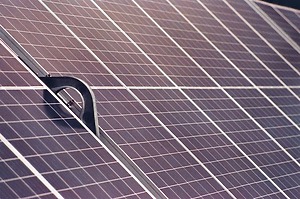
As France begins creating its 2027 budget, Prime Minister Sébastien Lecornu proposed canceling several renewable energy projects, claiming that the subsidies for these projects were financial burdens. Catherine MacGregor, the CEO of Engie, a major energy firm in France, argued the opposite. At a competitiveness meeting held by Politico, MacGregor emphasized the importance of investor trust in a project and how withdrawing from projects could damage the future of investments in France.
As Europe has been at the forefront of decarbonization and green energy, investors can typically make confident decisions when it comes to European projects. “Europe has one advantage: It moves slowly, and that offers a certain level of stability which is very interesting for investors,” she said. “Renewable projects, when we do them well, in an organized manner and at scale … we are able to be competitive.” Choosing to pull out of these projects could weaken investor confidence in the bloc and have lasting economic impacts.
EPA plans to reallocate biofuels
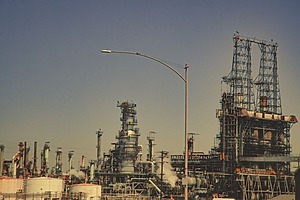
In August, the United States Environmental Protection Agency (EPA) chose to waive Renewable Fuel Standard obligations for 29 small refineries in the U.S. These waivers totaled 1.76 billion renewable identification numbers (RINs) for 2025 and were the largest ever issued. The decision angered farm groups and biofuel producers who feared a lack of demand.
On Tuesday, the EPA proposed that larger refiners incorporate more biofuels into their outputs for the next two years. The proposal aims to offset lost ethanol and farm demand, and EPA officials believe it will likely appeal to farm-state voters as November’s elections are swiftly approaching.
The EPA plans to reallocate 100% of the waived volumes in one of two ways: split them evenly between 2026 and 2027, or assign all to 2027. The agency is accepting public comments before December 4, 2026.
Editor’s Note: The opinions expressed here by the authors are their own, not those of impakter.com — Cover Photo Credit: Benjamin Applebaum via Wikimedia Commons