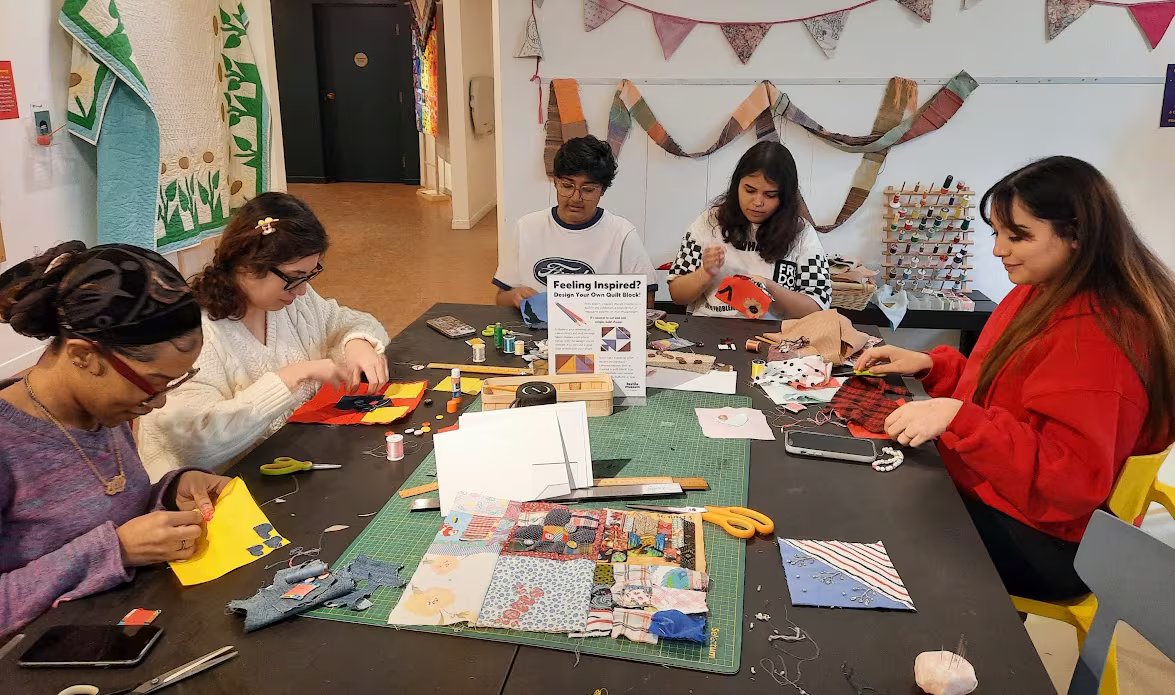
Depending on the corner of the internet you inhabit, you may have noticed that the feeds are full of sewing enthusiasts.
Look up “thrift flips” on Instagram or TikTok and you’ll find creators remaking second-hand garments into new ones, or old quilts into hoodies and track suits.
On Pinterest, searches for “sewing ideas” are up 118 per cent year over year by its Canadian users, while those for “beginner sewing projects” rose 67 per cent, according to data provided to CBC News by the platform.
Sewing hobbyists and the people who teach them say a number of factors — including renewed interest in analog hobbies and growing concern about the impacts of fast fashion — are driving more Canadians to pick up a needle and thread.
“A generation raised on fast fashion is rediscovering the value of making and repairing their own clothes,” said Sabine Weber, a professor of fashion at Seneca Polytechnic College in Toronto whose PhD research focused on sustainable fashion.
“And now they have discovered thrifting.”
Referencing data from Trendex North America, a Canadian apparel market intelligence firm, Weber says the clothing resale market was forecast to grow from around $3.8 billion in 2022 to almost $6 billion in 2026.

Students from Seneca Polytechnic on a visit to the Textile Museum of Canada in Toronto. (Submitted by Sabine Weber)
That shift in shopping habits has prompted people to learn how to make small repairs to thrifted finds, and from there to try more ambitious upcycling projects, she says.
“And then you want to really … show your individuality and your self-expression by making your own clothes.”
In Victoria, Erin Kerr says she began in earnest to develop her sewing skills a few years ago. “I had a scrunchie brand called Hair of the Dog that ended up doing pretty well … but I was just kind of sewing rectangles over and over,” Kerr told The Current.
Once she expanded her repertoire, Kerr began to offer sewing lessons to get more out of her studio space and bring in a little extra cash.
“We immediately had an email list of hundreds of people that were interested in learning to sew from us,” she said.
What started as a weekend project has since morphed into the Sewing Club, a specialty shop and school that offers patterns, fabric, tools and a range of sewing workshops.
“There’s definitely a lot of people that want to take their time with sewing and are into the whole kind of slow fashion movement,” said Kerr. Others want to learn to alter clothes that don’t fit well off the rack, or start from scratch and make something new.
Embracing the analog
There’s also the offline nature of the craft, says Weber.
“It’s a very big contrast to all the typing we do and all the machines and phones and iPads and whatever.”

Branislava Pavlovic started sewing in spring 2025 and one of her most prized projects is this jumpsuit made of vintage Toronto Blue Jays bedsheets, which she wears to games. (Submitted by Branislava Pavlovic)
As Branislava Pavlovic points out, “it’s literally impossible to be on your phone and sew at the same time.”
She took up sewing in the spring of 2025 with beginner classes at the Neon Needle in Toronto and now works there as studio manager and instructor.
“We find that there’s a lot of people who are in tech jobs, engineers and administrators, that just want to come and just do nothing like what they do all day, but actually do something for themselves and be creative.”

Candice Alvarez, who sews and designs patterns from her home studio in Burlington, Ont., says she thinks the increased interest coincides with a shift in people’s understanding of the impacts of fast fashion. (Amanda Grant/CBC)
Ishmam Sarker says he was inspired by some of the sewing content he was seeing on Instagram and TikTok.
“I’ve always been into fashion … And then I guess the algorithm worked in my favour. It slowly started to push some sewing-specific content on it,” Sarker said.
He followed a tutorial on how to make a tote bag and took on more ambitious projects from there.
“I started just getting patterns from Fabricland and a bunch of other places online as well,” he told The Current at a fabric swap in Toronto.
YouTube, he said, “helps a lot.”
Candice Alvarez says she thinks social media has pushed hobbies like this to the forefront.
“And I think that’s incredible because honestly, I had no idea that people were sewing their own clothes before I started,” she said.
Alvarez, who now sews and designs patterns from her home studio in Burlington, Ont., says she also thinks the increased interest coincides with a shift in the way people look at fashion.
“Like fast fashion — for a while, people loved it,” she said. “You could buy a T-shirt for $10 and it was amazing.”
Whereas “people now, their eyes are opened to the fashion industry and how damaging it can be to the environment, and the labour [conditions] and like all of it.”
Getting started
Those who are thinking of taking up sewing can check out an endless supply of tutorials online.
But brick-and-mortar studios where people can take in-person classes seem to be increasing in number.

The Neon Needle in Toronto is a sewing studio that offers a range of sewing classes and workshops. (Submitted by The Neon Needle)
For example, in Toronto, the Neon Needle transitioned fully from tailor shop to sewing-lesson studio in February 2024. Downtown Sewing opened in April 2025 and SewBar, a combined sewing studio and coffee shop is set to open soon.
Hey Soft Spot opened in Vancouver in September, Calgary’s Sew Happy in August and Winnipeg’s Lilax Studio in April.
Back in Victoria, at the Sewing Club, Kerr recommends keeping expectations modest at the start.
“I would say don’t get too emotionally attached to your first project because it’s probably going to look bad,” she said. “So don’t focus too much on the outcome. It’s more the process and building your skills.”