An interview with Ria Lu and an analysis on the perception of video games and young gamers in the Philippines.
MANILA, Philippines – There’s been so much attention on video games and heat on the Philippine video game industry because of the spate of school shootings of the last couple months.
These events have been tragic, and in attempting to find answers, video games have been blamed. I’ve written before that I think we need to expand our thinking around video games and how they intersect with the causes of these terrible events.
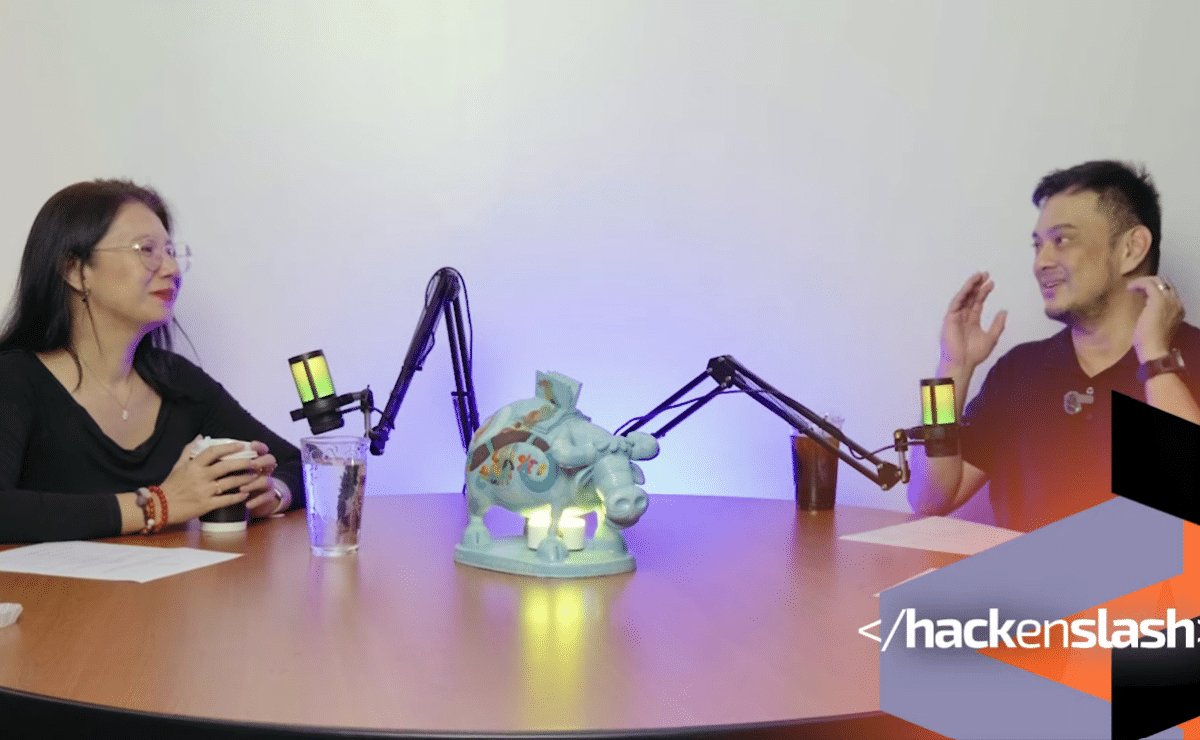
In exploring these ideas further, I got to sit down with Ria Lu, President and CEO of Leveret Group and President of the Game Developers Association of the Philippines.
Her expertise has been sought recently in these discussions and she was the first guest of the recently relaunched Hackenslash podcast.

But what is a gamer, really?
We started off the conversation with questioning what our definition of a gamer is in 2026.
Recent events portray what people might’ve imagined gamers to be twenty or even thirty years ago: nerds locked away in their rooms, introverted, lacking in social skills.
Basically all the cliches that people might have had.
But it was clear to both of us that we need to expand how we define gamers.
As Ria said, “I don’t think we can use the old definition of gamer anymore because games have really evolved into something that now has so many demographics. Can we say that Candy Crish gamers are not gamers when they sometimes spend more than some of the other more violent free-to-play games? Can we still say they’re not gamers when they’re significantly supporting the industry?”
I threw in the idea that alongside all the people who are loading up Candy Crush, tower defense, and other puzzle games on mobile, there are so many people who don’t fall under the “gamer” title that play games like Grand Theft Auto games, NBA 2K, and FIFA.
These demographics might not necessarily identify themselves as “gamers” but that’s one of the things worth rethinking.
The image of the outsider nerd as the only kind of gamer no longer holds.
Thus the moral panic around “video games as a radicalizing force” and something that compromises the safety of children betrays a limited imagination of what games and gamers are.
RELATED STORY: SAFE Kids vs. SMART Kids: Is the Philippines ready?
So how do we think about games?
Video games and the act of playing games is a much bigger, broader thing that needs a lot more consideration.
I would even offer up the idea that things like crossword and NYT puzzles qualify.
Whether it’s immersive fantasy worlds, or momentary escapes–my own small pleasure would be word games–so many of us turn to games for a reprieve from the challenges and pressures of the real world.
Ria shared, “Games historically and even now, I think, have always been a retreat for people. We retreat into games when the real world gets to be too much… We need the games so that we can let loose a little bit. At least in this world, I know things are happening for me. At least in this world, I’m a hero. Or even with the Candy Crush stuff, at least in this world, the rules are clear. Unlike in the real world, you don’t know this works. So at the end of the day, whether that’s an RPG, a shooter, or a puzzle game, the reason why we’re there is because we need to breathe from the real world.”
I think one of the old ways that games have been framed negatively was calling them “escapist.”
But I like to think here that games provide retreat, release, and even opportunities for feelings of accomplishment that we might not get in our daily lives.
We can feel a sense of control, or we can get the feeling of exploring.
Of course one of the things to consider is that when people like Ria and I think about games, we remember the old days when we were all mostly in the “real world,” when kids played on the street and games were an option not everyone had.
It was also a time when we didn’t all have super-powerful computers in our pockets, and when people weren’t spending most of their waking lives in front of screens.
That’s one thing to think about.
The intention in going to games is still the same: to have fun, to escape, to have experiences you wouldn’t normally have, to be transported to imaginary worlds.
But it is true that the world around us has changed, and unfortunately that has also shaped the worlds inside of games.
Things have changed
We talked about how sometimes people who felt vulnerable or needed escape went to games.
In the past, games and online communities were a place where people who felt like outsiders could “find their people.”
But now we do have to confront the truth that predators and bad faith actors lie in wait, on platforms like gaming spaces, to take advantage of kids who are vulnerable.
It becomes more difficult for parents to intervene as well.
Ria recalled “in our time” technology was centralized in the home, whether that was a TV in the living room or a shared computer, since at the time not everyone had their own laptop, let alone smartphones in pockets. “Pero now everything is personal. It’s a personal phone, right?”
I noted that the digital space was actually a safe space for people to get away from their parents, to find people they wouldn’t normally get to talk to.
Unfortunately, that need to get away from parental oversight becomes the space where kids can be taken advantage of.
There are much fewer social guardrails in place, because you can form friendships and possibly harmful connections without even ever meeting anyone.
And it can happen while you are physically present around people like your parents.
It’s here that Ria stressed the importance of not forgetting how much of “offline disappears because of the online” and in that sense, how because of the time we spend online, we lose the connections and essential social interactions of the offline world, “face-to-face friendships.”
What we lost
I joked about the Grand EBs of the early to mid-00s.
For the uninitiated, or those too young or not born yet, “eyeballs” were sort of what conventions are today.
Gamers of a certain MMO would go to a venue to meet up, some dressed up in Cosplay, and they would spend actual facetime, eye-balling the people that they had spent countless hours playing with online.
There was a social element, and an excitement to meeting people.
Of course there was some risk, too. Like, what if the people were socially awkward or weird? Or what if you yourself were the weird one? But that’s just part of it. And as Ria observed, meeting up in person, or playing games together helped you develop a sense of how to be around people.
When there’s a face to face and social component, you get to cultivate “timpla.” You can sense and regulate your emotions and reactions, while at the same time you gauge and adapt to the way that other gamers are. You get a sense of when the trash talk is good or going too far. You learn how to put people at ease or help them feel comfortable. When we only stay in our rooms we don’t get a chance to develop these.
And perhaps one of the biggest problems is that gaming and social platforms are incentivized to keep us online, and they will push our behavior that way.
The social isolation then hits the most vulnerable the hardest.
What we actually want
Even as we hit upon these biggest challenges with platforms and violent games, Ria and I wound up talking about what Filipino gamers actually want.
The attention is on the gory and violent, but if you look at what Filipinos are making and buying, it’s totally different.
Ria swings us away from foreign made games and platforms to look at the kind of locally produced work that she champions with GDAP: “There’s a lot of cozies in the Philippine games. (The) Philippines psych, we’re tired. We kind of want to just like relax in the game. You know, feel in the game. And so a lot of our games are actually not violent. The games that are being produced these days are really a reflection of what our society is craving for as well.”
We talked about cozy games, puzzle games, and even Fallen Tear, which though a Metroid-vania is still a far cry from the games that cause moral panics.
It makes sense that local devs would make games that reflect local gamer needs for fun and escape. And it’s something we should be supporting more.
There’s a lot said about the Filipino creativity, but Ria brings up an important point: if we want Filipino devs making games that serve and reflect us, then they need our support.
That could mean us as individuals buying the games, or businesses and government agencies engaging and working with Filipino game devs.
We closed our conversation with this powerful call to action: “ Why don’t we work together and create games that may be non-violent or that teach people how to protect themselves?
Instead of us complaining and looking for blame, you know what? Let’s do something about it. Maybe it’s time for us to really be intentional about creating things that we actually want our young people to play.”
RELATED STORY: Too busy for parental controls? Think again