Ahead of the November 18-19 APEC Summit
U.S. and China struggle to coordinate agenda in advance
Ukraine war and trade tensions also on the agenda
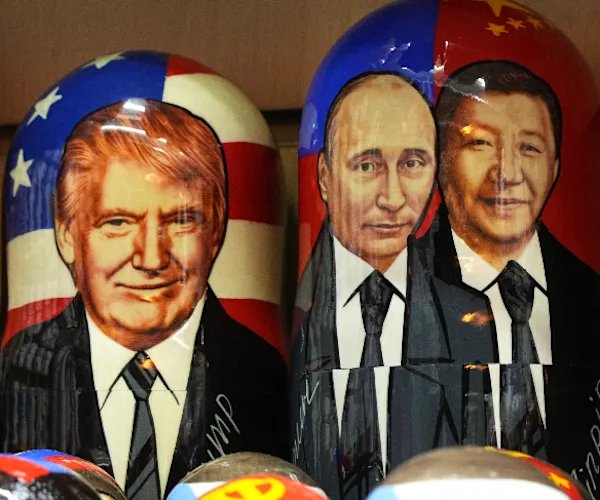
A trilateral summit among the leaders of the United States, China and Russia is expected to be pursued on the sidelines of the Asia-Pacific Economic Cooperation (APEC) summit, which will be held in China on November 18-19. However, the United States and China reportedly remain at odds over the format and agenda. The United States wants to make nuclear arms control a key topic, while China is expected to refuse to take part in negotiations on the issue.

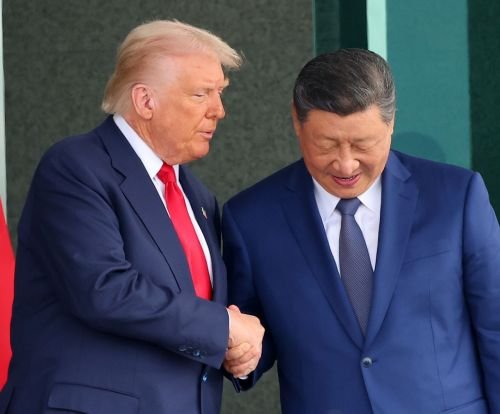
U.S. President Donald Trump and Chinese President Xi Jinping shake hands as they leave the venue after their summit at Naraemaru, the protocol room at Gimhae Air Base in Busan, on October 30, 2025. Yonhap News.
The Wall Street Journal (WSJ) reported on November 9, citing people familiar with the matter, that the United States and China had failed to bridge their differences over the format and agenda for a trilateral meeting between U.S. President Donald Trump, Chinese President Xi Jinping and Russian President Vladimir Putin. The meeting is being pursued on the sidelines of the APEC summit, which will be held in Shenzhen, China, on November 18-19.
The biggest point of contention is nuclear arms control. Trump has argued that a new arms control framework should be established since the New Strategic Arms Reduction Treaty (New START), which limited the nuclear arsenals of the United States and Russia, expired in February. In particular, he has said China should be included in future nuclear arms control negotiations, citing the rapid growth of its nuclear arsenal. On November 8, when asked about the possibility of a trilateral summit between the United States, China and Russia, he said, “I think there will be a meeting with President Putin and President Xi,” adding that “we’ll discuss a lot of issues, including denuclearization.”
For China, however, taking part in trilateral arms control negotiations could risk cementing its disadvantage in nuclear capabilities. The WSJ reported that such a deal would be unacceptable to Xi, who has overseen the largest expansion of China’s nuclear arsenal in its history. A Chinese official told the outlet that the Chinese government would not agree to participate in such negotiations. China is also said to favor a summit format in which leaders’ remarks and the outcome are coordinated in advance, while the United States wants freewheeling, unscripted discussions. China’s opposition to the proposed format is seen as an effort to reduce the political risks Xi would face by adhering to traditional diplomatic protocols.
The Russia-Ukraine war is another major item on the agenda. Foreign media outlets have previously reported that the trilateral summit was being pursued at Putin’s suggestion. The Center for European Policy Analysis (CEPA) and others have noted that Russia wants to discuss terms for ending the war that favor Moscow at a trilateral meeting that excludes Ukraine.
U.S.-China trade tensions are also being cited as a key issue at this year’s APEC summit. The United States and China agreed to extend their trade truce by two months, until January 10, 2027, from its original expiration date of November 10, 2026. However, negotiations on further tariff cuts have yet to conclude, and the United States is pressing China to honor its pledges on rare earth supplies, leaving open the possibility that trade tensions could flare up again.
Hot Picks Today

Meanwhile, allegations of links between NVIDIA CEO Jensen Huang and Chinese intelligence agencies have emerged as a wildcard. The U.S. House Foreign Affairs Committee, Intelligence Committee and Select Committee on China have asked Huang to attend a closed-door joint briefing on November 18. Trump has defended Huang and said he wants him to join his Asia trip, but neither Huang’s participation in the trip nor his attendance at the congressional briefing has been confirmed.
This content was produced with the assistance of AI translation services.
© The Asia Business Daily. All rights reserved. Unauthorized AI training and use prohibited.