Stock Market Outlook Key Takeaways
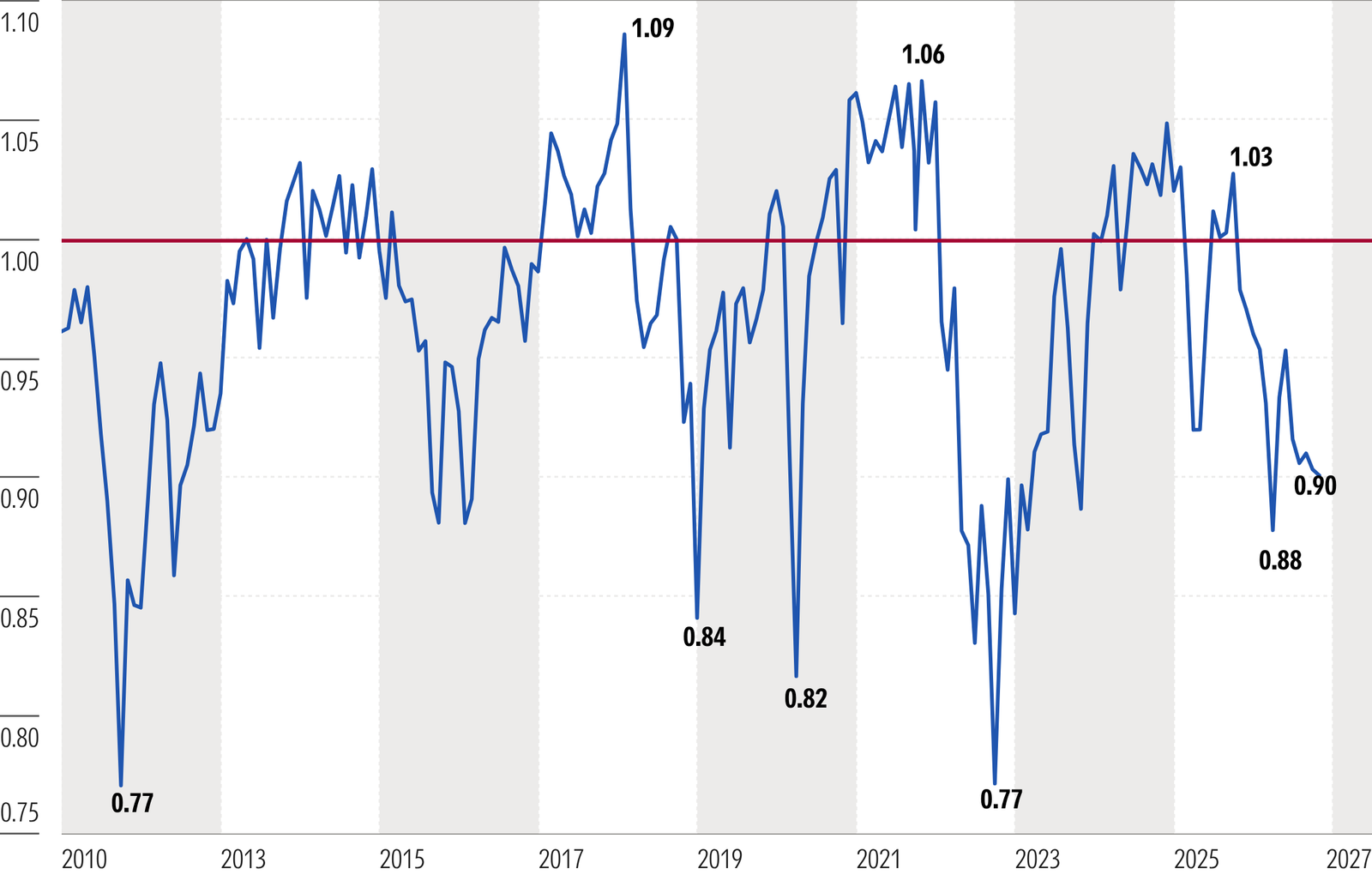
- The US stock market is trading at a 10% discount to a composite of our valuations
- AI enthusiasm is evolving into AI accountability
- Maintain a barbell-shaped portfolio: Overweight value and growth, underweight core
Based on a composite of our intrinsic valuations of the stocks we cover included in the Morningstar US Market Index, as of Oct. 30, 2026, the US equity market was trading at approximately a 10% discount to our fair value estimates.
Positioning for the Remainder of 2026
While the US equity market is attractively valued at a 10% discount to our valuations, we do not think that is enough margin of safety to overweight equities above an individual investor’s long-term asset-allocation targets. Based on the combination of heightened dangers we’ve already written about among global macrodynamics (tightening monetary policy, high inflation, high interest rates, and so on), along with the evolution in investor focus toward returns on spending on artificial intelligence, we expect heightened volatility over the next few months. In our view, the market will need better visibility into 2027 capital expenditure plans and more robust indications that AI will begin to generate faster revenue growth in the near term.
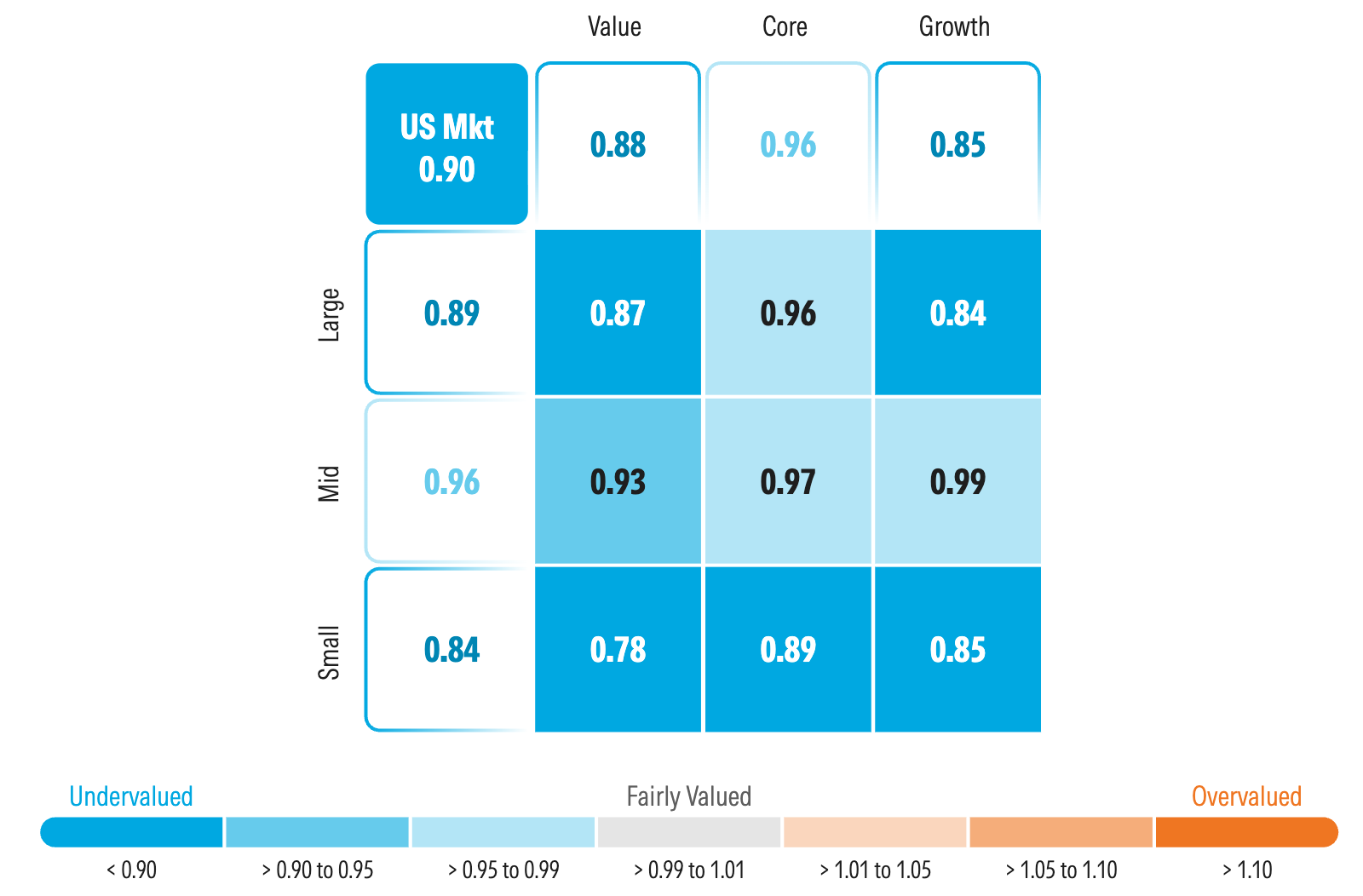
Based on our valuations, we advocate maintaining a barbell-shaped portfolio by overweighting both the value and growth categories and underweighting the core category. By capitalization, we maintain a recommended overweighting in small caps, market weighting in large caps, and underweighting in mid-caps.
Anything but AI Rotation in Full Swing
Over the past few months, the focus on AI and AI-related stocks has evolved away from who can build the most compute capacity the fastest to who shows signs of generating new revenue from AI utilization and how quickly. Following the deluge of capital expenditures over the past three years spent on building out artificial intelligence, investors are increasingly wary that new revenue is not coming quickly enough to be able to generate adequate expected returns on that spending.
The selloff in AI stocks at the end of October started with Meta Platforms META acknowledging that it would need to raise up to $100 billion in new equity capital to fund its planned capital expenditure in 2027. The selloff was then further exacerbated by rare earnings misses by Alphabet GOOGL and Amazon AMZN. Specifically, Alphabet’s search business grew more slowly than expected, and Amazon’s advertising missed consensus.
In the semiconductor space, Intel’s INTL results beat expectations, but the stock fell as its guidance was significantly lower than expected and concerns arose that its CPU business for data centers may not live up to expectations. Among the commodity-oriented technology hardware stocks, Sandisk SNDK also beat consensus, yet the stock fell as it failed to live up to even higher expectations. Investors are increasingly questioning if the earnings growth will last.
Considering Alphabet and Meta constitute 78% of the market capitalization of the Morningstar US Communication Services Index, it is no surprise it was the worst-performing sector in October, dropping 14.72%. The Morningstar US Technology Index was the second worst-performing, falling 6.62%. Lastly, the Morningstar US Industrials Index fell 0.95% as those industrial stocks tied to the AI buildout boom retreated.
As AI fell, the sector rotation into “Anything but AI” was in full force. Our Morningstar US Energy Index rose 14.05%, the Morningstar US Consumer Defensive Index rose 11.55%, the Morningstar US Utilities Index rose 9.87%, and the Morningstar US Healthcare Index increased 8.82%.
Where We See Opportunity by Sector
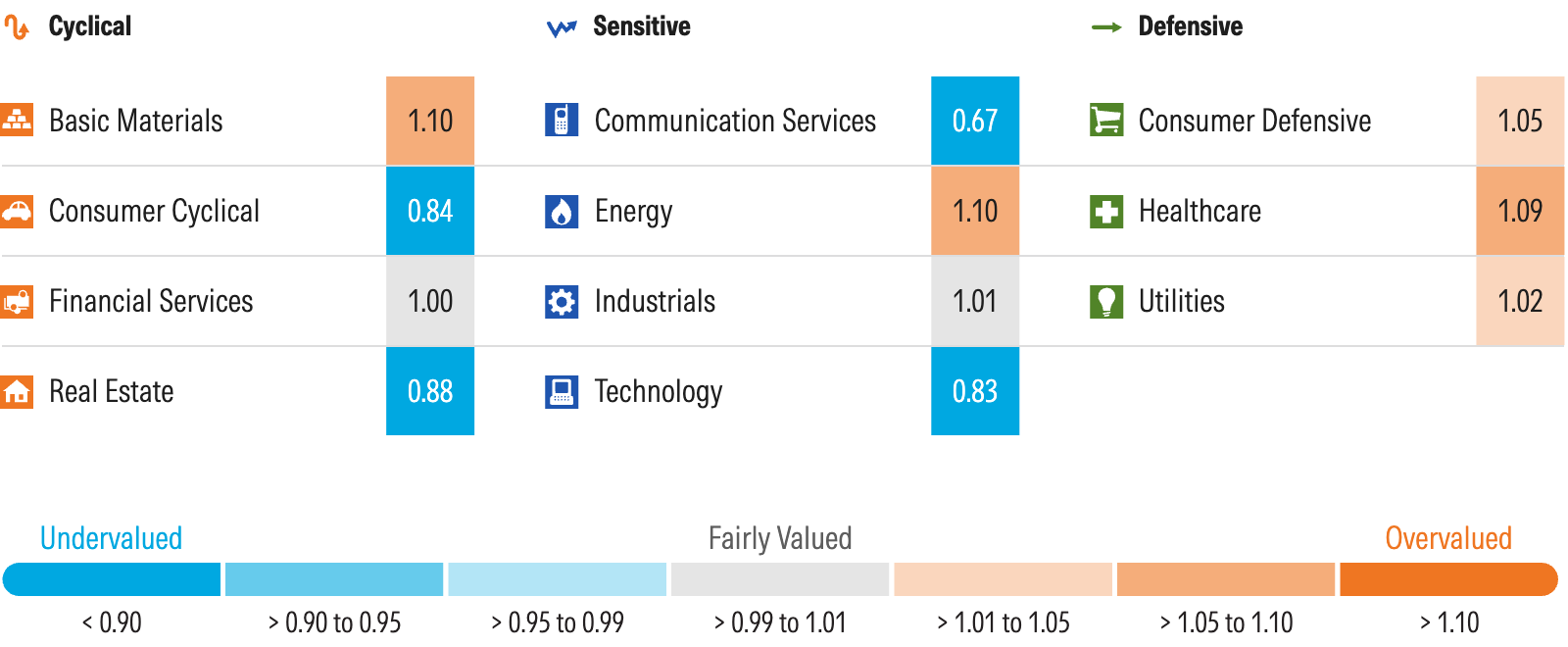
Following the plunge in both Alphabet’s and Meta Platforms’ stock prices, the communications sector is the most undervalued, at a 33% discount to fair value. Not only do we think the market has overreacted to the downside following Alphabet’s earnings report, but our analyst also raised our fair value to $450 from $433.
Technology is the second most undervalued sector, at a 17% discount to fair value. However, as we have noted in the past, the preponderance of undervaluation in the market is concentrated in the Undervalued Seven (Nvidia NVDA, Alphabet, Broadcom AVGO, Microsoft MSFT, Meta, Amazon, Tesla TSLA). Removing Nvidia, Broadcom, and Microsoft from our price/fair value calculation, the technology sector is close to fairly valued.
Consumer cyclical is the third most undervalued, at a 16% discount to fair value. Amazon and Tesla account for about half of the undervaluation.
Real estate is the last remaining sector trading at a significant discount from our intrinsic valuations. We continue to prefer real estate with defensive characteristics and to steer clear of urban office space, which we think may have further downside risk.
The basic materials and energy sectors are tied for most overvalued, at a 10% premium to fair value. The basic materials sector has had a relatively strong run this year as the demand for raw materials, aggregates, and copper used for data construction has driven strong performance. We think the energy sector has traded up too far relative to our longer-term forecasts for oil prices and suspect that the sector is at risk of a quick correction once oil prices begin to subside.
Healthcare is the third most overvalued, as it has been a beneficiary of the Anything but AI rotation. Generally, the only remaining values in the sector are the beleaguered health insurance stocks and several devicemakers whose short-term results have been uninspiring.