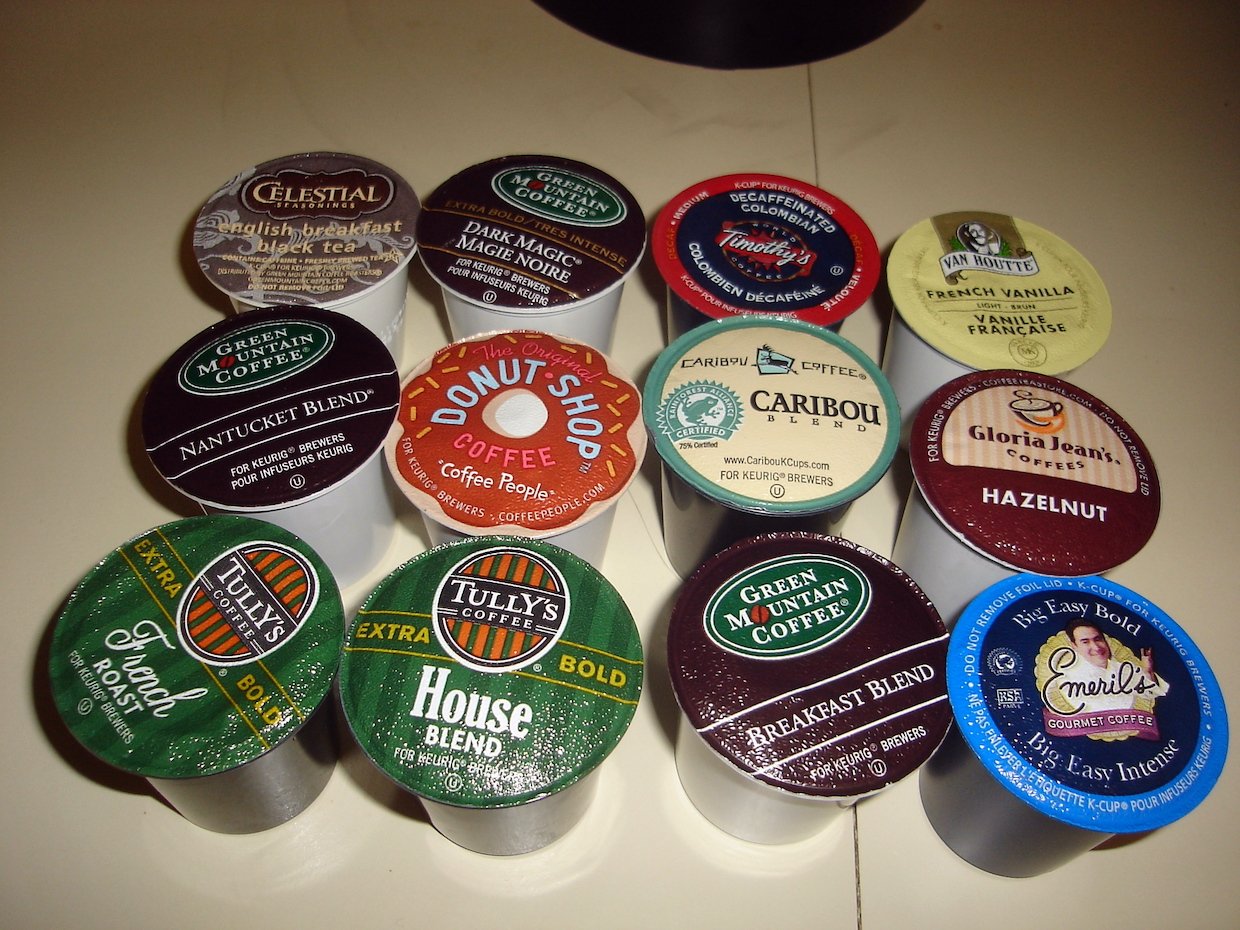
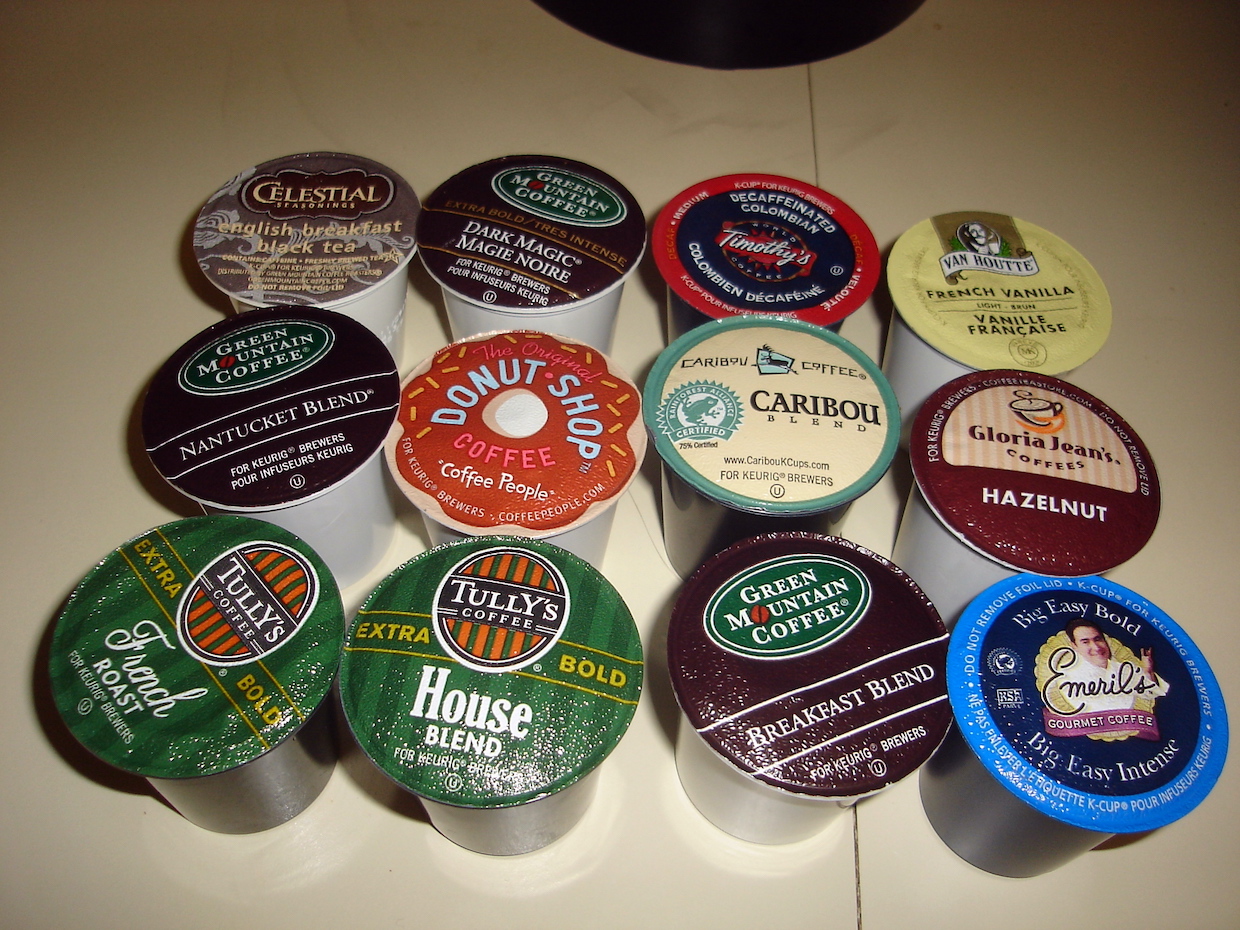
An assortment of Keurig K-Cup pods. 2011 photo: “Keurig Flavors” by Shoshanah, via Wikimedia Commons, licensed under CC BY 2.0.
A federal judge has allowed some major antitrust and false advertising claims against Keurig Green Mountain to proceed toward trial in a 12-year-old dispute over competition in the single-serve coffee market.
In a 139-page opinion issued Sept. 18 and made public Oct. 20, a Southern District of New York judge rejected Keurig‘s request to dismiss several central claims without a trial, while dismissing others.
The plaintiffs include JBR Inc., doing business as Rogers Family Company, the company behind San Francisco Bay Coffee, as well as TreeHouse Foods and distributor McLane Company.
They allege Keurig Green Mountain — now a subsidiary of Keurig Dr Pepper — unlawfully maintained its dominant market position and kept coffee pod prices artificially high after a key K-Cup patent expired in 2012.
Claims Moving Forward
The ruling focuses partly on contracts Keurig entered with major coffee brands including Starbucks, Dunkin’, Peet’s and Caribou Coffee. Some of those agreements restricted partners’ ability to produce competing single-serve products or limited the number of coffee pod varieties they could sell through Keurig.
“Plaintiffs have created at least a genuine issue of material fact concerning whether the agreements with roasters harmed competition by preventing nascent competitors like Starbucks and Dunkin’ from competing with Keurig,” Judge Vernon S. Broderick wrote.
The judge also allowed claims involving Keurig’s agreements with packaging and machinery suppliers that restricted their work for competitors, as well as distributor contracts allegedly limiting sales of independently manufactured pods.
Additionally, the ruling preserves claims that Keurig improperly tied sales of its brewers to purchases of its own or licensed coffee pods through distributor agreements.
Separately, the judge found that certain statements by Keurig suggesting competing pods could impair the performance of its Keurig 2.0 brewers or pose safety risks were “literally false.” Other false advertising claims involving compatibility and warranties also remain.
Claims Dismissed
The judge dismissed other claims involving Keurig’s 2.0 brewer design, certain retail agreements, earlier patent lawsuits and acquisitions of competing roasters.
He also rejected allegations that the major roasters had coordinated with one another as part of an unlawful conspiracy.
Across the case’s more than 2,600 recorded documents over the past 12 years, Keurig has broadly disputed the allegations, maintaining that its business practices promoted competition and provided consumers with numerous choices.
In a statement to FoodBev Media, a Keurig spokesperson said the ruling “validates several important portions of our defense and dismisses many of the plaintiffs’ theories.”
In an Oct. 21 press release, Rogers Family Coffee Co. CEO Lisa Smoot framed the unsealed ruling as a “huge win.”
“This is a huge win for us,” Smoot said. “Our family company has been pursuing justice for over a decade. We remain committed to seeing this through to a just decision.”
The litigation began in 2014 with lawsuits filed in multiple federal courts that were consolidated in New York for pretrial proceedings. Litigation between the two companies dates at least back to 2011, when Keurig sued Rogers, alleging patent infringement.
According to currently available online case documents, no trial date has been set. The court has requested availability for a possible New York trial in the second quarter of 2027, while the Rogers case could return to California for trial.
Comments? Questions? News to share? Contact DCN’s editors here. For all the latest coffee industry news, subscribe to the DCN newsletter.
Nick Brown
Nick Brown is the editor of Daily Coffee News by Roast Magazine.