For all the attention luxury fashion pays to fabrics, workout clothing has remained something of an exception. Expensive leggings and gym shorts are still largely sold on performance, with polyester and elastane blends found at just about every price point. But as consumers become more interested in the materials and manufacturing behind their clothing, a growing number of independent labels are questioning why activewear shouldn’t receive the same attention as the rest of their wardrobes.
According to a 2025 report from Boston Consulting Group, the activewear market is becoming increasingly competitive as different generations reconsider how they shop for athletic clothing. And while established brands continue to introduce new performance technologies and technical fabrics, smaller labels are experimenting with natural fibers, more sophisticated designs and materials that have traditionally been associated with luxury fashion.
A New Class Of Activewear Brands
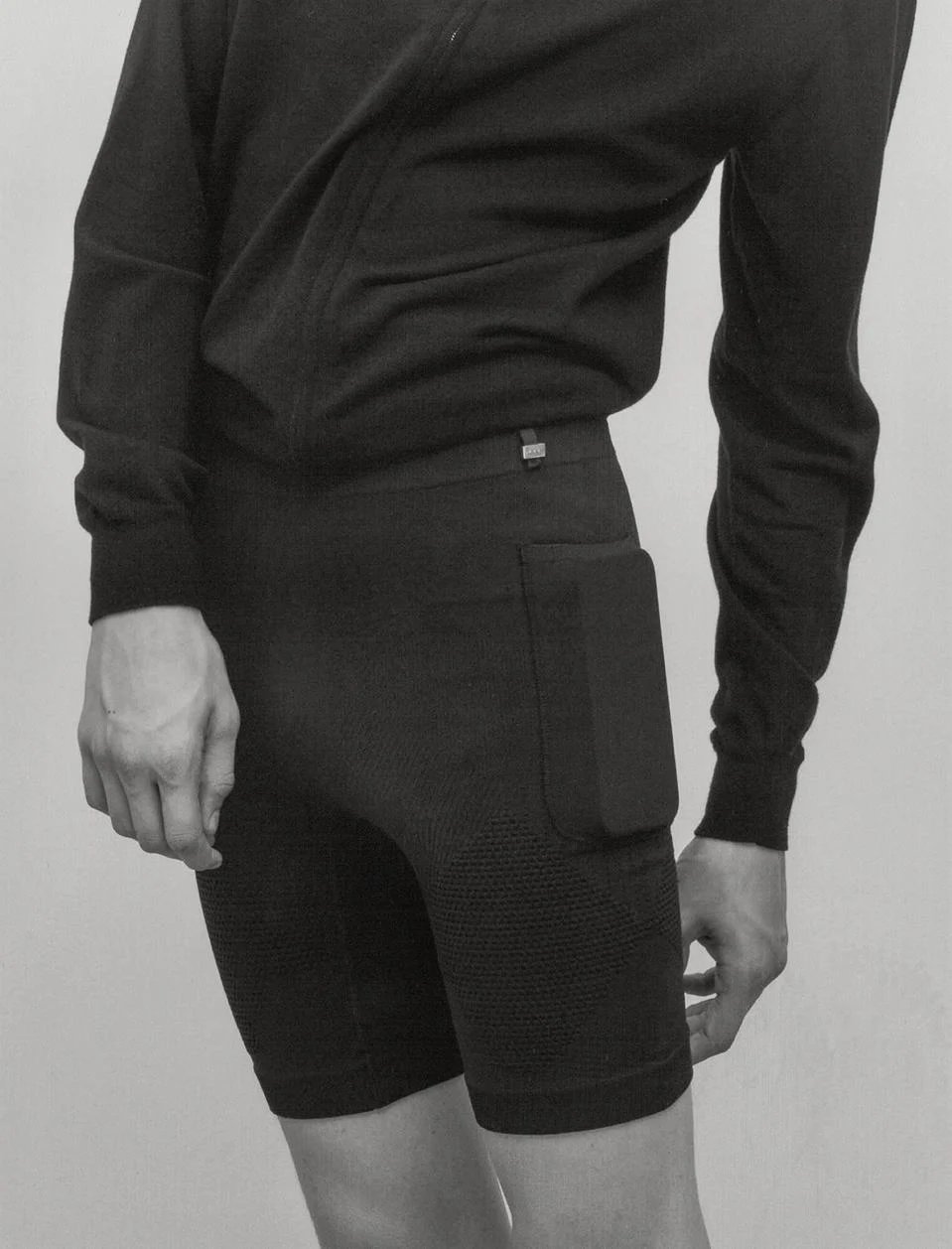
For Copenhagen-based 444, founded by Julius Juul and Davide Maccari, the idea began with a trip to a New York supermarket. The two founders spent half an hour examining food labels, paying close attention to ingredients and sourcing. Shortly afterward, they purchased a pair of workout shorts online without looking at the materials. The experience eventually led to the creation of 444, which launched its first collection in September. Juul, who is also known for his work with fashion label Heliot Emil, and Maccari developed a collection of activewear essentials using primarily natural and bio-based fibers, with production in Italy and Portugal.

Campaign imagery from 444, an independent luxury activewear brand.
“We noticed the shift in ourselves first,” Juul explains. “In the last years people have become a bit fed up with overconsumption, and that naturally translates to activewear too.” The collection, titled Uniform 001, incorporates eucalyptus-derived fibers, merino wool and hemp alongside materials more commonly associated with luxury knitwear, including silk and cashmere. The pieces range from training shirts and shorts to trousers and knitwear intended for recovery and cooler temperatures.
Advertisement
Advertisement
According to Juul, the challenge was finding natural materials capable of meeting the demands of modern athletic clothing. Eucalyptus-derived fibers are paired with wool in the brand’s T-shirts, while hemp and organic cotton provide structure for its shorts and trousers. “Natural fibres are very good at temperature, odour and comfort over time,” he says. “The work is in selecting them and processing them for how we train now.” But natural fibers also present limitations, particularly when it comes to stretch and recovery. To address this, 444 uses a fabric derived from corn and castor oil that the brand says can replicate the characteristics of conventional elastane.
444 also takes an understated approach to design, avoiding prominent branding and bright colors in favor of a fairly neutral palette. Maccari questions why expensive athletic clothing has become so closely associated with conventional synthetic fabrics, particularly when luxury brands elsewhere in the fashion industry emphasize the quality and origins of their materials. “We are going in the opposite direction,” he says. “Less branding, no loud logos or colours, and we let the materials speak.”
But 444 isn’t the only independent label revisiting traditional fabrics for modern workout clothing. California-based H-O-R-S-E, founded by former fashion editor Sue Williamson, produces loose-fitting athletic essentials from 100% cotton, drawing inspiration from vintage physical education uniforms and 1970s basketball clothing. Its collection includes short running shorts, ringer T-shirts and sweatshirts, with silhouettes that wouldn’t look particularly out of place in a vintage sportswear archive.
In an interview with Haloscope, Williamson explained that she had struggled to find natural-fiber athletic clothing that suited her personal style. She eventually began developing her own pieces, drawing inspiration from her father’s college basketball shorts and old P.E. uniforms. While much of modern activewear emphasizes compression and body-conscious silhouettes, H-O-R-S-E has adopted a looser fit and a more traditional sportswear aesthetic, with pieces that could just as easily be worn outside the gym.

California-based H-O-R-S-E takes inspiration from vintage athletic uniforms and traditional American sportswear.
Rethinking Performance Fabrics
Australian brand Paire, founded in 2020 by Nathan Yun and Rex Zhang, has taken a more technical approach to the category. The company, which recently expanded into the United States, develops its own proprietary fabrics, including blends incorporating merino wool, eucalyptus fibers and recycled materials. Its latest BioFlex activewear collection uses a bio-based nylon made partly from agricultural waste, with approximately 50% of the fiber derived from corn stalks. The material took nearly two years to develop and appears across a range of performance clothing, including sports bras and high-rise skorts.
Advertisement
Advertisement
Yun, the company’s co-founder and CEO, says the extended development process was necessary to achieve the performance standards the brand wanted. The founders developed BioFlex as an alternative to conventional petroleum-derived nylon, using corn stalks that might otherwise be burned or discarded. According to Paire, the finished material offers the stretch, moisture management and durability expected from modern athletic clothing, while reducing its reliance on fossil-derived raw materials.

Australian apparel brand Paire develops proprietary fabrics for its growing collection of premium essentials and activewear.
But interest in natural-fiber workout clothing extends beyond these three brands. Earlier this year, The Business of Fashion reported on increasing demand for cotton and wool activewear from companies including Nero, Mover Sportswear and Mate the Label, citing concerns around synthetic materials and changing consumer preferences. Traditional performance fabrics have also faced greater environmental scrutiny in recent years. According to the European Environment Agency, the washing and wearing of synthetic clothing releases microplastic fibers into the environment, although the amount depends on the materials and how garments are produced and maintained.
Replacing synthetics entirely presents challenges, however. Cotton absorbs moisture and lacks the stretch recovery of elastane, while wool and other natural fibers require careful development to perform under different training conditions. Even plant-derived materials are not necessarily biodegradable, a distinction that Juul says was important when developing 444’s collection. “Bio-based describes where a material comes from, not how it ends its life,” he explains. “We do not claim a plant-derived fibre is biodegradable just because it did not come from oil.”
Paire has approached the issue by selecting materials according to their intended use, rather than abandoning engineered fibers altogether. “We prioritise natural fibres wherever possible, while developing lower-impact alternatives to conventional synthetics when performance requires them,” Yun says. “Our goal is to find the right balance between comfort, sustainability and functionality, creating products that people genuinely enjoy wearing, perform better and last longer.”
The Changing Market For Premium Activewear
The growing popularity of fitness and wellness has also brought athletic clothing into closer contact with luxury fashion. Consumers are spending more time in gyms, studios and other wellness spaces, and workout clothing has become a regular part of wardrobes well beyond those settings. But as athletic apparel has become more common, brands have also started to pay greater attention to how their clothing looks outside the gym. For smaller labels such as 444 and H-O-R-S-E, that has meant incorporating familiar elements of casual menswear and womenswear into their collections, from relaxed trousers to vintage-inspired shorts.
Advertisement
Advertisement
“I think luxury activewear is heading toward the centre of the wardrobe, not the edge of it,” Maccari says, pointing to the growing importance of health and wellness in consumers’ daily lives. He’s also seeing a change in what consumers associate with premium athletic clothing, with less emphasis on conspicuous branding and more interest in materials and longevity.
And while conventional performance apparel is unlikely to disappear, particularly for sports that require highly technical fabrics, there’s a growing selection of alternatives for consumers who want something different from the usual polyester shorts or compression leggings. Spending more on a well-made pair of cotton shorts or a merino wool training shirt isn’t so different from investing in a better sweater or pair of trousers, particularly if those pieces are worn several times a week. As Maccari sees it, consumers have already begun thinking more carefully about what they eat and where it comes from, and he’s hoping that same curiosity will eventually extend to what they wear to the gym.

Campaign imagery from 444, an independent luxury activewear brand.
This article was originally published on Forbes.com