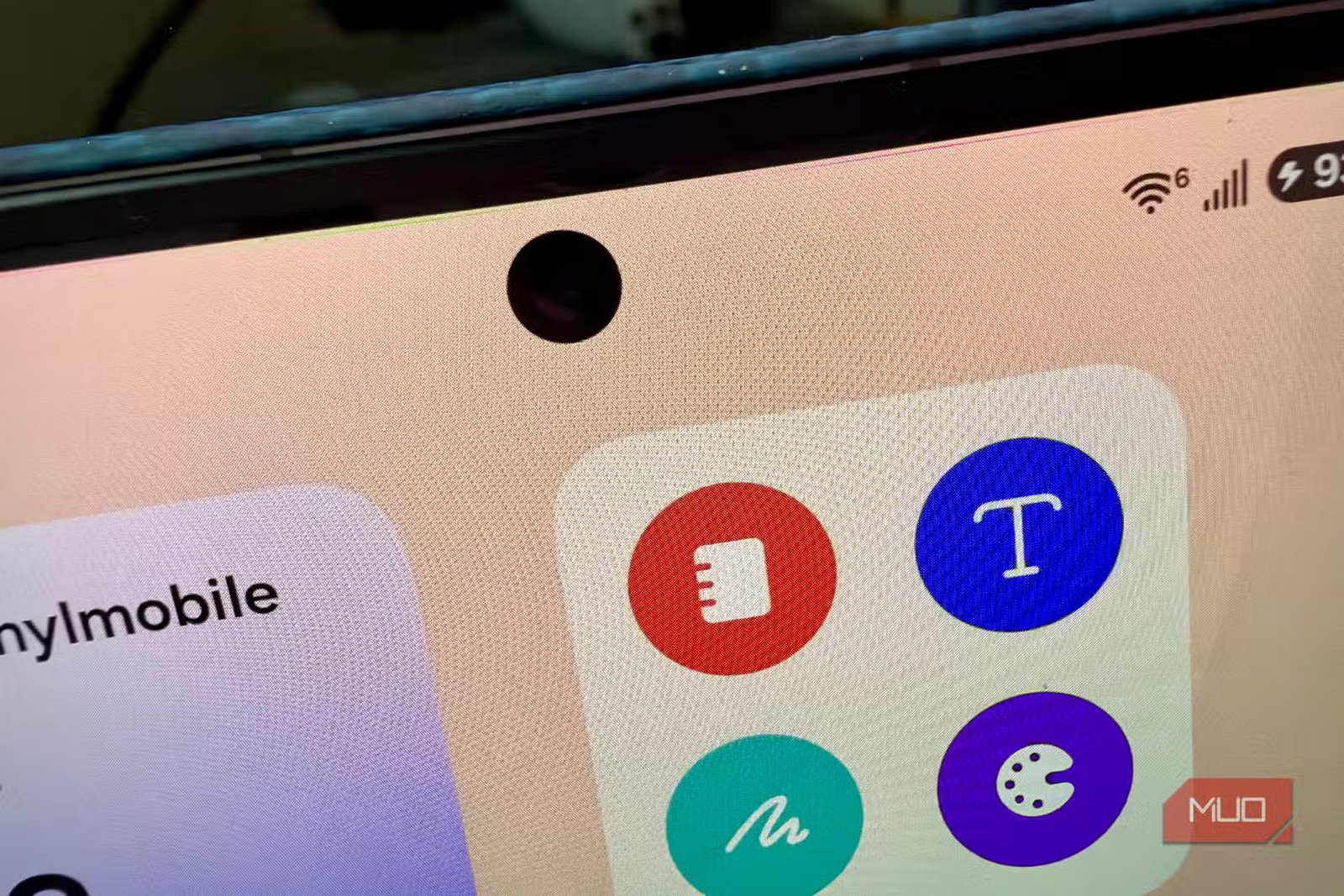
I took one selfie with the iPhone Duo’s inner camera and did not love the ensuing photo. It was blurry and a little underdone. Then I spent some time with my mom on FaceTime with it, and she never even noticed the camera quality.
Phones have shipped with cameras hidden under the screen since ZTE’s Axon 20 in 2020, and none of them took good pictures. Samsung stuck with a 4MP under-display camera from the Galaxy Z Fold 3 through the Fold 6, then switched to a 10MP punch hole on the Fold 7. Apple put one in the iPhone Duo anyway, and before launch, the big question was whether it would turn out to be Android’s abandoned feature finally done right.
As a selfie camera, it definitely isn’t. What impresses me most (more than the fold that everyone’s so excited about) in the Duo is that Apple decided exactly what this camera is for.
Under-display cameras earned their bad reputation
Six years of hazy selfies

The inner camera sits behind display pixels, meaning that far less light reaches the lens than it does on a traditional camera with a cutout.
Samsung’s run with under-display cameras ended with the camera-notched Fold 7. In a side-by-side comparison between the handsets, the Fold 6’s image looked super noisy. The Duo has the same issue. It takes 4MP stills at 2432 x 1824 resolution with no portrait or night mode available, according to Apple, which lists no Smart HDR or Deep Fusion either.
So, did Apple ship a bad camera on purpose? That’s not Apple’s general strategy, which only makes sense when you realize what they have in mind for the inner display hidden camera: Video calls via Facetime.
Apple gave its hidden camera exactly one job
It’s a FaceTime camera by name

Apple never calls the inner camera a selfie camera. Its spec page lists it as an under-display FaceTime camera, and the feature list reads like a webcam’s: 1080p video at 30 or 60 fps, plus Center Stage to keep you in frame on video calls. Apple’s announcement pitches it for calls with the Duo fully open. For selfies, Apple provides something else: the front and rear cameras, with the outer display as your viewfinder if you want.
The Camera app forces the issue, too. When I tap Portrait mode with the Duo open, the phone switches from the inner display camera and the preview flips to the room behind the phone. For a portrait selfie, I have to turn the Duo around.
Apple keeps adding features for that one job. Edge Light arrived in iOS 27.2 and turns the border of the inner screen into a ring light for dim rooms. It also only works with the under-display camera on the inner display. On my Duo, running the iOS 27.3 beta, you can find it under Control Center > FaceTime Controls > Edge Light. It shows up as soon as FaceTime’s camera preview opens, so I can set it before I dial.
The specs fit the use case perfectly, too. FaceTime HD calls top out at 1080p (as of 2020), the same ceiling as the inner camera. Third-party video apps that use Apple’s Virtual Front Camera switch to the inner camera when you open the phone, capped at 1080p and 60 fps.
Video calls are where 4MP stops mattering
What my calls actually looked like

I spent a few calls using the inner camera on my Duo for its intended job. In good light, I looked fine, and the other person didn’t even comment on the quality of the image. In a dimmer room, like every other FaceTime call I’ve had, the image was grainy. That said, turning on Edge Light is a great way to improve that image.
On a Zoom call, the phone is set to switch to the inner camera when you unfold it, and that seemed to hold up in my own practice. The call looked just as good as on FaceTime, too.
It’s all subjective, of course. Gizmodo said even video calls look muddy, while 9to5Mac found the camera perfectly fine on calls in good lighting. My calls landed more to the “just fine” quality side of things.
My Galaxy Z Fold 8 goes the other way: its 10MP inner camera sits in a punch hole that can cover text when the phone is rotated. While it hasn’t bothered me when using the Z Fold 8, I do appreciate the hidden nature of the Duo’s implementation. These two passport-style foldables share a shape and differ in almost everything else, and this is one more place they do.
A lower-quality camera with the right job description
If you take a lot of selfies with your foldable open, the Galaxy Z Fold 8 wins. Its 10MP punch-hole camera takes better photos, while the Duo’s inner camera will let you down if you use the inner camera for anything more than video calling.
That’s the part that impressed me more than the fold. Apple didn’t fix under-display cameras, and its 4MP sensor has the same flaws Samsung’s did. What Apple changed was acting as if it was a selfie camera. Take your selfies with the two better cameras and use the hidden one for video calls (and use Edge Light to make even those a bit better).