The Mackenzie Valley Highway is officially a project of national interest.
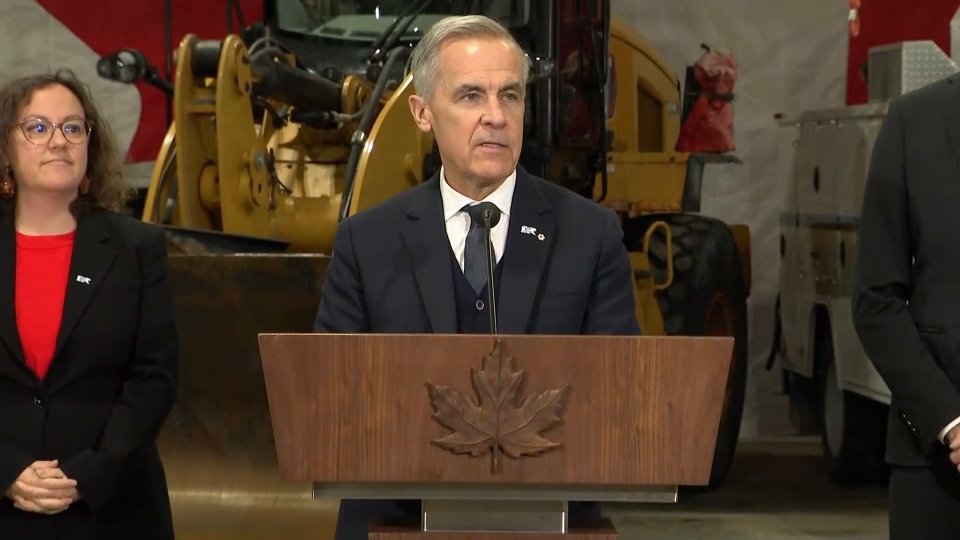
Cheers rang out as Prime Minister Mark Carney made the announcement during a news conference on Friday with dozens of people in attendance, including Indigenous leaders from across the territory.
The 800-kilometre gravel highway would run from Wrigley to Inuvik in the Northwest Territories, along a similar route as the existing Mackenzie Valley winter road system, and pass through the communities of Tulít’a, Norman Wells and Fort Good Hope.
By designating the Mackenzie Valley Highway a project of national interest, Carney says the government brings together departments to reduce duplication among various agencies and move more efficiently.
“For decades, funding for different proposals of this highway came incrementally, stalling progress,” Carney said.
The federal government also announced the creation of a new Crown corporation to manage the project.
The entire construction costs are currently estimated at $4.2 billion — a price tag that the federal government has committed to covering entirely. The recent federal budget earmarked $3.1 billion for the project.
The current projections are to have the road completed in 2032.
“Everyday life is going to be transformed for people,” N.W.T. Premier R.J. Simpson said in an interview with CBC News.
In a response to Carney’s announcement issued Friday afternoon, Bob Zimmer, the federal Conservative shadow minister for Arctic affairs, doubted the prime minister’s commitment.
“Every few months brings a new press conference or a new process. People in Wrigley, Tulita, Norman Wells and Fort Good Hope don’t need another announcement. They need shovels in the ground,” it read.
Indigenous involvement
Earlier in the week, the federal and territorial governments signed a “leadership governance agreement” with Sahtu Secretariat Inc., the Gwich’in Tribal Council, and Pehdzéh Kı First Nation, which establishes the framework for the highway’s planning and governance.
Carney added that the project will still need to go through “treaty-based” assessment and environmental review processes carried out by the Mackenzie Valley Environmental Impact Review Board (MVEIRB).
Various iterations of planning, studies, funding and assessments for the Mackenzie Valley Highway have been off and on for nearly 70 years. The MVEIRB has had an outstanding environmental assessment for the project since 2013. According to federal documents, it could complete its assessments by the end of 2027.
“Modern treaty commitments, Aboriginal and treaty rights, and environmental protections are integral to our responsibility to consult and to our approach,” said Carney.
Those consultations, he added, will be incorporated into a “conditions document” that sets the requirements for construction.
“One project. One plan. One set of commitments, duly consulted and co-developed,” Carney said.
Beyond the planning, Carney said the goal is to employ as many northerners as possible during the highway’s construction. The project is expected to create about 3,000 jobs during peak construction.
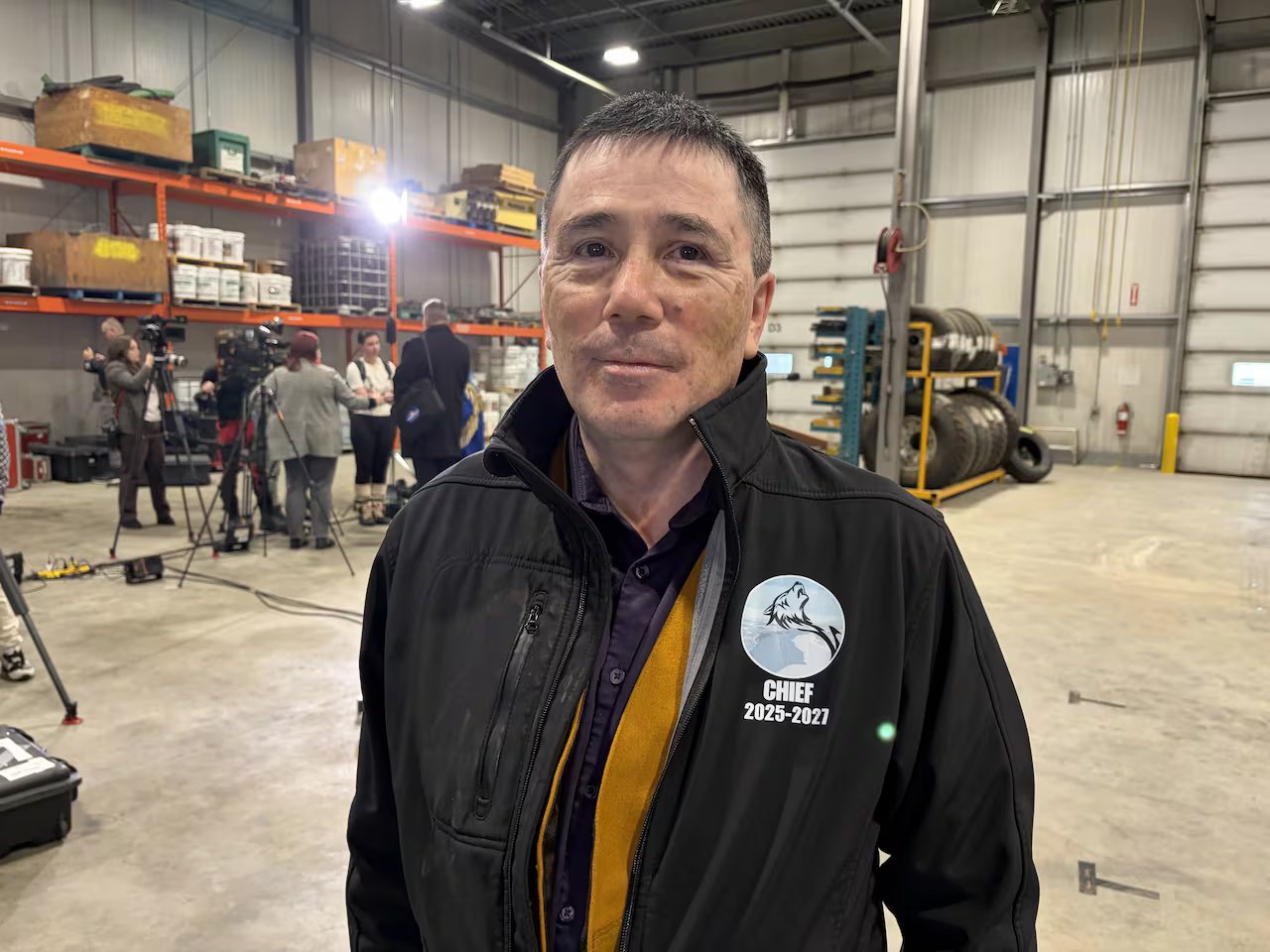
Shawn Grandjambe, chief of Fort Good Hope, was in attendance at Friday’s news conference.
“I’m sure we’re going to have a lot of people employed,” he said. “We’re going to have to start making plans for training them.”

Shawn Grandjambe, chief of Fort Good Hope, says the project will be good for his community. (Luke Carroll/CBC)
Sahtu Grand Chief Wilbert Kochon, who was also in attendance, said he’s still concerned about the environmental impact.
“Right away, you think about water, animals,” Kochon said. “What’s the certainty to protect our water?”
Following the announcement, Łı́ı́dlı̨ı̨ Kų́ę́ First Nation (LKFN) in Fort Simpson issued a news release calling for permanent bridges across the Liard and Mackenzie rivers — a request it has been making for years.
According to federal officials, the current plan does not include funding for those two bridges.
“If the Mackenzie Valley Highway is truly a project of national interest, permanent bridges that ensure reliable, year-round access, strengthen community resilience and support long-term economic development must be integral to that commitment,” said LKFN Chief Kele Antoine in the news release.
Opening economic opportunities
Carney also announced an additional $120 million for the Arctic Economic and Security Corridor on Friday. That money would go toward route selection, environmental studies, engineering and regulatory work “to make the project shovel-ready by 2029.”
That project would see a road built from Yellowknife toward the Nunavut border, ultimately connecting to a road that would run all the way to Grays Bay on the Arctic Ocean.
According to the N.W.T. premier, the highway and corridor will allow the territory to unlock its resource potential.
“Unfortunately, we’ve never had that enabling infrastructure to allow us to develop our own resources,” Simpson said. “To be clear, resource development is not the end goal, it is a means to an end.”
That end, he added, is for the territory to build more infrastructure and offer better services for residents.
“On top of that, we have widespread and worsening social issues rooted in the trauma of colonialism that we must address,” he said. “As a government, we need more revenue to address these issues.”

Territorial, federal, and Indigenous government officials held a ceremonial signing of the ‘leadership governance agreement’, which establishes the framework for the highway’s planning and governance. (Luke Caroll/CBC News)
Both Carney and Simpson recognized that with increased access to the road system comes an increased risk of social issues.
“We’re alert to the issue,” said Carney, adding he wants to ensure projects are “hugely net-positive” for the communities.
In an interview, Simpson referred to the leadership governance agreement signed with Indigenous governments to “ensure that the communities have the support they need”.
Gwich’in Grand Chief Frederick Blake Jr. said Indigenous governments have consistently brought up the need for support as a part of the project, and suggested funding for on-the-land programming as one possibility.
“A lot of our communities all down the valley are dealing with a lot of the same issues,” he said. “We have a common interest to make sure that all these programs [continue], and adequate funding is brought to the communities.”
Initially referred to the Major Projects Office in March 2026, the Mackenzie Valley Highway is the third to be listed as a project of national interest under the Building Canada Act. The proposed Arctic Economic and Security Corridor is still being assessed by the office.
Preparatory work is also underway with resurfacing of Highway 1 near Wrigley. The next steps include the relocation of the Oscar Creek Bridge and the realignment of Christina Creek, both near Norman Wells, once the winter road is built early next year.