Gamescom 2026 was scheduled for August 26–30 in Cologne, Germany, and the question DW put in its headline still hangs over the business in early November. DW’s analysis of what is next for the gaming industry frames the answer around three pressures: artificial intelligence, hardware costs and slowing user growth. None of those has a settled outcome yet.
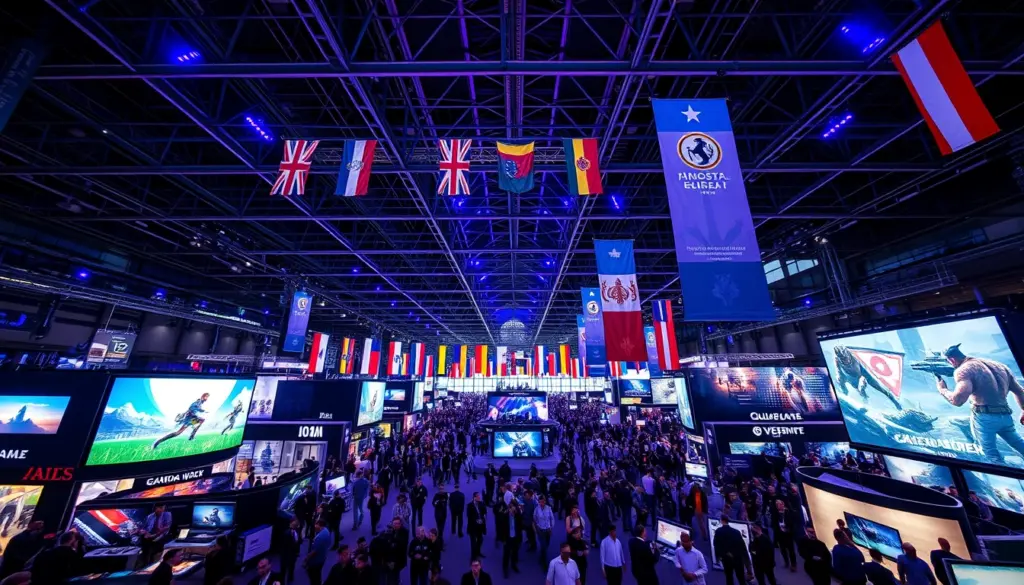
The show itself sent a strong signal of demand. The organizers reported that the available exhibition area was fully booked. The official gamescom press releases named aerosoft, Embark Studios, GIANTS Software, Konami, Level Infinite, NC and Tencent Games among the confirmed exhibitors. A sold-out floor looks healthy on paper. It sits awkwardly next to our own reporting on game layoffs reaching 10,977 and passing all of 2025.
This article separates what the record confirms from what is analysis. Specific product announcements, release dates, prices and hardware specifications are not established by the official Gamescom information we reviewed, so we do not report any. What we can do is lay out the numbers that exist, the competing readings of them, and the questions publishers will have to answer in 2027.
Don’t miss new tech stories on Google
Add Tech Insider once in the Google app and our stories appear in your news suggestions.
Add Now
What Is Confirmed About Gamescom 2026
The confirmed list is short, and that is worth stating plainly. Gamescom 2026 ran on August 26–30 in Cologne. The organizers said every available exhibition area was booked. Seven companies were named as confirmed exhibitors. Beyond that, the official material does not establish launch dates, prices or specs for any product.
The table below sorts the claims circulating around the show by how well they are supported. Anything marked unconfirmed is analysis or attributed commentary, not a verified outcome.
| Claim | Detail | Status |
|---|---|---|
| Dates | August 26–30, 2026 | Confirmed by gamescom |
| Location | Cologne, Germany | Confirmed by gamescom |
| Exhibition area | Fully booked | Reported by gamescom |
| Named exhibitors | aerosoft, Embark Studios, GIANTS Software, Konami, Level Infinite, NC, Tencent Games | Confirmed as exhibitors |
| Global games market | $213.9 billion | Attributed to Newzoo, not a forecast |
| Market growth | 6.1% year on year | Attributed to Newzoo, not a forecast |
| Product launches, prices, specs | None established | Unconfirmed |
Note the last row. Headlines about new consoles, handhelds or GPUs tied to Cologne should be treated as reports until a manufacturer confirms them. The sourcing we reviewed does not name a single new 2026 console, handheld or graphics card launch.
A Fully Booked Floor: Why It Matters
Trade shows are lagging indicators of corporate confidence. A company commits to a booth months ahead, pays for floor space, and staffs it. When the organizer says every available area is gone, it means enough publishers and platform holders still think a physical presence in Cologne pays for itself.
That does not mean the underlying business is easy. Booth budgets are small next to development budgets. A studio can fund a modest stand while cutting a team in the same quarter. The full floor tells us marketing channels still matter. It does not tell us margins are healthy.
The organizers present the fully booked result as a milestone, and the claim comes from the event’s own communications. That makes it a verified statement of what gamescom said, not an independent audit of attendance or deal volume. Readers should weigh it that way. Organizers have every reason to emphasize growth, and neutral confirmation would need figures from exhibitors or an outside auditor.
Still, a hard capacity limit carries one real implication. If demand for space exceeds supply, smaller studios and newer entrants may struggle to find a position near the halls that draw traffic. Discovery, one of the pressures analysts flag below, starts on the show floor as much as on a storefront.
The Named Exhibitors and What They Signal
Seven names appear in the confirmed list: aerosoft, Embark Studios, GIANTS Software, Konami, Level Infinite, NC and Tencent Games. We will not guess at their lineups, because the official information does not say what each company brought. What the list does show is the spread of business models under one roof.
The names differ in size and business model, and that mix is the signal. Level Infinite and Tencent Games appear as separate entries, so the organizers list each brand on its own. We will not characterize any company’s portfolio beyond what the announcement states.
The takeaway for readers hunting for news: a confirmed exhibitor is not a confirmed announcement. A booth reservation tells you a company will be in the room. It does not tell you it will unveil a game, name a date or set a price. Our fact sheet contains no such claims for any of the seven, so we make none.
Coverage from outlets such as PC Gamer’s Gamescom 2026 recap and the BBC’s highlights and developer insights piece is where readers should look for game-by-game detail. We lean on DW and the organizers for the industry framing and leave title-level claims to the reporters who were on the floor.
The $213.9 Billion Market Figure in Context
DW cites Newzoo for a global games market of $213.9 billion and year-on-year growth of 6.1%. Those are large numbers. They also describe the past, not the future, and DW’s coverage treats them as the backdrop for a more cautious story.
Growth of 6.1% on a base that size adds somewhere between $12 billion and $13 billion in a year, by simple arithmetic on the reported figures. That is real money. It is also a modest pace by the standards of a sector that markets itself on growth, and the gap between a growing market and a profitable studio has widened. Revenue can climb while headcount falls, which is exactly the pattern the layoff trackers show.
One more caution. A single market-size number hides how revenue splits across platforms, regions and business models. A rising total can coexist with shrinking sales for mid-sized publishers if a handful of live-service games capture most of the new spending. The Newzoo figures do not settle that question, and neither does our fact sheet.
AI in Games: Two Readings of One Technology
DW’s reporting quotes two analysts who read AI in almost opposite ways. The disagreement is the most useful thing in the story, because it maps the argument studios are having internally.
The Content-Flood Reading
Van Dreunen, quoted by DW, said “AI is flooding the existing digital markets with content that is generally disregarded by players.” That is commentary, not a measured result. It does line up with a trend we covered when Itch.io’s new game pages doubled to more than 6,000 a day with AI blamed. More pages do not mean more players.
The Cost-Saving Reading
Piers Harding-Rolls, also quoted by DW, described AI as a tool for repetitive tasks such as preproduction work and coding, used to save time and cut costs. That reading treats AI as back-office plumbing rather than a creative engine. Studios can adopt it quietly without changing what players see on screen.
The two views are not mutually exclusive. A studio can use AI to trim preproduction while the wider market drowns in low-effort releases. The tension shows up in public policy fights too. Tim Sweeney’s attack on Steam’s disclosure labels, which we covered in our report on his criticism of Steam AI labels, shows how little agreement exists on whether players should be told how a game was made.
Claims that AI will decide the industry’s next phase remain analysis. Nothing in the confirmed record shows a studio shipping a hit built mainly on AI, or a player backlash large enough to change a platform’s rules. Treat both camps as hypotheses to test against 2027 release data.
Hardware Costs and the Price Squeeze
Harding-Rolls listed the pressures in one sentence, as DW reported it: “Increasing costs for games hardware components pushing up prices, hyper-competition across all areas of the market meaning a glut of content, and challenges in discovery (of new users) and user acquisition.” The first item is the one players feel at the register.
Our own coverage backs the direction of travel without proving DW’s causal story. Memory prices hit a record, as we detailed in our report on DRAM reaching a record high, and handheld makers followed with higher sticker prices. The Steam Deck price increase coverage noted a 108% jump on a Legion Go 2 2TB configuration.
For buyers, the squeeze changes the math on when to upgrade. A premium handheld now competes with a console on price. We tracked that in our comparison of the Xbox Ally X20 at $1,299 against the Switch 2 and the Ayn Thor. If component costs keep climbing, expect more tiered launches, where a base model hits a headline price and the memory-heavy version costs far more.
Nothing in the official Gamescom information confirms a specific hardware price move. Readers should regard any figure floated in connection with the show as unverified until a manufacturer posts it.
Content Glut, Discovery and Slowing User Growth
Put the three non-hardware pressures together and a pattern emerges. Supply of games keeps rising. Demand, measured in new players, is growing more slowly. The result is a market where visibility is the scarcest resource.
DW highlighted slowing user growth despite the sector’s financial strength. Harding-Rolls named discovery and user acquisition as challenges. Combine those and you get rising acquisition costs, since every studio chases a similar pool of players with a similar set of ad channels. Cheaper production through AI could make this worse, because lower costs invite more releases into the same attention budget.
That is why a physical event still carries value. A booth, a hands-on demo and a press appointment cut through algorithmic noise in a way a store page cannot. It also helps explain the sold-out floor, even though the organizers did not draw that link themselves.
| Pressure | Who raised it | Type of claim |
|---|---|---|
| AI floods digital markets with disregarded content | Van Dreunen, via DW | Expert commentary |
| Rising hardware component costs push up prices | Piers Harding-Rolls, via DW | Expert commentary |
| Hyper-competition and a glut of content | Piers Harding-Rolls, via DW | Expert commentary |
| Discovery and user acquisition challenges | Piers Harding-Rolls, via DW | Expert commentary |
| AI used for preproduction and coding | Piers Harding-Rolls, via DW | Expert commentary |
| Slowing user growth | DW reporting | Reported trend |
What Industry Leaders Said
Event organizers and the German industry association offered a more upbeat framing than the analysts. These are statements from interested parties, so read them as positioning rather than evidence.
Felix Falk, managing director of game, the German Games Industry Association, said in opening remarks published on gamescom.global: “In times of hesitation and pessimism, we need excitement for the future. The games community, the studios, the entire industry – we are all looking ahead.” The remark concedes the mood problem before answering it.
Gerald Böse, president and chief executive officer of Koelnmesse, said in the same set of opening remarks: “When it comes to the future of the global games industry, there is no way around gamescom. It brings together business, politics and communities unlike any other event in the world.” As the head of the venue operator, Böse speaks about his own product.
Falk also told Deadline: “Gamescom shows how lively, creative, and diverse the industry is this year, even though there have been tough times.” That interview touched on layoffs, consolidation and investment, and the quote acknowledges the rough stretch directly.
Tim Endres, director of gamescom at Koelnmesse, told PCGamesN: “Across Gamescom, companies, developers, and professionals are discussing what comes next, forming new connections, and exploring the ideas and technologies that will shape the future of the industry.” Asked whether the show proves the industry is heading toward a better future, Endres answered: “I would say yes: Gamescom is proof that the game industry is working towards a better tomorrow with the possibilities provided today.”
Compare those lines with the analysts. Falk and Endres stress resilience and direction. Van Dreunen and Harding-Rolls stress friction and cost. Both can be true at once, and the gap between them is where the 2027 story will be written.
Competitive Comparison: Two Camps, Two Strategies
Rather than rank companies on facts we lack, it helps to compare the strategies the commentary implies. Studios facing the same pressures are splitting into recognizable camps.
| Strategy | Core bet | Main risk |
|---|---|---|
| AI as cost cutter | Save time on preproduction and coding | Lower costs invite more competing releases |
| Premium hardware | Buyers pay more for performance | Component costs push prices out of reach |
| Event-led discovery | Physical presence cuts through content glut | Booth costs rise while budgets shrink |
| Franchise reliance | Known brands lower acquisition cost | New IP gets starved of attention |
| Small-team efficiency | Cut headcount, ship smaller games | Talent loss and thin release calendars |
The first two rows map directly onto the DW commentary. The remaining three are our analysis of how companies respond to the pressures the experts named. They are not claims about any specific company’s plans.
The tradeoff is easy to see. AI can lower the cost of making a game but cannot lower the cost of getting noticed. Hardware makers can push performance but cannot make memory cheaper by decree. Event organizers can sell out a floor but cannot raise the number of people willing to buy a new title. Each camp holds one lever and needs another.
Market Impact: Who Gains and Who Pays
If the pressures DW describes persist, the winners are companies with scale in marketing, platform access or franchise recognition. They can absorb rising acquisition costs and ride out hardware swings. Smaller studios feel every squeeze first.
Consumers pay in two ways. Hardware prices climb when component costs rise, and software choice narrows when publishers retreat to safer bets. The most visible near-term test is Rockstar’s schedule. Our coverage of the GTA 6 leaks and the Nov. 19 launch shows how one release can dominate attention and spending across a whole quarter, leaving less room for everyone else.
Investors face a harder read. A market growing 6.1% is attractive in most sectors. In games, it arrives alongside a layoff wave, so expectations have to reset. Companies that tie their guidance to AI savings will need to show the savings in margins, not in slide decks.
For workers, the picture is mixed. AI used for repetitive tasks could free time for creative work or remove entry-level roles, depending on how employers deploy it. The confirmed record does not say which outcome is winning. For more on the platforms and hardware angle, see our gaming coverage hub.
Historical Context: From Boom to Correction
The mood around Cologne in 2026 reads differently from the years when games rode a pandemic surge. Publishers hired aggressively then, and many are now trimming. Our tracker-based reporting shows the 2026 layoff count passing the whole of 2025.
| Signal | Reported figure | Where we covered it |
|---|---|---|
| Game industry layoffs in 2026 | 10,977, passing all of 2025 | ASGC tracker report |
| Handheld price rise | +108% on a Legion Go 2 2TB | Steam Deck price coverage |
| New game pages on Itch.io | 6,000+ a day, double the prior pace | AI slop report |
| Memory market | DRAM at a record high | DRAM and NAND report |
| Premium handheld price | $1,299 for the Xbox Ally X20 | Handheld comparison |
Each row comes from our own earlier reporting, and each tells the same story from a different angle. Costs rise, supply of content rises, and headcount falls. A sold-out Gamescom floor fits that story if you read it as companies spending on visibility because discovery is hard.
The lesson from earlier cycles is that a growing market does not protect individual studios. When growth is slow, the money flows to whoever already holds the audience. That makes the 6.1% figure less comforting than it sounds.
Five Predictions for the Next 12 Months
These are our forecasts, built from the pressures above. None is a confirmed outcome, and each could miss.
- AI disclosure fights intensify. With analysts split on whether AI helps or floods, expect more storefront and platform debates over labels, building on the Sweeney dispute.
- Tiered hardware pricing spreads. If component costs stay high, manufacturers will lean on base models at headline prices and pricier memory-heavy variants.
- Discovery spending rises. Studios will spend more on events, creators and demos to cut through the glut, which keeps show floors full even as development budgets tighten.
- Layoff headlines continue, with fewer surprises. The count already passed last year’s total, so the next phase is likely steadier cuts rather than shock closures.
- Growth stays modest. We expect market-size reports to land near the 6.1% pace rather than reaccelerate, unless a mega-release shifts spending.
Check these against the 2027 data. If AI-built games start topping charts, or if hardware prices fall, the thesis changes.
What Gamescom Did Not Confirm
Honest coverage needs a clear boundary. The sources we reviewed do not establish any specific product announcement, release date, price, hardware specification or launch plan from Gamescom 2026. They do not confirm that AI, hardware costs or slowing user growth will define the industry’s next phase. Those are readings of the evidence, offered by DW and the analysts it quotes.
The Newzoo numbers describe a market’s size and recent growth. They do not predict anything. The expert statements are opinions, and the organizer quotes are promotional by nature. If you see a specific price or spec attributed to the show, ask which company published it.
We will update this analysis if the organizers or exhibitors publish verifiable announcements. Until then, the safest summary is this: the floor sold out, the market grew 6.1% by Newzoo’s count, and the hard questions about AI, costs and players remain open.
FAQ: Gamescom 2026 and the Industry’s Next Phase
When and where was Gamescom 2026?
Gamescom 2026 was scheduled for August 26–30, 2026, in Cologne, Germany, according to the organizers.
Which companies were confirmed as exhibitors?
The organizers named aerosoft, Embark Studios, GIANTS Software, Konami, Level Infinite, NC and Tencent Games as confirmed exhibitors. Being on the list does not confirm any specific announcement.
Was the Gamescom 2026 exhibition area sold out?
Yes. The organizers reported that the available exhibition area was fully booked.
How big is the games market?
DW cites Newzoo for a global games market of $213.9 billion and 6.1% year-on-year growth. These figures describe the market’s size and recent growth, not future outcomes.
Will AI decide the industry’s next phase?
That is analysis, not a confirmed result. Van Dreunen warns of AI-generated content flooding markets, while Piers Harding-Rolls describes AI as a way to cut cost on repetitive tasks. Both are commentary quoted by DW.
Were new consoles, GPUs or handhelds announced?
The official Gamescom information we reviewed does not establish any specific product announcement, price or spec. Treat claims to the contrary as unverified until a manufacturer confirms them.
Why are game prices and hardware prices rising?
Piers Harding-Rolls pointed to rising costs for games hardware components pushing up prices, as reported by DW. Our own coverage shows record DRAM pricing and handheld price increases, consistent with that view.