Ultimately, we have to learn to live with a certain reality. Almost every society has a hard core of fascists, racists, xenophobes, far-right extremists and neo-Nazis. The difference is that they were once a relatively small minority, and it was easier to identify them: their socioeconomic backgrounds, where they lived, their hairstyles, clothes, tattoos, the music and festivals that provided the soundtrack to their lives, and their violence.
That era is over, at least in the West. Almost wherever you look, far-right parties have established a substantial electoral presence. In Italy, the right is already in power. Far-right parties have become significant political forces in France, Britain and Spain. Even center-left parties, such as Denmark’s Social Democrats, have incorporated elements of the right’s policy agenda in an effort to remain politically relevant.
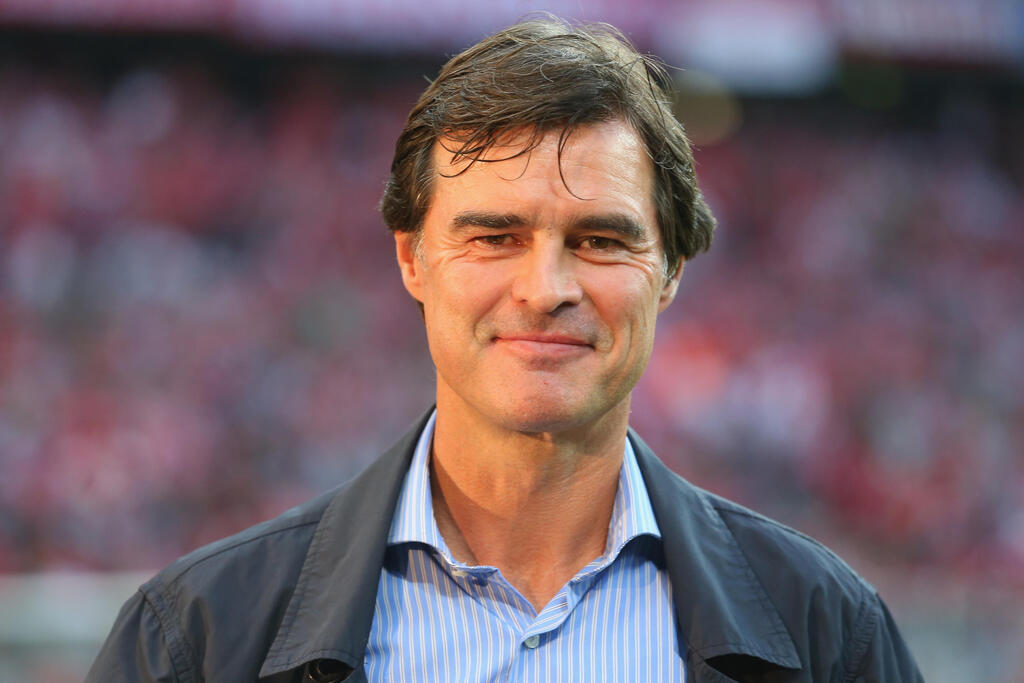
Thomas Berthold’s presidential candidacy carries symbolic significance
(Photo: Alexander Hassenstein/Bongarts/Getty Images)
What was once considered the political fringe has become increasingly mainstream. Its supporters could be your banker, your accountant, your local police officer or your neighbor.
Sport is part of a country’s social fabric, and the rise of the far right has direct implications for it, for two reasons.
The first is funding. A government led by the far right could determine whether public money goes toward projects involving immigrants or LGBTQ communities, or whether funding becomes contingent on displays of allegiance to the national flag and anthem.
The second is legitimacy. Far-right extremism has long been present among violent football hooligans, and authorities have fought hard to combat it. The concern is that a far-right government could turn a blind eye to such behavior. Football supporters with extremist views could feel emboldened, believing that their attitudes and actions have gained legitimacy.
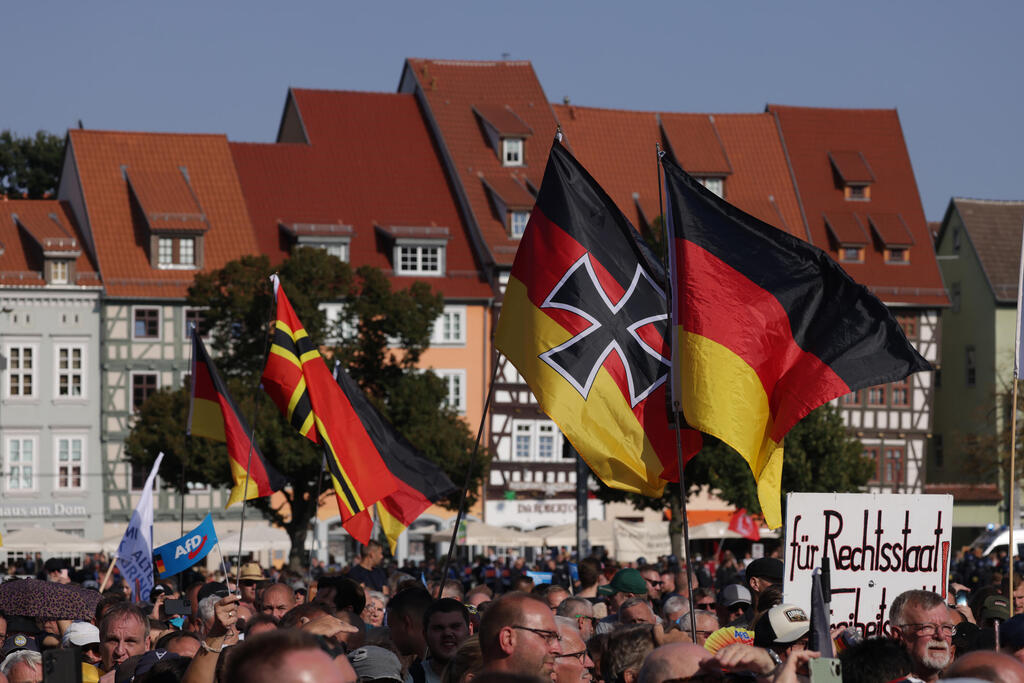
Germany’s far-right Alternative for Germany is now the country’s largest opposition party
(Photo: Sean Gallup/Getty Images)
And then, of course, there is symbolism. As far-right parties attract voters from increasingly diverse backgrounds, their supporters may include a tax official, your daughter’s teacher, your family doctor or even a former football world champion.
Thomas Berthold was hardly the most important player on the West German team that won the 1990 FIFA World Cup in Italy. Lothar Matthäus was at the peak of his career, one of the finest footballers in the world at the time. Then came Andreas Brehme, Jürgen Klinsmann and Rudi Völler.
But Berthold played in every match of the tournament and was one of the mainstays of coach Franz Beckenbauer’s team. He operated on the right flank, neutralized Dutch star Ruud Gullit through man-marking and did whatever was required of him.
His precise standing within that team is ultimately secondary. He was a starting player on a World Cup-winning side. In German footballing terms, that makes him a legend.
Whatever one thinks of Alternative for Germany, the party understands political marketing. On January 30, 2027, Germany’s Federal Convention is scheduled to elect the country’s next president. The governing coalition’s candidate, Ilse Aigner, could become the first woman to hold the office.
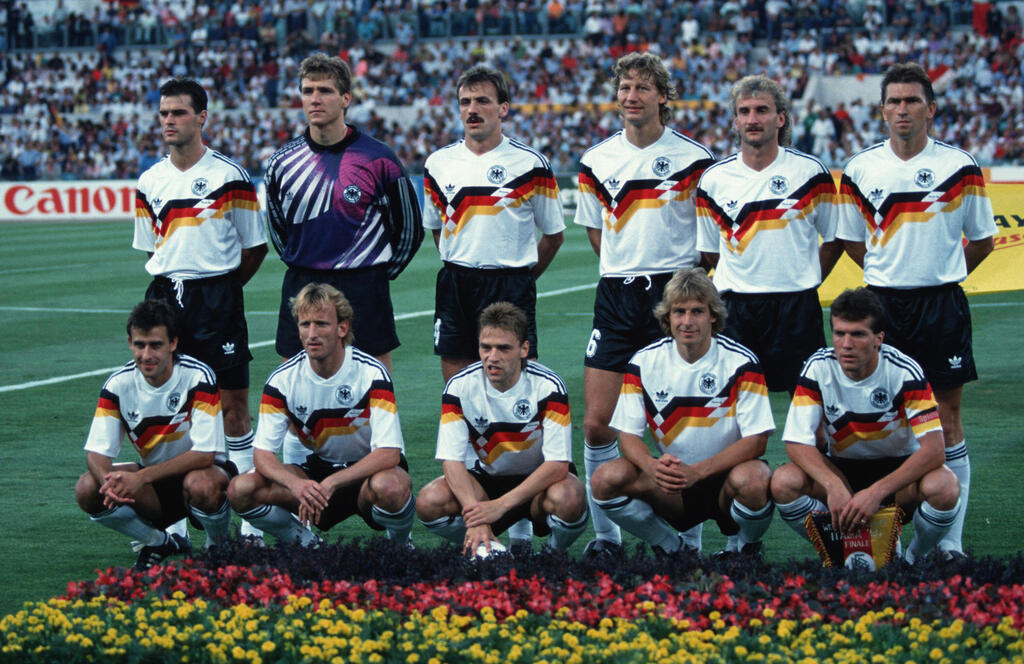
Thomas Berthold (standing, far left) and his West German teammates at the 1990 World Cup final
(Photo: Bongarts/Getty Images)
Against this backdrop, the AfD selected Berthold. The party understands that few things capture the German imagination and unite the country emotionally quite like football, particularly nostalgia for a World Cup victory.
Berthold’s candidacy is less about securing the presidency than attracting attention to the party and its candidate. His value to the AfD lies in his public profile and the emotional connection many Germans have with the national team’s past achievements.
The nomination represents another development in the increasingly intertwined relationship between football, society and politics.
Jürgen Klopp, who recently took over as Germany’s national team coach following a prolonged period of disappointment, is regarded by many as a potential savior of German football. Yet Klopp began his tenure by striking a political note against the backdrop of the far right’s electoral gains.
He called for Germans to reclaim their flag, national anthem and patriotism, encouraging supporters to take pride in their country rather than leave patriotism in the hands of extremists.
Klopp has gone on the offensive. Berthold is now waiting for him in defense.
The German word “Querdenker” originally carried positive connotations. It described a creative, independent thinker who challenged convention and offered unconventional solutions.
During the COVID-19 pandemic, however, a movement known as Querdenken emerged to protest lockdowns, vaccinations, pandemic restrictions and government policies more broadly.
The term has since acquired negative associations, often referring to conspiracy theorists, pandemic deniers, anti-vaccine activists and people who express profound distrust of state institutions and mainstream media.
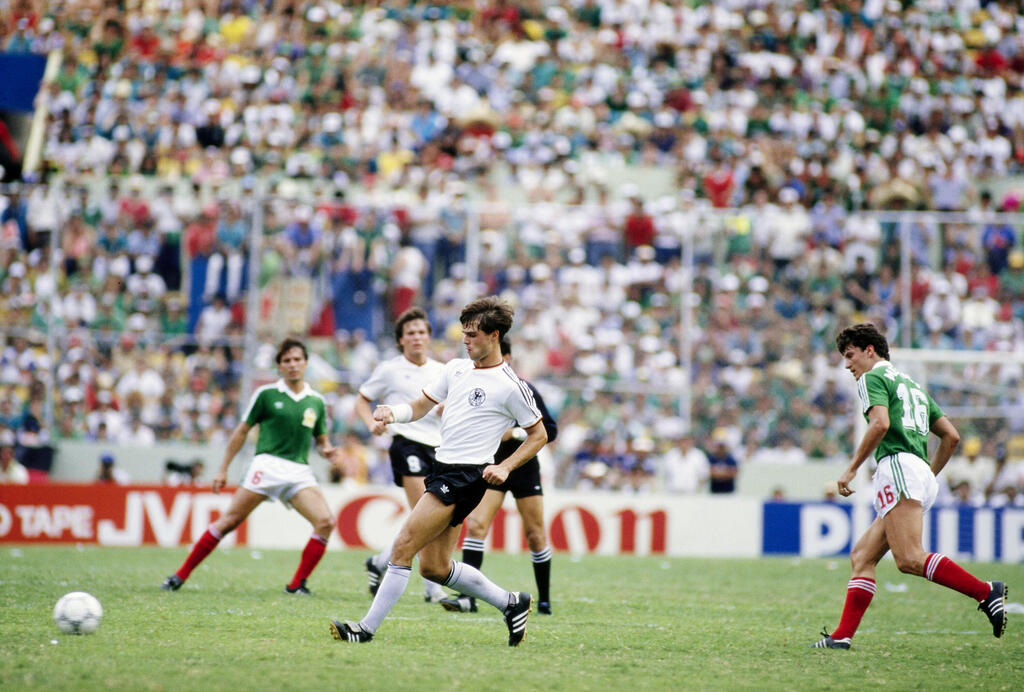
Berthold during his international football career
(Photo: Mike King/Allsport/Getty Images)
The movement expanded rapidly, establishing branches throughout Germany and neighboring countries. Extremists from across the political spectrum joined its ranks, including neo-Nazis and adherents of the Reichsbürger movement, which rejects the legitimacy of the modern German state. Parts of the movement have been placed under surveillance by Germany’s domestic intelligence services.
Berthold also became involved in the movement. On one occasion, he claimed that Japan and Germany were not sovereign states.
Now the man whose political involvement prompted Social Democratic lawmaker Ralf Stegner to joke that he had done too many heading drills with a medicine ball has been nominated for Germany’s presidency, the country’s most important office in symbolic terms.
More than a story about what happened to Berthold, it is a story about the changes taking place in Germany.
Announcing his nomination, the AfD described Berthold as a candidate from the heart of society who could represent all Germans. Berthold himself is not a member of the party and lives in Switzerland.
In 1999, while still playing professionally for VfB Stuttgart, Berthold was asked to recommend his favorite nonfiction book. He chose “Secret Societies and Their Power in the 20th Century,” written by far-right author Jan Udo Holey under the pseudonym Jan van Helsing.
The book promotes antisemitic conspiracy theories about Jewish bankers, particularly the Rothschild family, supposedly controlling global politics behind the scenes. It draws on “The Protocols of the Elders of Zion,” a notorious antisemitic forgery. Distribution of the book was banned in Germany over its antisemitic content.
For those who take the AfD’s promises to combat antisemitism at face value, Berthold’s history of promoting such literature raises serious questions about the party’s choice of presidential candidate.
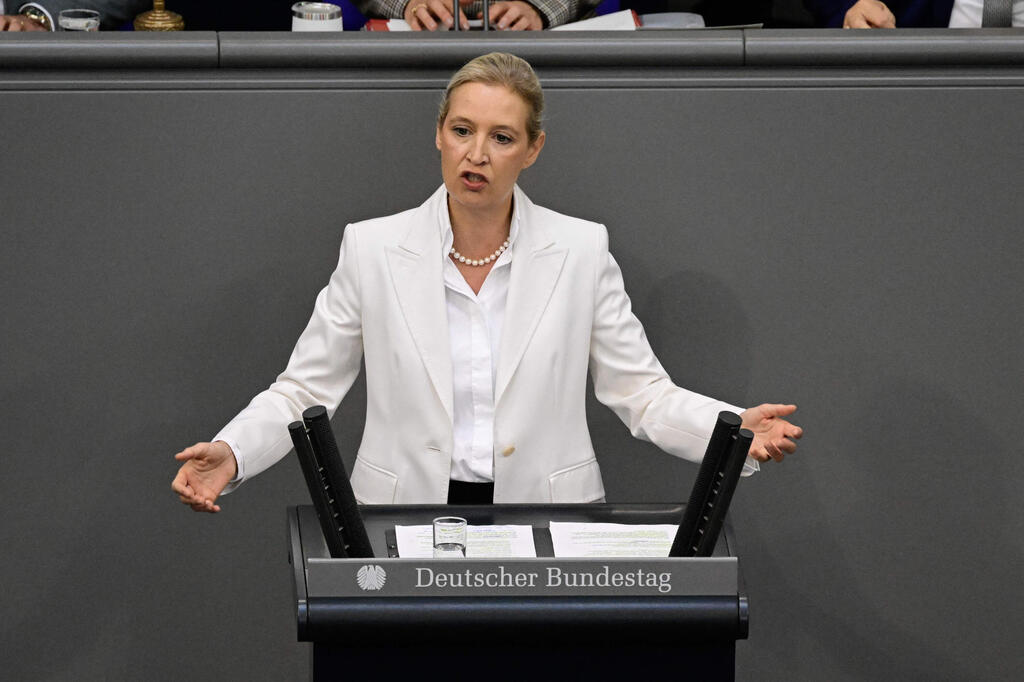
Alternative for Germany co-leader Alice Weidel
(Photo: John MacDougall/AFP)
The symbolism extends to the date of the presidential election. On January 30, 1933, German President Paul von Hindenburg appointed Adolf Hitler as chancellor, marking the Nazis’ rise to power and paving the way for the destruction of the Weimar Republic’s democracy.
Berthold has presented his candidacy as an effort to unite Germany internally and represent the country with dignity abroad.
The historical contrast is difficult to ignore.
Berthold’s nomination takes on additional significance when viewed against the backdrop of far-right extremism and intimidation within German football.
The violence, hatred, neo-Nazi symbolism and antisemitic codes displayed in the stands are already familiar. Increasingly, however, reported incidents suggest that such behavior has also infiltrated teams themselves, reaching locker rooms, video analysis sessions and coaching staffs.
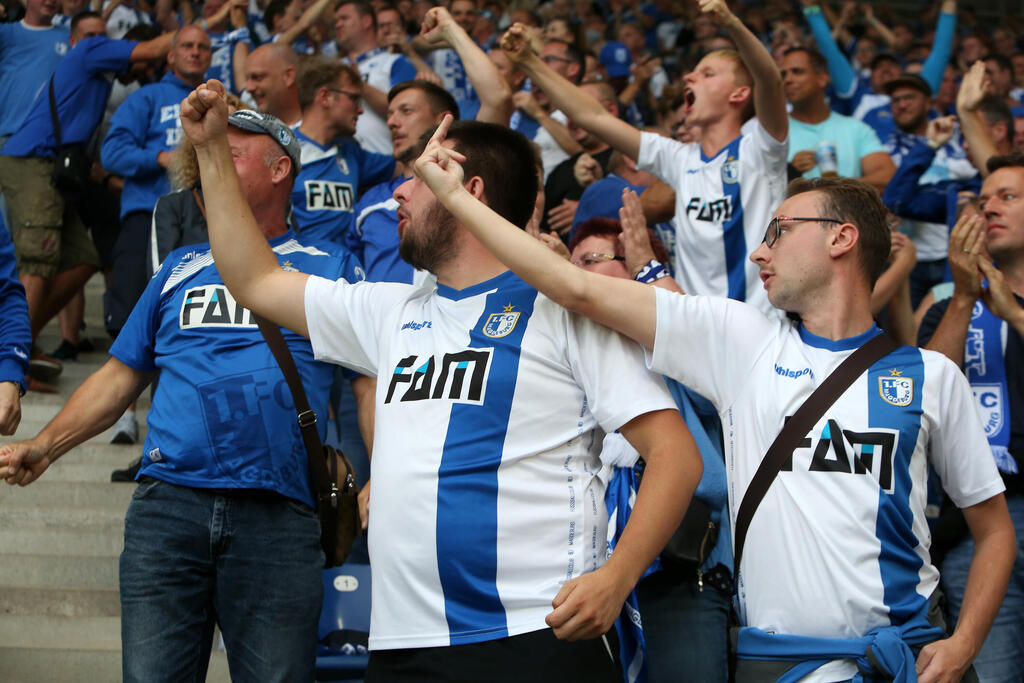
Racist and sexist language and expressions of far-right support have been reported in German football, particularly in the lower leagues
(Photo: Adam Berry/Getty Images)
In some clubs, particularly in the lower leagues, racist and sexist language or openly expressed support for far-right parties has reportedly become part of the club culture. Those who object to racist or sexist remarks may remain silent out of fear, while discrimination against Black players and minorities becomes normalized.
At one reported amateur football match in Magdeburg, supporters directed chants calling for deportation at an opposing team from Berlin that included numerous players of immigrant backgrounds.
Football, like sport more generally, reflects the society in which it is played. These incidents raise questions about how the boundaries of socially acceptable behavior regarding racism and discrimination have shifted in recent years.
A player in Bavaria’s amateur football league told the German football magazine “11Freunde” that some of his teammates greeted one another with Nazi salutes.
It is against this backdrop that Berthold’s presidential nomination should also be understood.
According to German media reports, Berthold has expressed support for urine therapy and falsely claimed that convicted sex offender Jeffrey Epstein is still alive. Epstein died in prison in 2019.
It would be easy to dismiss Berthold, his statements or his political standing. Former German goalkeeper Sepp Maier once famously remarked that every team has its idiot, a line recently invoked by a Social Democratic politician in connection with Berthold’s nomination.
But dismissing him risks overlooking his growing public profile. He is a sought-after interviewee whose political prominence has developed alongside the AfD’s rise.
In a 2024 interview, Berthold claimed that shadowy figures secretly controlled world affairs and that politicians and governments were merely puppets carrying out their instructions.
It is a familiar conspiracy narrative, echoing longstanding antisemitic tropes about hidden forces controlling the world.
Whatever the outcome of his presidential candidacy, Thomas Berthold remains a World Cup winner in a football-obsessed country. His nomination illustrates how sporting celebrity and political identity can intersect, and how the cultural significance of football can extend far beyond the pitch.