SINGAPORE – First came the salad bar, then the slop bowl.
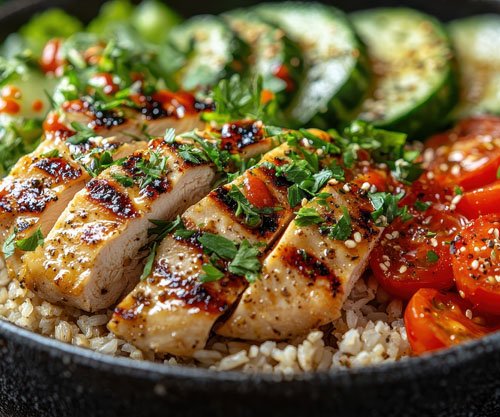
But in 2026, this sort of healthy eating – dumping kale, chicken breast, nuts and other assorted high-protein crunchables into an oversized bowl – no longer cuts it. Once a symbol of corporate efficiency, salad bowls find themselves increasingly derided as products of a bygone era.
The falling stock prices of health food chains such as Sweetgreen and Cava have been documented in US publications like The New York Times and The Atlantic, with customers tiring of high prices and predictable offerings.
In Singapore, too, new players sense that the industry is hungry for change.
Healthy food sometimes gets a bad rep for being too bland and expensive, says Allen Law, 46, founder of wellness hub Longevity World.
He hopes to refresh things at his vegan foodcourt, Glow Food, which sells plant-based creations such as Sichuan “beef” noodle soup and massaman tempeh wraps.
This is a good time to venture into the health food sector, he says, as Singaporeans grow more health-conscious, eschew alcohol and seek out high-protein, high-fibre foods. But these practices are not yet as widespread as he hopes.
“We don’t just want to target those who are already eating clean. We also want to target those who usually eat unhealthy food and convince them that healthy eating is not so bad,” he says.
The Straits Times takes a look at five new wellness concepts to find out how they are shaping healthy eating today.
Glow Food

Glow Food opened in September.
PHOTO: GLOW FOOD
Where: Level 1, 10 Coleman Street
Open: 11am to 6pm daily
Info: www.glow.food
Eating vegan once in a while will not necessarily make you live longer, but it certainly does not hurt.
“You don’t need to be fully vegan or vegetarian, but it’s good to have a predominantly plant-based diet,” says Law, citing advice from his dietitian. “Your body will be able to feel the pureness and energy.”
It is hard not to feel reinvigorated while strolling along the sun-drenched atrium where Glow Food is located, a soya milk smoothie in hand. The vegan foodcourt, which opened in Coleman Street in late September, has six concepts selling fusion bowls, power wraps, bentos, sandwiches, smoothies and noodles.

Staff preparing a meal at the vegan foodcourt Glow Food.
PHOTO: GLOW FOOD
Recipes were developed with YangMing Spring, a Michelin Green Star vegan restaurant in Taipei. “Instead of putting different things into one bowl, we pay close attention to how we pair the ingredients and marinate individual ingredients, like mushrooms,” Law says.
This attention to detail is most evident in Glow Food’s bentos, which come with punchily seasoned proteins and vegetables. Its fusion bowls, on the other hand, are fresh but underseasoned.

Some of the vegan food sold at Glow Food.
ST PHOTO: CHERIE LOK
Price is also a major concern for Law. “A lot of people have said that even if they wanted to eat healthily, they can’t afford it every day. So the question for us is: How do we make it affordable?”
Eliminating food waste has helped his team save costs, as has finding the right suppliers. Yet, there seems to be a limit to how low he can go.
Food at Glow Food starts at $12.99 for a fusion bowl – higher than chains such as Supergreen, where protein bowls are priced at $10.30 and up – while a mango lassi costs an eye-watering $9.90.

There are six stalls at Glow Food.
PHOTO: GLOW FOOD
Still, teething issues have not tempered his ambition. “I want us to reach a tipping point where healthy food becomes the majority of options available in the market.”
Bringing about drastic change, he says, requires working within a wider ecosystem. That is why he has nestled Glow Food within his wellness hub, Longevity World, where customers can get their health assessed at Morrow Medical, work out at its wellness centre and then head down for some guilt-free fare.
“Diagnostic services usually fall apart after the customer leaves the clinic,” he says. So he hopes that by making vegan food more accessible, he can slowly change more minds.
The Calla Project

Nourish Cafe at The Calla Project.
ST PHOTO: CHERIE LOK
Where: 271A Holland Avenue
Open: 9am to 9pm daily
Info: the-calla-project.rezerv.co
Recovery clubs are all the rage in Singapore these days. Like various other wellness spaces across the island, The Calla Project – which opened in Holland Village in May – has a sauna, cold plunge, micro-bubble bath and mineral bath.
The catch is that it is open only to women.
Founder Anastasiia Cheong, 29, says: “It’s good that there are more recovery spaces and that they’re gender neutral. Spreading awareness about mental and physical recovery and how it actually benefits your body is important, but I felt that what was missing for me was that sense of comfort.
“Sometimes, you don’t feel comfortable wearing your bikini around men. So having a women-only space was something I wanted to try.”

The bathing space at The Calla Project.
ST PHOTO: CHERIE LOK
The protected space, where a single visit costs $45, seems to have resonated with her female clientele.
“We have women from different backgrounds, even Muslim women who might not go to a gender-neutral space. So I was very happy that they felt comfortable coming to us.”
Men, meanwhile, are welcome downstairs, at the second-floor cafe overlooking Holland Road. Like Longevity World’s Law, Cheong is trying to build her own wellness ecosystem here.
Life, she felt, was getting too fragmented. “You work out in one place, you recover in another place (and) you eat somewhere else. If you could have everything in the same place, it would be so much more convenient, because Singapore is fast-paced and efficient.”

Rooted bowl at Nourish Cafe.
ST PHOTO: CHERIE LOK
To complement the recovery centre, Nourish Cafe serves light, tasty food designed to be healthy, but not too health-conscious. She understands that throwing oneself into a new lifestyle can be daunting, and that taking small steps towards clean eating – perhaps by alternating between lighter and more indulgent meals – is a more sustainable option.
So nutritional staples such as tempeh bowls ($16) sit alongside chicken grilled cheese sandwiches ($18) on the menu, which also includes a breakdown of calories, fat, carbohydrates and protein.
Cheong is a former gymnast who once struggled with an eating disorder. She says she initially had mixed feelings about helping her customers count calories.
“As an athlete, I was all about dieting, counting calories, counting macros, and it was just so miserable. So now, as an adult, I just let myself have everything.”
But she recognises that some of her customers need to keep track of such numbers to reach their fitness goals. Everything in moderation, she says. “They’re just numbers. Don’t be scared of them.”
Refresh prebiotic soda

Refresh prebiotic soda is available in four flavours.
PHOTO: CURATED CULTURE
Where: 7-Eleven stores
Info: curatedculture.sg
Trying to max out your protein and fibre intake? Here is another way to drink your macros. In September, local beverage brand Curated Culture launched Refresh, a range of zero-sugar prebiotic sodas inspired by Asian flavours.
Each 245ml can contains 5g of plant-based prebiotic fibre – which supports gut health – no sugar and 30kcal. While the drink is not intended to replace fibre-rich foods such as fruit, vegetables and whole grains, the team sees it as an additional way to incorporate fibre into one’s diet.
“Ultimately, we want healthier choices to feel less like an obligation and more like a natural part of everyday life,” says Shermaine Heng, 29, chief operations officer. She has a bachelor’s degree in food science and previously worked in the food flavour industry.

Refresh was launched by (from left) Sew Shu Wen, Shermaine Heng and Christian Eviston-Putsch.
PHOTO: CURATED CULTURE
Refresh is available in four flavours: lychee, calamansi, peach and mango – tropical flavours the team hoped would be familiar to Singaporean consumers. It retails for $2.50 to $3 a can.
Sew Shu Wen, Curated Culture’s chief technology officer, says: “A significant part of our research and development work involved balancing sweetness, acidity, aroma, carbonation and mouthfeel, ensuring that adding 5g of prebiotic fibre did not compromise the overall drinking experience.”
The 29-year-old has a master’s degree in food science and specialises in fermentation, probiotics and clinical studies.
Refresh is currently available only in 7-Eleven stores. According to Curated Culture’s chief executive Christian Eviston-Putsch, 38, patrons of supermarket chains such as Little Farms and FairPrice are already familiar with better-for-you products, so the decision to initially prioritise convenience stores was deliberate.
“With Refresh, we wanted to go further. If we genuinely wanted to make healthier alternatives more accessible, we cannot be present only in places where health-conscious consumers already shop. We also need to be present where everyday beverage decisions are being made,” he says.
Refresh will also be available in major local supermarkets after February 2027.
Iku Salad Pro

Unagi Iku Salad Pro.
PHOTO: IKU SALAD PRO
Where: All Niku Iku outlets
Info: www.instagram.com/nikuikusg
Japanese takeaway kiosk chain Niku Iku is going green, rolling out a low-carb line that puts a Japanese twist on the traditional salad bowl.
Launched in August, Iku Salad Pro features proteins like teriyaki-glazed unagi ($16.80).
According to co-founder Jake Chia, 43, the idea came from the brand’s customers. “Many of them love our grilled proteins but don’t always want rice, whether they’re watching carbs, training or just want something lighter. We heard it so often that it became the most-requested addition to the menu.”
Proteins such as chicken thigh ($11.80) and beef ($12.80) are grilled a la minute and served on a bed of mesclun greens, charred cherry tomatoes, grilled pumpkin, wakame seaweed and white cabbage. A drizzle of roasted sesame and yakiniku sauces completes the meal.

Iku Salad Pro launched in August.
PHOTO: IKU SALAD PRO
This combination of vegetables was selected for its mix of crunch, sweetness and Japanese flavour. “We also designed it for takeaway. The dressings come on the side and the bowl has a lid, so customers can drizzle what they like, shake to mix and everything stays crisp until they eat,” he says.
Co-founder Huang Changyong, 42, adds that customers expect more from their salads nowadays. “Customers want food that’s still filling and satisfying, with enough protein. On top of that, they want it to taste good. This segment of customers also often seeks convenience because most of them are busy professionals who need something quick, whether for lunch or after a workout.”
To better embed their offerings within the wellness ecosystem, Chia and Huang are exploring collaborations with fitness centres near their outlets to provide member perks, such as special discounts or offers.
Rei by Janice Wong

Sticky date pudding from rei.
PHOTO: REI BY JANICE WONG
Where: Le Jardin, Raffles Sentosa Spa, 51 Artillery Avenue South, Sentosa
Open: Noon to 6pm daily
Info: reipureyou.com
Chef-artist Janice Wong has built a chocolate bar from locally grown cacao, a six-course tasting menu consisting entirely of desserts and even a 2.4m-tall, 800kg chocolate sculpture – Singapore’s largest chocolate art installation.
But she is nowhere near done experimenting. “My dream is to create a whole confectionery line without sugar,” says the 43-year-old, who has a love-hate relationship with this cornerstone of her craft. “I just think it’s very bad for you.”
In her view, every other component in a dessert – flour, eggs, chocolate – can be beneficial when eaten in moderation, but sugar does nothing for the body.
So she created rei, a confectionery line with no refined sugar or sugar substitutes such as stevia, erythritol or maltitol. Desserts are instead sweetened with raw honey, maple syrup, dates and whole fruit.
To her, natural sugars are fine. “How we design is by taking everyday fruits and products and simplifying our recipes. So if I don’t need a certain ingredient, I’ll try to cut it out,” she says.

Olive Oil Earl Grey Cake from rei.
PHOTO: REI BY JANICE WONG
For instance, her chocolate ice cream ($8) is completely vegan, substituting oat milk for cow’s milk, yet it maintains a thick, rich texture. Other highlights include the indulgent (comparatively, at least) honey Basque cheesecake ($18) and olive oil lemon myrtle cake ($18) – bright, dairy-free and slightly savoury.
“To me, guilt-free means being focused on very simple ingredients. We’ve curated the taste to make it simple and clean. You can taste each component,” she says.
The challenge for her is finding a way to make everything vegan-friendly. “Without honey, we’re very reliant on dates and have to use chia seed gels to achieve enough moisture and create good textures for the cakes.”
Chocolates can be purchased online, but the full dessert menu is available only at Le Jardin at Raffles Sentosa Spa.