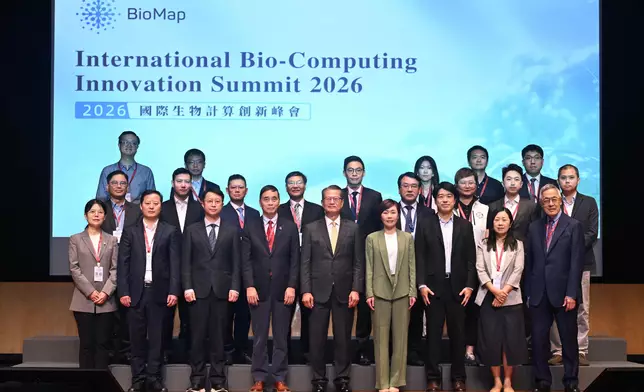
Speech by FS at International Bio-Computing Innovation Summit 2026 (with photos/video)
Following is the speech by the Financial Secretary, Mr Paul Chan, at International Bio-Computing Innovation Summit 2026 today (November 6):
Click to Gallery
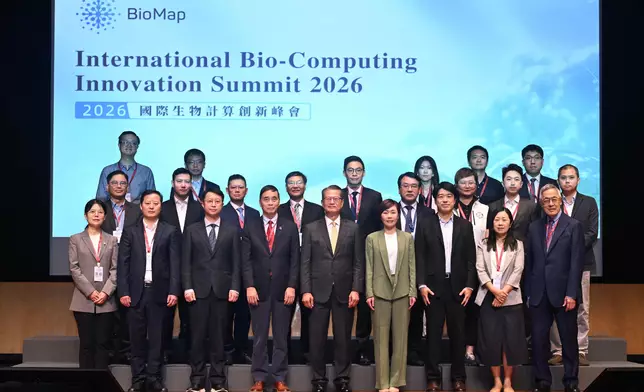
Speech by FS at International Bio-Computing Innovation Summit 2026 Source: HKSAR Government Press Releases
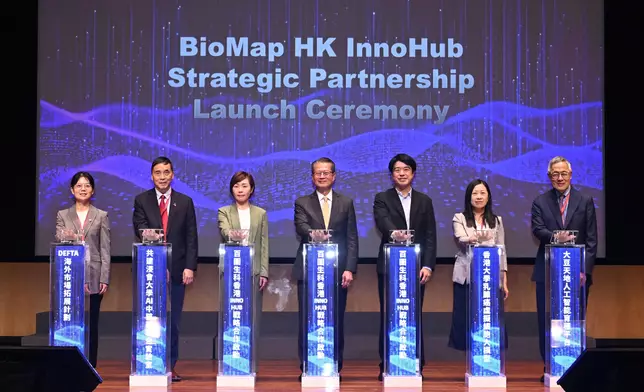
Speech by FS at International Bio-Computing Innovation Summit 2026 Source: HKSAR Government Press Releases
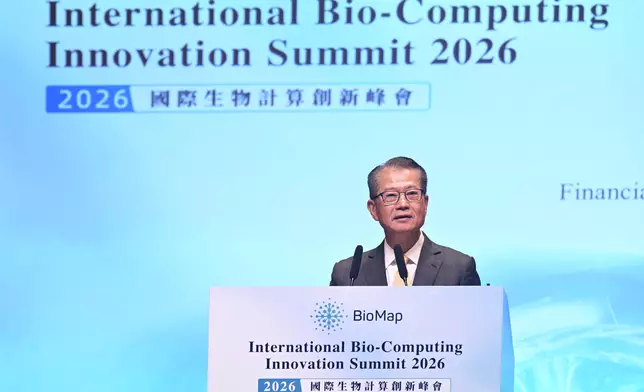
Speech by FS at International Bio-Computing Innovation Summit 2026 Source: HKSAR Government Press Releases
Source: AI-found images
Liu Wei (Co-founder and Chief Executive Officer of BioMap), Clara (Chief Executive Officer of the Hong Kong Investment Corporation Limited, Ms Clara Chan), distinguished speakers and guests, ladies and gentlemen,
Good morning. It is a pleasure to open the third International Bio-Computing Innovation Summit. To everyone joining us from overseas and the Mainland, a very warm welcome to Hong Kong.
Let me begin with two laws that tell very different stories about scientific progress.
Many of you will be familiar with Moore’s Law. In computing, we have come to expect more computing power for lower cost every year or two. It is the kind of progress we would all like to see in other fields.
Yet medicine has followed a very different path. For some 70 years, even as the science grew more sophisticated, the cost of bringing a new drug to patients doubled roughly every nine years.
This is known as Eroom’s Law: Moore’s Law in reverse, even in its name. There is a little humour, but none in the consequences. Behind that rising curve are promising treatments that were never able to secure funding, and patients waiting for better medical options.
That is why this summit matters. Can advances in computing and biology help reverse the pattern of Eroom’s Law so that treatments can be brought to patients sooner? And what will it take to translate that aspiration into tangible benefits for patients?
I am optimistic, and there are good reasons for optimism. There are three forces that could help us bend the curve, and Hong Kong can contribute in the process.
The first force is the power of computing to transform biological research.
Over the past two decades, gene sequencing has become far cheaper. We have learnt to “read” the code of life. With AI (artificial intelligence), we are now learning to “model” how life works. And we are beginning to “write” that code–to design molecules, antibodies and enzymes, rather than relying on trial and error in the laboratory alone.
The progress is pleasing. This year, a drug discovered by generative AI has entered phase three clinical trials. This is a late stage trial on patients. The company behind it is listed in Hong Kong.
Regulators are also beginning to accept evidence from computer models. They are recognising AI tools for specific tasks in drug development. They are also allowing alternatives to animal testing for safety checks. Wider acceptance of these methods could help reduce the cost of bringing new drugs to patients.
But we must also be realistic. AI cannot eliminate clinical risk: some AI-designed drug candidates failed in late-stage trials. What AI has achieved is to shift the bottleneck from discovery to validation. The progress will depend on the quality of the data, the speed of the trials and the approach of regulators. Solving that bottleneck can be an important next step in bending the curve.
The second force is the changing geography of drug innovation, and the opportunity to connect it better.
Drug development is a global endeavour, and China now is no longer just a market for global pharmaceutical companies. It has become an indispensable part of their global research and development network.
Last year, overseas licensing deals for innovative drugs from China reached nearly US$140 billion in total value, almost 10 times the level in 2021. Recently, valuations of many Chinese companies developing innovative medicines have also surged substantially.
But the point is not about that China is rising. It is that we have more sources of promising innovation, and more opportunities to bring the resources needed to develop them. If we can connect them better, we can reduce duplication and help promising medicines move more quickly from laboratories to the market.
The third force is capital – not just how much we invest, but how well we put it to work.
Global venture funding for biopharma has fluctuated in recent years. But AI-driven drug development platforms still attract substantial investment. This year, one such company raised over US$2 billion in just a single round. At the same time, investors are asking for stronger clinical evidence and clearer paths to market. The opportunity is to combine the ambition to fund new approaches with the discipline to test whether they work.
In Hong Kong, the Government is also making these industries a priority, with a commitment to supporting their growth. Under the national 15th Five-Year Plan, our country has identified biopharma as an emerging pillar industry, and will develop biomanufacturing and brain–computer interfaces as future industries.
All these call for public-private partnership, supported by patient capital that crowds in private investment. The aim is not simply to spend more on drug development. It is to give promising science the time to prove itself – and direct more resources towards what works.
Ladies and gentlemen, against this backdrop, Hong Kong’s role is increasingly clear: to bring models, patients, markets and capital together–and help reduce the time and cost in bringing new treatments to the market.
Let me begin with the patient, because a promising molecule still has to be proven safe and effective. We want researchers to find the clinical trial infrastructure, expertise and regulatory framework here in this city.
That is why we are establishing the Hong Kong Centre for Medical Products Regulation, building our own capacity to independently assess medicines and medical devices.
That is why, in Hetao, or the Loop, we are working to make it easier for data and biosamples to move across the boundary. We are also linking laboratory research, clinical trials and real-world studies in Hong Kong and Shenzhen.
And that is why we are establishing the Life and Health Technology Research Institute, as well as building a third medical school with HKUST (The Hong Kong University of Science and Technology), which will have a strong focus on clinical research from the outset.
Beyond clinical research, we also help connect medicines with markets and investors. Global pharmaceutical companies and international investors want to access China’s new medicines in development through a familiar and trusted platform. This is exactly what Hong Kong offers.
Our capital market shows the strength of that role. Since the listing reforms for pre-revenue biotech firms back in 2018, we have become the world’s second-largest fundraising centre for biotechnology. Last December, when an AI drug developer listed in Hong Kong, its cornerstone investors included a global pharmaceutical company and a Chinese technology group. This is Hong Kong’s super connector role in action: bringing together drugmakers, technology companies and investors from both the Mainland and around the world.
Finance has a role to play long before a company is ready to list. Our complete fundraising chain supports innovators from start-up all the way through as their businesses grow. And through the Hong Kong Investment Corporation, we are bringing in patient capital, long-term investors, partners and expertise.
Clara will talk more about this shortly, but let me highlight one partnership that began at the very first edition of this summit: the collaboration between the Hong Kong Investment Corporation and BioMap.
Today, BioMap’s Hong Kong InnoHub is working with our universities to establish start-ups, train students to develop AI models that learn the language of proteins, and turn such models into tangible outcomes in biology. That is “Finance+” in action: finance supports and empowers what happens in the laboratory.
Ladies and gentlemen, let us return to the summit today. The “world models” to be discussed reminded me of economics. Economists have spent a century building models to explain how economies work – but only with very mixed results. I hope those who work on modelling living systems in biology will do better. Because if they do, we could see better treatments–and longer, healthier and happier lives for us all.
Eroom’s Law describes the past. It needs not dictate the future. If this is the decade in which we finally bend that curve, let Hong Kong play a part in making it happen.
Thank you, and I wish you a successful summit.
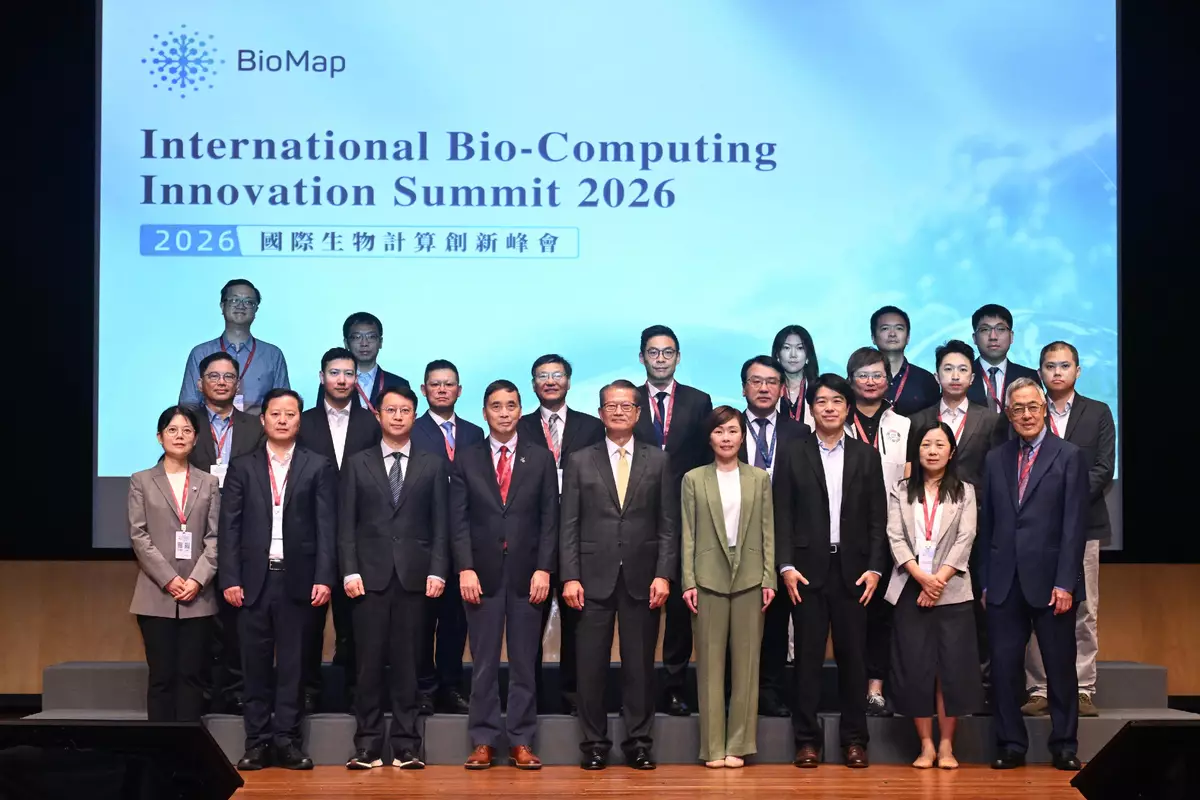
Speech by FS at International Bio-Computing Innovation Summit 2026 Source: HKSAR Government Press Releases
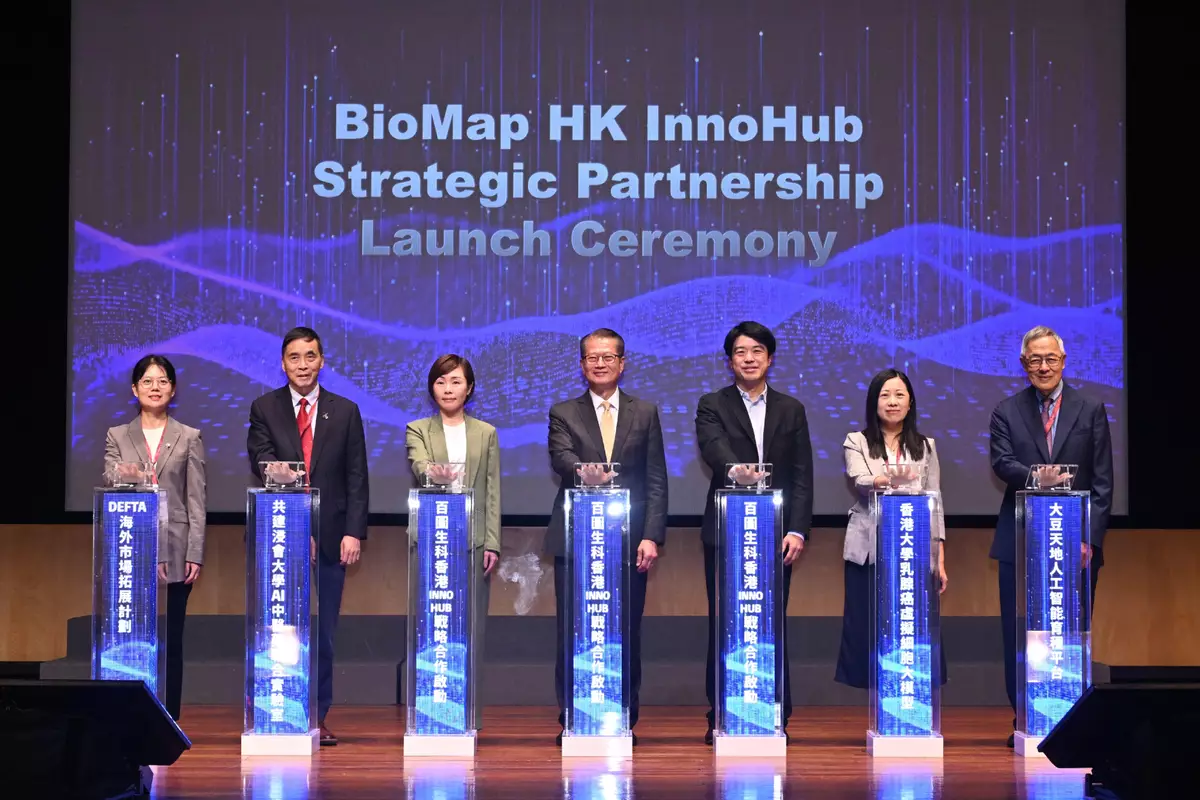
Speech by FS at International Bio-Computing Innovation Summit 2026 Source: HKSAR Government Press Releases
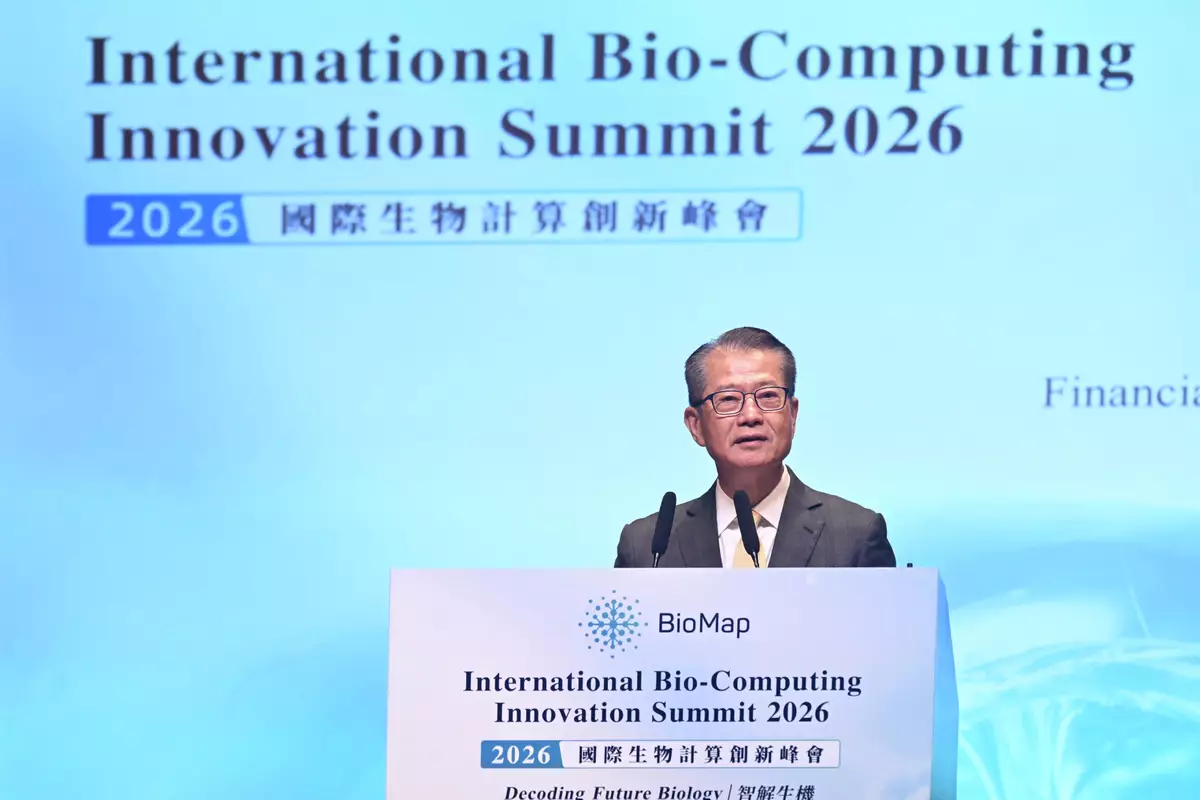
Speech by FS at International Bio-Computing Innovation Summit 2026 Source: HKSAR Government Press Releases
Source: AI-found images
Two registered minor works contractors and their authorized signatories disciplined
The Registered Contractors’ Disciplinary Board has completed two disciplinary inquiries under the Buildings Ordinance (BO) and decided that one of the registered minor works contractors (RMWC) and its authorized signatory (AS) should be disciplined for having been convicted by a court of offences related to building works, and the other RMWC and its AS-cum-director should also be disciplined for having been convicted of relevant offences, and negligent or having misconducted themselves in building works.
The Board’s written decisions and orders issued on October 20 were published in the Gazette today (November 6). Details are available at the following links:
Case 1: egazette.gld.gov.hk/pdf?type=egn&year=2026&volume=30&gno=45¬ice_no=7125
Case 2: egazette.gld.gov.hk/pdf?type=egn&year=2026&volume=30&gno=45¬ice_no=7126
The first case involved the alteration of a wall signboard at a shop on Yuen Long On Ning Road. The RMWC and its AS submitted a certificate to the BD in December 2022, certifying that the subject minor works, which were type C minor works under Class III, had been completed. An investigation by the BD revealed that the RMWC and its AS did not register the type and item of the said minor works, yet they had carried out and certified minor works for which they were not registered. The RMWC and its AS were subsequently prosecuted by the BD, and were convicted and fined $12,000 in total at the Tuen Mun Magistrates’ Courts in August 2024, pursuant to sections 40(2E) and 40(5) of the BO. In view of the convictions, the BD notified the Board for its consideration of disciplinary action against the RMWC and its AS under the provision of sections 13(1) and 13(3) of the BO.
Upon completion of the disciplinary inquiry, the Board ordered that the RMWC be removed from the register of minor works contractors for two months with effect from the date of the Gazette, and the AS be fined $4,000. Also, the RMWC and its AS were ordered to pay a total of $42,000, being the costs of the Board and the BD for conducting the inquiry.
The second case involved the erection of a wall signboard at the external wall of a building on Shau Kei Wan Road. The RMWC submitted a prescribed form to the BD in July 2022, notifying the commencement of Class II minor works for erecting a wall signboard at the external wall with a display area not larger than 10 square metres; and a certificate to the BD in the same month certifying the completion of the minor works. An investigation by the BD revealed that the display area of the said signboard was larger than 10 sq m, which should have been classified as Class I minor works requiring the appointment of prescribed building professionals to submit prescribed plans and details of works, and a notice of commencement and a certificate of completion of the works. The RMWC and its AS(also being the director of the RMWC) were subsequently prosecuted by the BD, and were convicted and fined $16,000 in total at the Eastern Magistrates’ Courts in May 2024, pursuant to sections 40(2A)(c), 40(2A)(e) and 40(6) of the BO. In view of the convictions and that the RMWC and its AS-cum-director had been negligent or had misconducted themselves in building works, the BD notified the Board for its consideration to take disciplinary action against the RMWC and its AS-cum-director under the provisions of sections 13(1) and 13(3) of the BO.
Upon completion of the disciplinary inquiry, the Board ordered that the RMWC be removed from the register of minor works contractors for two months with effect from the date of the Gazette and be fined $4,000, and the AS-cum-director be fined $12,000 in total. Also, the RMWC and its AS-cum-director were ordered to pay a total of $46,300, being the costs of the Board and the BD for conducting the inquiry.
A spokesperson for the BD reiterated that any registered contractor who contravenes the relevant provisions of the BO in carrying out building works, or is convicted by any court of an offence relating to building works, or has been negligent or has misconducted himself in building works, will be subject to enforcement action including criminal prosecution and disciplinary action under the BO.
Source: AI-found images