NVIDIA introduced key technologies and use cases for RTX Spark, its next-generation premium PC platform specialized in running local AI agents. While designed primarily for AI development and content creation, the platform also features the ability to run high-end games utilizing the latest graphics technology, including DLSS 5.
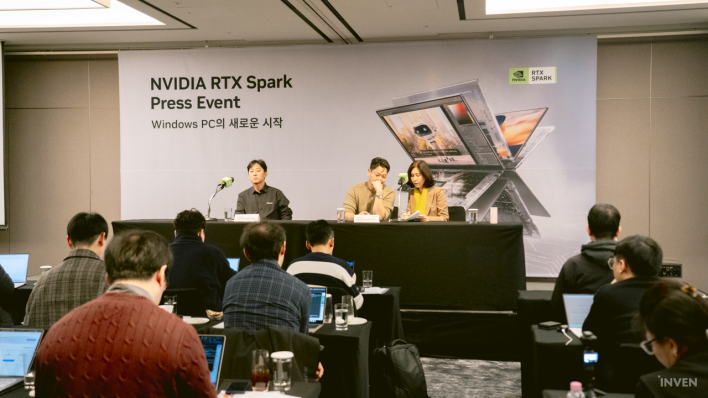
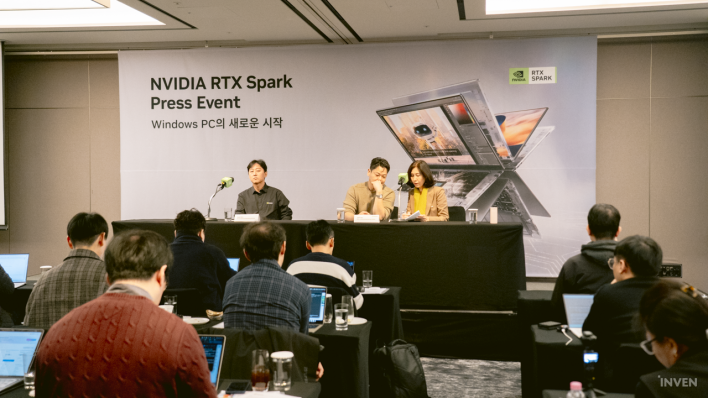
On November 6, NVIDIA hosted an RTX Spark press conference at the JW Marriott Hotel in Seoul. The event served to present the core technology and performance of RTX Spark—which went on sale in Korea on October 16—and demonstrate real-world use cases, including local AI agents, content creation, and gaming.
The presentation was delivered by Jeff Yen, Technical Marketing Director for NVIDIA APAC. Looking back at the evolution of GPU architecture, CUDA, and RTX technology that NVIDIA has developed over the past 25 years, he explained that AI agents will sit at the center of next-generation PCs.
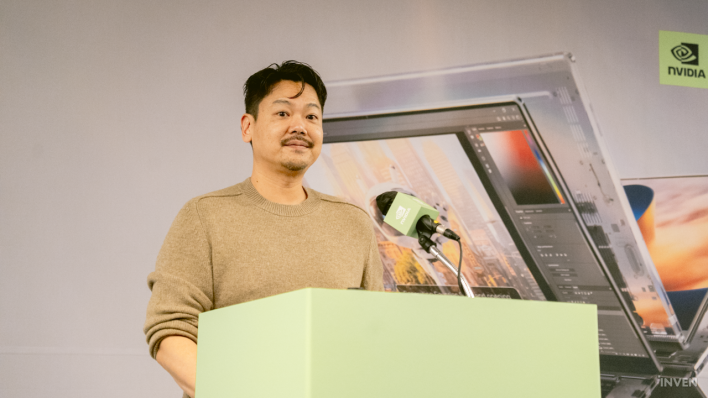
Director Jeff Yen emphasized, “2026 is such a crucial inflection point that it could be called the year of local AI agents,” adding that “AI agents are transforming PCs from simple tools into co-workers.”
The RTX Spark introduced by Yen is built on a superchip that integrates NVIDIA’s Blackwell RTX GPU and Grace CPU into a single package. Designed in collaboration with MediaTek, the CPU features up to 20 cores, while the GPU and CPU share data over an NVLink-C2C interface.
Through this architecture, it delivers up to 128GB of unified memory and 1 petaflop of AI compute performance (based on FP4). It is designed to alleviate the memory capacity constraints that plagued existing PCs when running large AI models, allowing the GPU and CPU to utilize the same memory pool across various tasks.
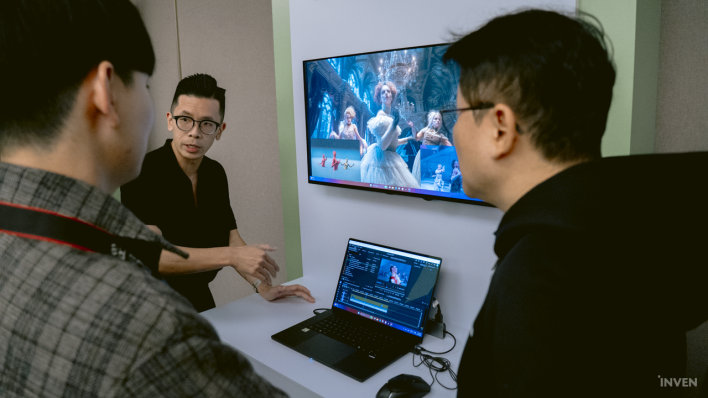
The biggest differentiator emphasized by RTX Spark is its ability to run AI agents locally on the PC without relying on the cloud.
Director Jeff Yen highlighted privacy protection, reduced dependency on network connectivity, faster response times, and lower cloud API costs as the benefits of local AI. In particular, because AI models and the files required for tasks can all be stored on the local PC, sensitive information can be processed without being transmitted to external servers.
Scenarios requiring cloud models for complex tasks were also taken into account. NVIDIA’s NeMo Switchyard is a technology that selectively utilizes local and cloud AI models based on task complexity and required performance. Relatively simple tasks are processed locally on the PC, while cloud models are tapped when higher inference capability is needed.
Various examples of applying these technologies to real-world tasks were presented at the event. However, rather than hands-on testing or performance measurements by reporters, the event proceeded in a format where staff explained and demonstrated features in pre-configured environments.
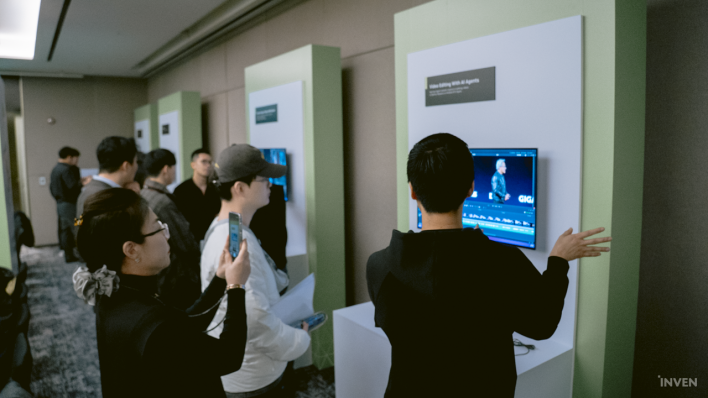
First, the “Chief of Staff” AI agent was presented as an example of managing the user’s schedules and tasks. Going beyond answering simple questions, the AI functions as a personal assistant that supports schedule verification and task management.
The “Microduck” development agent was highlighted as a use case for supporting programming and robotics development. NVIDIA explained that the advantages of a local AI environment stand out even more in development and training workflows that require long, repetitive execution.
In the content creation domain, the “Video Producer Agent” and “Music Performance Reimagined” were introduced. These involve AI agents linking various creation tools to assist with the video production pipeline and creative workflows.
Director Jeff Yen stated, “Knowing what you want to create and knowing how to actually create it are two entirely different things,” explaining that users can perform complex creative work with the assistance of AI agents without having to master every piece of professional software.
According to NVIDIA, more than 130 creative applications currently support RTX acceleration. Users can leverage the performance of RTX Spark not only in traditional content creation tools like Photoshop and Premiere Pro, but also in generative AI-powered video editing and 3D content creation.
Gaming is another key use case pitched for RTX Spark. Director Jeff Yen emphasized that “AI developers and creators play games too,” highlighting that RTX Spark is fully equipped to run games.
RTX Spark supports NVIDIA’s core gaming technologies, including DLSS, Ray Tracing, Reflex, and G-SYNC. According to NVIDIA, 97 out of the top 100 popular games run on RTX Spark at launch, with plans to expand support further in the future.
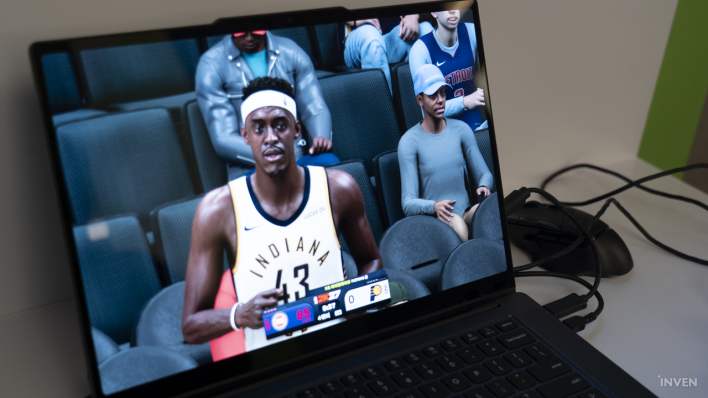
Prominent games showcased at the event included NBA 2K27 and NCSOFT’s AION 2.
NBA 2K27 in particular was presented as an implementation of the latest DLSS 5 technology. DLSS 5’s 3D-Guided Neural Rendering uses AI to enhance the fidelity of lighting and materials in games. Rather than merely upscaling resolution or generating frames, it focuses on rendering more realistic lighting, skin, hair, and other details.
Director Jeff Yen cited NBA 2K27’s October update as an example, explaining that an optimized DLSS 5 model improved performance while maintaining image quality. Presentation materials showed a case where framerates improved from approximately 65 FPS before the update to around 90 FPS after applying the new model.
AION 2 was also featured as a title running on RTX Spark. NVIDIA highlighted that its Unreal Engine 5-based high-end graphics are supported by technologies like DLSS 4.5, allowing players to enjoy the game without needing a massive desktop gaming system.
What was impressive at the venue, beyond performance, was the laptop size and power efficiency. The RTX Spark laptop superchip operates within a thermal design power (TDP) envelope of 45–80W, and the displayed products felt surprisingly light compared to typical high-performance gaming laptops. Heat output was also not noticeably tangible during game demos. However, this was an impression on-site, not a result from standalone temperature or power consumption measurements.
Performance retention when running on battery was also highlighted. Citing internal test results, Director Jeff Yen explained that even when operating on battery without external power, the system retains approximately 98% of its performance compared to being plugged in.
These features underscore how RTX Spark targets a different segment than conventional gaming laptops. Rather than prioritizing gaming performance above all else, RTX Spark aims to be a premium PC built primarily for AI development and content creation, while still fully capable of gaming.

In fact, high pricing emerged as a major topic during the Q&A session following the presentation. While acknowledging that RTX Spark carries a high price point, Director Jeff Yen predicted that the first buyers in the current market will likely be AI developers, content creators, and early adopters.
He explained, “In the current market landscape, no one will consider RTX Spark a cheap product,” adding, “As a premium offering, its value will depend on what tasks users intend to perform.”
He also noted that traditional x86-based PCs paired with discrete GPUs will continue to see strong demand, stating that the two product categories can coexist depending on user intent. An NVIDIA official added that for users whose sole purpose is gaming, existing high-performance gaming laptops may be a better fit.
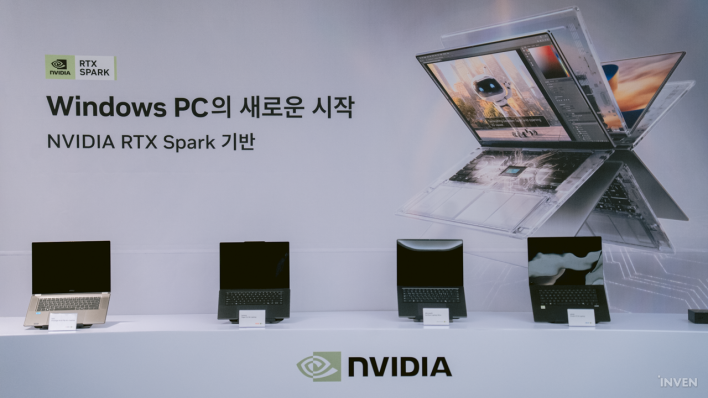
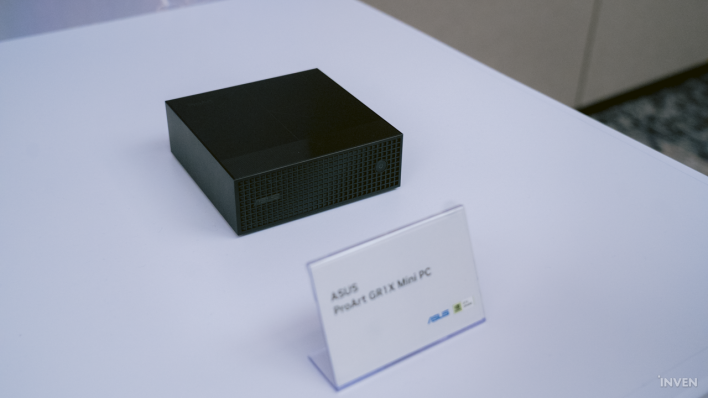
Meanwhile, RTX Spark-powered products on display at the event included Microsoft’s Surface Laptop Ultra, ASUS’s ProArt P16, MSI’s Prestige N16 Flip, and Lenovo’s Yoga Pro 9n.

RTX Spark laptops are available for purchase through official manufacturer retail channels—including ASUS, MSI, Lenovo, and HP—as well as domestic online storefronts. To celebrate the launch, NVIDIA is also running a promotion offering select new users a two-month subscription to Perplexity Pro along with bonus credits.
The market RTX Spark is targeting is clear: expanding the AI ecosystem—which has developed primarily around the cloud—to personal PCs, enabling AI development, content creation, and gaming all on a single system. Whether it can deliver enough practical value to justify its premium price tag to a broad range of users will likely be the key challenge for RTX Spark moving forward.
[Read Original]