Section 9’s End of Abyss sat in my review backlog longer than it should have. Several people in my community kept encouraging me to play it, but a busy review schedule meant I struggled to make time. After finally putting around 12 to 15 hours into the Xbox Series X version, I wish I had listened sooner. This has become one of my favorite indie experiences of the year. Its combination of unsettling atmosphere, interconnected environments, and tense combat kept pulling me back, even with other games competing for my attention.
Developer & Publisher // Section 9 Interactive, Epic Games
Platforms // PlayStation 5, XBOX Series X|S, and PC
MSRP & Release Date // $29.99, October 1st 2026
Reviewed On // Xbox Series X
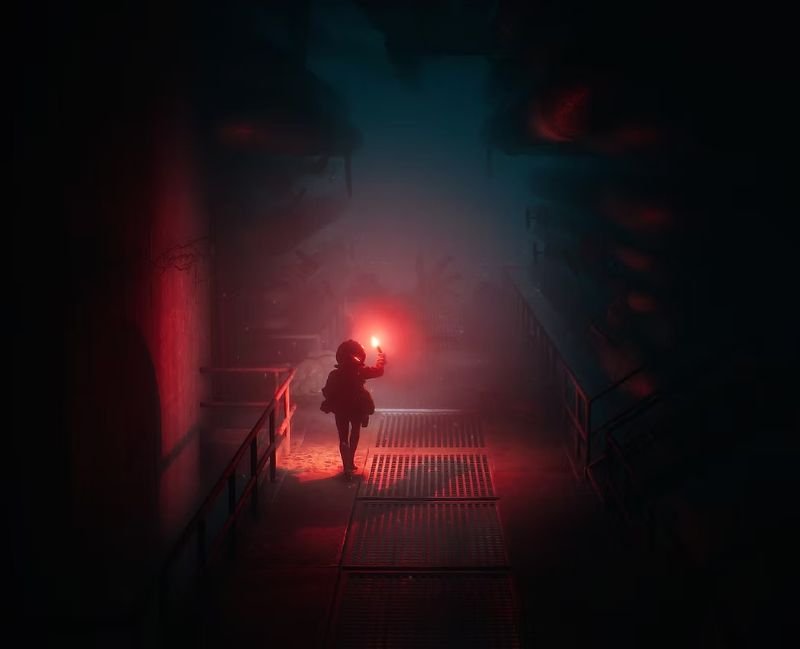
- End of Abyss has an unsettling atmosphere similar to Dead Space and Little Nightmares thanks to its constant tension and dark visual design.
- The lack of voiced dialogue was disappointing, but the audio design made up for it.
The atmosphere is easily End of Abyss’ greatest strength. Its environments feel uncomfortable before anything even attacks you, and the sound design does much of the heavy lifting.
Hearing creatures somewhere beyond the room you’re exploring creates a constant sense of unease. Sometimes they sound close enough to be around the corner, even when reaching them means navigating several connected areas. Their cries echo through the environment, leaving you wondering exactly how safe you are.
That tension brought back some of the feelings I had playing Dead Space for the first time. There’s a strong sense that something terrible happened here, and exploring means gradually uncovering the aftermath.
The visual design also reminded me of Little Nightmares. There’s an unsettling quality to the artwork that makes simply moving through an area compelling. Combined with the audio, it creates a world I wanted to investigate even when I wasn’t particularly comfortable being there.
The lack of voice acting was disappointing for me. However, the environmental audio is so effective that it still gives the setting a strong identity.
End of Abyss Wears Its Influences on Its Sleeve
- Level progression in End of Abyss takes cues from games such as Resident Evil and Demon’s Souls with alternative routes and shortcuts.
- The game encourages players to pay attention to their surroundings and usually rewards that curiosity.
End of the Abyss clearly takes notes from the Resident Evil series. Especially when it comes to progression. It’s common to discover locked routes, search for access cards, acquire tools, and revisit places that become accessible as your options expand.
There’s a Metroidvania feel to that structure. Finding something new can change how you understand an earlier area, giving you a reason to retrace your steps.
The interconnected map is particularly satisfying. Unlocking a door and realizing it leads back to a familiar location gives exploration a tangible payoff. Those shortcuts reminded me of the level design in Demon’s Souls, and they become especially useful when returning to difficult encounters.
Rewarding Exploration
- Exploration in End of Abyss is rewarding, often providing upgrade resources and suit modifications.
- In particular, searching vaults and corpses will often result in useful upgrades.
Exploring thoroughly can also uncover weapons, upgrade resources, and suit modifications. Bosses I defeated dropped vault keys, which gave me another reason to search for the vaults scattered around the map. Finding one and collecting a useful modification made the detour feel worthwhile.
You can search bodies for resources, too. End of the Abyss consistently encourages you to pay attention to your surroundings, and it usually rewards that curiosity.
Getting Lost Is Part of the Experience
- End of Abyss employs Metroidvania mechanics, where certain tools and keys open up new areas of the interconnected map.
- The scanner is an essential tool; it will highlight items of interest and could lead to clues to guide you where you have to go next.
I hate to admit it, but it’s easy to get lost in End of Abyss, and it happened quite a few times. Progression can involve several connected requirements: you need a tool to reach one area, but getting that tool requires a card that opens somewhere else. Keeping track of those steps occasionally left me wandering.
The shortcuts and shuttle system help, but the scanner became one of my most useful tools. It can highlight things worth investigating, including documents that provide the information needed to move forward. My biggest advice is to use it whenever you feel stuck. Something that initially looks like background detail may hold the clue you’re missing. The scanner also adds to combat preparation by letting you learn about enemies and how to approach them. It serves a practical purpose beyond simply pointing out collectibles.
Tense Combat With Some Control Frustrations
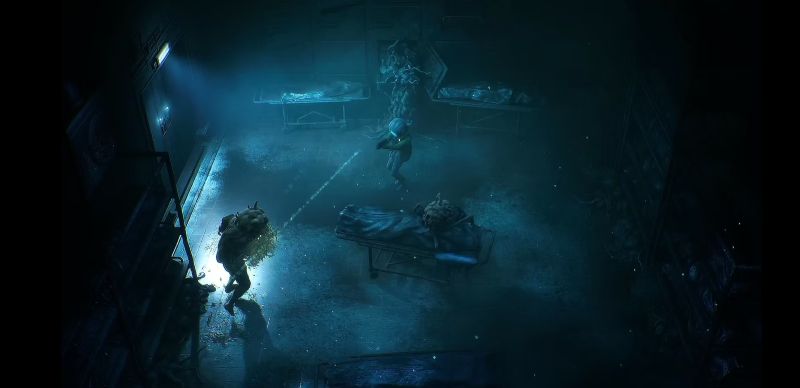
- End of Abyss uses twin-stick shooting mechanics, which sometimes causes awkward aiming.
- Regenerating pistol ammo prioritized upgrades, and made other weapons feel less
- Default controls of holding the X button to run didn’t feel natural.
End of Abyss combat relies on a twin-stick shooting setup, and encounters can become dangerous quickly. Charging ahead without considering enemy placement or your available tools is an easy way to get overwhelmed.
There are multiple weapons to find and upgrade, although you can only carry two at once. Crafting adds more options through ammunition, grenades, flares, and deployable explosives.
My biggest balance concern is the pistol. Its ammunition recharges, which made it such a dependable option that I focused much of my upgrade investment on it. That convenience also reduced some of the resource pressure I usually enjoy in survival horror. Other weapons had a harder time convincing me to put them away.
Aiming occasionally felt awkward as well. I would have appreciated a lock-on option, particularly during encounters where missing a shot could quickly put me in trouble.
The default controls were another sticking point. Holding X to run didn’t feel natural to me, and the ability placement took some adjustment. I use a controller with remapping options, but the standard layout still affected my experience. These frustrations never outweighed what I enjoyed, although they were the areas where I most wanted refinement.
Boss Fights That Keep You Engaged
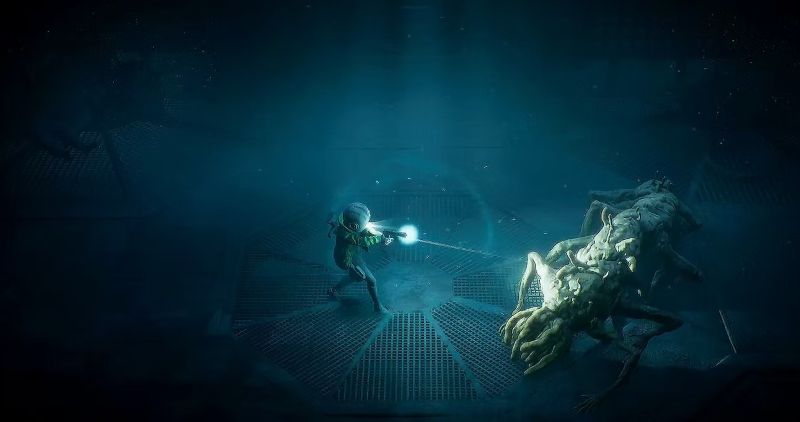
- Boss encounters feature distinct attack patterns, evolving mechanics, and punishing difficulty, rewarding repeated attempts, strategic equipment use, and learning enemy behavior.
- While boss fights deliver satisfying, skill-based combat and meaningful progression, more dramatic visual transformations during behavioral or phase changes would make encounters feel even more impactful.
The boss encounters have been another highlight. The ones I fought had distinct patterns to learn, with changes during the fight that forced me to adjust. Some took several attempts. One encounter had me retrying around five or six times, and certain situations made the damage feel especially punishing. Even then, I generally wanted to jump back in and improve my approach.
I would have liked more visible transformations to accompany changes in boss behavior. A stronger visual shift could have made those moments more dramatic. Mechanically, though, these fights gave me satisfying reasons to learn enemy patterns and make better use of my equipment.
Final Thoughts on End of Abyss
End of Abyss is a welcome surprise, combining oppressive atmosphere, excellent sound design, rewarding exploration, and engaging boss fights. Although its dependable pistol, awkward controls, and demanding navigation need refinement, they have not diminished the fun. After 15 hours, it stands among my indie highlights of the year.
Note – A review copy was provided by the publisher.
Pros
Oppressive, highly creepy atmosphere with impressive sound design
Rewarding Metroidvania-style exploration and interconnected level design.
Engaging and challenging boss encounters that test pattern recognition.
Useful scanner mechanic for navigating and analyzing enemies.
Cons
Awkward default control layout and twin-stick aiming.
Recharging pistol ammo reduces resource tension and weapon variety incentives.
Easy to get lost during multi-step navigation sequences.
Lack of voice acting and limited visual transformations during boss phases.