Listen to this article
Estimated 3 minutes
The audio version of this article is generated by AI-based technology. Mispronunciations can occur. We are working with our partners to continually review and improve the results.
Prime Minister Mark Carney says Ottawa has made progress on a trade irritant with the European Union — a carbon tariff on energy intensive Canadian exports.
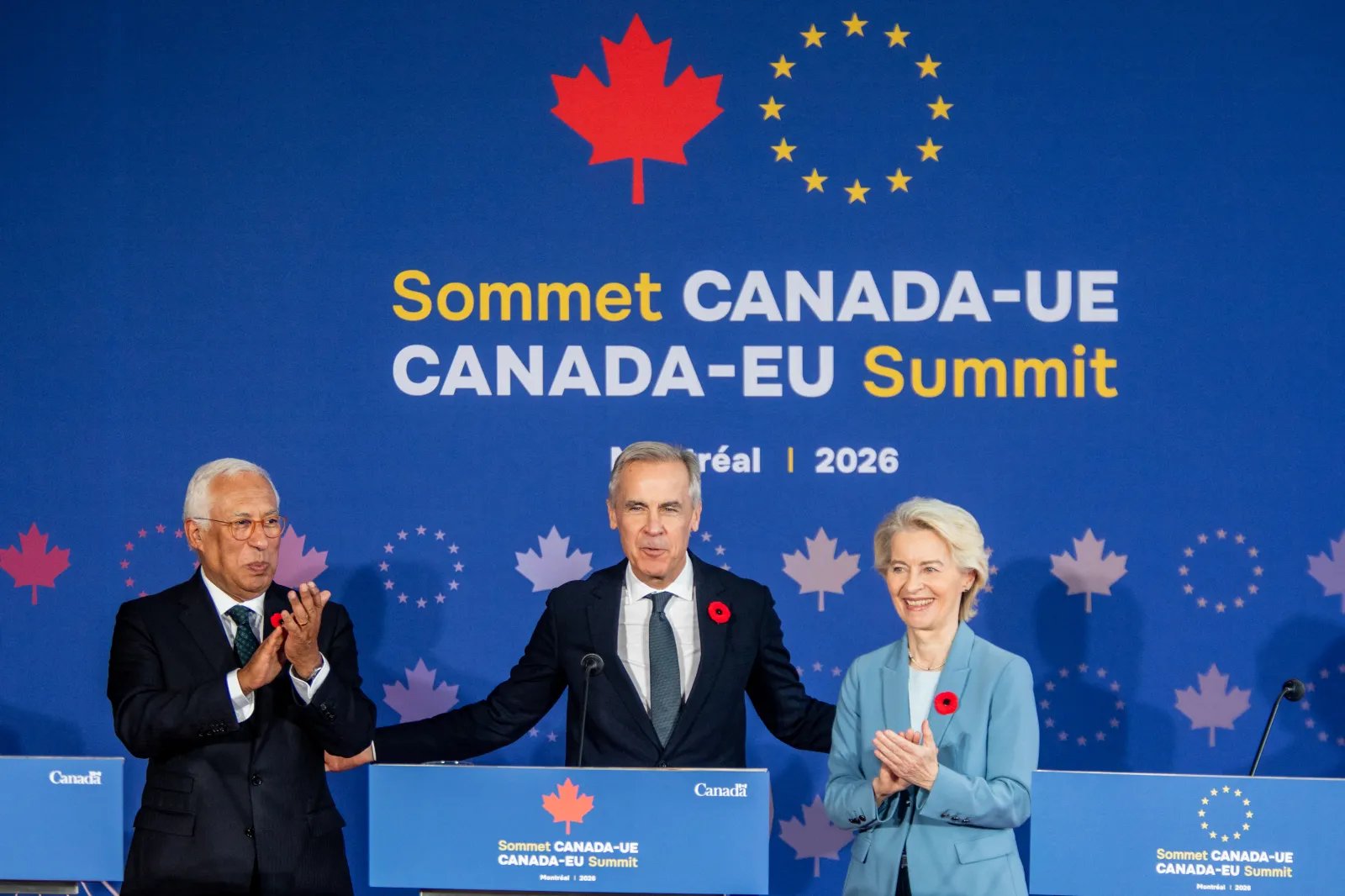
At the closing news conference for the Canada-EU summit in Montreal, Carney said there are “common solutions” to resolving the carbon import levy on Canadian products such as iron ore, steel, aluminum, cement and other goods.
Following up on Carney’s remarks to a reporter’s question, EU Commission President Ursula von der Leyen said she couldn’t have answered it better on what she called “trade irritants.”
The EU’s carbon border adjustment mechanism, or CBAM, is currently being applied at a low level and will ramp up to full implementation in 2034. It’s meant to encourage exporters from around the world, not just Canada, to lower the planet-warming emissions created when producing their industrial goods.
CBC News reported ahead of the summit that Ottawa’s diplomats were concerned about not only the carbon tariff that would be imposed but the cost of compliance. Canadian exporters would need to assess, report and verify the amount of embodied carbon in products.
CBC obtained an internal document ahead of the summit, which shed light on Ottawa’s concerns. Global Affairs estimated $2.8 billion worth of goods annually are exposed to the carbon import levy — primarily on metals that are already affected by U.S tariffs.
Those figures are averages based on data between 2021 and 2024, meaning exposure could be higher as Canadian goods seek new buyers to avoid U.S. tariffs.
The memo also states Canada is not exempt from the carbon tariff even with Canada’s national price on carbon and its decade-old trade deal with the European Union.
Canada’s ambassador-designate to the EU, Jonathan Wilkinson, spoke with CBC’s Power & Politics and confirmed diplomatic talks are heading in the right direction but not resolved.
Wilkinson said “the problem” Ottawa had with the European carbon border mechanism is it did not acknowledge Canadian producers were doing their part to reduce their greenhouse gas footprint by paying an industrial carbon price.
“We made enormous progress addressing those issues,” Wilkinson told host David Cochrane. “They [the EU] will recognize our carbon price.”

John Hannaford, personal representative of the prime minister to the EU, left, and Jonathan Wilkinson, Canada’s ambassador-designate to the EU, arrive at a news conference at the European Parliament in Strasbourg, France, on Sept. 17. (Justin Tang/The Canadian Press)
It’s not clear how much credit producers will get for paying Canada’s carbon price, but Wilkinson said “there’s a bit of work” still to do.
“Effectively, it needs to be in place by, I think, September or October of 2027. So there’s some time,” Wilkinson said.
Wilkinson said Canada has a competitive advantage compared with other countries, like the United States, who don’t have a carbon price and will likely face a full tariff from the E.U.
The update from the Carney government comes as the Liberals were under new pressure from the Conservatives to resolve the issue.
“Prime Minister Mark Carney has spent months talking up Canada’s relationship with the European Union. But to date, has failed to eliminate this threat to Canadian businesses,” read a statement from the Conservatives.