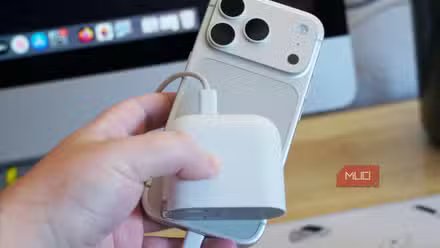
I wasn’t paranoid about preserving the battery health of my electronics until I started driving an electric car. Suddenly, I had a (depreciating) asset worth tens of thousands of dollars, and I could degrade its pricey battery by improperly charging it. But does that same logic apply to smartphones, which have lithium-ion batteries that similarly degrade faster or slower based on my usage habits? That’s the question I briefly pondered, before quickly realizing it doesn’t make much sense to limit my phone charging at all.
My phone’s battery couldn’t be more different from the battery in my car, and requires different care. I want to keep my car for as long as possible, while I’ll probably replace my phone every few years. I don’t need to use more than 80% of my car’s battery for everyday driving, but I do need my phone’s full capacity daily. My car battery’s repair cost is overwhelming, whereas my phone battery is cheaper to replace than some phone cases are to buy.
Put it all together, and the decision was easy. I won’t ever limit my phone’s battery to 80%, and I don’t think you should either.
Smartphone batteries last longer than you think
The battery might last longer than the phone stays in your pocket

Smartphone batteries don’t require replacing every year or two anymore, as their rate lifespans are extending. When you unbox a new phone, fully charging it provides 100% of its original capacity. Over time, the battery degrades, and the usable capacity will be less than when it was new. Each phone has a rated charge cycle count, which is the number of times the battery can be charged and discharged fully before it is expected to retain below 80% of its original capacity.
That’s important in the context of charge limits. Avoiding charging your phone above 80% can prolong the battery’s lifespan, as avoiding discharging your phone below 20% can. The middle is the sweet spot. If you set an 80% charge limit, you’re giving up 20% of your phone’s capacity daily. All the while, your phone’s manufacturer is telling you when it is expected to drop below 80% of its original capacity due to battery degradation.
These figures are available thanks to the European Union’s energy label database. The Samsung Galaxy S26, Galaxy S26 Plus, Galaxy S26 Ultra, and Galaxy S26 FE are rated for 1,200 charge cycles before their usable capacity dips under 80%. It’s the same for many Motorola flagships, too. The newest iPhones and Google Pixel phones are rated for 1,000 charge cycles.
If you don’t use your phone that often, you might use 150 or 200 battery cycles annually. Those on the other end of the spectrum, the power users, might record over 400 cycles per year. It varies based on usage, but the estimations are clear — flagship phones will run smoothly for years before their usable capacity dips below 80% compared to new. So, why give up that extra capacity before you have to?
Battery replacements are quick, cheap, and easy
If you need a new battery, it won’t be hard or expensive to get
The Fairphone 6, pictured above, is designed with repairability in mind.
Let’s say you use about 300 charge cycles per year — the Galaxy S26 series should last four years on its original batteries before degradation causes usable capacity loss beyond 20%. If you plan to keep a phone throughout its entire software support window, which is about five years for iPhones (minimum) and seven years for Pixel and Galaxy phones, you’ll have to replace the battery sometime in the middle.
There are two reasons that a midlife battery replacement isn’t something to worry about for a smartphone. For one, the average user simply doesn’t keep their phone long enough for battery degradation to cause a significant impact on everyday battery life. The average upgrade cycle is between two and three years in the U.S., and that makes perfect sense.
It lines up with two- or three-year cellular carrier contracts. If you’re trading in or replacing your phone before its rated lifespan is used up, setting a charge limit will only benefit the phone’s next owner.
Those that keep their phones until they break should still consider skipping a hard charging cap. Smartphone batteries are relatively affordable to replace. A new battery for the iPhone 17 costs just $99 at Apple, and that covers a full-service replacement. If you’re the handy type, you can get a Google Pixel 10 battery complete with the parts and tools you need from iFixit for only $50. Whether you go the DIY or repair shop route, replacing your phone’s battery three or four years into ownership won’t break the bank.
In my case, I keep some phones forever and trade in others early. No matter what I decide to do with a particular phone, I’m content with charging to 100% every night. If I give it up before battery degradation impacts my daily use, there’s no problem. When the battery starts to degrade enough, I’ll pay for a repair to extend its lifespan. It’s a win-win scenario in my book.
I won’t willingly sacrifice 20% of my phone’s battery
To avoid my phone’s battery degrading… I should artificially limit it?

Battery degradation certainly isn’t a myth, and there are some reasons you may want to set a charge limit for your phone. Those that don’t need their phone’s full capacity daily might want to set a charge limit, as it doesn’t hurt. For longer travel days when they need the extra juice, they can remove the limit and unlock more of their phone’s capacity. By slowing their battery degradation with a charge limit, these users could have more usable capacity saved for heavy days than I would without a charge limit.
The other consideration is your personal upgrade cycle. People that know they want to keep their phones as long as possible might see value in prioritizing long-term battery health. It is a trade-off, though. You have to decide whether giving up 20% of your phone’s battery capacity today is worth staving off the effects of battery degradation tomorrow.
Considering how I use my phone, I won’t give up the extra capacity daily. I charge my phone to 100% without worrying much about it. If the day comes when battery degradation sets in and my phone doesn’t last a full day, I’m ready and willing to replace it. The potential cost-savings of dodging a battery replacement isn’t worth artificially limiting my phone’s usable capacity in the here and now.