U.S. travelers are being warned that Mexico’s border state of Tamaulipas remains one of the riskiest places for Americans to visit, even as recent shelter-in-place instructions for U.S. government personnel in the city of Matamoros were lifted following several days of security operations and road blockages.
Get the latest news straight to your inbox!
Shelter Orders Lifted in Matamoros After Days of Unrest
Publicly available alerts from local media in Tamaulipas indicate that the U.S. Consulate in Matamoros ordered its staff to shelter in place on October 29, 2026, after security forces launched operations that led to road blockades and disrupted traffic across key arteries in the border city.
The following day, on October 30, 2026, multiple Mexican news outlets reported that the consulate lifted the shelter-in-place requirement for U.S. government employees in Matamoros as conditions on the ground stabilized and movement in the city resumed. The alerts described how consular personnel were allowed to leave their facilities again after being instructed to remain inside during the height of the disturbances.
Despite the easing of those internal restrictions, coverage from regional news organizations emphasized that the broader security context in Tamaulipas has not fundamentally changed. The lifting of the shelter order applied only to consulate staff in Matamoros and did not signal a downgrade of risk for travelers in the rest of the state.
Reports summarizing the consulate’s message noted that the incident was another reminder of how quickly conditions can deteriorate along this stretch of the U.S.–Mexico border, where road closures, confrontations involving security forces, and criminal blockades can appear with little notice.
Tamaulipas Remains Under Level 4 “Do Not Travel” Status
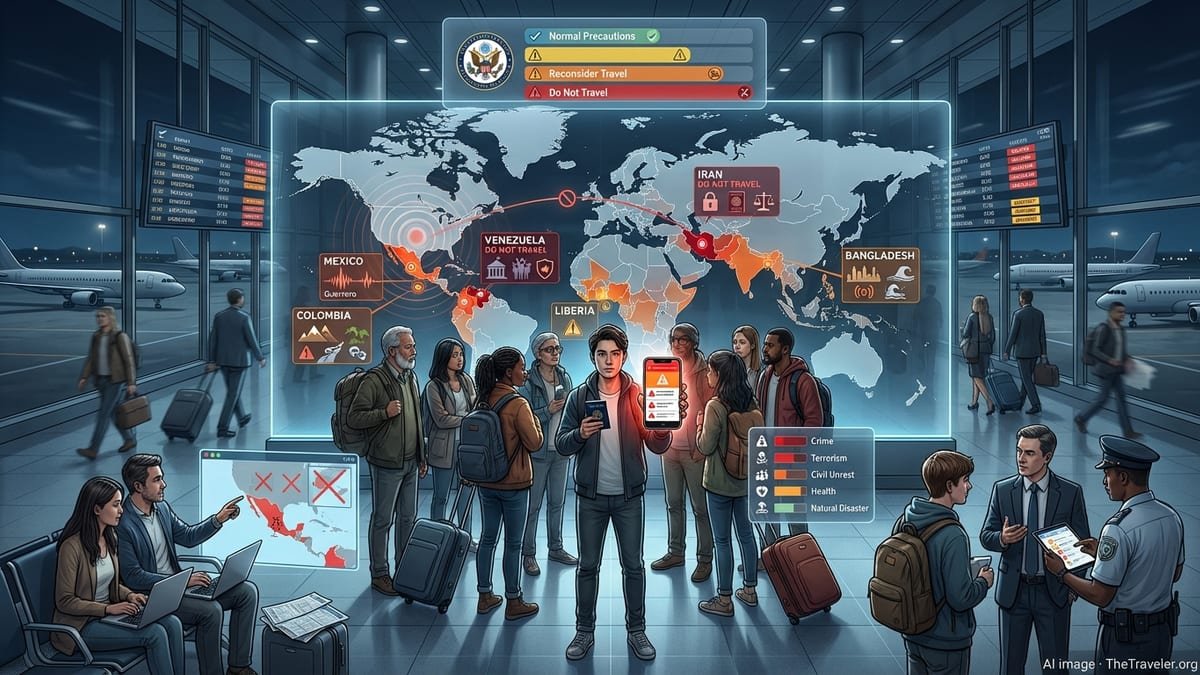
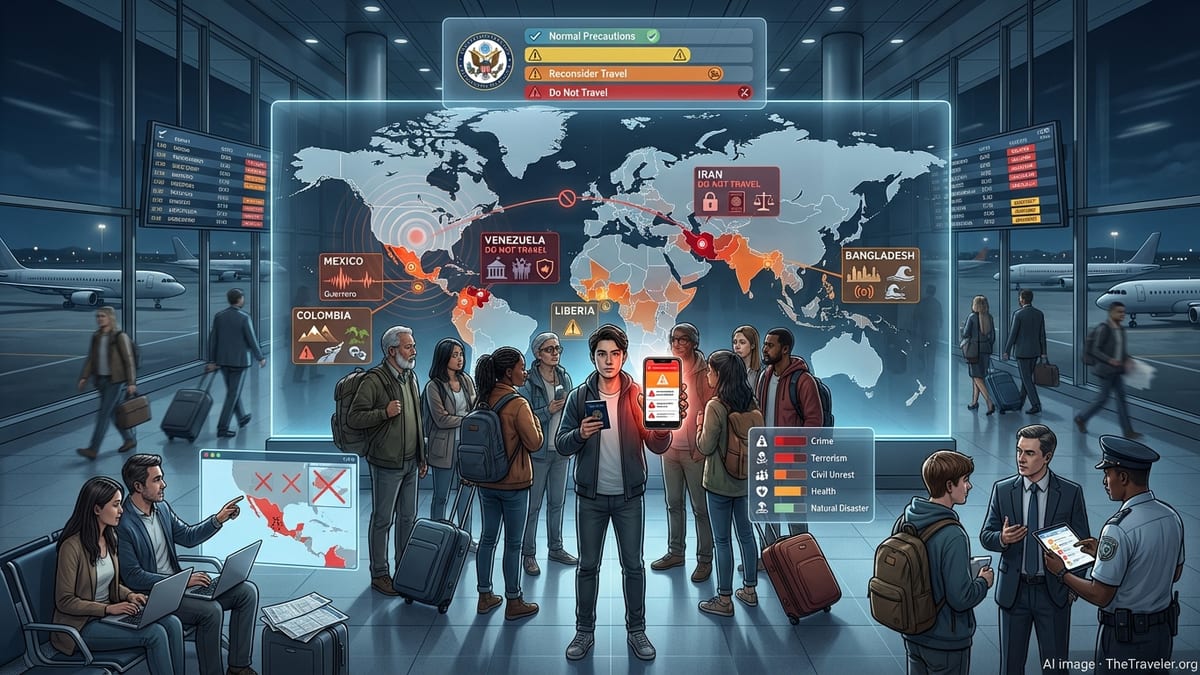
According to the current Mexico country advisory on the U.S. Department of State’s public travel website, Tamaulipas remains at Level 4, the highest warning level, with a clear “Do Not Travel” designation due to crime and kidnapping. The advisory groups Tamaulipas with Colima, Guerrero, Michoacan, Sinaloa, and Zacatecas as states where travel is strongly discouraged.
The Mexico advisory further explains that U.S. government employees face specific movement restrictions inside Tamaulipas. Publicly available guidance notes that travel by land between cities using interior highways is prohibited for official personnel and that travel to the border city of Nuevo Laredo is allowed only for approved official trips. The advisory also cautions that intercity buses in the state are not considered safe and that kidnapping and other violent crime have occurred on key routes.
Separate security alerts archived on U.S. Mission Mexico channels show a consistent pattern over recent years: reminders that Tamaulipas is a Level 4 state, warnings about kidnappings connected to intercity bus routes, and repeated references to criminal activity targeting both locals and visitors. This pattern continues even when short-term alerts, such as the October confinement order in Matamoros, are lifted.
These standing restrictions underscore that the end of a shelter-in-place episode does not equate to a general green light for leisure or nonessential travel. For Americans evaluating border trips, the Level 4 label remains the key reference point, signaling that the U.S. government considers the risks of visiting Tamaulipas to be comparable to those found in major conflict or crisis zones.
From Nationwide Shelter Alerts to Targeted Warnings
The Matamoros events unfolded only months after a broader wave of security alerts across Mexico earlier in 2026. In February, the U.S. Embassy in Mexico City issued a widely reported advisory urging Americans in several states, including popular vacation areas such as Jalisco, Baja California, and Quintana Roo, to shelter in place during large-scale security operations triggered by cartel-related violence.
Follow-up notices published in late February indicated that, as operations evolved, shelter-in-place instructions were gradually lifted in many affected regions and public transportation and businesses largely returned to normal. However, the embassy directed travelers to continue consulting the underlying state-by-state travel advisory, where Tamaulipas and several other states retained Level 4 status.
Public records and local coverage show that, even when immediate crises calm, individual U.S. consulates along the border continue to issue narrower alerts when specific threats emerge, such as road blockades, shootings, or reports of kidnappings on particular highways. The Matamoros shelter order and its subsequent removal fit into this pattern of short-term, location-specific warnings layered on top of long-standing national and regional guidance.
For travelers, this means that a return to “normal operations” in one city may simply indicate that a particular operation or blockade has ended, not that the underlying risk of organized crime or opportunistic targeting of visitors has diminished across the state.
Why U.S. Travelers Are Still Urged to Avoid Tamaulipas
Travel risk assessments produced by government and private-sector security analysts consistently rank Tamaulipas as one of Mexico’s most volatile states. Public information highlights the ongoing presence of rival criminal organizations, frequent clashes with security forces, and a history of incidents involving foreign visitors, including high-profile kidnappings in and around Matamoros in recent years.
The U.S. travel advisory cites crime and kidnapping as the primary reasons for the Level 4 designation. Open-source reports reference cases in which travelers on buses or driving private vehicles along major routes such as those connecting Reynosa, Matamoros, and interior cities have been stopped, robbed, or forcibly taken by criminal groups. In some alerts, Americans have been urged to avoid specific highways entirely due to recent kidnappings.
Local and regional media accounts also describe criminal roadblocks that can appear rapidly on key thoroughfares, sometimes coinciding with law enforcement operations. These blockades can trap motorists between rival groups or leave them exposed while authorities work to restore order. For visitors unfamiliar with the area, limited alternate routes and inconsistent mobile coverage can compound the danger.
Given these factors, publicly available guidance from U.S. and state-level agencies continues to emphasize that nonessential travel to Tamaulipas should be deferred. For those who feel compelled to go because of family or urgent business, the emphasis remains on minimizing ground movement, avoiding intercity buses, and keeping to strictly necessary routes during daylight hours only.
Practical Implications for Cross-Border Travel Plans
For many Americans, especially Texans, Tamaulipas is the gateway to popular inland destinations and to coastal areas of northeastern Mexico. Border crossings at cities such as Brownsville and McAllen connect directly to Matamoros and Reynosa, which might appear convenient for quick trips south of the border.
However, travelers relying on current official guidance will find that the combination of a Level 4 advisory and intermittent security alerts creates a challenging environment for recreational or spur-of-the-moment visits. Public information from Texas state officials earlier in 2026 urged residents to pay close attention to federal warnings and to avoid regions where shelter-in-place orders or Level 4 advisories are in effect.
Travel industry commentary gathered in recent months suggests that some U.S. tour operators and transportation providers have adjusted or canceled itineraries that would pass through Tamaulipas, preferring alternative routes through states with lower advisory levels. Airlines and long-distance bus companies serving other parts of Mexico have advised customers to stay alert to schedule changes when large-scale security operations affect multiple states at once.
For U.S. travelers planning trips to Mexico in late 2026 and into 2027, the main takeaway from the latest developments is that the lifting of shelter orders in Matamoros does not change the underlying risk calculus. Publicly available advisories still treat Tamaulipas as off-limits for discretionary travel, and routing through other border states with lower risk assessments will remain the safer choice for most visitors.