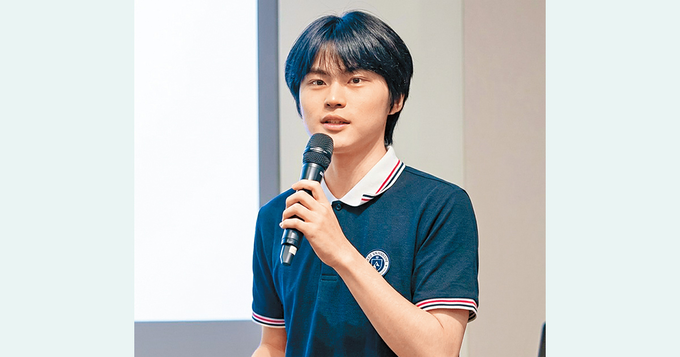
Nathan Chen announced on social media on Oct. 15 that he had recently departed the Beijing-based company behind the Kimi chatbot. He joined Moonshot at just 16 while still attending high school.
His departure came just months after Moonshot launched Kimi K3, an AI model that drew widespread attention in Silicon Valley for rivaling leading U.S. systems at significantly lower cost. During his brief tenure, he contributed to key innovations behind the company’s AI technology, including research that attracted praise from Tesla CEO Elon Musk and former OpenAI researcher Andrej Karpathy.
His announcement has fueled speculation about his next move, particularly after researchers from U.S. AI companies, including Anthropic, expressed interest in meeting him, according to the South China Morning Post. Among them was Sholto Douglas, an Anthropic researcher who asked whether Chen still planned to attend Carnegie Mellon University and invited him to San Francisco to meet other researchers.
Chen confirmed on X that he planned to travel to the San Francisco Bay Area. When another user asked the following day whether he was joining Anthropic, he replied, “no”, denying the speculation.
 |
|
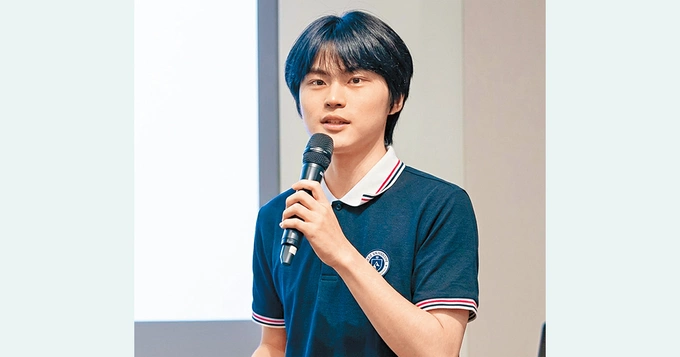
Chinese AI prodigy Nathan Chen. Photo from MoonshotAI |
Born in 2009 in Shenzhen, southern China, Chen took an unconventional path into the AI industry, without the academic competition medals or university qualifications often associated with young scientific prodigies.
He began exploring artificial intelligence in 2024 while still in high school, teaching himself through research papers and using Google’s Gemini chatbot to understand complicated concepts, according to China Newsweek newspaper.
In May 2025, he published a blog post explaining an AI technique that caught the attention of Yang Songlin, a researcher then pursuing a doctorate at the Massachusetts Institute of Technology. Despite his limited social media presence at the time, the post eventually caught the attention of the head of Tilde Research, a U.S. AI startup, who contacted him about the company’s work. Two months later,Chen traveled alone to Palo Alto, California, for a seven-week internship at Tilde Research, where he worked alongside experienced AI researchers, sometimes spending up to 15 hours a day in the office, according to his own account published on WeChat in September.
After returning to China, he expected to resume his final year of high school. Instead, he received an invitation to join Moonshot AI. He joined its Kimi research team in November, helping develop technology to make the company’s AI models faster and more efficient.
In March this year, Chen was named one of three equally contributing first authors of a research paper titled “Attention Residuals,” alongside senior researchers Su Jianlin and Zhang Yu. Their work introduced a technique to improve how AI models process information, which was later incorporated into Moonshot’s Kimi K3 model and attracted international attention.
Despite the recognition, Chen, who graduated from high school in June, has resisted being portrayed as a genius. In an earlier interview with China Newsweek, he urged people not to idolize him, emphasizing that the research was a team effort.
He is not the first Chinese teenage AI prodigy to attract international attention. Tu Jinhao, a former DeepSeek intern, co-authored research on the company’s groundbreaking R1 AI model while still attending high school in Shanghai. He began undergraduate studies at the University of Wisconsin–Madison in September 2025.
Chen’s departure from Moonshot comes amid intense competition between Chinese and U.S. technology companies for AI talent. Moonshot colleague Du Yulun said he regretted Chen’s decision to leave but supported his desire to explore new opportunities while still young, according to The Paper.
Chen has not confirmed whether he will pursue university studies or continue working in AI research.