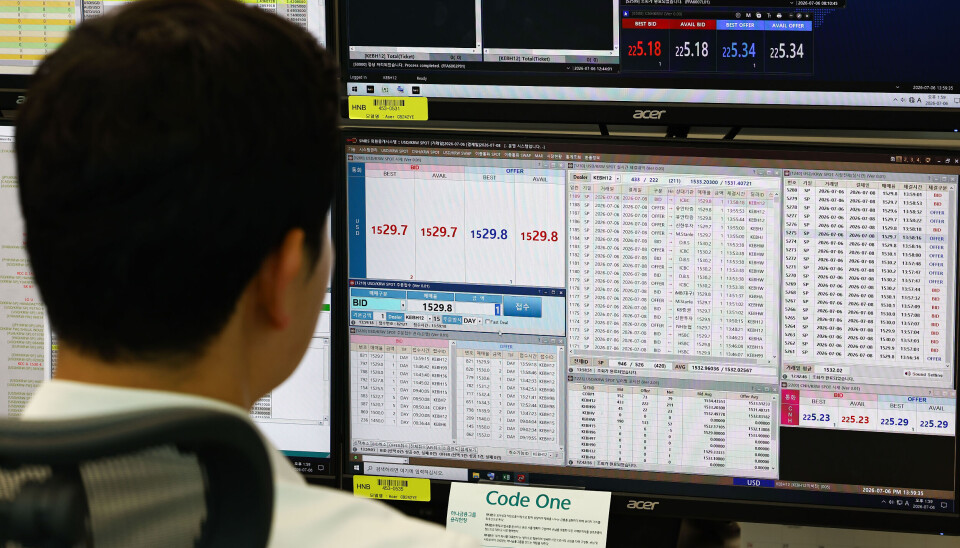
Round-the-clock trading is driving a surge in digital foreign exchange deals as companies and banks manage overnight currency swings.
Korea’s currency market no longer sleeps. Neither do some of the people whose jobs depend on it. Since the shift to 24-hour trading, smartphones have become an overnight lifeline for corporate treasury managers.
The change has sent transaction volumes soaring on banks’ digital currency-trading platforms, and banks are intensifying competition for corporate clients by extending trading hours and increasing staffing at overseas offices.
Kim, who works at a midsize Korean medical device company, is one of those managers. Until the first half of this year, the end of the banking day meant Kim could do nothing about overnight currency swings, no matter how dramatic. All Kim could do was wait for morning.
Since Korea opened its foreign exchange (FX) market for 24-hour trading on July 6, Kim’s phone has started buzzing whenever exchange rates fluctuate sharply. Each alert sends Kim to a bank’s FX app to place a forward order that locks in the rate for converting part of the company’s dollar export proceeds into won.
“I used to rely on exchange rates quoted by bank employees over the phone,” Kim said. “Now I can see real-time prices on my screen and complete a trade with just a few clicks. Keeping tabs on exchange rates day and night is exhausting, but the greater price transparency is a major advantage.”
FX transactions on digital platforms at Korea’s five major commercial banks surged 47.8 percent in just three months, from $167.4 billion at the end of June to $247.5 billion by the end of September, according to figures compiled by the JoongAng Ilbo on Tuesday. The analysis covered KB Kookmin, Shinhan, Hana, Woori and NH NongHyup banks.
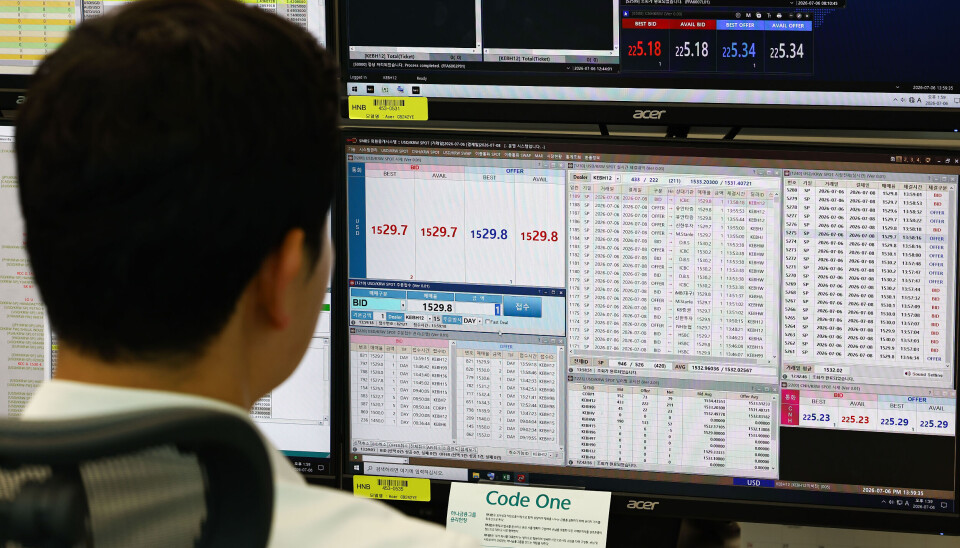
The number of customers registered on banks’ digital FX trading platforms also rose 13.7 percent over the same period, from 69,096 to 78,590. Shinhan Bank saw its customer base surge 46.8 percent, while Woori Bank posted a 24.4 percent gain.
In particular, Woori Bank’s numbers soared more than 43 times by the end of September this year compared to the end of 2024.
Hana Bank, which has offered 24-hour FX trading since 2022, accounted for 74.8 percent of the five banks’ combined currency trading volume as of September, up sharply from 44.4 percent in 2024.
Korea’s major banks have developed and operate their own digital FX trading platforms: KB Star FX for KB Kookmin Bank, Shinhan eFX for Shinhan Bank, Hana FX Trading for Hana Bank, Woori WON FX for Woori Bank and FX Allone for NH NongHyup Bank.
The expansion has also pushed banks deeper into the night. Before the market opened for 24-hour trading, their digital platforms operated from 9 a.m. until 2 a.m. the following day. Now, trading continues until as late as 4 a.m. to 6 a.m.
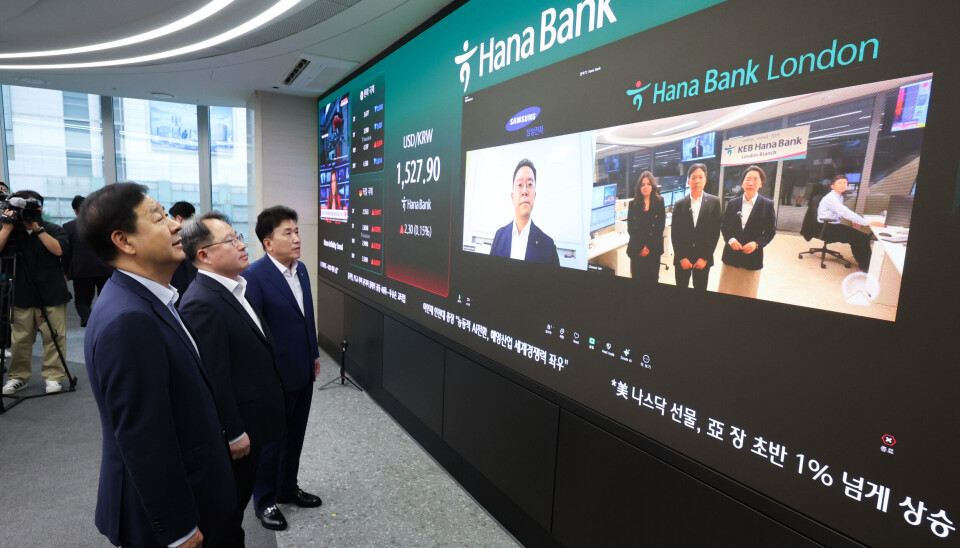
KB Kookmin Bank and Shinhan Bank have also added staff to their London offices, which offer easier access to global currency markets, to handle late-night transactions.
The surge in corporate use of digital FX platforms reflects a major advantage: Companies can now buy and sell currencies in real time at their preferred prices even in the early hours of the morning. They can also monitor live quotes and place orders at predetermined exchange rates.
“In the past, corporate clients had to buy and sell foreign currencies over the phone with bank employees at rates set by individual banks,” said a source from the banking industry. “If the employee handling the transaction stepped away from the desk, even briefly, exchange rates could move in the meantime, and customers often ended up losing money.”
The platforms offer more than just immediate currency trades. Companies can also enter into forward contracts to buy or sell currencies at exchange rates agreed upon in advance, and they have access to a broader selection of currencies.
Woori Bank, for instance, offers just 14 currencies through its regular internet banking service, including the dollar, yen and euro. Its dedicated digital FX platform expands that selection to 24, with options such as the Thai baht and Russian ruble.
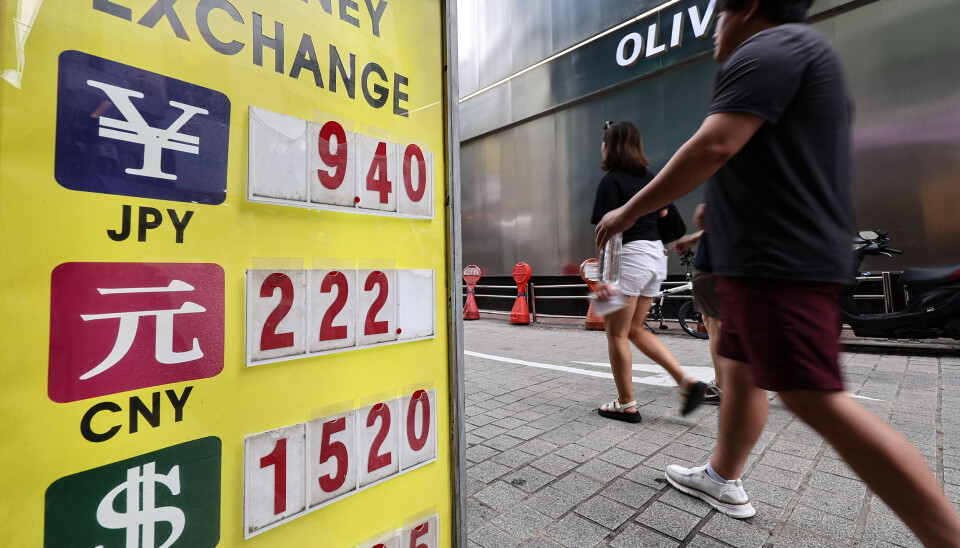
Volatility in the dollar-won exchange rate has eased since Korea opened its FX market for 24-hour trading.
Daily fluctuations in the won-dollar exchange rate eased to 0.44 percent in the three months between July 6 and Sept. 30 following the shift to 24-hour trading, compared to 0.53 percent in the previous three months between April 1 and July 3, according to Bank of Korea (BOK) figures provided to Democratic Party Rep. Yoon Hu-duk.
“Starting next year, we plan to introduce an offshore won settlement system that will allow foreign currency transfers as well as 24-hour currency trading,” said a BOK official.
BY KIM DO-NYUN [lee.soojung1@joongang.co.kr]