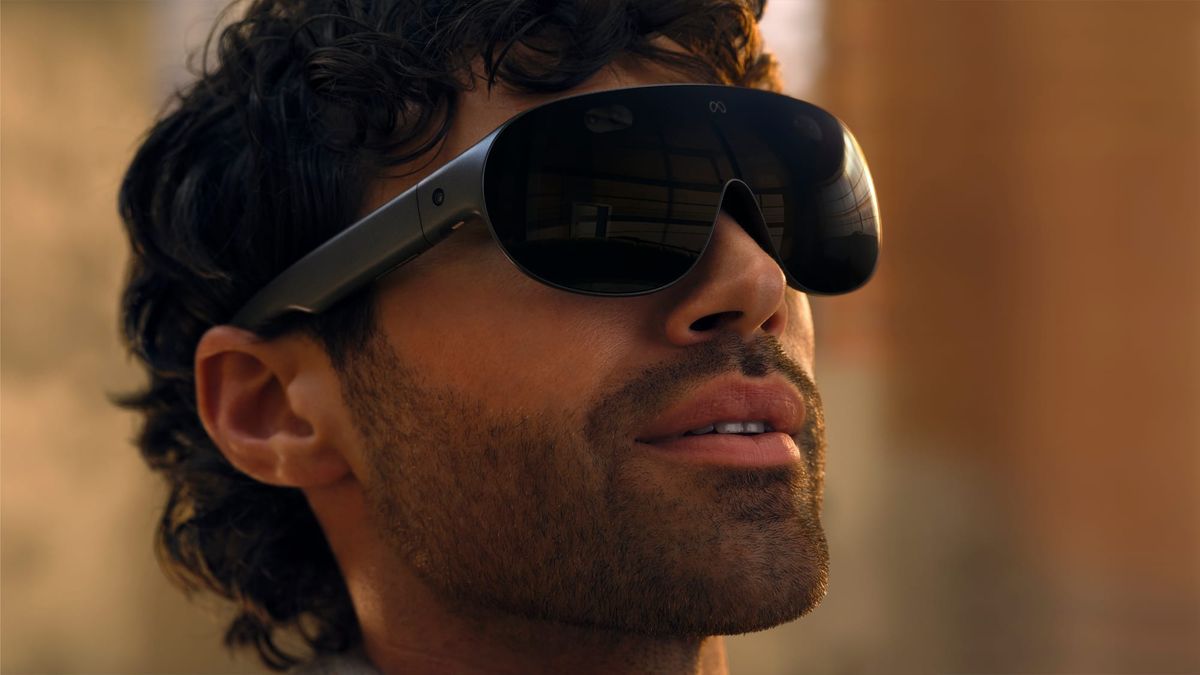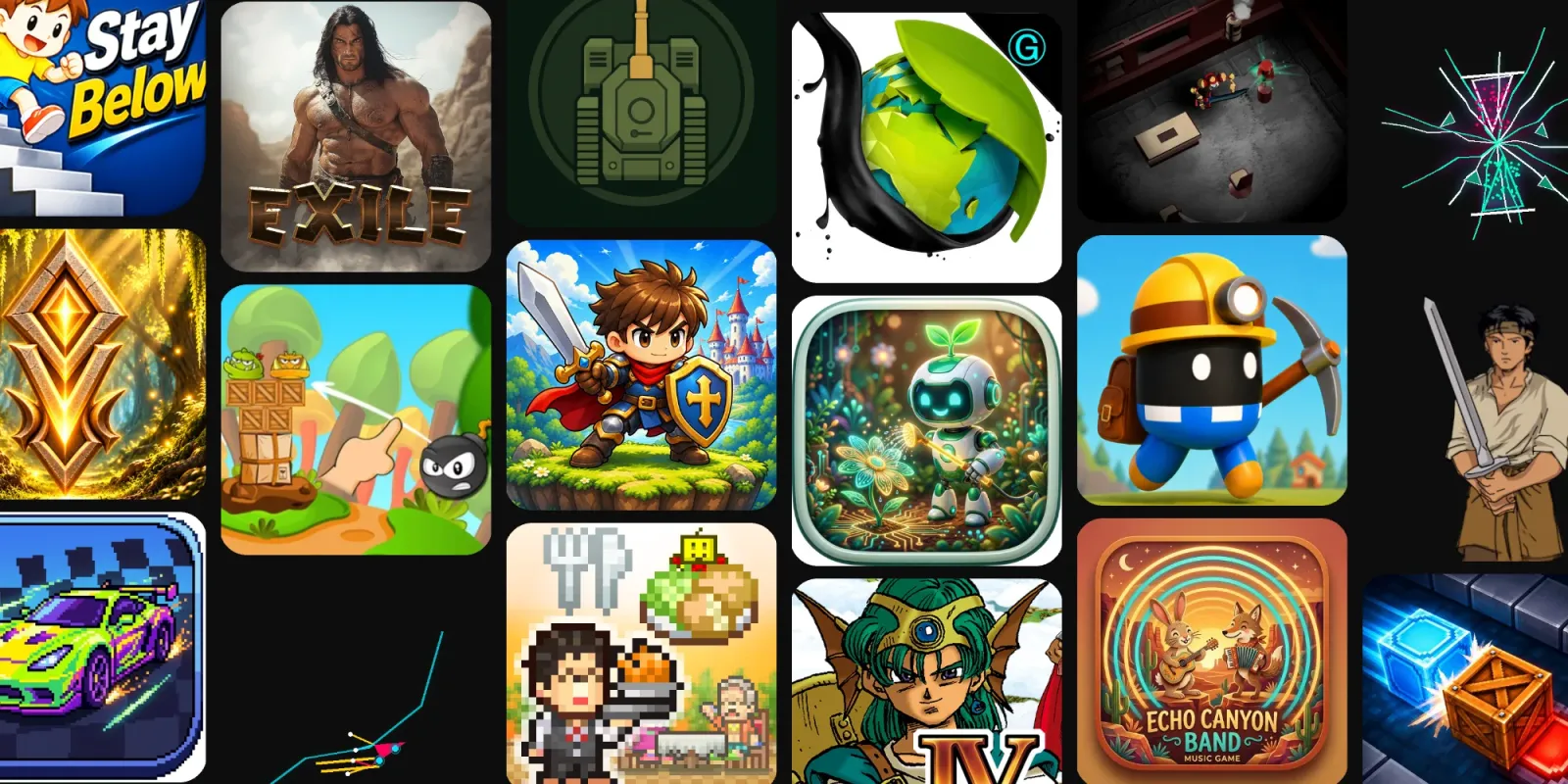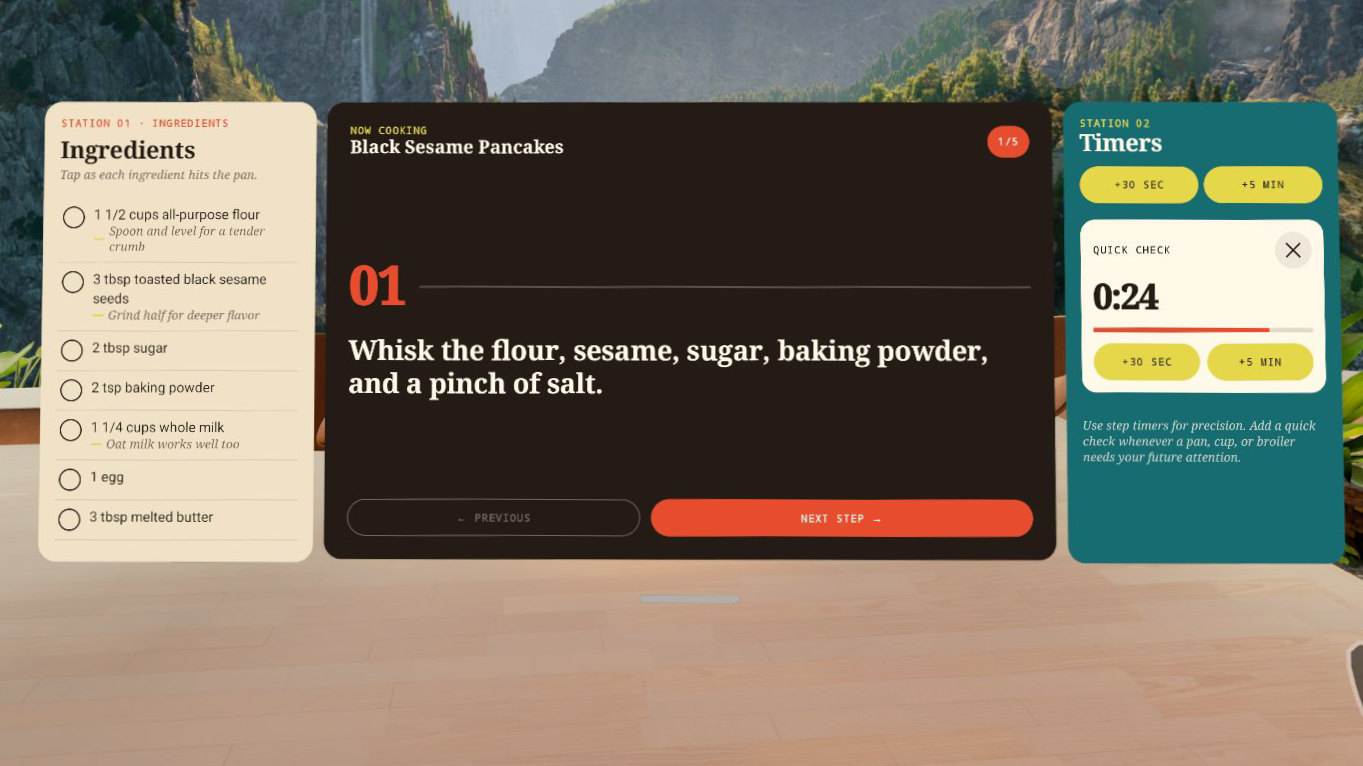
During Meta Connect 2026, Meta announced several new SDKs and features designed to enhance spatial apps. These announcements come as the company expands its focus on broader computing use cases ahead of Meta VR Glasses.
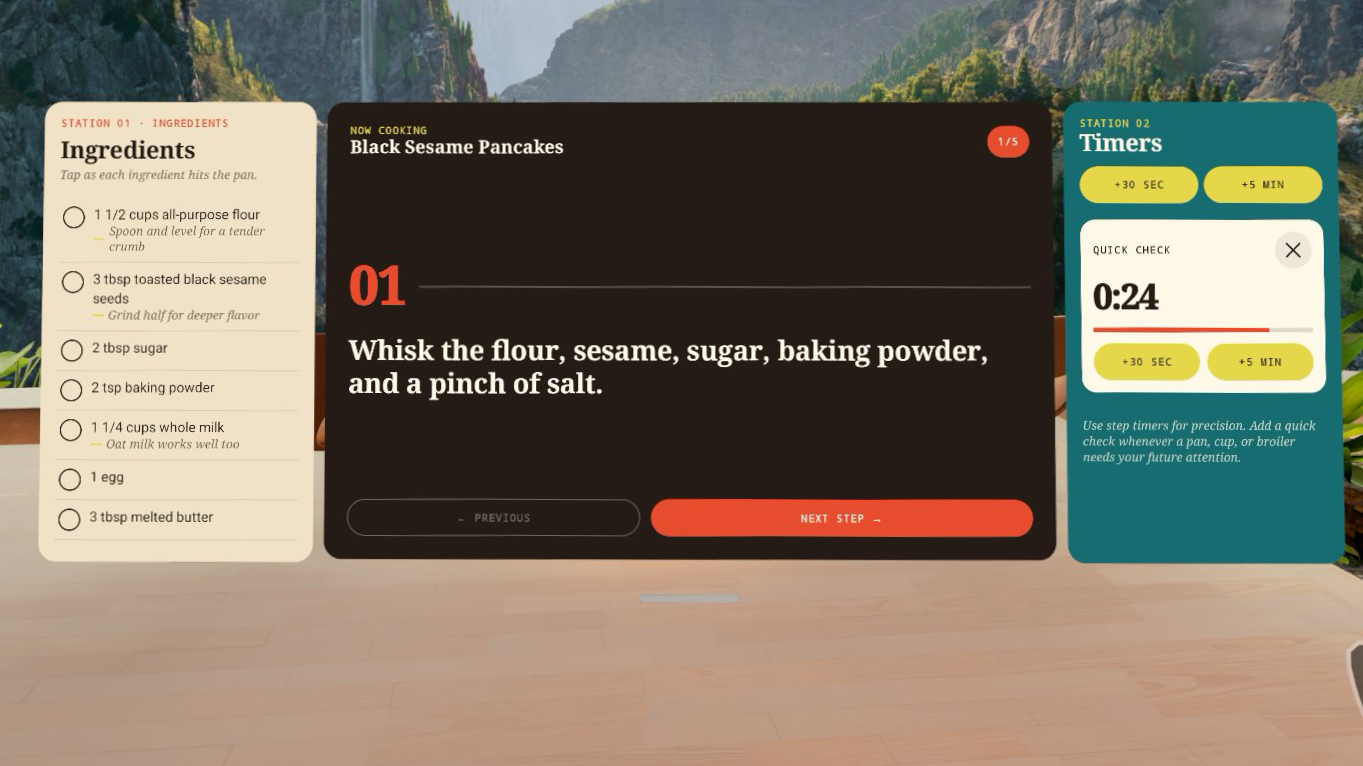
Historically, 2D apps on Horizon OS were largely restricted to tablet-style interfaces. Although multiple windows were supported, developers could not integrate floating or spatial elements into their UI without turning their apps into immersive experiences using the Spatial SDK.
The Meta VR Layout SDK changes that.
The NBA app using Meta VR Layout SDK, as shown in Pick your path: a developer’s guide to building for Meta VR and AI glasses.
The Meta VR Layout SDK allows developers to add spatial components and windows around the main window of a standard Jetpack Compose or React Native Android app. The app remains non-immersive, can coexist with other open apps, and retains its existing activity and UI architecture. Developers do not need to switch to the Meta Spatial SDK.
The NBA app is one of the first apps to take advantage of this SDK, using it to improve the UI and support multiple views.
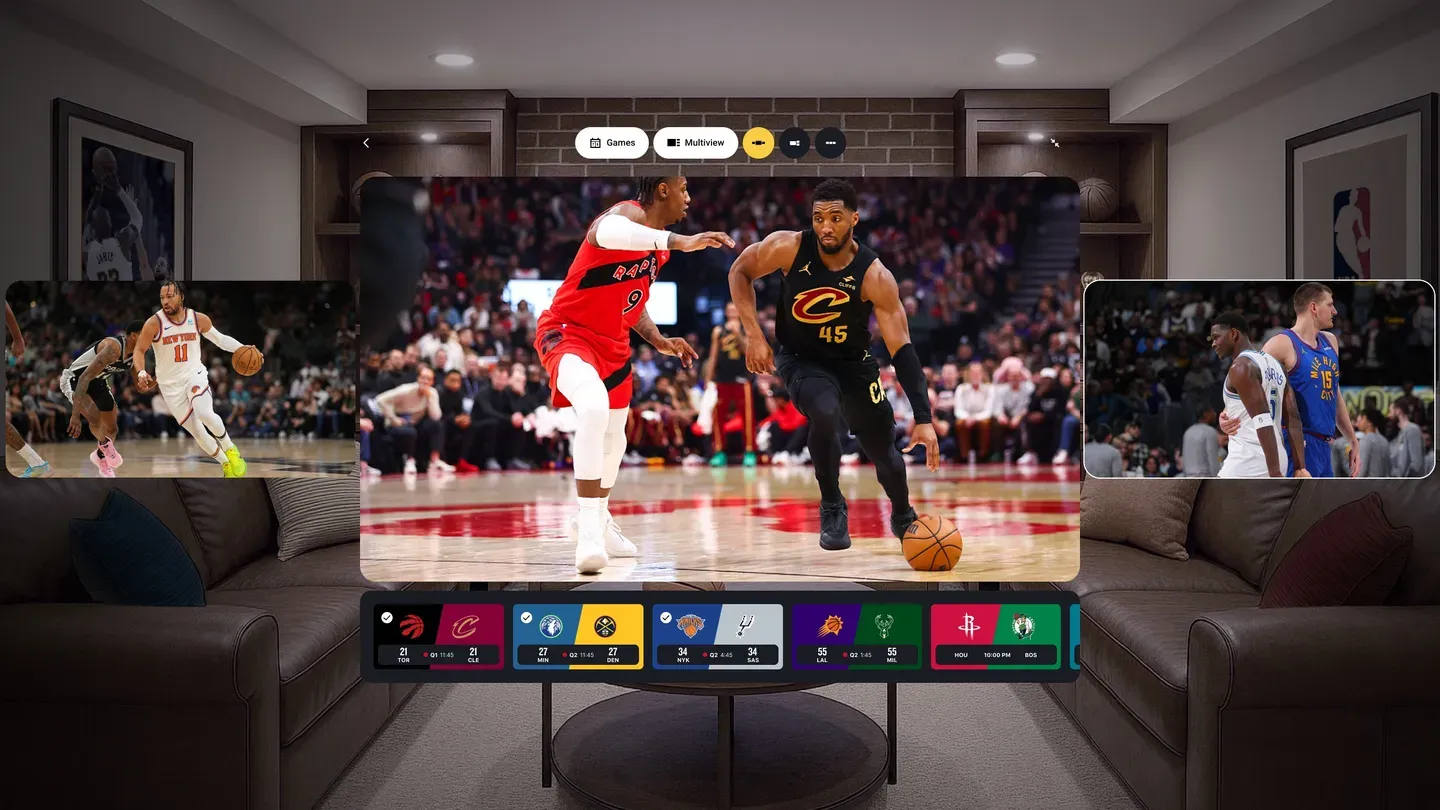
In essence, the Layout SDK enables window layouts similar to those in visionOS. However, it does not allow developers to spawn 3D objects or control the environment. Those capabilities still require the Spatial SDK.
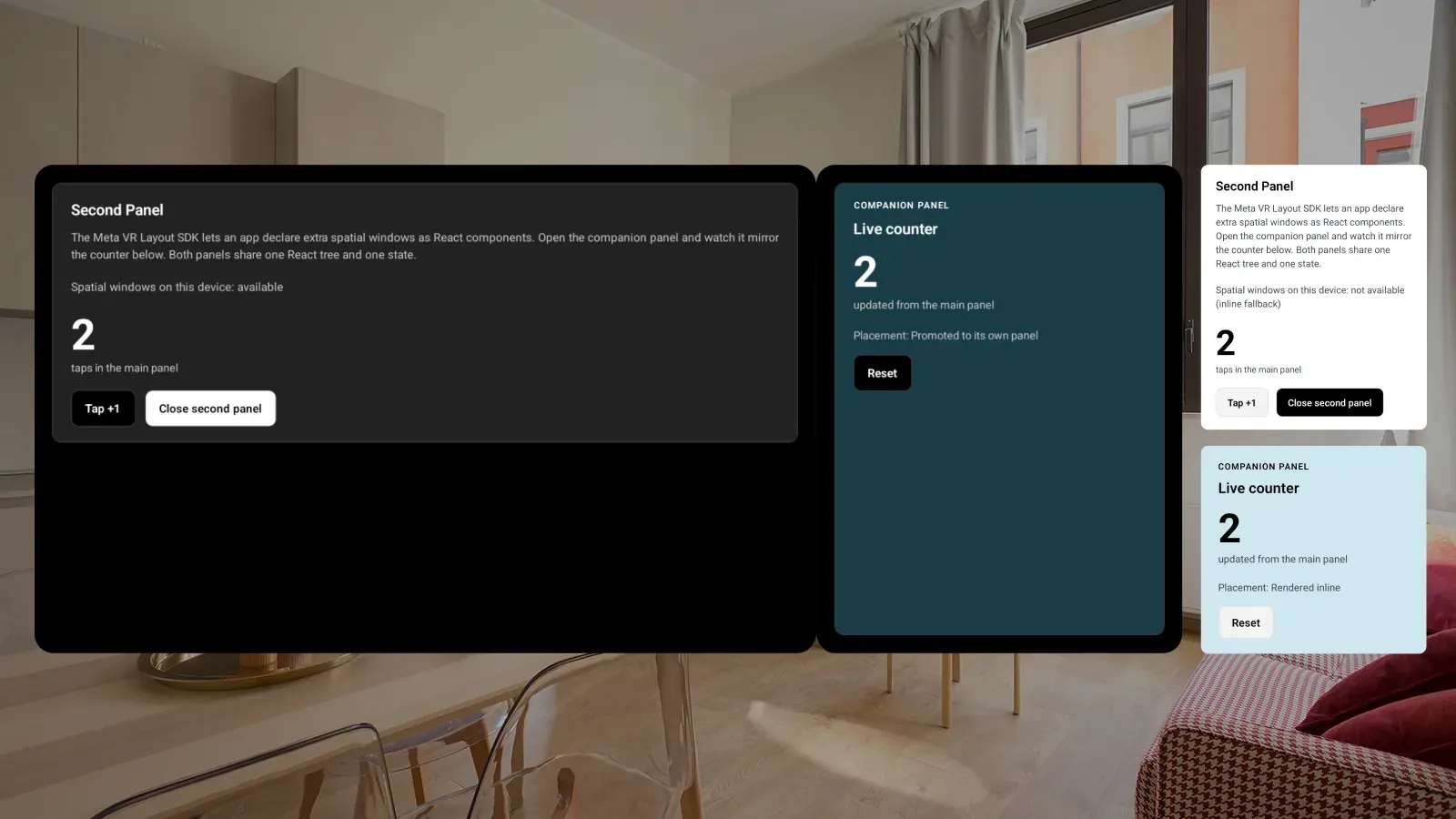
The Meta VR Layout SDK is fully supported only on Horizon OS 2.7 and later. Meta says that on releases earlier than 2.7, the SDK falls back to its non-spatial behavior instead of placing spatial windows. The main window remains available while each spatial window component uses its developer-configured fallback.
Meta VR Gaze SDK
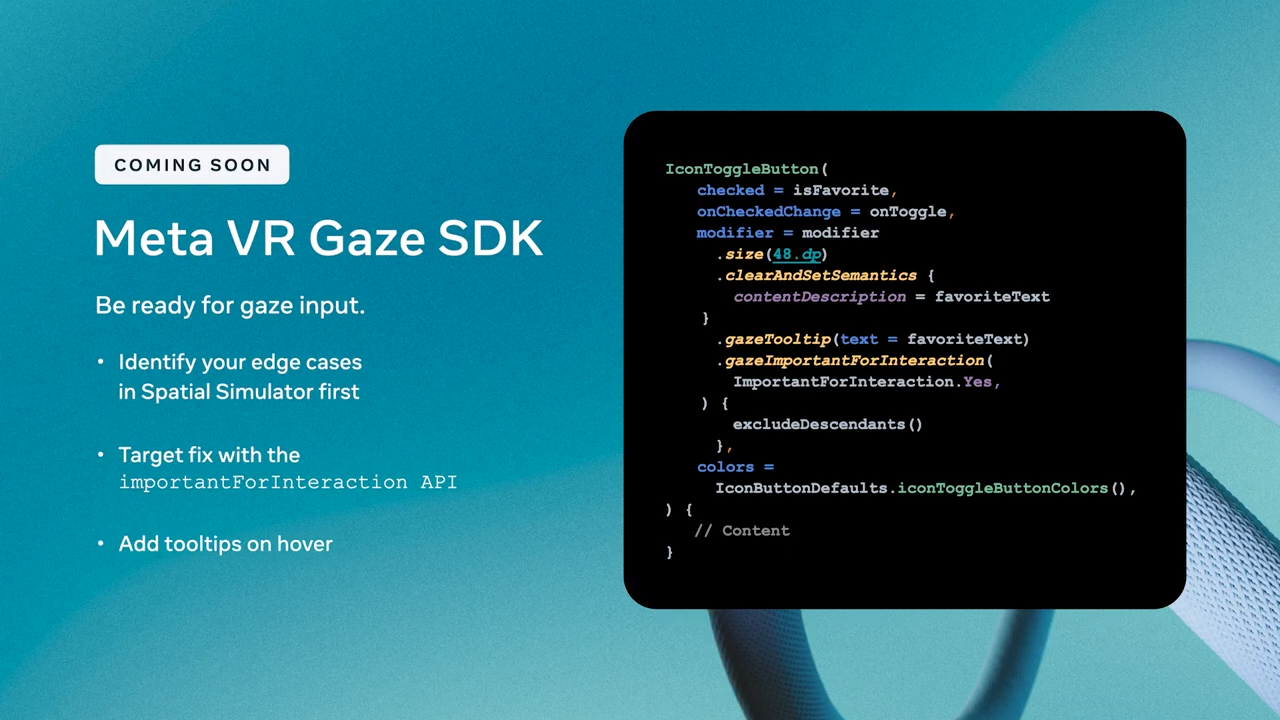
Alongside the Layout SDK, Meta will also be shipping a new Gaze SDK for Jetpack Compose, React Native, and Android Views.
Meta VR Glasses use a “Look and Pinch” input scheme by default, leveraging the device’s Eye and Hand Tracking. This works well for most layouts, but highly customized components can have elements that the system misclassifies. Developers can use the Gaze SDK to provide the hints the system needs to understand their layout, as well as customize hover behavior.
The Gaze SDK is in early access and is compatible with Horizon OS 2.7 and later. However, it cannot be used in a shipping app until it leaves early access. Developers can request access through the developer support portal.
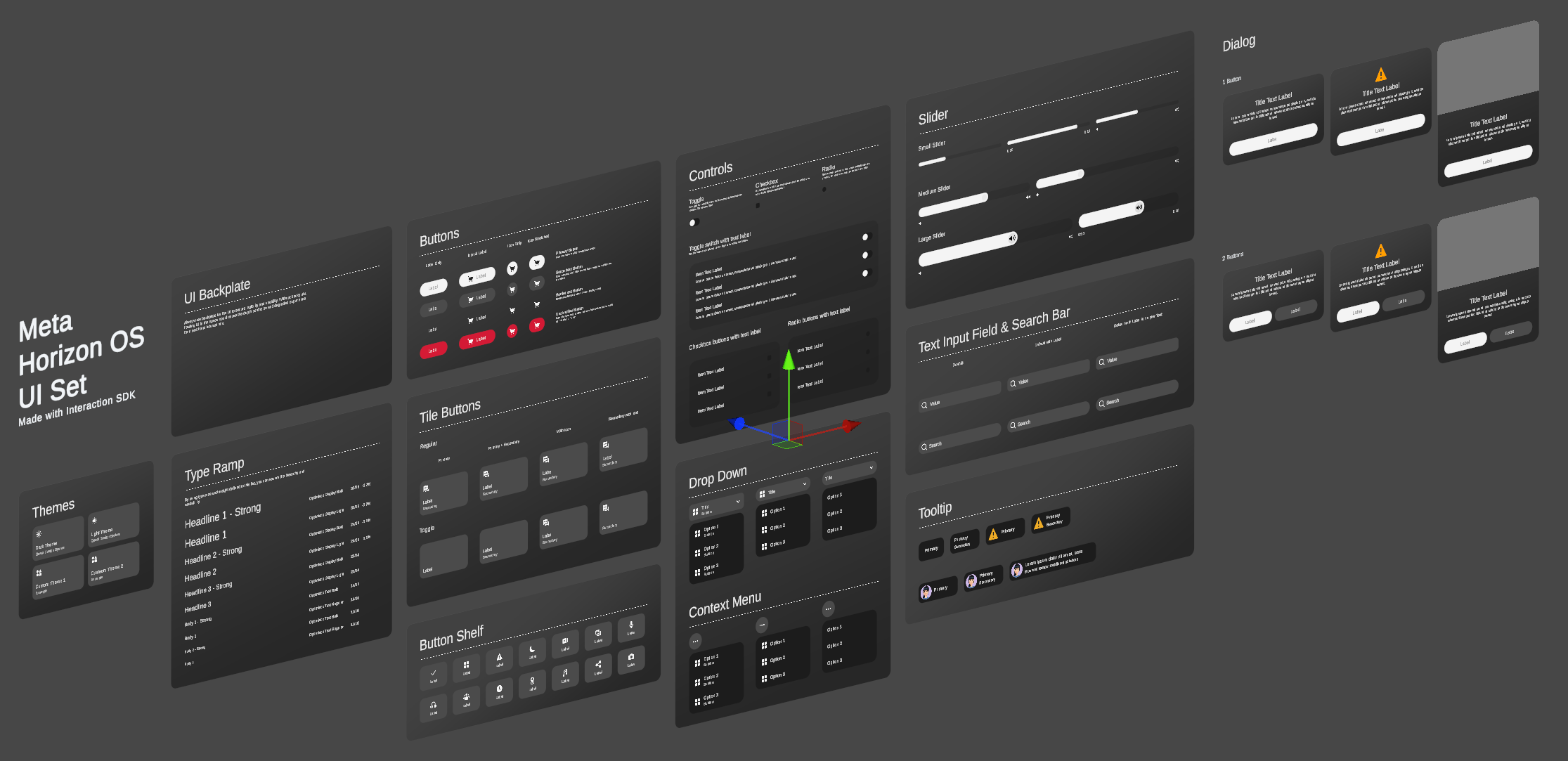
In October 2024, Meta released the Horizon OS UI Set, a UI kit for Unity, Figma, and later the Spatial SDK.
Meta Finally Released A Quest UI Kit For Unity
Meta finally released a Quest UI kit for Unity, meaning developers can easily build interfaces that feel cohesive with Horizon OS.
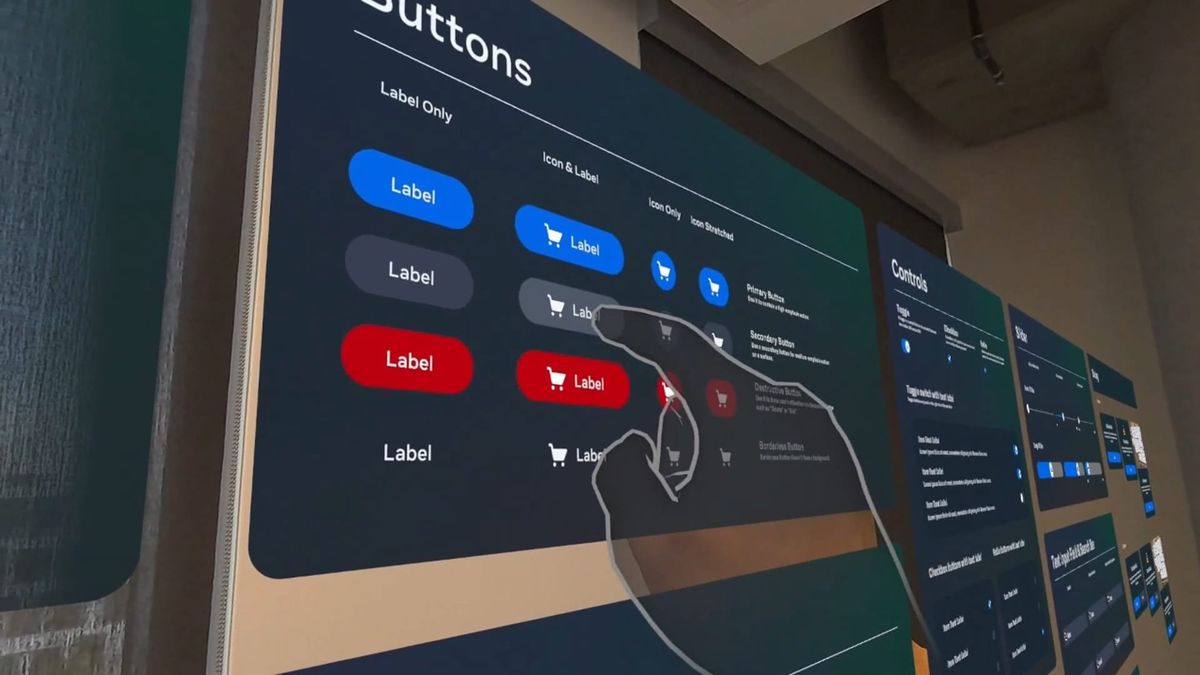
When developing for other operating systems such as iOS and Android, developers have access to high-level UI frameworks that help their apps feel cohesive with the operating system.
Before Meta introduced the Spatial SDK and the Horizon OS UI Set, developers building apps for Meta’s VR devices often relied on game engines, such as Unity or Unreal without a first-party UI framework specifically tailored to Horizon OS. As a result, most apps used entirely different UI solutions, many of which were custom-made or repurposed from asset stores.
The Horizon OS UI Set was Meta’s solution to this problem, providing developers with the components needed to build interfaces that feel cohesive with Horizon OS.
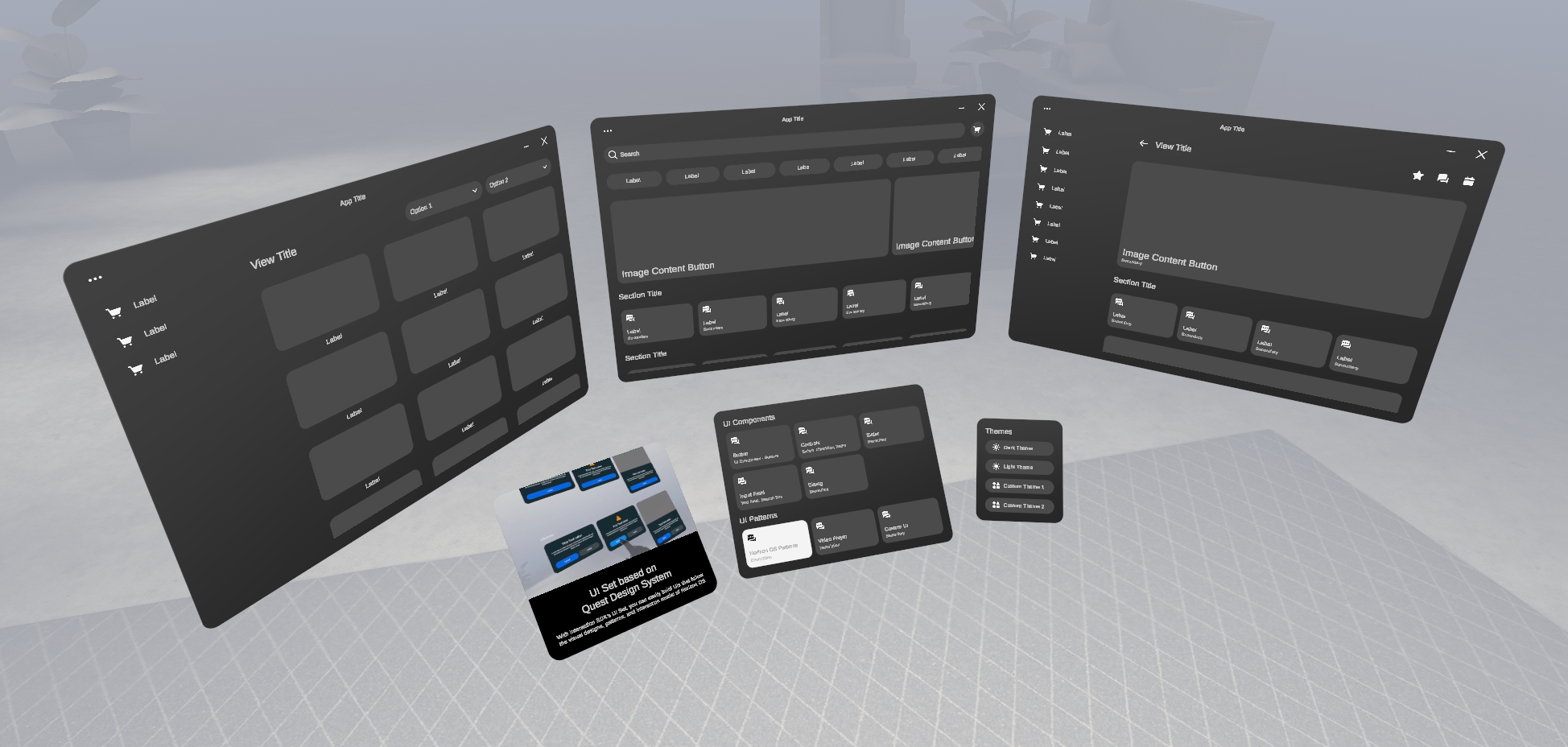
However, the Horizon OS UI Set was not a standalone SDK. This meant that its assets and frameworks were largely impractical to adapt for standard 2D Android apps, which is a major reason why most 2D apps on the platform still use their own implementations.
The Meta VR UI Set SDK aims to address this problem.
The Meta VR UI Set SDK is shown in Bring your ideas to Meta VR Glasses: a complete guide for mobile and web developers.
The Meta VR UI Set SDK is a Jetpack Compose design system for apps on Meta VR devices. It provides dark and light color schemes, semantic colors, typography, icons, component dimensions, and interaction feedback. It works with Jetpack Compose apps.
This makes the SDK relatively easy for 2D Android app developers to adopt, and Meta notes that it is optimized to be implemented by an AI coding agent. The company says that it is the successor to the Meta Horizon OS UI Set in Spatial SDK.
In practice, this could mean that many more 2D apps on the platform will adopt a consistent visual style and interaction patterns that match the rest of the system.
Disney+ Overhaul
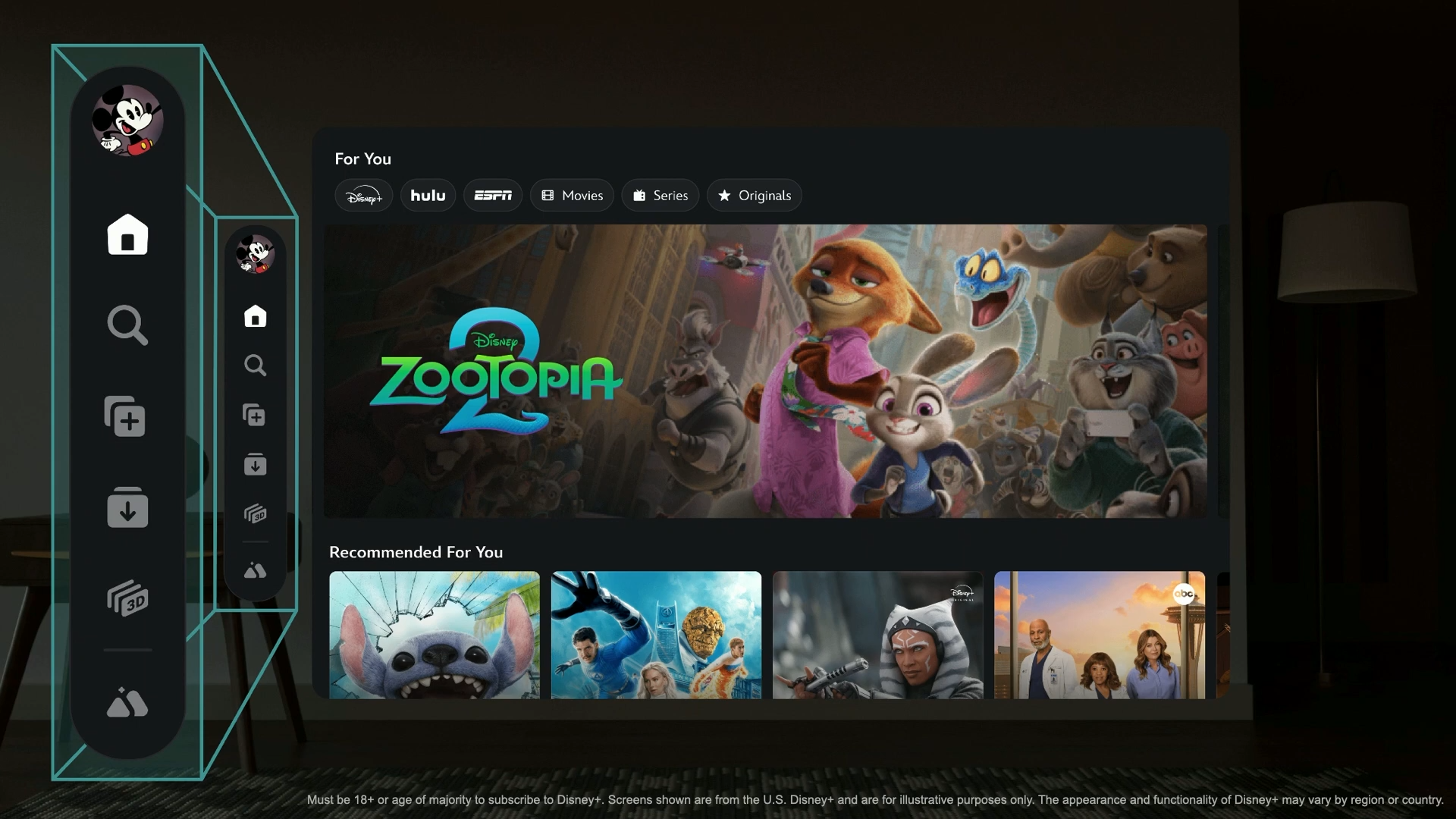
The Disney+ app on Apple Vision Pro was custom-built with a unique spatial UI and launched with several immersive environments, with more released in the months that followed.
The app then launched on Quest in December 2025, with support for up to 4K resolution with Dolby Vision HDR. Disney+ Premium subscribers also had access to Dolby Atmos immersive audio in supported titles, a feature added to Horizon OS in v71, and could download content for offline viewing.
Quest Now Has A Disney+ App With Downloads & Dolby Atmos
Quest headsets now have an official Disney+ app, with support for downloads and Dolby Atmos immersive audio — but not for 3D.
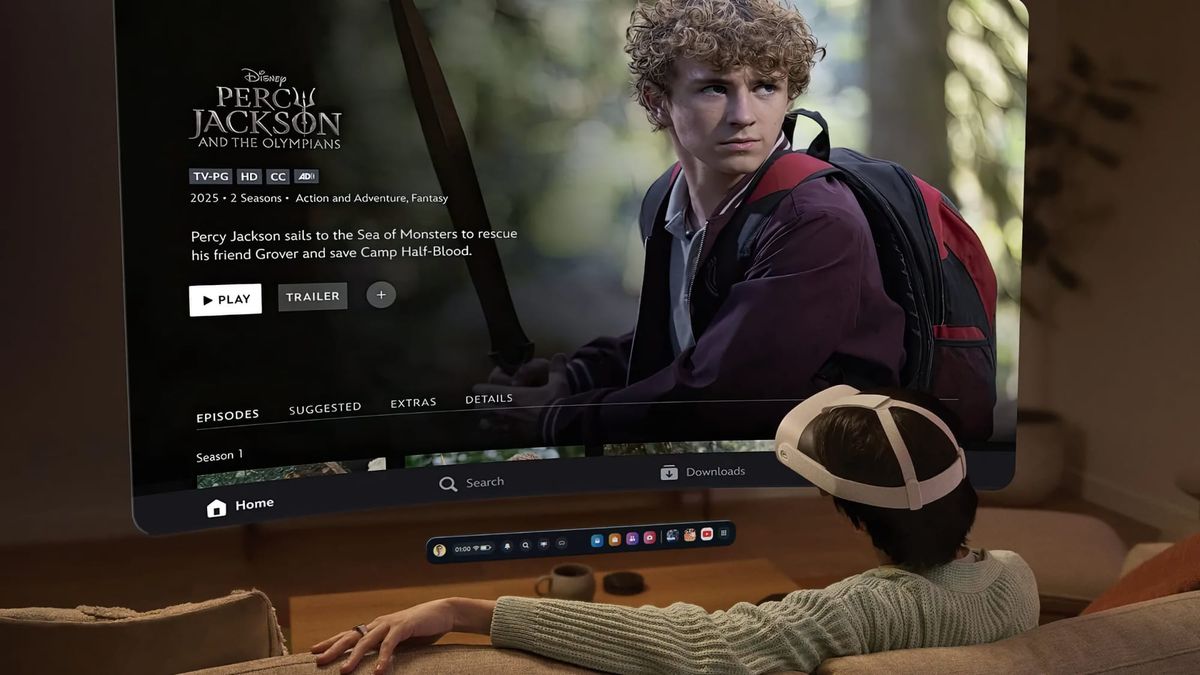
However, unlike the visionOS version, the Quest Disney+ app did not support 3D content and was limited to 2D media. It also lacked the custom 3D environments that could be used as virtual cinema spaces.
Now, Disney plans to take advantage of updates to Horizon OS and Meta’s developer tools to bring many features of the visionOS version of the app to the platform. These include recent improvements to the Spatial SDK that enable enhanced audio, interactions, and more.
The updated Disney+ app for Horizon OS, as shown in Built for Quest, ready for Meta VR Glasses: how leading studios are planning for the future.
In November, Disney+ will receive a major update that overhauls its UI and makes the experience more spatial. The update will also add support for 3D media and introduce several of the 3D environments available in the visionOS app.
This update is expected to arrive around the same time that Meta adds the ability to rent or buy “hundreds” of movies on Quest in the US later this year. The company says that this catalog will eventually expand to “thousands” of titles available internationally by the time Meta VR Glasses launch in 2027.
Meta VR Glasses Officially Announced, Shipping Spring 2027 For $1300
Meta VR Glasses have 2.4K micro-OLED displays, weigh 100 grams, and are powered by a tethered puck with Qualcomm’s Snapdragon Reality Elite chipset.