Middle Ages Just Invaded Every Runway at Paris Fashion
Week
You probably have one in your
closet right now – a sunny piece you bought on impulse, wore once,
then quietly retired to the back of the rack. Yellow has always
been that color: the one we admire on a flower, on a sunset, on
someone else’s Instagram feed, but rarely dare to put on our own
bodies. We tell ourselves it washes us out, that it is too loud,
too risky. And yet, as Paris Fashion Week wrapped up on Tuesday,
October 6, nearly every major runway was drenched in it. So what
changed?
A shade with centuries of bad press
Yellow’s image problem is not
new, and it runs far deeper than a simple style preference.
Historian Michel Pastoureau explored the hue’s troubled past in his
2019 book dedicated entirely to the color. Since the Middle Ages,
yellow has been linked to aging and sickly complexion. It also
carries the symbolic weight of one of the seven deadly sins:
envy.
According to Pastoureau, once
yellow became tagged as a dishonorable color associated with ideas
of treachery, it naturally morphed into the color of lies and
betrayal. It was historically connected to Judas, and by the late
19th century in France, strikebreakers – seen as traitors to the
workers’ cause – were labeled with the same word used for the
color. Could a shade really overcome that kind of
baggage?
The numbers back up the stigma.
As Marc Beaugé, the
fashion columnist for Le Monde, noted in a February
2026 column, surveys conducted in France over decades consistently
place yellow as the least popular shade in the basic palette,
trailing far behind blue, green, red, black, and white, in that
order. Beaugé himself openly wondered whether it is even reasonable
to dress in yellow.
From butter yellow to full neon – the runway
takeover
The groundwork for this moment
was actually laid two years ago. Back in 2025, several major
outlets, including the New York Times, flagged the rising wave of a
closely related trend called butter yellow. The soft, warm tone was
spreading across clothing, home décor, and makeup all at once.
Timothée Chalamet and Cynthia Erivo were spotted wearing the shade
at the Oscars, and a specialist interviewed by the Times described
it as almost an antidote to long gray winters, pointing to the
Scandinavian style of Copenhagen residents in Denmark as a
reference.
Fast-forward to Paris, and that
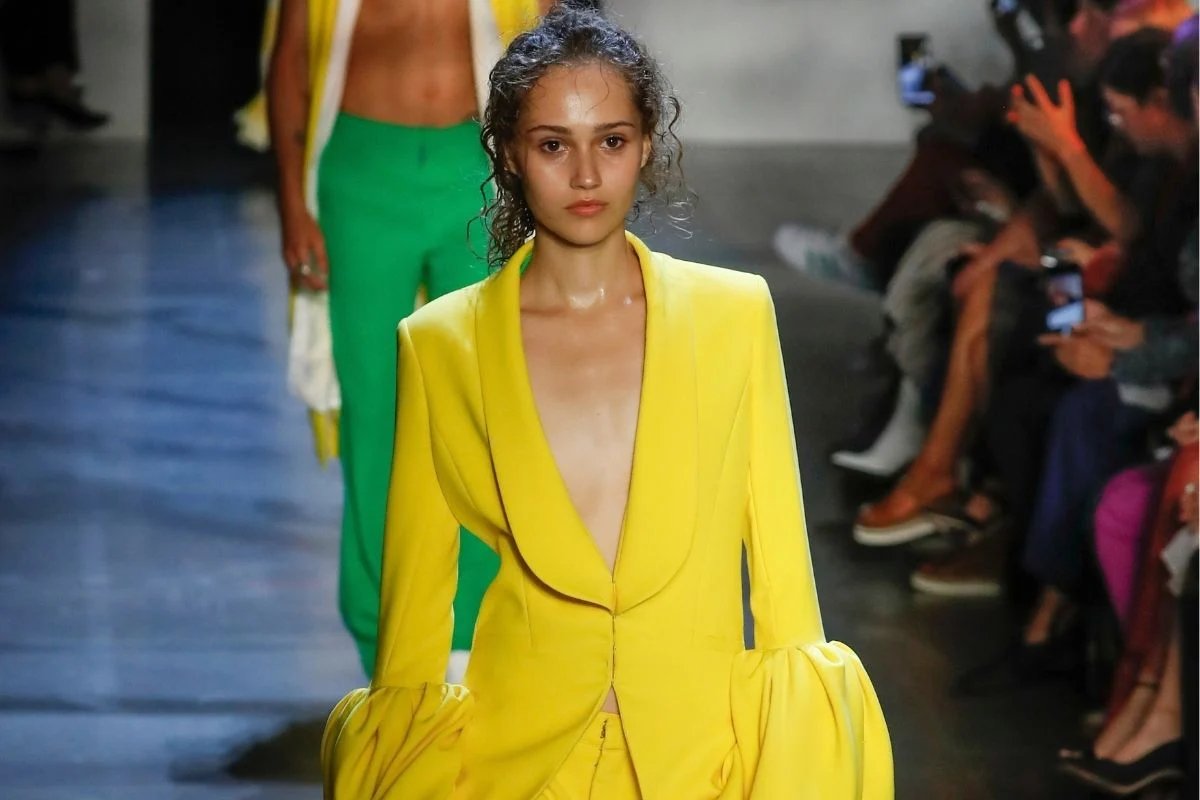
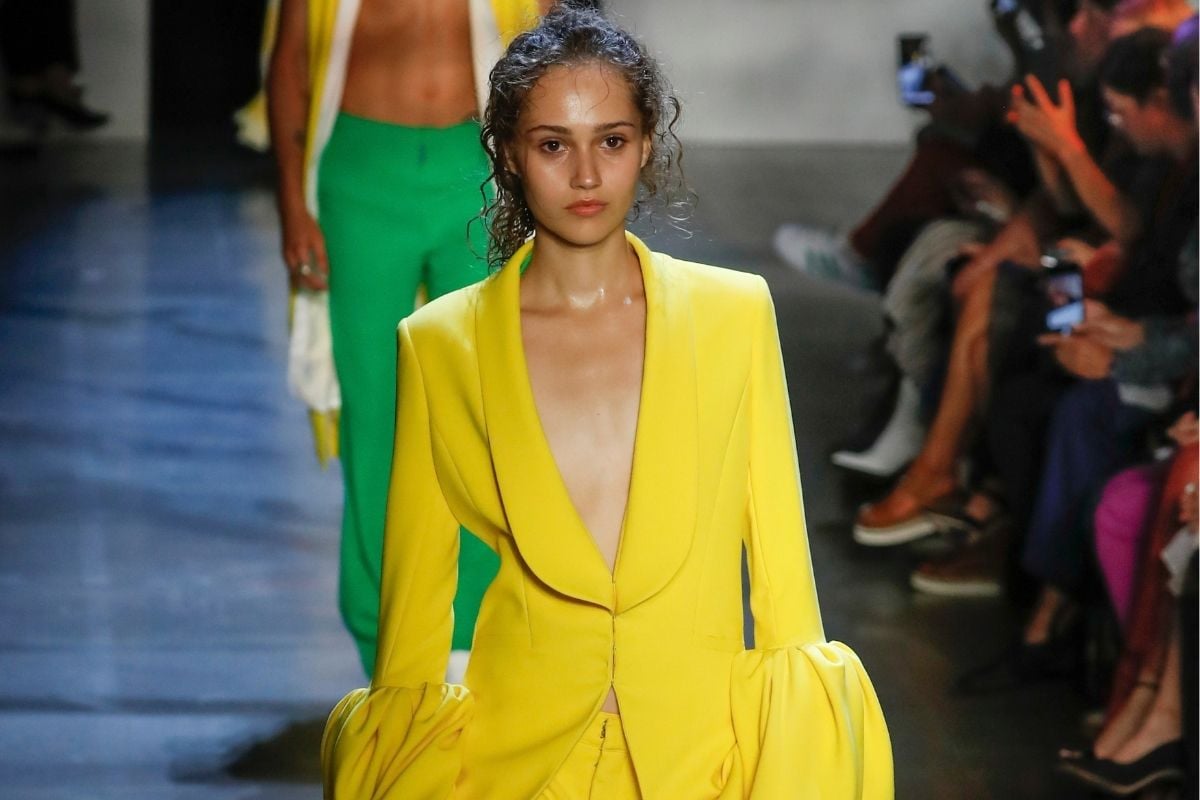
gentle butter tone has exploded into something far bolder. At
Loewe, the yellow was loud and unapologetic – pumps, a men’s shirt,
a skirt, trousers, and a handbag all rendered in an eye-catching,
vivid shade. Lacoste took a similar approach. The brand staged its
Spring-Summer 2027 collection at Roland-Garros, where neon yellow
pieces stood in sharp contrast against the clay courts.
Not every designer went electric.
Victoria Beckham offered a polo and a semi-transparent dress in a
softer, gentler yellow. Dries Van Noten and Miu Miu also leaned
into the trend – Miu Miu notably through a mini-short barely larger
than underwear. Even the most avant-garde houses were not immune:
Vivienne Westwood, Rick Owens, Comme des Garçons, and Mugler all
incorporated yellow into their collections. The invasion was
confirmed, and it spanned every possible shade on the
spectrum.
Why the shift feels bigger than a passing fad
Stars like Rihanna, Céline Dion,
and Jennifer Lopez nearly stole the spotlight from the actual
trends during the week. Yet the yellow story kept pushing through,
show after show, house after house. That level of consensus among
designers rarely happens by accident. When a color that has spent
centuries at the bottom of every popularity poll suddenly appears
on virtually every catwalk, we are witnessing something more
deliberate than a seasonal whim.
The progression from butter
yellow in 2025 to full-spectrum yellow in Paris suggests designers
are gradually training our eyes. First came the approachable, muted
version. Now comes the neon, the canary, the marigold. The
diversity of tones on display in Paris shows the industry is not
pushing a single shade but inviting us to find our own version of
yellow – whether that means a quiet polo or an electric
handbag.
Of course, embracing the color
remains a bold chromatic choice that does not flatter everyone
equally. Sarah Knafo learned that lesson during the Paris municipal
elections, where her yellow stood out sharply against a sea of
gray, black, and navy suits – and not necessarily in the way she
intended.
The color no one wanted is now everywhere
Here is what we know now that we
did not before: yellow is not just having a moment – it is staging
a full-scale rehabilitation. A hue once synonymous with betrayal
and bad taste has been championed by some of the most influential
fashion
houses on the planet. The takeaway is refreshingly
simple. If the least loved color in history can reinvent itself on
the world’s most prestigious runways, perhaps the piece gathering
dust in the back of your closet deserves another chance this
spring.