Subscribe to our FREE Newsletter, or Telegram and WhatsApp channels for the latest stories and updates.
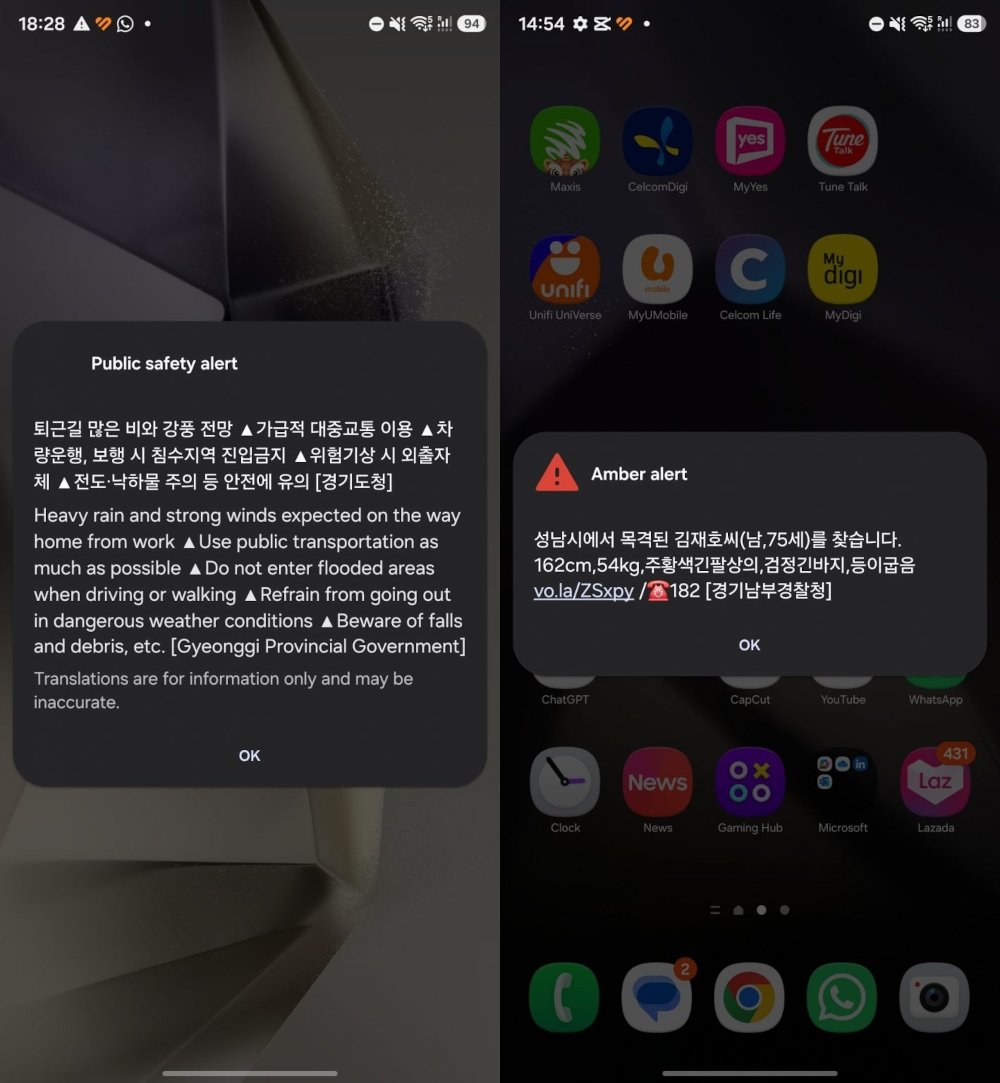
Malaysians may receive an unusual government alert on their mobile phones on 19 November, warning them of a simulated natural disaster and potentially instructing them to evacuate their homes.
Don’t panic if the message appears on your screen. It’s part of a live test of the Cell Broadcast System (CBS), a national disaster warning system being developed by the Malaysian Communications and Multimedia Commission (MCMC).
According to the New Straits Times, the exercise marks the final phase of live testing for the system, which aims to deliver faster and more precise disaster warnings to people in affected areas.
The upcoming test will be an important step in determining whether the technology can help Malaysia communicate emergency warnings more effectively when disasters strike.
How Does The Cell Broadcast System Work?
The CBS is designed to transmit disaster alerts directly to mobile phones within designated areas, without relying on individual phone numbers, SMS or an internet connection.
Unlike conventional SMS alerts, which are sent individually to recipients, cell broadcast technology can distribute messages to compatible mobile phones within a targeted area through mobile network infrastructure.
The system is expected to replace Malaysia’s existing SMS-based disaster warning system, which currently delivers targeted flood warnings through the National Disaster Management Agency (NADMA) and telecommunications companies.
The technology can also deliver alerts during periods of heavy voice and data traffic, without requiring users to install a special application.
However, the system still depends on functioning mobile network infrastructure, meaning coverage remains an important consideration, particularly in rural areas.
What Will The 19 November Test Cover?
The November exercise will put the CBS through a practical test, with members of the public potentially receiving simulated warnings about natural disasters near their homes or in their surrounding areas.
These messages may include instructions to evacuate and proceed to the nearest shelter. As the exercise is a test, recipients should not mistake the simulated scenario for an actual emergency.
The pilot could be launched in high-risk areas, including flood-prone parts of Selangor, Kuala Lumpur, Kelantan and Pahang.
However, the system’s success will depend on more than its ability to send messages to mobile phones.
Authorities will need to connect hazard monitoring, accurate location targeting, telecommunications networks and clear instructions into a single, reliable national warning system.
In other words, getting an alert onto someone’s phone is only the first step. The warning must also reach the right people at the right time and tell them what they need to do.
Faster Alerts Could Make A Difference During Floods
Malaysia’s experience with floods highlights why timely disaster warnings matter.
Clear skies and calm rivers do not necessarily mean a flood will not happen. Water levels can rise rapidly, leaving residents with little time to prepare or evacuate.
By delivering targeted alerts to people in affected areas, the CBS could give families precious minutes to seek shelter, help vulnerable residents and allow emergency authorities to respond.
The United Nations reported in 2025 that 44 countries had adopted mobile-based public warning systems for hazards such as earthquakes, tsunamis, floods, wildfires and severe storms.
Malaysia’s move towards a cell broadcast system would strengthen its approach to communicating similar emergencies.
The Challenges Go Beyond Technology
Despite its potential, the CBS will need to overcome several challenges before it can serve as a dependable national disaster warning system.
One major concern is mobile coverage. Although the system does not require an internet connection, it still relies on functioning mobile network infrastructure. People in areas with poor coverage may not receive alerts, making alternative warning methods necessary.
Public awareness and trust will also be important. Malaysians need to understand what the alerts mean and how to respond, particularly when a message contains urgent instructions.
The wording of alerts must be clear and appropriate to the situation. Warnings should distinguish between general advisories, imminent threats and evacuation orders so that people understand the seriousness of the situation.
Alerts should also be available in Bahasa Melayu and English, with local dialects used when necessary. People with visual, hearing or reading disabilities should be considered, potentially through tailored video messages or other accessible formats.
These considerations could help ensure that warnings are understood by as many people as possible, rather than simply delivered to their devices.
Malaysians Should Still Be Prepared
While the CBS could improve the speed and precision of disaster warnings, it should complement existing disaster preparedness efforts rather than create a false sense of security.
Its effectiveness will ultimately depend on whether alerts can be received, understood and acted upon. Network limitations and other challenges mean that people should not assume a mobile warning system will eliminate every risk.
The 19 November test will therefore be an important opportunity to assess how the system performs in practice and identify areas that may need improvement.
Ultimately, the true measure of the CBS will not be how often it sends alerts during ordinary days, but whether Malaysia is ready to act when a real disaster strikes.
Share your thoughts with us via TRP’s Facebook, X, Instagram, or Threads.