Democrat Roy Cooper leads Republican Michael Whatley by a wide margin in the race to claim North Carolina’s open U.S. Senate seat as voters sour on President Donald Trump, a new WRAL/WSOC Poll shows.
Whatley, a longtime Republican Party insider, was endorsed by Trump and has themed his campaign largely around delivering for Trump’s agenda if elected to the U.S. Senate. He has consistently trailed Cooper, the former governor, in polls this year. The new poll, released Tuesday, shows a continuation of that trend.
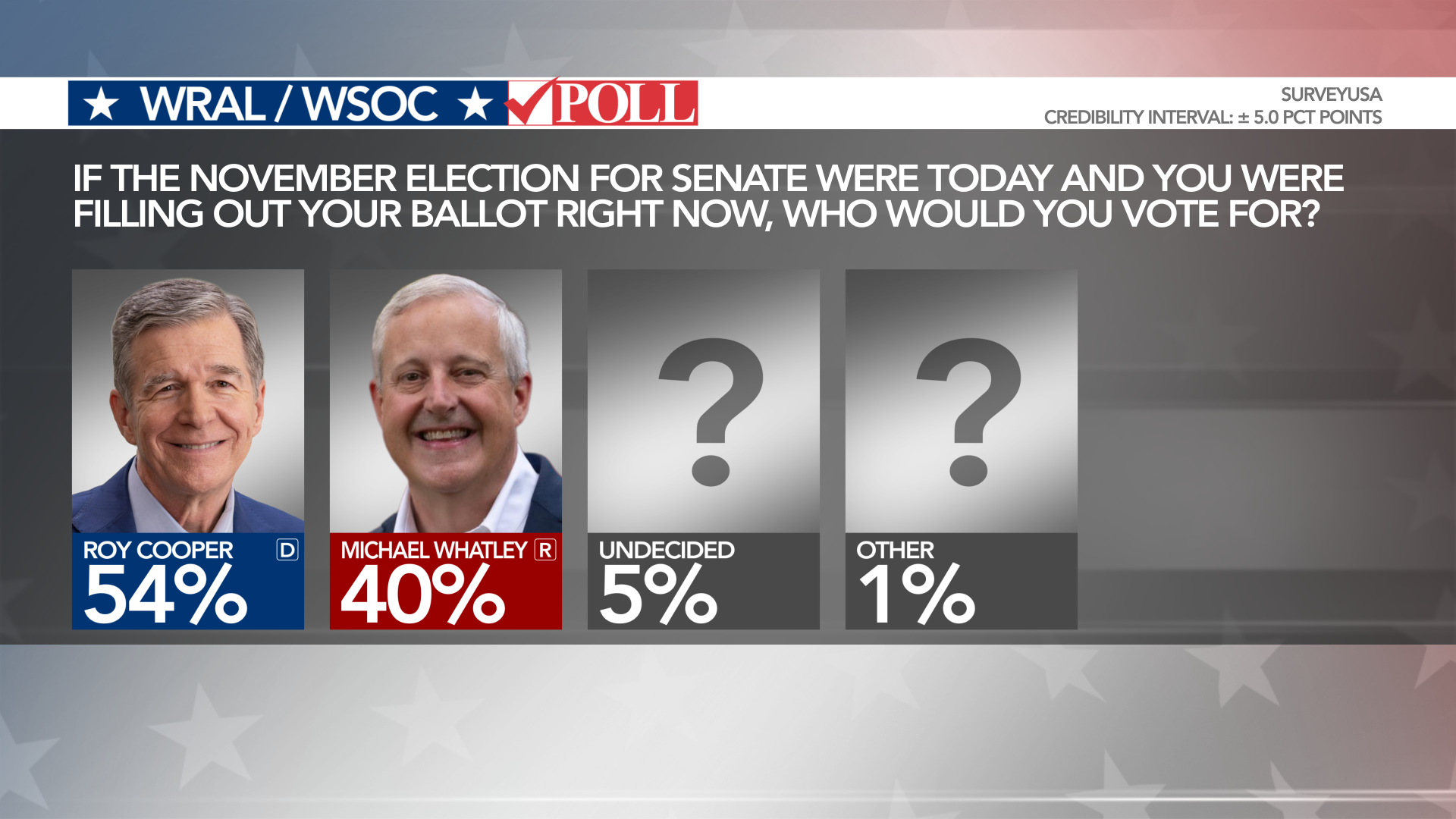
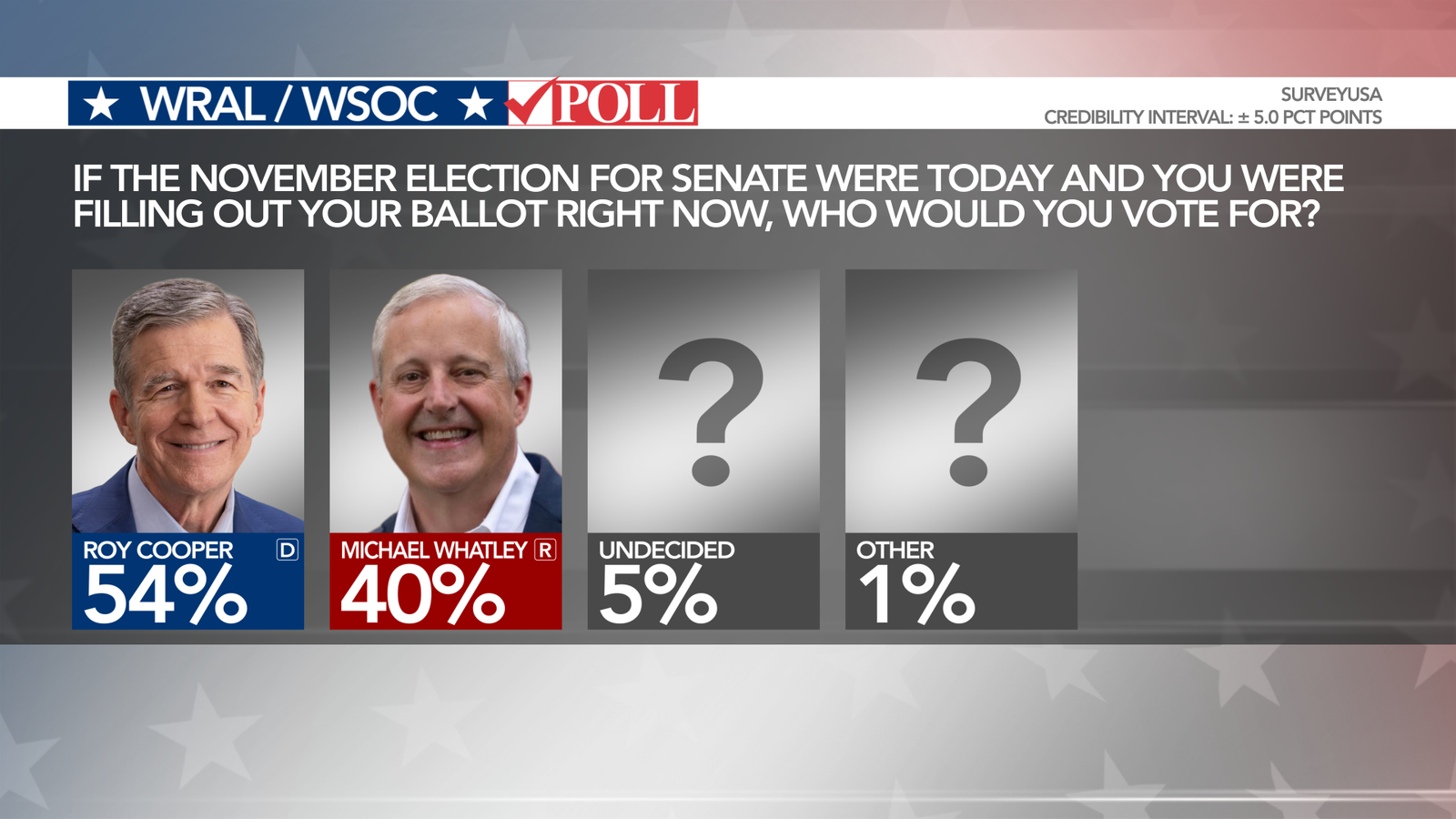
It showed Cooper with a 14-point lead among likely voters — 54% percent said they would likely vote for Cooper, while 40% said they’d vote for Whatley. About 5% were undecided, and 1% said they’d vote for another candidate. Green Party nominee Michael Dublin and Libertarian Shannon Bray are also running in the 2026 midterm race to replace Republican U.S. Sen. Thom Tillis, who isn’t seeking reelection.
A spokesperson for Whatley’s campaign said undecided voters are still in play and that Whatley has been working hard to court them.
“Michael Whatley has been meeting with communities across the state holding nearly 400 campaign events, meeting with communities from Murphy to Manteo as Roy Cooper hides in his basement,” Whatley spokesman DJ Griffin told WRAL in a written statement. “We are confident this race will continue to tighten, and Michael Whatley will win in November.”
Cooper’s campaign manager Jeff Allen, meanwhile, said they’re not counting Whatley out yet either and are also continuing to court undecided voters.
“A Democrat has not won statewide federal office here in nearly two decades, and North Carolina is a 50-50 state,” Allen said. “We’re building a campaign to earn every vote and make sure North Carolinians know that Roy Cooper will fight for them, while Michael Whatley will continue to enrich himself at their expense.”
Cooper has also consistently led in fundraising, and in recent days Whatley stopped running TV ads, as has one major national conservative group that pulled millions of dollars it had planned to spend boosting Whatley’s campaign.
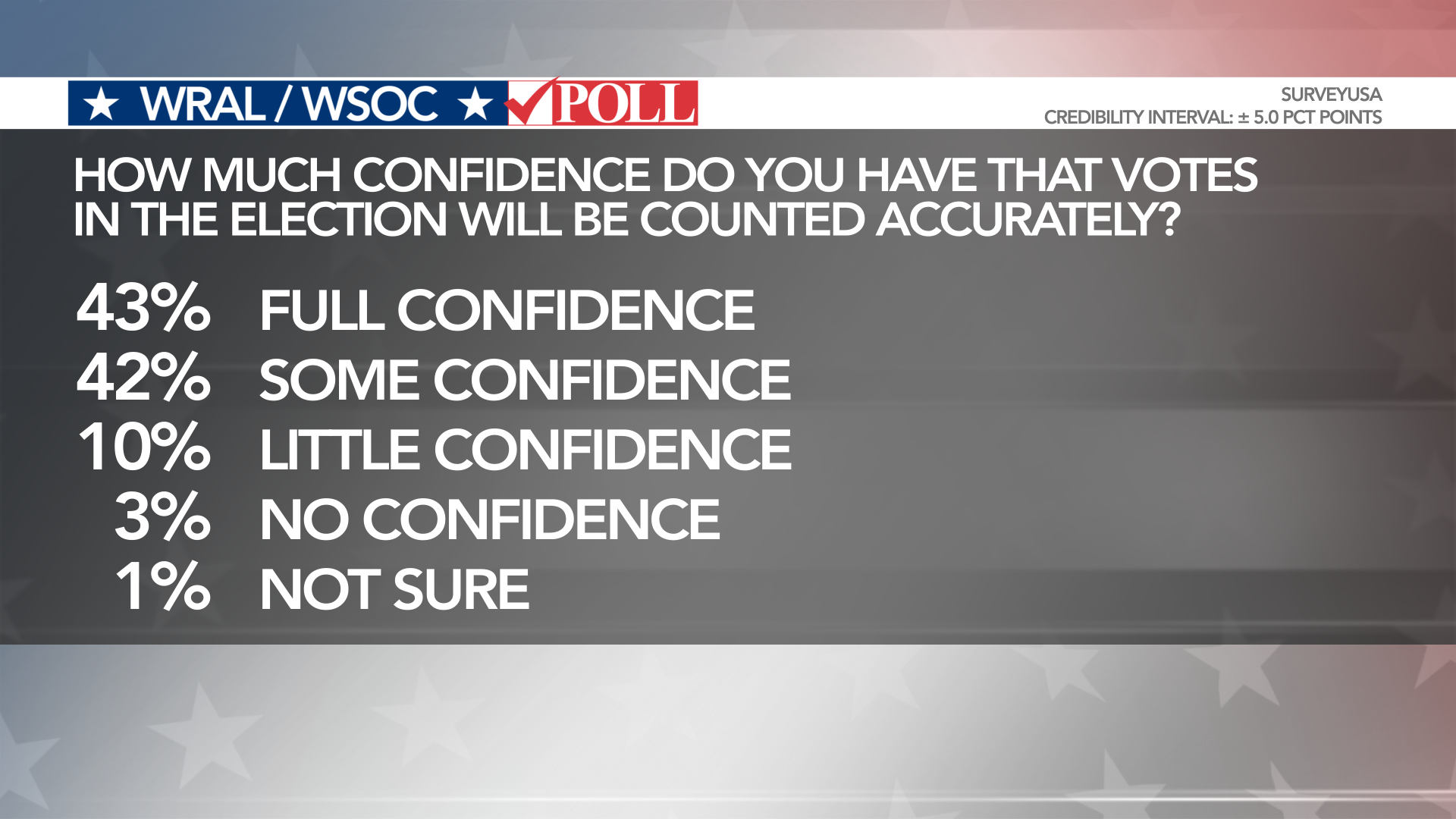
The poll, conducted by polling company SurveyUSA for WRAL and WSOC-TV in Charlotte, was conducted from Oct. 7-11 and sampled 900 North Carolinians, of whom 643 had either already voted by mail or indicated they were likely to vote. Early voting begins this week. Election Day is Nov. 3. The poll had a credibility interval of 5 percentage points. A credibility interval is similar to a margin of error but takes into account more factors and is considered by some pollsters to be a more accurate measurement of statistical certainty.
North Carolina elections for federal races such as U.S. Senate and president are almost always close. Because of that, political analysts had predicted Whatley would close the gap as Election Day neared.
“The common expectation that a lot of us had was this lead by Cooper would shrink, and we would go into a kind of normal dynamic of North Carolina elections — where basically the margin of victory would be within a poll’s margin of error,” said Michael Bitzer, a Catawba College political scientist, whose own Sept. 30 poll showed Cooper with a 12-point lead. “I’m not sure that we’re seeing that at this point.”
Tillis didn’t seek reelection this year after falling out of favor with Trump for voting against Trump’s signature piece of legislation, the 2025 spending bill that Trump and his supporters called the “One Big Beautiful Bill Act.” Whatley has strongly supported the law — and has blasted Cooper for saying he would’ve voted against it like Tillis did.
The law slashed Medicaid, a healthcare program for low-income families, by more than $1 trillion in order to fund tax cuts that largely benefited corporations and wealthy earners. Tillis said that was the reason he opposed it: More than 25% of North Carolina’s population is on Medicaid, and Tillis and other critics say it will siphon billions of dollars out of the state’s healthcare economy by kicking people off the program, possibly leading to the closure of even more rural hospitals.
In his new book, “How to Lose Friends and Antagonize Presidents,” Tillis suggested that Whatley’s chances of replacing him in the Senate may have been doomed from the start, since politics demanded Whatley align himself with Trump policies like those healthcare cuts. Whatley has also repeatedly defended Trump’s tariffs and the war in Iran, while Cooper has called for an end to both.
Tillis writes in the book that he told the president directly that Trump “took advice from some [people] on healthcare policy that is going to harm North Carolina and kill Whatley’s chances.”
Whatley has tied himself closely to Trump. Whatley’s campaign website lists his top priority as being to “enact the Trump agenda in the U.S. Senate.”
Chris Cooper, a Western Carolina University political scientist who isn’t related to Roy Cooper, said in an interview that Whatley’s all-in, pro-Trump stance clearly helped Whatley win the GOP primary in March, but it could be hampering his chances now in part because the popularity of top political leaders can affect how people vote in all kinds of elections.
Trump’s approval ratings have plummeted since retaking office, instituting broad tariffs, and then attacking Iran — actions which have driven up the price of fuel, groceries, home goods and more. Trump has said the higher prices are worth it to carry out his agenda.
Trump unpopular, Stein popular
The new WRAL/WSOC Poll shows Trump is unpopular with likely voters in North Carolina this year, despite having won the state with 51% of the vote just two years ago over Democrat Kamala Harris. Just 37% of likely voters statewide approve of the job Trump has been doing in the first half of his new term in office, the poll found, and 60% disapprove of his handling of the presidency.
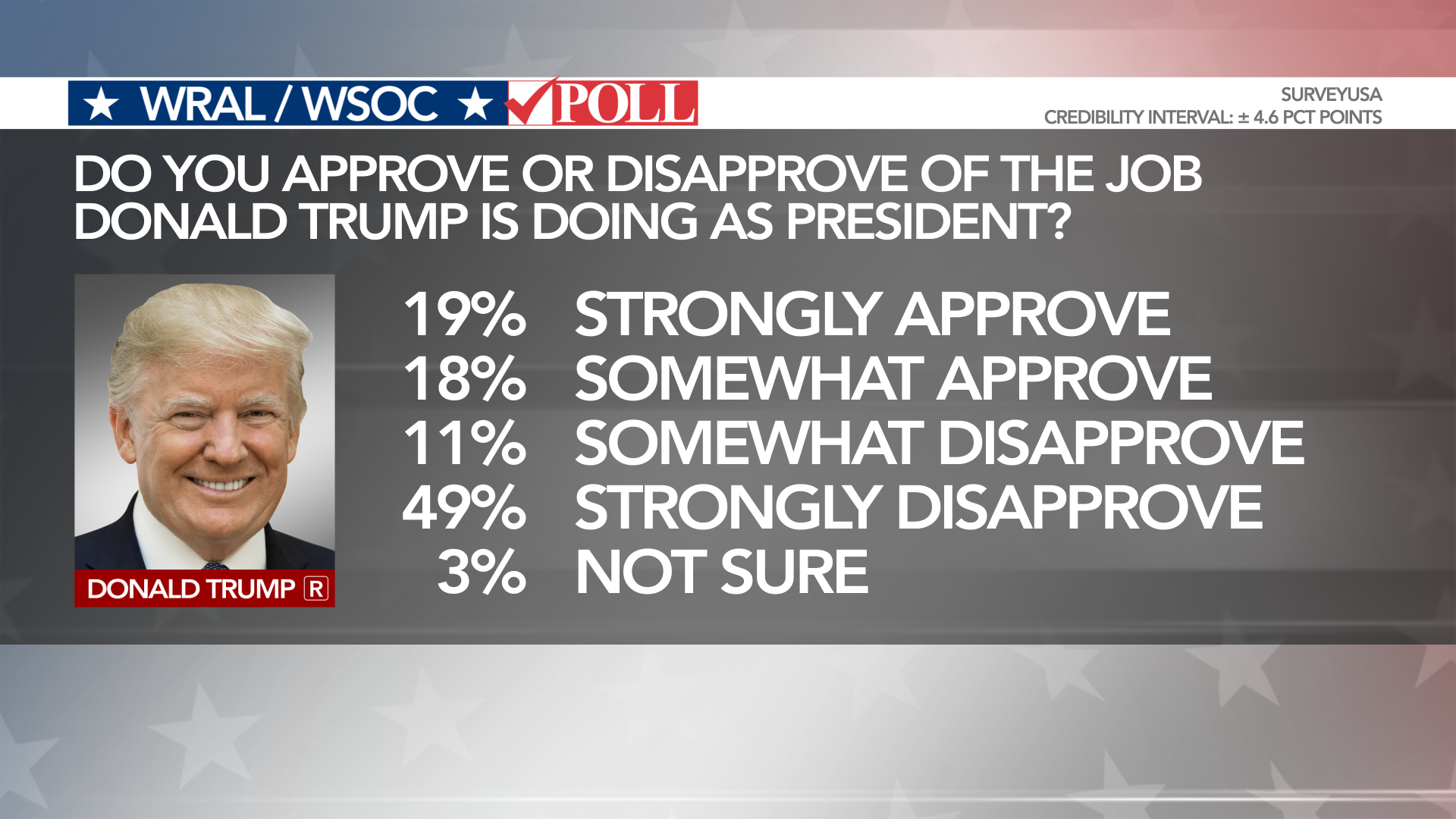
That could reflect rising dissatisfaction with Trump’s policies, such as on tariffs and Iran, that have driven prices higher despite his 2024 campaign promises to lower prices, political analysts say. It could also reflect the fact, seen in other elections over the past decade, that a large number of Trump supporters are simply not likely to vote if Trump isn’t personally on the ballot.
Trump himself is well aware of that dynamic. When he visited North Carolina last month to deliver a campaign speech with Whatley, Trump urged the Gastonia crowd: “Pretend I’m on the ticket. Because essentially, I am. We’ve got to win this election.”
Bitzer said Trump’s poor favorability isn’t unique to North Carolina.
“This is a very pro-Democratic year,” Bitzer said. “Republicans are playing defense. I think we’re seeing that in other U.S. Senate races. Kansas, Ohio, Alaska.” The national political groups that pulled financial support from Whatley have redirected that money to races in some of those states.
Polling often shows races getting closer in the final weeks of an election, so the fact that that isn’t happening this year could be due to Trump’s poor approval ratings, said Cooper, the Western Carolina University political scientist. “The national environment has just gotten better and better and better for Democrats,” he said. “So maybe you’d normally expect to see the Republicans come home. But not when the environment continues to improve for Democrats everywhere else.”
The poll also asked voters about a politician who’s not on the ballot this year. Democratic Gov. Josh Stein won’t be up for reelection until 2028. But generally, the poll showed, voters are much happier with how he’s handled his first two years in office than with Trump. It found that a plurality of respondents — 46% — approved of Stein’s performance as governor and 32% disapproved.
Stein won in 2024 in the most lopsided election for governor in recent state history, defeating scandal-plagued Republican challenger Mark Robinson by a margin of 55% to 40% — roughly the same margin this new poll shows Cooper leading Whatley. A WRAL News Poll in October 2024 showed Stein up by 15% over Robinson, the same as the margin he eventually won by.