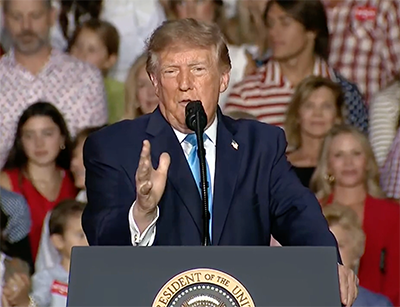
On March 14, 2025, President Donald Trump ordered the U.S. Agency for Global Media, which manages the country’s international broadcasting system, to reduce its operations to the “minimum presence and function required by law,” and by the next day, USAGM was terminating grants, placing employees on administrative leave and canceling contracts. Voice of America was effectively silenced, while Radio Free Europe/Radio Liberty, Radio Free Asia and Middle East Broadcasting Network found themselves fighting for funding and their survival.
But the State Department’s Office of Inspector General (which is also the OIG for USAGM) found last month that USAGM could not show it adequately weighed the costs and benefits of that cost-cutting and didn’t take the steps to ensure critical services would continue. USAGM’s effort to determine what the law required it to preserve, the report says, did not sufficiently account for the full range of laws and regulations governing the agency. That same report found that the administration has been paying 420 employees to remain on leave. That’s $3.2 million every two weeks.
Beyond the jobs lost, the Trump administration weakened the country’s hard-won information capability just as Russia, China, Iran and other authoritarian governments began competing more aggressively for the same audiences.
In other words, the decisions came first. The understanding came later.
I spent many years inside this system at Radio Free Europe/Radio Liberty as a reporter, editor and newsroom leader. It needed reform.
But what Trump and his appointee, Kari Lake, unleashed was not reform but a rushed dismantling with little clarity about what the law required and what America needed. Beyond the jobs lost, the Trump administration weakened the country’s hard-won information capability just as Russia, China, Iran and other authoritarian governments began competing more aggressively for the same audiences.
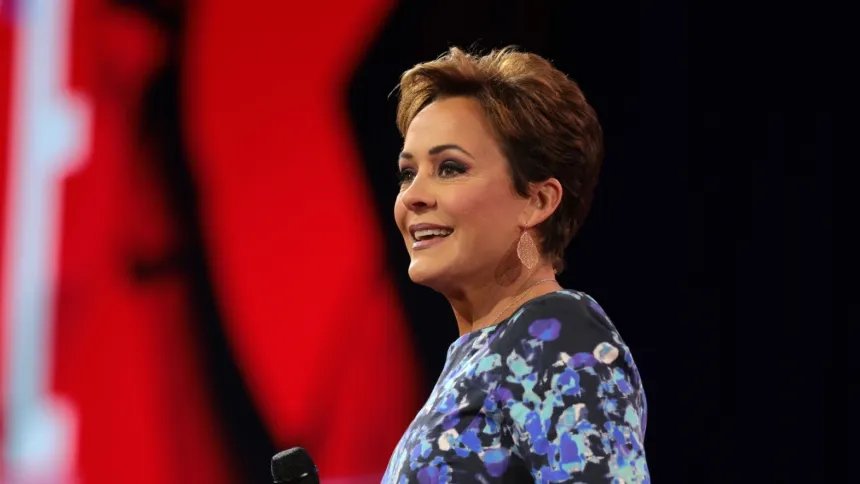
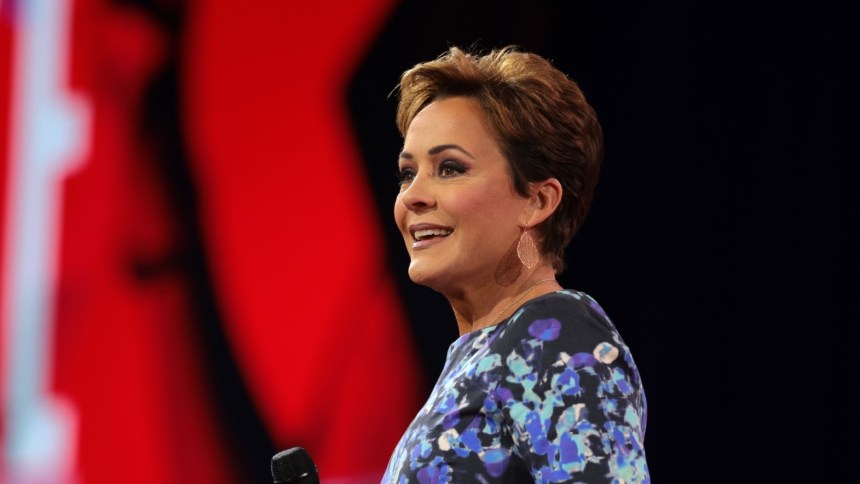
At a June 26, 2025, congressional hearing, lawmakers cited statements from the presidents of RFE/RL, Radio Free Asia and Middle East Broadcasting Networks, saying Lake had spent “not a single minute” with them or their senior teams before their grants were terminated. Lake pointed to lawsuits that had been filed against USAGM and told lawmakers, “It’s hard to meet with somebody when they’re suing you.”
But that answer was evasive: What happened before the lawsuits — and before the decisions were made?
Lake didn’t have to agree with the people running those networks. It’s OK if she believed some services should have been cut. But she should have understood what she was cutting. That’s called due diligence.
Some of the damage was immediate.When the grants were cut, Radio Free Asia announced that half its language services would stop producing new content, including Tibetan, Burmese, Lao and Uyghur. Its English service and Asia Fact Check Lab were also affected.
Other losses are harder to put into a spreadsheet. For example, a journalist who has spent years developing sources inside Afghanistan cannot simply be replaced. Neither can an editor who understands the languages, politics and disinformation networks of Central Asia.
In February 2025, the month before Trump ordered cuts to USAGM, Sputnik, Russia’s broadcasting service, opened a major editorial center in Addis Ababa, Ethiopia, expanding its footprint in Africa.
I spent years in those newsrooms. The hardest thing to build wasn’t a studio, a transmitter or a website. It was trust. Audiences in closed societies are not short of information. What is scarce is information they believe.
And when America leaves an information space, that space does not stay empty. In February 2025, the month before Trump ordered cuts to USAGM, Sputnik, Russia’s broadcasting service, opened a major editorial center in Addis Ababa, Ethiopia, launching Amharic-language operations and expanding its footprint in Africa. Russia later launched radio broadcasting in Amharic and English, saying its programs could reach 6 million listeners in Addis Ababa and surrounding areas.
It doesn’t appear that Trump or Lake understood the strategic value of the information space before walking away from it. Voice of America mattered so much because audiences trusted its journalists to report independently — despite the U.S. government funding it. But in July 2025, Voice of America began translating and publishing White House-supplied videos about America’s 250th anniversary and the nation’s founders. Voice of America is supposed to explain the American government’s position, not be the American government’s position.
The problem has become more visible during the U.S.’s war with Iran.
At the start of the war, when the U.S. struck a girls’ school in Minab, killing scores of civilians, many of them children, Voice of America Persian’s website went days without a story specifically about the bombing. The story that eventually appeared centered Secretary of State Marco Rubio’s statement that the United States would not deliberately target a school.
A lawsuit that includes USAGM and Lake (who a judge ruled was ineligible to serve) as defendants and includes veteran Voice of America journalists, Pen America and Reporters Without Borders as plaintiffs, said Voice of America’s Mandarin Service published an artificial intelligence-generated image of a triumphant-looking Trump posing in front of an American flag, which the plaintiffs said is “imagery worthy of North Korean propaganda.” Voice of America is not supposed to Trump’s — or any president’s — mouthpiece. It should report what the president says and does, but as an independent news organization, not as an instrument for promoting him.
More articles

Muhammad Tahir
Muhammad Tahir is a nonresident senior fellow at The Atlantic Council’s Eurasia Center. He previously held key roles at Radio Free Europe/Radio Liberty (RFE/RL) in Washington, D.C., and Eastern Europe and served as bureau chief for IHA, the Turkish media, in Pakistan and Afghanistan. Most recently, he led media strategy at the nonprofit Corus International. His work has been published by CNN, BBC, Al Jazeera, The Washington Post and The New Atlanticist, among others.