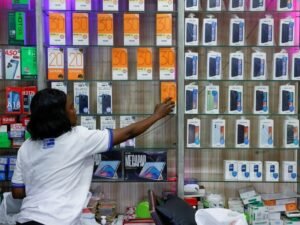
Africa’s mobile internet usage gap has reached 64 per cent despite broadband networks covering 92 per cent of the continent’s population, with high smartphone costs, limited digital skills and inadequate local content identified as major barriers to internet adoption.
The findings were contained in the GSMA’s Digital Africa Index 2026, which highlights the growing disconnect between telecommunications infrastructure expansion and actual internet usage across the continent.
According to the report, only 28 per cent of Africa’s population uses mobile internet on their own devices, leaving millions of people unable to benefit from digital services despite living within the reach of mobile broadband networks.
The report launched at the GSMA Digital Africa Summit in Cape Town, South Africa, on November 18, noted that Africa has made considerable progress in expanding connectivity, but the challenge has increasingly shifted towards ensuring that people can afford and effectively use internet services.
Angela Wamola, Head of Africa at GSMA, said closing the usage gap would require coordinated efforts by governments, telecommunications operators and other stakeholders to address the barriers preventing people from accessing digital services.
“Africa has made real progress in expanding mobile broadband coverage. The challenge now is ensuring that more people can actually use it. With 64 per cent of the population living within coverage but not using mobile internet, closing the usage gap requires us to tackle the barriers that continue to keep people offline,” she said.
The association identified the cost of internet-enabled devices, limited digital literacy and the absence of relevant local content and services as some of the factors discouraging adoption, particularly among low-income populations.
Similarly, it noted that only nine of the 54 African countries assessed imposed neither sector-specific taxes nor import duties on mobile handsets, compared with 10 countries in 2024, raising concerns about the affordability of smartphones across the continent.
The GSMA cited South Africa as an example of how tax reforms could improve access to internet-enabled devices, noting that the country removed a nine per cent excise duty on smartphones priced below R2,500 in April 2025.
Following the policy change, monthly sales of entry-level smartphones reportedly increased by 80 per cent, from approximately 250,000 units in March 2025 to 460,000 in February 2026.
The association urged African governments to consider reducing or eliminating import duties and sales taxes on entry-level smartphones, while also encouraging sustainable device financing schemes to lower the cost of acquiring internet-enabled phones.
It further called on regulators to make spectrum available at prices that support continued investment in network coverage and quality, noting that affordable access to devices and data remains critical to expanding digital participation.
Nigeria was among seven countries that joined the leading group of African nations with stronger digital development and more enabling policy and regulatory environments in the 2026 index, alongside Egypt, Ghana, Rwanda, Senegal, Seychelles and Tunisia.
The countries joined Kenya, Mauritius and South Africa, bringing the number of African countries in the leading group to 10, compared with three in 2024.
However, Nigeria continues to face a significant internet adoption challenge, with an estimated 140 million people living within mobile broadband coverage but not using mobile internet services in 2025.
The figure underscores the gap between telecommunications infrastructure availability and meaningful digital inclusion in the country, where affordability, digital literacy, electricity access and the availability of relevant online services remain important considerations for internet adoption.
Meanwhile, the GSMA said addressing these challenges would require sustained collaboration between governments, telecommunications operators, regulators and development partners to ensure that network expansion translates into greater digital participation, economic opportunities and access to essential online services.
We’ve got the edge. Get real-time reports, breaking scoops, and exclusive angles delivered straight to your phone. Don’t settle for stale news. Join LEADERSHIP NEWS on WhatsApp for 24/7 updates →