 ZDNET
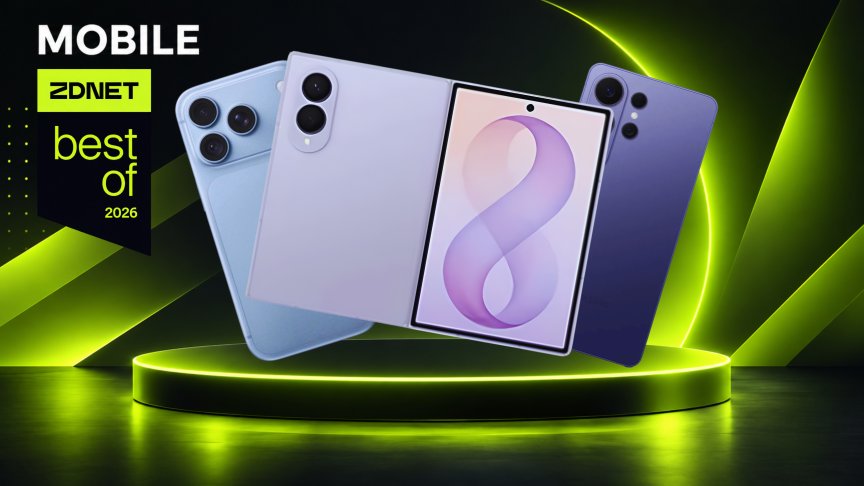
2026 was a huge year for smartphones, with two devices in particular shaking up the status quo: the Samsung Galaxy Z Fold 8 for its unique passport-sized form factor and gorgeous display, and the iPhone Duo, Apple’s first foldable, years in the making.
Also: ZDNET’s best products of 2026: Expert picks for phones, laptops, and more
Both of these phones nudge the foldable form factor ever closer to the mainstream, with Samsung capitalizing on a mature design built on several years of experience, and Apple tapping into its massive market of smartphone consumers thirsty for something new. In the end, however, the Samsung Galaxy Z Fold 8 earned our best smartphone of the year award for its pocketable design, all-day battery, and barely-there fold.
The best smartphone of 2026:

Samsung’s all-new form factor debuted right before Apple’s first foldable, the iPhone Duo. It may not have the same wow factor, but the Galaxy Z Fold 8 has a charming, practical design that outweighs all its weaknesses. The compact, BlackBerry-esque phone unfolds into a mini tablet, with aspect ratios that feel more natural than its taller Fold 8 Ultra sibling. It’s not the first time we’ve seen a shorter, wider folding phone, but this is indeed the first time it appeals to a wider audience.
Read our review: Samsung Galaxy Z Fold 8
Its true uniqueness lies in its versatility. It unfolds into a 7.6-inch mini tablet with a 4:3 aspect ratio, which is more natural for everyday tasks than traditional book-style foldables’ square 8-inch screens. I open the Fold 8 when I want to watch video content, and everything from YouTube videos to movies on Netflix just looks better than other tall folding phones.
– Reviewed by Kerry Wan
Our runners-up:

As far as iPhones go, the Duo is the first of its kind, but it’s years in the making, finally giving Apple access to the foldable phone market. When folded, the 5.4-inch OLED display stretches widely, like a passport book, so it sits comfortably with your pinky supporting one corner and your thumb on the other. Still, this is very much a two-handed affair, whether you’re using the Duo folded or unfolded.
Read our review: iPhone Duo
The iPhone Duo’s displays — specifically, the inner 7.6-inch LTPO OLED panel — are the killer feature; they’re the reason the foldable costs as much as it does, and why I can’t put the phone down quite yet. When unfolded, the nano-texture matte finish greatly reduces reflections and glare, making the screen uniform in color and brightness. It’s just as satisfying to tap and glide the Apple Pencil on than it is to watch videos and scroll through photos. Notably, stylus support is something Samsung and Google still don’t offer.
The iPhone Duo earns itself ZDNET’s Editors’ Choice award for its polished design, high performance, and proven endurance. At the time of writing, the iPhone Duo has withstood over 100,000 folds in CNET’s custom-made durability test machine.
– Reviewed by Kerry Wan

As much as I want Qi2 magnets, bigger camera sensors, and more battery capacity, the Galaxy S26 Ultra is a well-rounded flagship. Features like Privacy Display, faster charging, and Horizontal Lock make for a better user experience. Are they enough to warrant an upgrade from its predecessor? Maybe not. But is the Samsung Galaxy S26 Ultra one of the best phone experiences available right now? Absolutely.
Read our review: Samsung Galaxy S26 Ultra
The Samsung Galaxy S26 Ultra has a 6.9-inch AMOLED display with support for a 120Hz adaptive refresh rate and a 3120×1440-pixel resolution. It’s bright, vivid, and the best screen on a phone right now — thanks largely to Samsung’s anti-reflective coating and execution of its new Privacy Display feature. The S26 Ultra packs the same 5,000mAh battery capacity as previous generations which might disappoint some, but it’s still surprisingly efficient.
– Reviewed by Prakhar Khanna

See full bio