(WLUK) — Wisconsinites will have to dish out more money for this year’s Thanksgiving meal.
According to Wisconsin Farm Bureau’s annual Marketbasket survey reports the price of a traditional Thanksgiving meal in Wisconsin rang in at $63.67, up 2.9% from 2025.
The Marketbasket survey looks at the price of popular food items used to prepare a Thanksgiving meal sufficient to serve 10 people. This survey allows for Wisconsin food prices to be compared with food prices from across the country. Comparatively, the American Farm Bureau Federation’s survey of the same items showed a 6% increase from 2025 prices at a total of $58.63.
“Families are watching every dollar this Thanksgiving, and so are the farmers who help put that meal on the table,” said WFBF Senior Director of Public Relations Cassie Sonnentag. “Farmers receive less than six cents of every food dollar while facing rising production costs. By shopping holiday specials and choosing Wisconsin-grown products when possible, consumers can stretch their budgets while supporting local farm families behind their holiday traditions.”

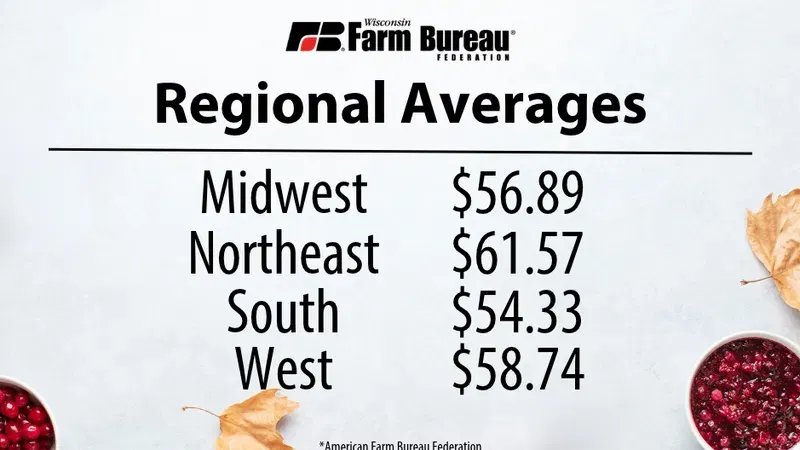
2026 Regional Averages for Thanksgiving meal from Wisconsin Farm Bureau.
Wisconsin Farm Bureau members collected price samples of 15 Thanksgiving food items in early November.
- A 16-lb turkey costs about $28.96, up from $27.24 in 2025
- A gallon of milk costs about $3.83, up from $3.52 in 2025
- A half pint of cream costs about $1.78, down from $1.89 in 2025
- A dozen of dinner rolls costs about $3.61, up from $3.57 in 2025
- A 1-lb relish tray with carrots and celery costs about $1.77, up from $1.68 in 2025
- A 12-oz bag of cranberries costs about $2.13, down from $2.19 in 2025
- A 30-oz can of pumpkin pie mix costs about $4.50, up from $4.41 in 2025
- Two pie shells costs about $3.66, up from $3.53 in 2025
- 14-oz cube stuffing costs about $3.36, down from $3.44 in 2025
- 3-lbs of sweet potatoes costs about $4.05, up from $3.99 in 2025
- 1-lb of frozen green peas costs about $2.27, up from $2.03 in 2025
- Miscellaneous ingredients cost about $3.75, same in 2025
Officials say several factors are contributing to higher grocery prices this Thanksgiving, including increased fuel and transportation costs that impact the food supply chain.
Meanwhile, farmers receive just less than six cents of every food dollar spent.
“The price tag at checkout doesn’t tell the whole story,” said Sonnentag. “Farmers face many of the same financial pressures as consumers, from higher production costs to transportation expenses.”
Turkey prices in Wisconsin rose $1.12 compared to last year’s survey. While the U.S. turkey industry is showing signs of recovery, turkey growers continue to face challenges from animal disease and higher feed costs.
These pressures extend beyond the Thanksgiving table, with the USDA forecasting a 2.3% increase in grocery prices nationwide earlier this year. Rising costs continue to impact both farmers producing our food and families purchasing it.
Ways to Stretch Your Thanksgiving Food Dollar
While Thanksgiving meal prices have increased this year, a little planning can help families celebrate without stretching the budgets. Wisconsin Farm Bureau’s annual Marketbasket survey provides a snapshot of grocery prices but does not account for store sales, loyalty discounts or coupons.
Shoppers can take advantage of several opportunities to save while filling their holiday tables with Wisconsin favorites:
- Watch for turkey deals: Grocery stores often offer turkey specials as Thanksgiving approaches. Compare prices, check loyalty rewards and consider a smaller bird if you’re feeding fewer guests.
- Plan your portions: Build your menu around the number of guests you’re hosting. Preparing the right amount of food can help reduce unnecessary spending and food waste.
- Make it homemade: From stuffing and dinner rolls to pumpkin pie, preparing dishes from scratch can be a budget-friendly option, especially when you already have ingredients in your pantry.
- Shop smart and seasonal: Compare prices on fresh, frozen and canned produce. Seasonal ingredients and store-brand alternatives can help keep costs down without sacrificing flavor.
- Think beyond Thanksgiving: Choose ingredients you can use in multiple dishes and plan ways to turn leftovers into additional meals. A little creativity can help stretch your grocery dollars beyond the holiday.
- Support Wisconsin farmers: Look for Wisconsin-grown cranberries, potatoes, dairy products and other locally produced foods when they fit your budget. Choosing local products helps support the farm families who contribute to our holiday traditions.