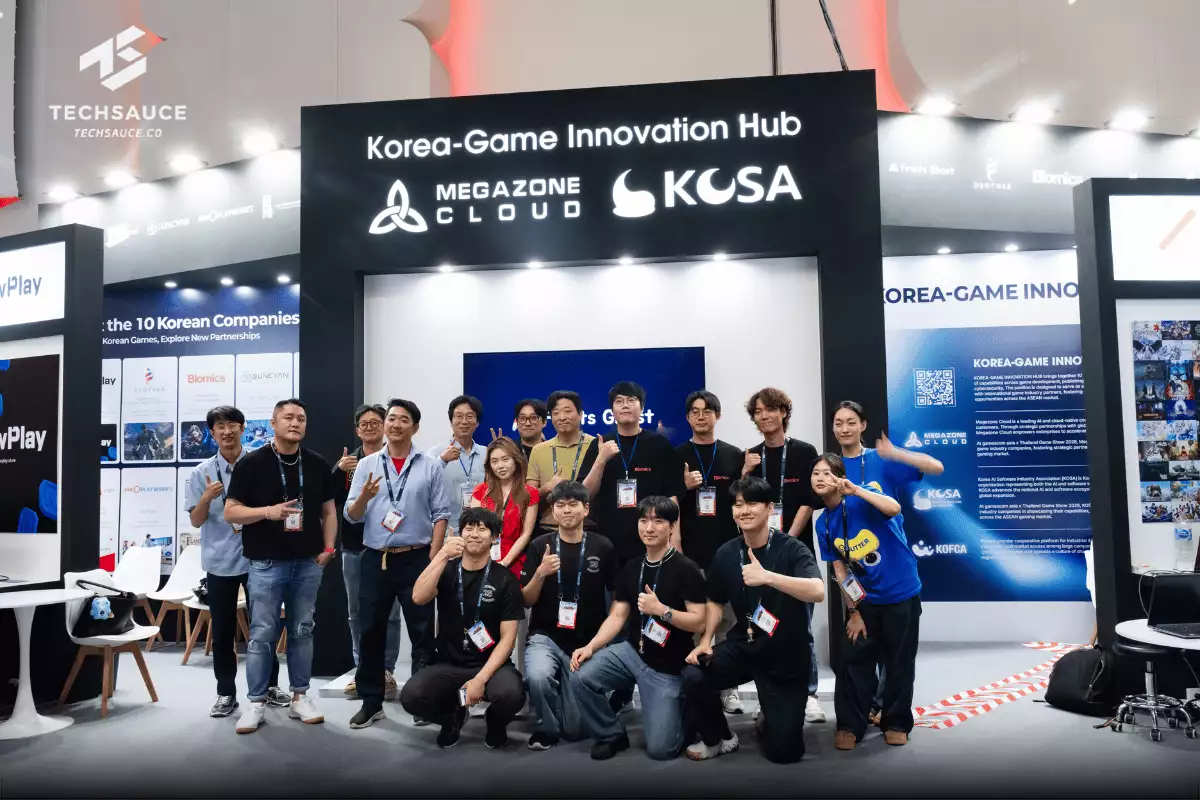
At gamescom asia x Thailand Game Show 2026, the largest game exhibition in ASEAN, held at the Queen Sirikit National Convention Center from October 29 to 30, one pavilion brought together 10 game and technology companies from South Korea under the name KOREA-GAME INNOVATION HUB. All of them came with the same goal: finding partners who can help take their business into Thailand and Southeast Asia.
The pavilion was located in the event’s Business-to-Business (B2B) zone. It was organized by the Korea Artificial Intelligence & Software Industry Association (KOSA) and Megazone Cloud under the Large-Small Business Joint Overseas Expansion Support Program, which helps large Korean companies and smaller ones expand overseas together. As a result, the participating companies covered almost the entire game industry value chain, from game developers, a sports gaming platform, a sound studio and a publisher to payment and anti-cheat solutions. Beyond showcasing their products, each company also held one-on-one business meetings with Thai game companies and publishers to explore partnership opportunities in the region.
Techsauce visited all 10 booths to learn what each company brought to the show, what it is focusing on, and how it sees opportunities in Thailand. Although their businesses differ widely, almost every booth gave a similar answer when asked what kind of partner they were looking for: ‘a partner who understands the players and the culture of this market’.
Hound13: A First PC Title That Beat Expectations, and Plans to Grow with ASEAN
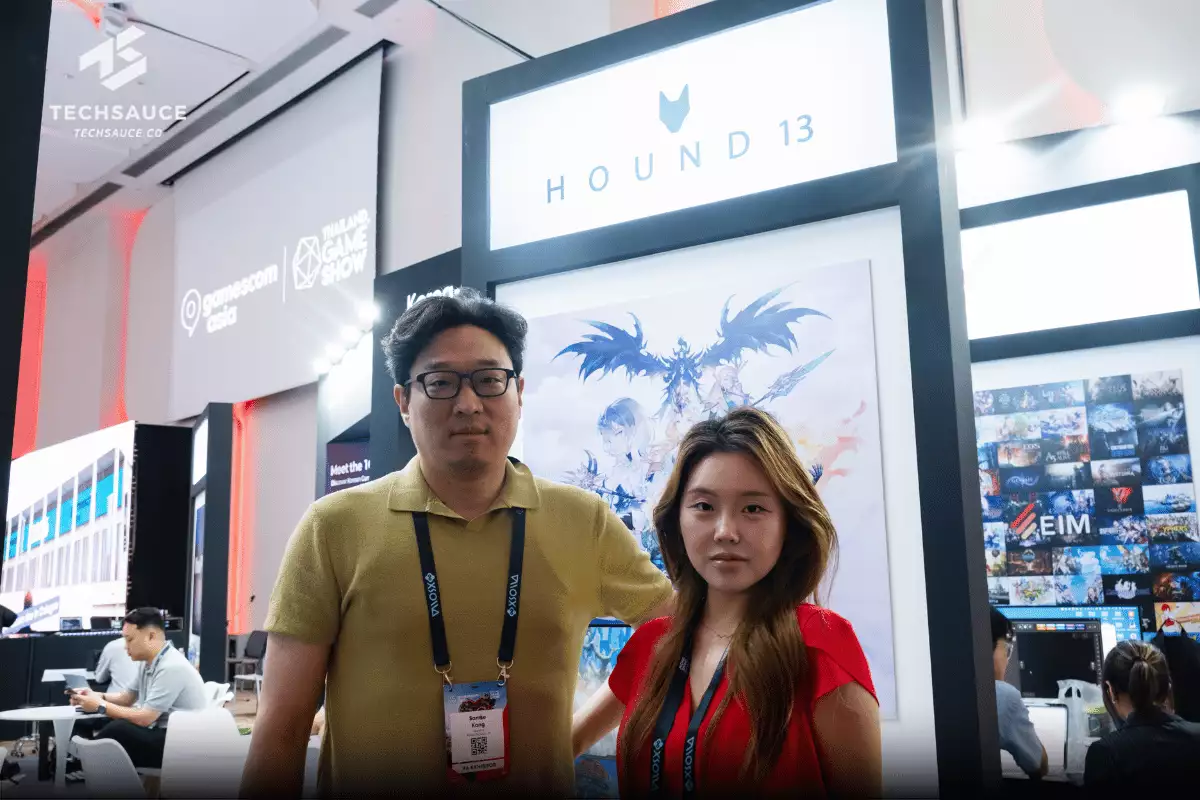
First up is Hound13, an Action Role-Playing Game (Action RPG) studio that brought DragonSword to the show. The team is preparing a major free content update for December, along with new English and Chinese voice-overs. Because DragonSword is the studio’s first PC game, its better-than-expected reception was what surprised the team most. Part of that support came from fans of the studio’s existing intellectual property (IP), who have backed it all along.
In combat, Hound13 wants players to feel what Koreans call ‘sonmat’ (손맛), the satisfying impact that travels to the player’s hands with every attack, so that they feel as if they are fighting in the action scene themselves.
Although most of the game’s players currently come from the US and China, Hound13 sees Thailand and Southeast Asia as a large market with growing demand, especially for PC games, which fits the studio’s plan to keep focusing on PC and console. However, Thailand’s culture, history and favorite game genres differ from those of Korea, Japan and China, the markets the team knows well. The studio is therefore looking for local partners who know the Thai market and are ready to work through the challenges together.
PLAY Mephistowaltz: From a Solo Developer to Flame On, Sire!, a Dark World Worth Exploring
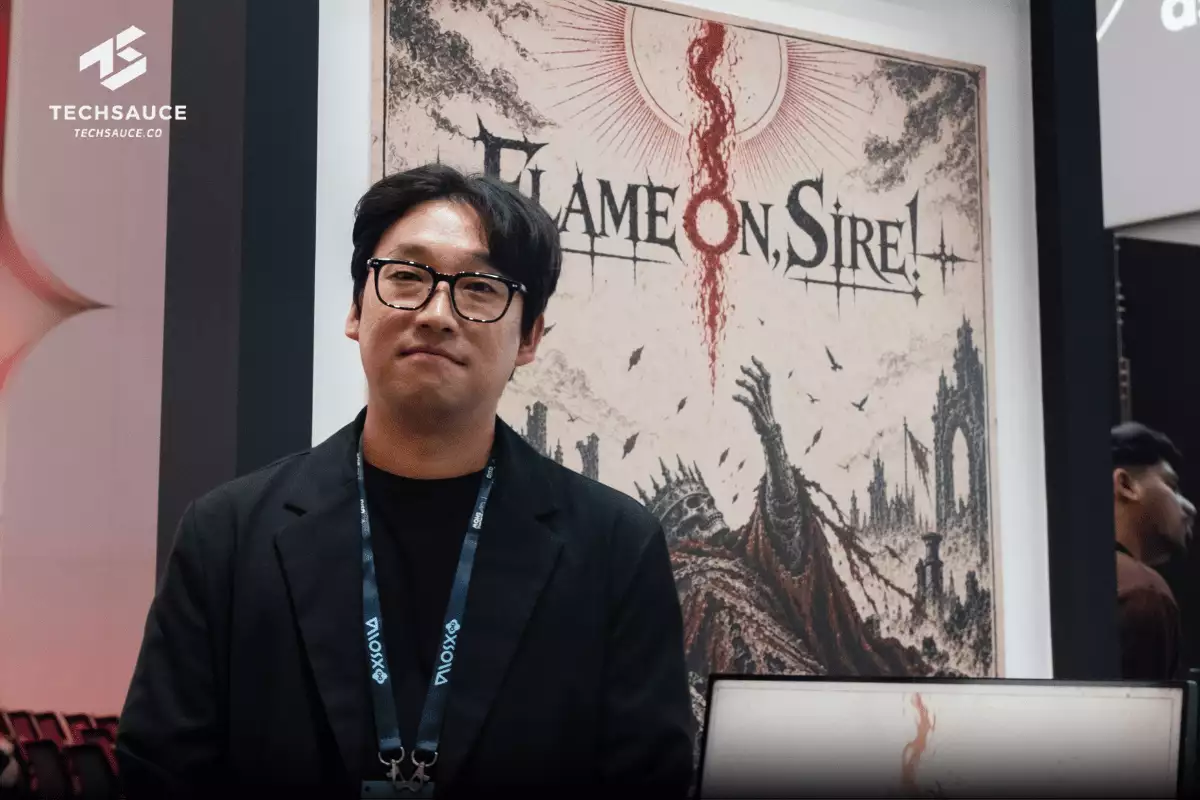
If Hound13 grew from the fan base of an existing IP, PLAY Mephistowaltz is a studio that started small, as a single developer. Along the way, the team learned that even a small team can build a strong game with a clear and efficient development process. The studio’s goal is therefore simple: keep making better games and deliver experiences that players genuinely enjoy.
The studio brought Flame On, Sire!, a dark fantasy game designed to make curiosity the first thing players feel. Although its world is dark and mysterious, it should still make players want to explore what lies ahead. In its design, the studio puts gameplay first, while the story supports the action without interrupting it and adds meaning to what players are doing.
During the show, the team visited the Business-to-Consumer (B2C) zone, met both Thai gamers and developers, and came away impressed by how passionate Thai people are about games. Looking at opportunities in Thailand, PLAY Mephistowaltz hopes to work with partners who truly understand the market and Thai players.
Deother: A Fighting Game for Every Child Who Wants ‘a Fighter Carrying Their Own Flag’
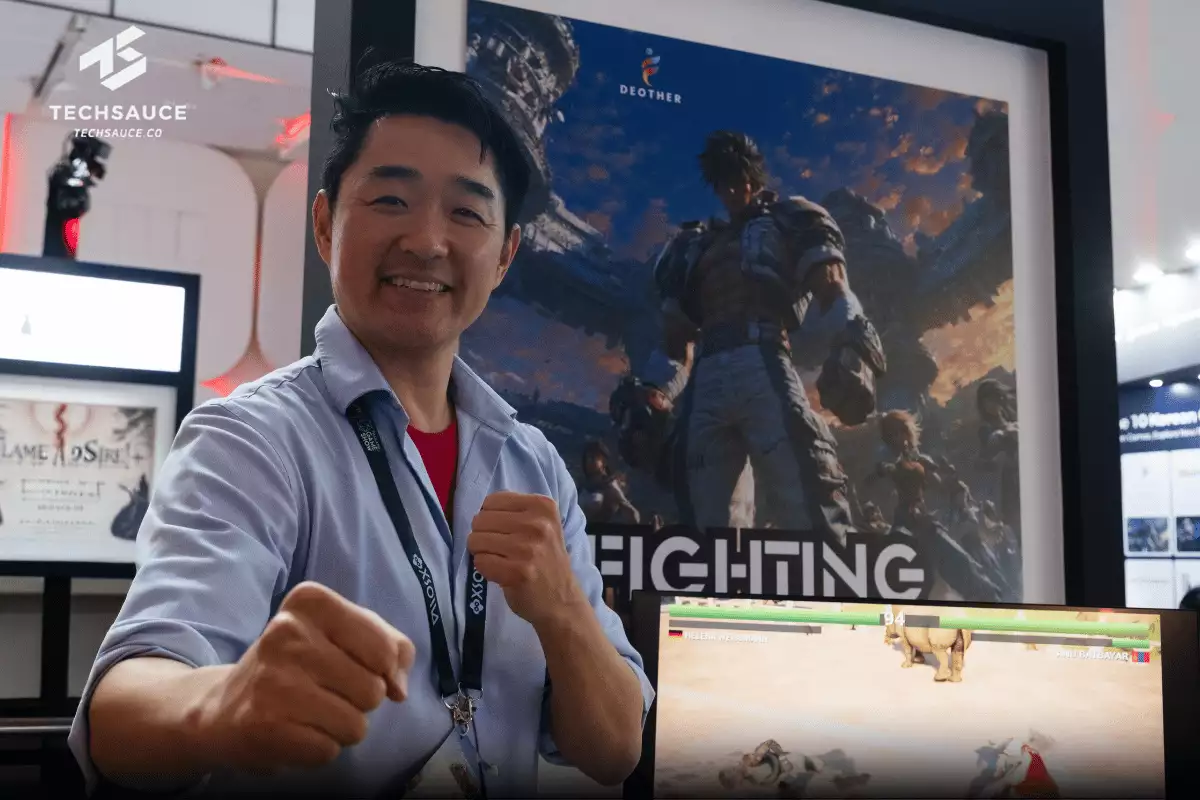
Deother also began with a single developer. Working alone, its founder has been building a fighting game based on a science fiction novel of their own. The game’s highlight is its roster of fighters representing different countries, with the goal of eventually covering every nation, along with a wide range of martial arts, including taekwondo, Muay Thai, karate, judo, boxing and pencak silat from Indonesia. The control system combines directional inputs with controller buttons to support a large number of moves, and the game is designed with esports in mind.
The next step is to have each character speak their own language, so a Thai fighter would speak Thai. Deother wants the game to be the dream of every boy and girl around the world who wants a fighter carrying their own national flag.
Thailand holds special meaning for Deother, since its founder trained seriously in Muay Thai, which inspired the idea of creating a fighting game. The company therefore wants to release the game in Thailand and include both male and female Thai fighters. What surprised the team was the growth of esports in Vietnam and the popularity of games across Southeast Asia. Deother believes that in the near future, PC and console games will grow in popularity alongside the region’s existing mobile market, and that the region will become the next hub of the game industry. In its view, the fact that gamescom asia is held in Thailand rather than Japan or Korea is ‘a clear signal’.
Because the game brings together fighters from many cultures, respecting each of those cultures is essential. Deother admits that it does not know everything, so it is looking for partners from Thailand, Vietnam and Indonesia to help fill in the details. It also wants to learn from Thai players before a wider launch and to add more Thai martial arts beyond Muay Thai, believing that without knowledge, a product cannot get better.
SUNCYAN: The Spike Draws Non-Volleyball Fans In with Manga-Style Storytelling
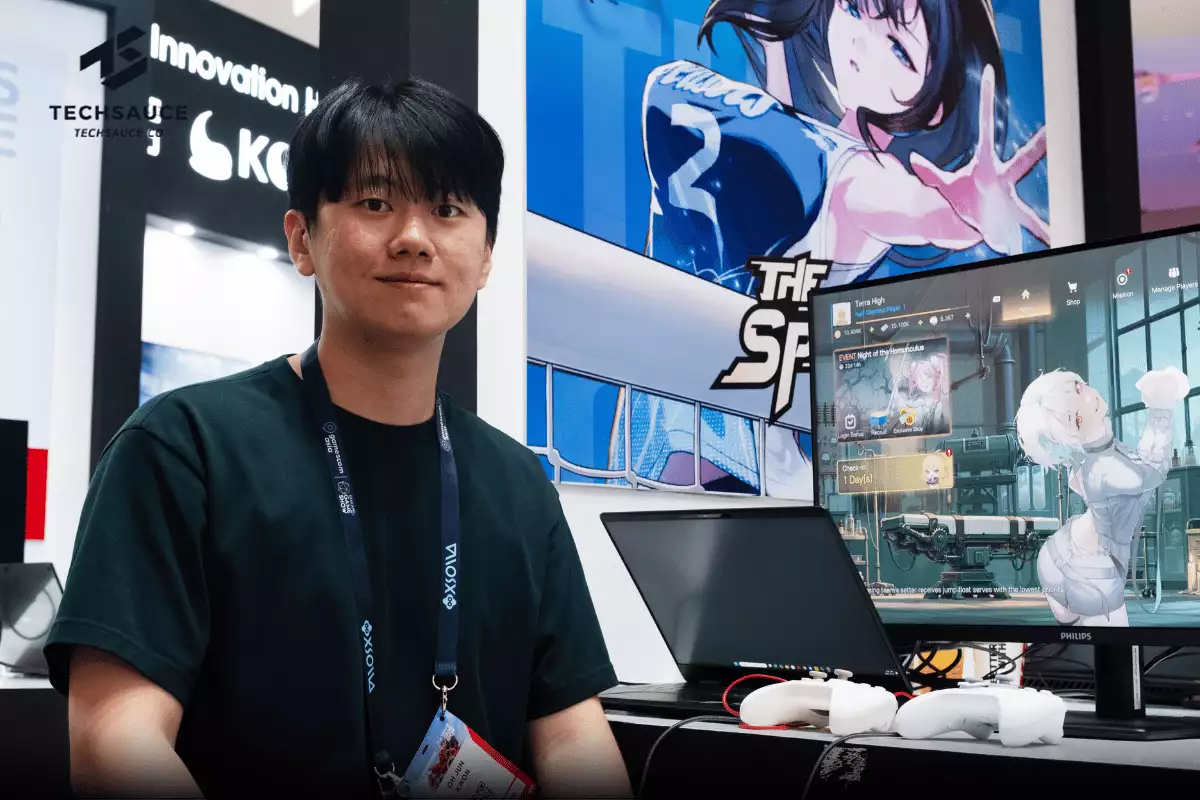
While Deother wants a fighter for every nation, SUNCYAN has taken a different path: building a strong sports game IP for the long term. With its volleyball game The Spike now enjoying a stable player base, the team is focusing on making the IP, its characters and its world appealing and widely known, rather than chasing short-term sales. What surprised the team was the number of organic downloads from players who found the game without advertising, which far exceeded expectations, as well as a volleyball market that turned out to be bigger than expected.
So why can people who don’t follow volleyball still enjoy The Spike? The story follows the style of shonen manga, similar to Naruto or Jujutsu Kaisen, so players familiar with Japanese anime can get into the game easily and gradually learn about volleyball through its characters and world. At the same time, the developers themselves are avid volleyball fans who still watch matches and play the sport to find new ideas for the game.
With its focus on IP, SUNCYAN is not just looking for a typical User Acquisition (UA) partner in Thailand and ASEAN. Instead, it wants partners who love games and are willing to try new things together, such as offline events or brand-building approaches that other game companies rarely attempt.
FruitsGhost: Butter PoP and the Formula for a Casual Game You Can Play in Any Spare Moment
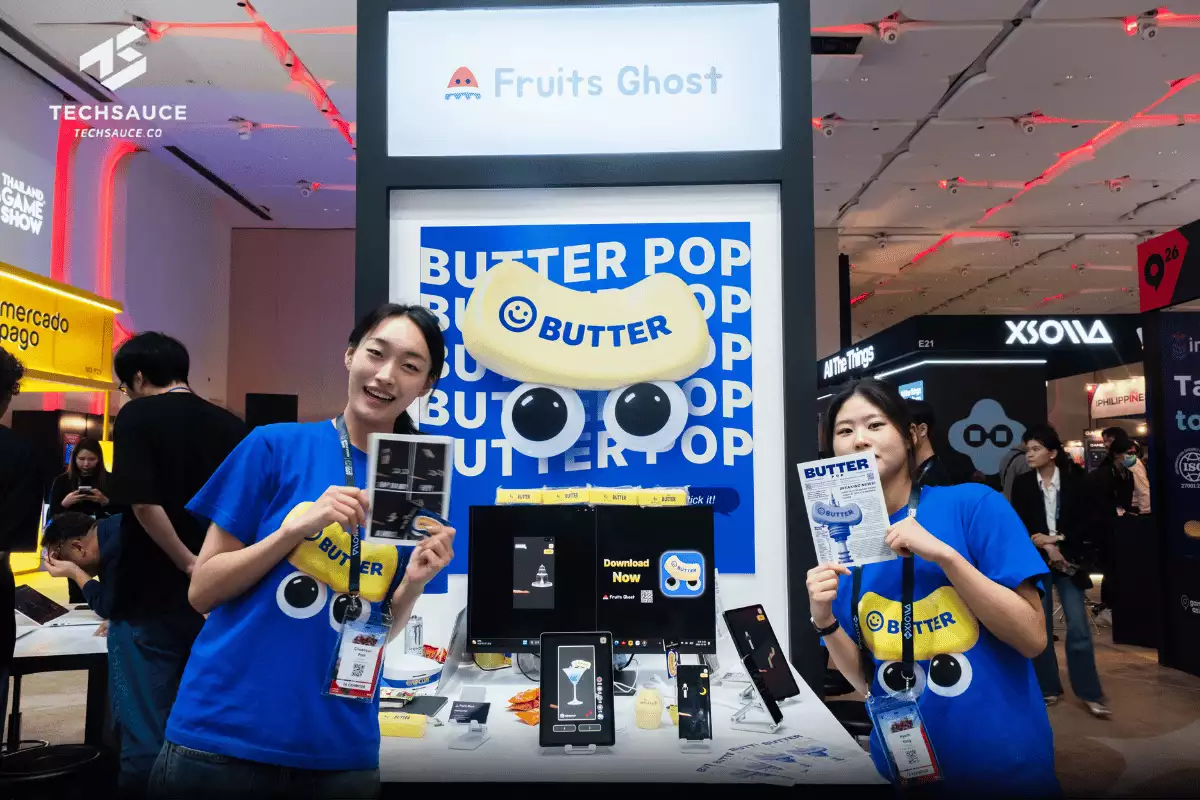
Where the volleyball game draws players in with its story, FruitsGhost relies on touch and sound. The recently launched Butter PoP marks the company’s first major step into the global casual game market, so the team is now focusing on live operations and tracking feedback from players worldwide. What surprised the team most was the strong response from teenagers, who currently make up about 80% of its users.
The fun of Butter PoP comes from pairing each level’s difficulty with sensory feedback. After clearing several easy levels in a row, players face a harder one, and beating it delivers a ‘dopamine rush’. Every touch also comes with relaxing Autonomous Sensory Meridian Response (ASMR) sounds and soft, bouncy butter physics. The team learns which moments players enjoy by analyzing retention data alongside direct player feedback. The goal is a game that hooks players from the start, balances challenge and relaxation, and can be played while waiting for a train or in any spare moment without feeling pressured.
Looking at Thailand and ASEAN, FruitsGhost believes that as AI speeds up game development, games that offer a unique experience will matter even more. The region also has a huge base of young, tech-savvy mobile players who want new content. The company is therefore looking for publishing and marketing partners who understand the local culture and can convey the game’s distinctive atmosphere to players.
PHI PLAYWORKS: Phigolf Turns a Half-Day Round of Golf into a Lunch-Break Game at Home

If Butter PoP is a game for any spare moment, PHI PLAYWORKS brings sports into the home and gets players physically moving. Guided by its vision, ‘We Design Health and Happiness’, the company creates games that combine entertainment with well-being. Its main product is Phigolf, a golf simulator that works with both real golf clubs and the included swing trainer, which has the weight and feel of a real club but is safer to use indoors. Users simply download the mobile game and connect the sensor via Bluetooth, with no need for a large space.
PHI PLAYWORKS showcased technology in three areas: realistic sports equipment, body motion capture, and the processing of that motion data so other developers can use it to build games. Every piece of content follows three principles: it must be a sport, it must be good for your health, and the whole family must be able to play together. The game therefore offers online play and tournaments, from groups of friends up to a global level, so that several generations at home can play together. And while a round on a real course takes around four to five hours, Phigolf lets players get moving and have fun within a lunch break.
North America is currently PHI PLAYWORKS’ main market, and the company does not yet have partners in Thailand. The show was therefore a chance to build partnerships with developers in Asia as it pursues its next vision, ‘Home Sportainment’, or sports entertainment at home. The platform allows developers of motion-based games to publish their titles, supported by motion-tracking tools through an Application Programming Interface (API) and a Software Development Kit (SDK). The company is inviting game studios, developers and strategic partners from Thailand to join this market, and it is ready to serve as their bridge to Europe and North America.
Studio EIM: A Game Audio Team That Wants to Be the ‘One Sound Team’ for Multi-Country Launches
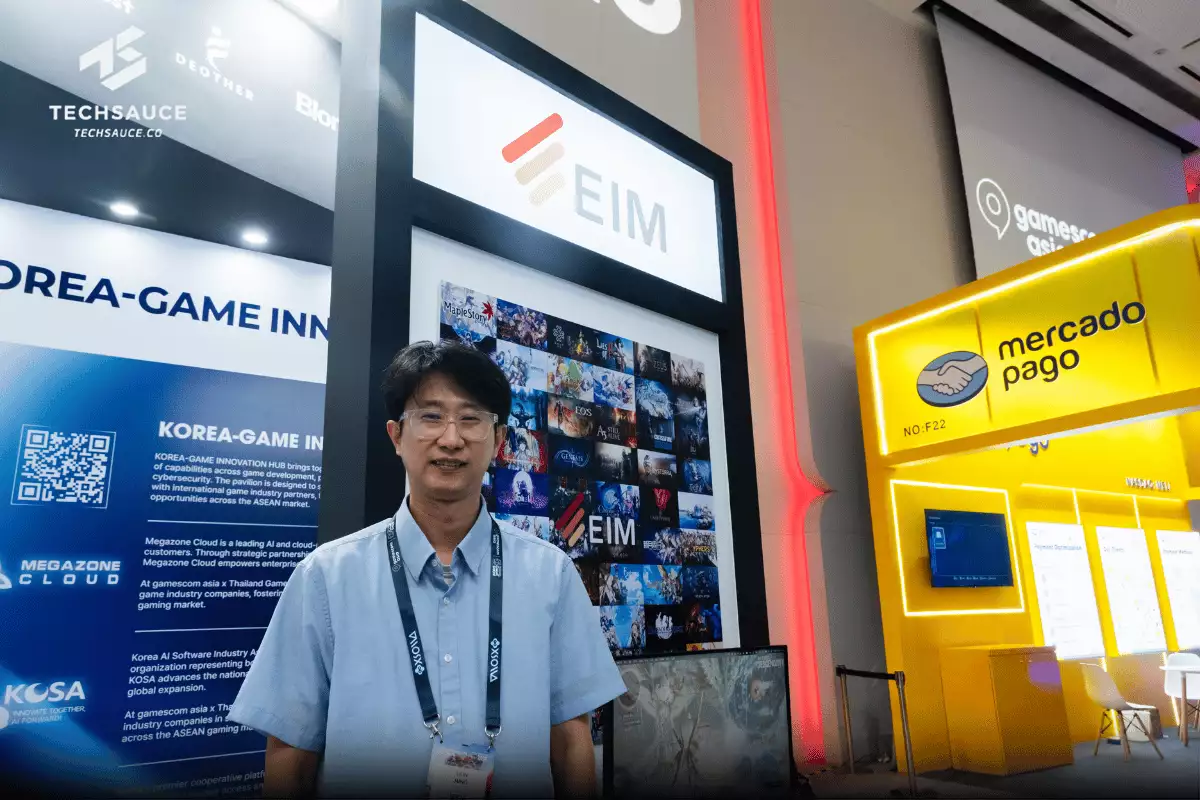
Beyond game studios and the sports gaming platform, the pavilion also featured companies working behind the scenes to bring games to players, starting with audio. Studio EIM is a South Korean game audio studio with 27 years of experience. Its strength lies in handling music, sound effects, mixing and voice-over all within one team. The team is now developing AI voice-over that carries the emotion of Korean voice actors into Thai, and it is looking for partners to experiment with it.
Whenever it starts work on a new game, Studio EIM first seeks to understand what the game wants to communicate to players, including its genre, its world, the players’ age range, and the moments players should remember. Sound makes the biggest difference in moments such as the first minute that shapes a player’s impression, a boss fight, or the point when a player falls in love with a character because of their voice. Studio EIM invites people to think of a game they love, noting that we often remember its sound as well, and its team is the one that creates those sounds.
At this show, the team was surprised by how many teams from Thailand, Indonesia, Vietnam, India and Malaysia stopped by the booth looking for audio partners. Studio EIM already works in Japan, China and North America, and over the next one to two years it hopes to expand into Thailand, Vietnam and Malaysia so that games launching in multiple countries can rely on a single sound team. It is therefore looking for partners who can handle translation, cast voice actors in each country and provide native-speaker script reviews, as well as producers and publishers that need audio work.
Blomics: A Korean Publisher Bringing Mobile Games to the Browser, Now Seeking Thai Partners
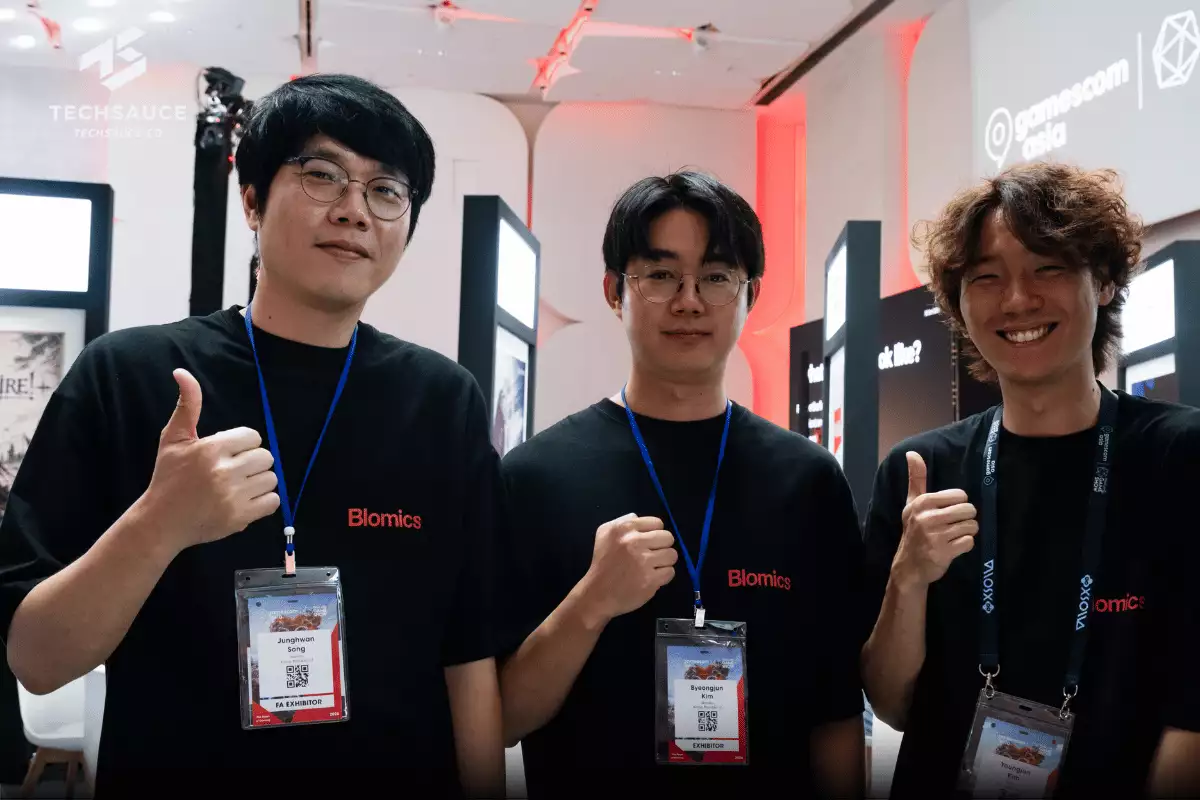
Once the audio is ready, the next step is bringing the game to market. Blomics is a Korean game publisher run by a team of veterans from leading Korean companies. It has more than 10 partners and over five live games, and it brought two titles to this show. What excites the team is converting games originally made for mobile into web versions, so players can start playing instantly in a browser on PC or mobile with no barriers to entry. This is a new challenge for the company in a new market.
Blomics has mainly published games for Korean players, but Thai players are different and interesting, so the company needs a dedicated strategy for Thailand and other Southeast Asian markets. Blomics is now preparing games for the Thai market and hopes to work with developers, publishing partners or marketing partners in Thailand to build a strategy and grow together.
NewPlay: A Web Shop Solution That Drives Both Direct Sales and Player Retention
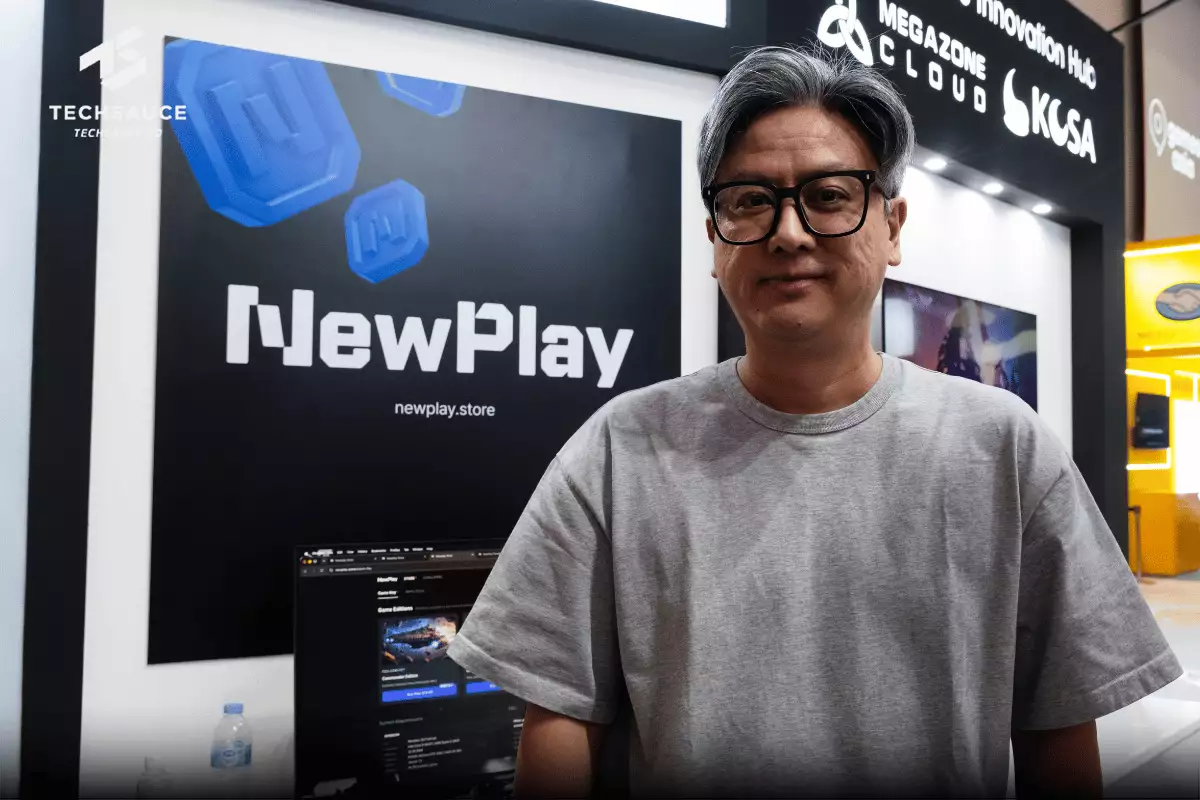
Once a game reaches the market, it needs a payment system to support it. NewPlay is a South Korean payment solutions company with nearly 50 partners in Korea, and it is using gamescom asia as a starting point to expand partnerships with game companies in Southeast Asia. NewPlay’s service helps developers and publishers sell directly to players, but it goes beyond generating revenue by also helping them retain players. One example is its Challenge feature, which lets players complete small missions for small rewards and then redeem them for items in the game’s web shop. The more often players come back to redeem rewards, the more they see what the shop offers, and the more likely they are to become paying players.
NewPlay acknowledges that the App Store and Google Play are more convenient, but it sees a trend of dedicated players accepting an extra step to pay outside the app because they get more value. It is no different from shopping, where people tend to choose stores that offer more discounts, freebies or bonuses. For studios just starting out, NewPlay advises asking first whether the market actually wants that type of game. Games that copy others may struggle, while games with distinctive features or gameplay still have a chance. What matters most is knowing your players, your region and your market.
In Southeast Asia, NewPlay sees many publishers still focusing on mobile games or buy-to-play PC games, but it is starting to see more cross-platform development and more games being turned into web or HyperText Markup Language 5 (HTML5) games. This shift to multiple platforms is exactly where NewPlay is ready to support game companies at every stage of their growth.
Wellbia.com: Anti-Cheat Protection Built on the Idea That Fair Play Means Protecting Honest Players
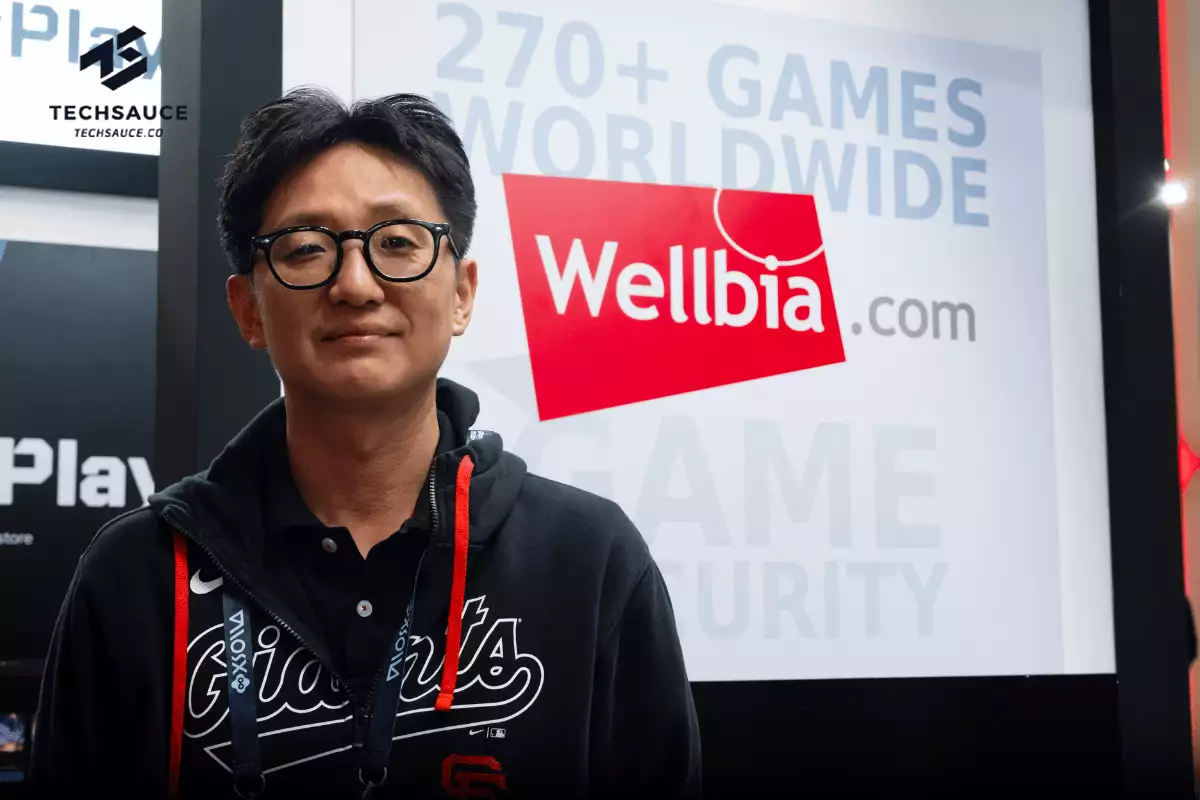
Once a game is live and players start spending, the next thing to protect is fairness. Wellbia.com provides anti-hacking solutions or PC and mobile games and has already worked with several major game companies in Thailand and Southeast Asia. Game companies choose its service because if cheaters are allowed to damage a game’s ecosystem, the game itself will suffer in the long run, and players who play fairly will grow frustrated with those using cheat programs.
For Wellbia.com, fair play means that no one uses cheat programs of any kind. Because there will always be people trying to take advantage of others, the company has to fight cheating to protect players who have done nothing wrong. When the system detects behavior that may be cheating, Wellbia.com recommends that game operators start with a warning to make sure the player is actually cheating. If the player continues, the operator can then suspend the account temporarily or remove the player from the game under an internal policy, which every company should define clearly.
Over the next one to two years, Wellbia.com is expanding its solutions in the Thai market and turning more of its focus to small and mid-sized companies and indie studios, which often struggle to access such solutions because of limited budgets. Since a small company today may become a big one once its game succeeds, Wellbia.com wants to partner with these studios and grow alongside them.
From Games to Back-End Systems, Every Booth Wants Partners Who ‘Understand Thai Players’
Although the 10 companies sit at different points in the game industry value chain, their views on opportunities in Thailand and ASEAN turned out to be strikingly similar. Many agreed that the region is a large and still-growing market, both for mobile games, with their large base of young players, and for PC and console games, which Hound13 and Deother see as gaining popularity. Meanwhile, NewPlay and Blomics see a shift toward web-based and multi-platform games.
The same was true when it came to partners. Many companies admitted that they do not yet know Thai players well enough, and some, such as PHI PLAYWORKS, have no partners in Thailand at all. They are all looking for local partners who understand players’ culture, language and preferences, from the native-speaker script reviews Studio EIM needs to the details of Thai martial arts that Deother wants to learn. As Deother put it, ‘Without knowledge, you cannot make a product better’.
Building networks with people in the Thai market was therefore at the heart of this pavilion. Even after the show, KOSA and Megazone Cloud plan to keep supporting each company’s network so that the conversations started here can turn into real exports and business partnerships.
Sources: Techsauce interviews at the KOREA-GAME INNOVATION HUB pavilion, gamescom asia x Thailand Game Show 2026