Havana, Cuba
The historic drubbing US President Donald Trump received in the US midterm elections apparently has not dimmed the enthusiasm he feels for one of his most high-risk foreign policy goals: “Taking Cuba,” as he put it earlier this year.
“I want to get Cuba done before I leave,” Trump told conservative radio host Hugh Hewitt on Thursday. Trump said he would consider using military action to topple the island’s leadership.
Even as voters in the midterms widely rejected Trump’s war in Iran, the US president suggests he still has the communist-run island just 90 miles from Florida in his crosshairs.
The comments further escalated tensions with Cuba, which for months has been readying soldiers and civilian militias for a possible US invasion.
“Cuba does not attack or threaten any nation,” responded Cuban President Miguel Díaz-Canel on X, “But we will reject any attempt at foreign military aggression and we are preparing for that threat.”

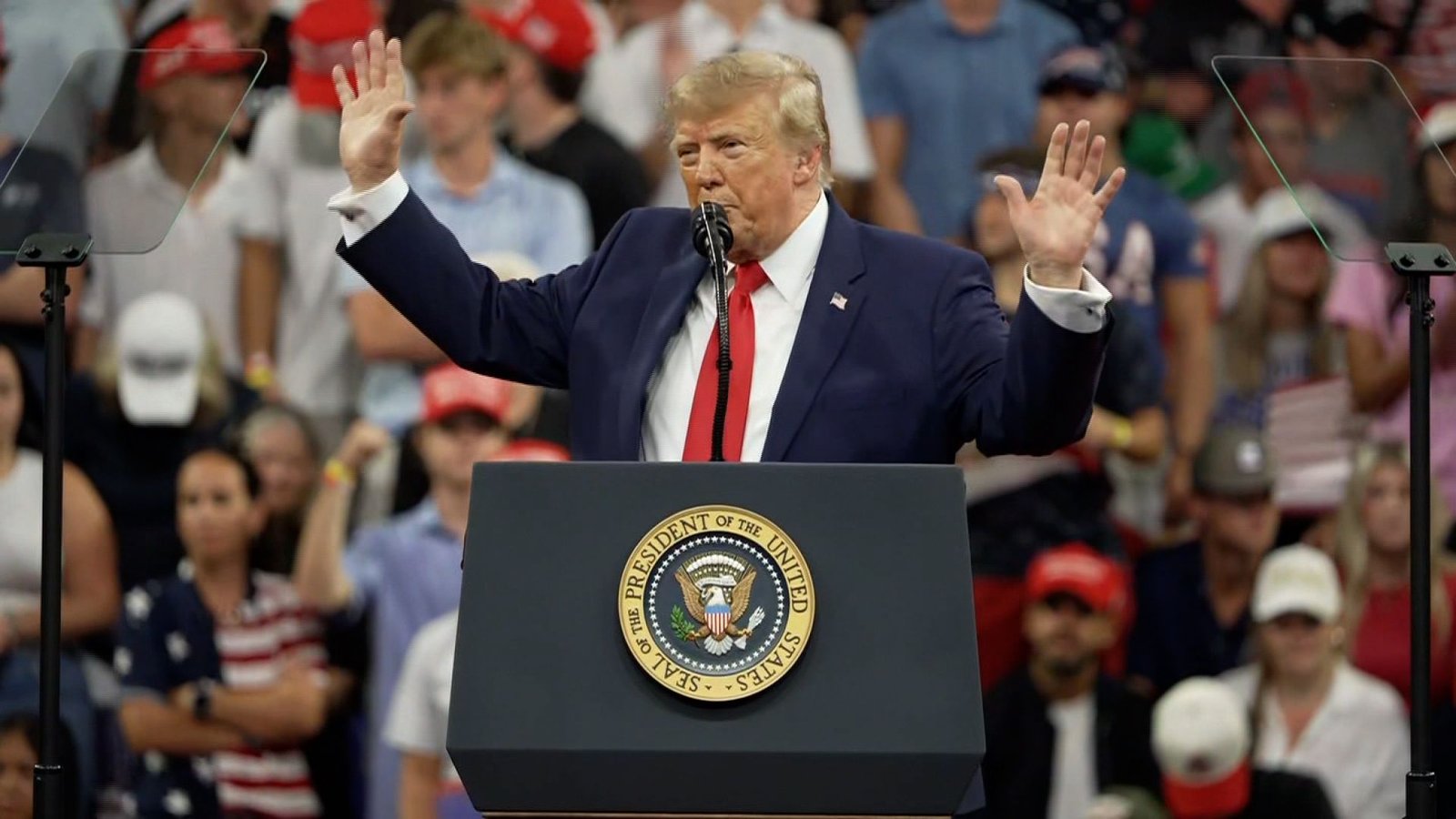
Trump tells Florida crowd that “we’ll take care of Cuba”

For nearly a year, Trump has ratcheted up sanctions on the island — including an oil embargo — while alternatively portraying Cuba as both a failed state and grave threat to US national security.
A US State Department report in July titled “Cuba: The Capital of 21st Century Communism” ominously accused Havana of “persuading the children of the West to turn against their own inheritance” and laid out what many observers read as the case for regime change on the island.
Trump has wavered on whether the US will follow through on military action to force Cuba’s government from power, saying the country’s economy is already collapsing and that he may place a US aircraft carrier off the island’s coast before sending US Secretary of State Marco Rubio to Havana to hammer out a deal literally at gunpoint.
Rubio, a Cuban-American and staunch critic of the Cuban government, has made clear that there needs to be new leadership on the island and that under US law, “regime change” is a condition for economic sanctions to be lifted.
“You cannot change the economic trajectory of Cuba as long as the people who are in charge of it now are in charge of it,” Rubio told Fox News in May. “I don’t think we’re going to be able to change the trajectory of Cuba as long as these people are in charge in that regime.”
In several tense meetings in 2026, US officials told Cuban counterparts they needed to liberalize the island’s economic and political models and end cooperation with US adversaries or face the consequences.

The May indictment of former Cuban President Raul Castro — who is 95 but still wields enormous power on the island — just months after the US capture of Venezuelan leader Nicolás Maduro — drove home those warnings.
And while the US still technically maintains diplomatic relations with Cuba, for months the Trump administration has referred to Cuba’s government as “an illegitimate regime.”
The impasse boiled over into a shouting match at the UN last month, as Cuba’s Foreign Minister Bruno Rodríguez Parrilla tried to interrupt US Ambassador Mike Waltz from giving a speech lambasting what he called Cuban leaders’ corruption and incompetence. A Cuban diplomat was later expelled for appearing to shove a US official.

‘This is America!’: Altercation between US and Cuban officials erupts at UN
A heated exchange broke out between US Ambassador to the UN Mike Waltz and Cuban Foreign Minister Bruno Rodríguez Parrilla during Tuesday’s UN General Assembly debate on the US embargo against Cuba.

Privately, Cuban officials expressed hopes that a rout for Trump in the midterm elections and US voters’ apathy toward military interventions would cool the administration’s imperial designs on the island.
The electoral rout came but there appears to be little reprieve in store for the beleaguered island nation during Trump’s remaining time in office.
A US official, who did not want to be named, told CNN that Washington still expects “the regime to collapse” and that the midterms fiasco will not lead to any softening of the administration’s policy towards Cuba
Having resisted US pressure for nearly 70 years, Cuba does not appear to be caving now.
As grim as life has become for Cubans — blackouts now can last for days, medicine and food are increasingly scarce and the value of the Cuban peso is in a seemingly perpetual death spiral — the island’s government remains firmly in control.
So far, the few talks that have taken place have yielded no tangible results and there is no sign that the administration has found, as US officials put it, “their Delcy” in the Cuban government, referring to Delcy Rodríguez, Maduro’s much more pliant successor in Venezuela.
Trump’s prediction that the Cuba’s leadership will offer concessions to end the pressure campaign notwithstanding, there appears to be little chance of a diplomatic breakthrough.
Cuban officials view any economic benefits of a deal to be a poisoned chalice.
As one Cuban diplomat told me years ago, “We know that if the Americans are for it, we should be against it.”
But Havana may be missing the opportunity to make a historic and lasting deal.
“It’s ‘Nixon goes to China’,” said Ricardo Herrero, the executive director of the Cuba Study Group, a non-partisan organization focused on US-Cuba relations and the Cuban private sector. “You make the deal with your staunchest adversary on the other side, because that deal becomes untouchable. It’s going to come at a higher cost. But it has much greater longevity than any deal that you strike with the Democrats,” he said.
Even if Rubio — widely viewed as the architect of Trump’s Cuba crackdown — were to leave the administration to mount his own bid for the presidency in 2028, any respite for Cuba would likely be short lived.
As president, Rubio would undoubtably seek to finish what Trump started with Cuba.