The Trump administration has undertaken an unprecedented effort to inject the federal government into state elections as it hunts for voter fraud — and to help President Donald Trump continue his baseless quest to try to prove the 2020 election was rigged and stolen from him.
Election officials and Democratic lawmakers fear that the Trump administration’s aggressive actions could spill into Election Day and voter intimidation — and that dubious claims of mass voter fraud will be used to cast doubt on the midterm election results if they go poorly for Trump and the GOP.
CNN has reviewed what five outspoken officials leading the effort — including the president — have said in TV interviews, podcast appearances and speeches about voter fraud and their attempts to find it ahead of the midterms, how their claims about widespread issues of fraud often don’t add up, and what actions they say their agencies or the federal government may take in November.
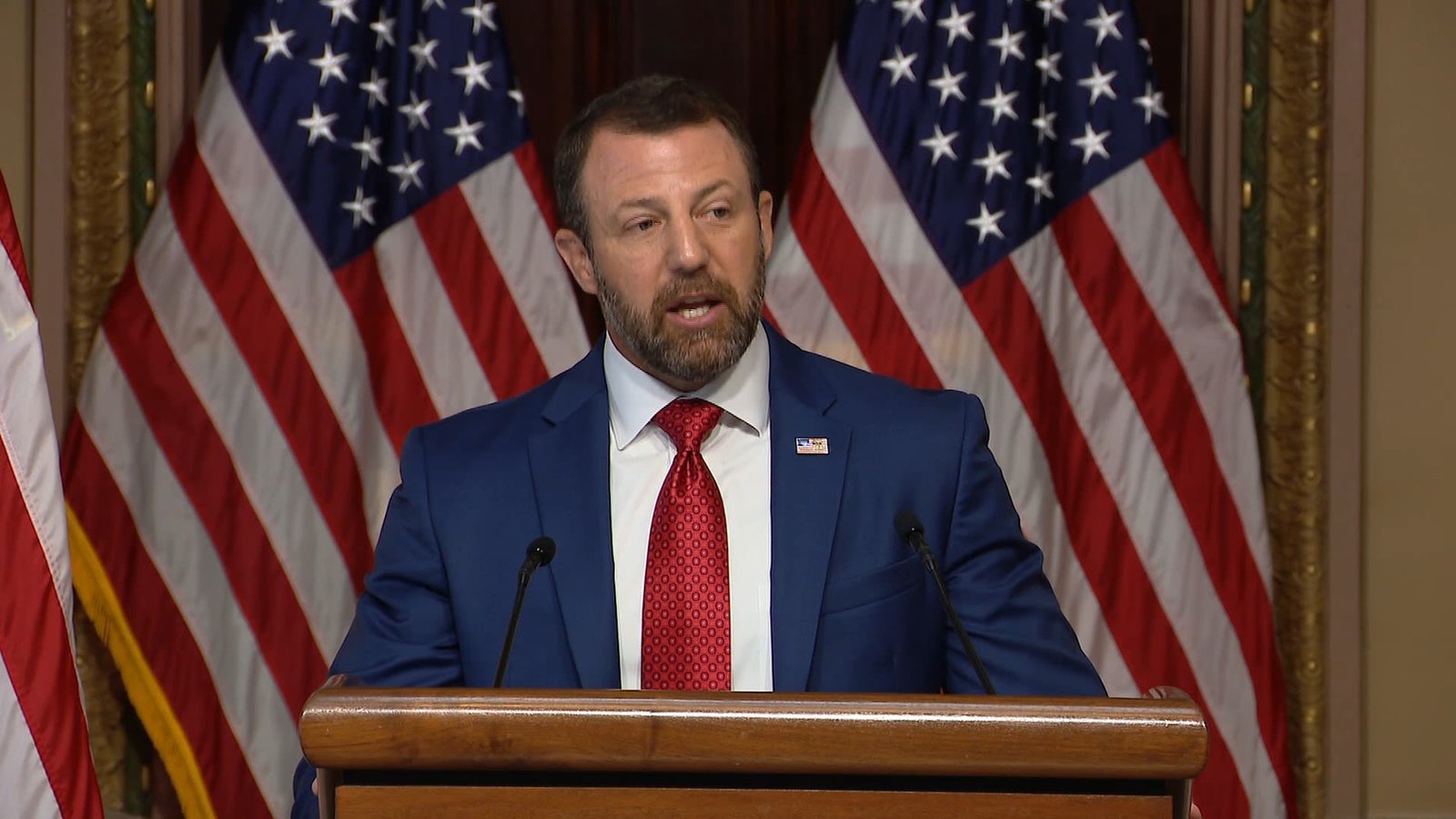
Homeland Security Secretary Markwayne Mullin


Who: Mullin has kept the Department of Homeland Security at the center of Trump’s election agenda — hunting for noncitizen voters and investigating election fraud, pressuring states to adopt Trump-backed election reforms and raising doubts about the security of voting machines.
What are the claims: In July, Mullin claimed DHS had identified more than 250,000 noncitizens registered to vote in California, Pennsylvania, New Jersey and Nevada by analyzing public voter lists as well as roughly 25,000 noncitizen registrants in more than a dozen Republican-led states that voluntarily handed over their rolls.
But the headline-grabbing numbers Mullin presented as “fact” have come under immense scrutiny and, in some cases, failed to hold up. Even some Republican officials have warned that the DHS findings are misleading and dramatically inflated.
Mullin has echoed Trump’s longstanding warnings that most voting machines are vulnerable to hacking, particularly because they contain foreign-made parts. “We know that [foreign adversaries] can change voter registration and your vote,” Mullin said in July.
Last month, Mullin alleged there was “some trouble with some machines” but said he could not determine whether fraud was involved: “That may have had a glitch, may have been something else.”
He has also warned that election officials who fail to adequately secure the midterms or prevent illegal voting could face consequences — including fines, other penalties or even prison.
What can be done in November: Escalating disputes over allegations of non-citizens on voter rolls have spilled into federal court on the eve of the election and could fuel broader questions or challenges over the integrity of the results.
In California, the Justice Department sued after DHS identified roughly 20,000 likely non-citizens registered, seeking to segregate their ballots until their citizenship is confirmed. A federal judge rejected the DOJ demand on Wednesday. DOJ has made similar demands in Washington State, despite concerns that last-minute investigations could disenfranchise eligible voters that may have been mistakenly flagged.
Mullin’s warnings to state and local officials are part of a broader pressure campaign on election workers who have endured years of threats and baseless accusations. Some officials and voting rights advocates worry the added scrutiny could strain operations and that isolated mistakes could be used to cast doubt on otherwise valid results.
He continues to press others in the administration to address what he describes as voting-machine and supply-chain vulnerabilities, including systems that use barcodes or QR codes. Other Trump allies have called for machines to be restricted or even banned ahead of the midterms, though the administration has yet to take such an action, and likely lacks the authority to do so.
DHS is seeking to withhold grant funding from states that refuse to adopt sweeping Trump-backed election changes, including mandating manual paper-ballot counts after elections. It’s unclear if any states have agreed to adopt new reforms.
Meanwhile, Mullin and DHS have repeatedly denied that the administration plans to widely deploy ICE agents to polling places during the midterms, saying recently: “We’re only going to be there if we’re required because there’s some type of threat.”
Still, local election officials, including some Republicans, are preparing their workers in case federal officers show up.
DHS has devoted extensive investigative resources to finding illegal voting, probing thousands of individuals as well as canvassing groups and nonprofit organizations. Internal department records indicate that federal agents will be monitoring the midterms in their hunt for voter fraud.


Who: As head of the Justice Department’s Civil Rights Division — which oversees voting-rights enforcement — Dhillon has become one of the administration’s most visible figures in its push to uncover election fraud. A longtime Trump ally, she supported his efforts to challenge the 2020 result.
What are the claims: Dhillon has repeatedly accused local officials of enabling voter fraud and vowed to pursue cases for any and all election violations.
“We’ve found hundreds of thousands of dead people on the voter rolls and tens of thousands of noncitizens on the voter rolls, which are now being investigated further,” Dhillon said on Fox Business in July.
However, despite devoting massive resources to voter-fraud investigations, the administration has publicly announced only a few dozen election-related prosecutions.
Dhillon’s team has sought unredacted voter rolls from the states as part of the administration’s search for noncitizen voters — and they’ve sued roughly 30 states that balked at the request. The DOJ has lost every ruling in those cases so far. Dhillon has suggested that officials who refuse to comply, which includes some Republicans, may have something to hide.
Other Republican-led states have voluntarily given their voter lists to Dhillon’s department.
Like Mullin, Dhillon has warned local officials they could face prosecution if they fail to adequately safeguard the midterms. This summer, she sent letters to all 50 states that even some Republican officials described as unnecessary and threatening.
“My job is to enforce all of the federal laws relating to voting, and those laws include criminal penalties, not only for the people who falsely rep their citizenship to register to vote, or vote illegally, but also election officials who knowingly allow or conspire with people to vote when they have no legal right to do so, including noncitizens,” Dhillon said in a July interview on Newsmax.
What can be done in November: Dhillon has championed what she calls the “biggest DOJ election observer effort in history,” with plans to deploy more than 1,000 federal monitors to polling places across all 50 states on Election Day. Federal monitors have long been part of US elections, and Dhillon says they will not interfere with voting. Instead, she says, they will document potential violations of federal law and other irregularities for review afterward.
CNN found that some Justice Department monitors deployed during this year’s primaries had previously participated in legal efforts to challenge or overturn Trump’s 2020 election loss. In Wyoming, Republican officials accused two federal monitors of using “aggressive” tactics.
While there’s no evidence of looming disruptions on November 3, Dhillon’s rhetoric has fueled concerns among some election officials that Trump’s Justice Department may depart from the longstanding practices and limits governing federal election monitoring.
Dhillon has also said states that have refused to turn over unredacted voter rolls are “under investigation.” That warning, combined with the administration’s threats against local officials — including DOJ most recently threatening California election officials with prosecution over noncitizen voters — has stoked fears that federal authorities could target election workers and use isolated incidents to bolster claims that the results cannot be trusted. The Justice Department last week issued federal grand jury subpoenas to local election officials in Los Angeles County, a significant escalation in their battle with the state.
In Alaska, DOJ filed a preemptive federal lawsuit last week to block the state from certifying the results of its Senate race if Republican incumbent Dan S. Sullivan loses to Democratic challenger Mary Peltola. DOJ alleges the campaign of another candidate — Dan J. Sullivan, a retired teacher — was designed to confuse and pull votes away from the incumbent, though Alaska’s Supreme Court ruled in June that both Sullivans could remain on the ballot. DOJ has also opened a criminal probe into the matter.
 ” class=”image__dam-img image__dam-img–loading” onload=’this.classList.remove(‘image__dam-img–loading’)’ onerror=”imageLoadError(this)” height=”1080″ width=”1920″/>
 ” class=”image__dam-img image__dam-img–loading” onload=’this.classList.remove(‘image__dam-img–loading’)’ onerror=”imageLoadError(this)” height=”1080″ width=”1920″ loading=’lazy’/>
Who: Patel leads the FBI, which in January seized 700 boxes of 2020 election materials in Georgia from Fulton County’s election offices. The search warrant was obtained based on allegations in an affidavit from 2020 election denier Kurt Olsen, who has worked in the White House and Justice Department under Trump. Fulton County officials argued in court filings that those claims have long-circulated in right-wing circles and have already been investigated by the state, which found no intentional wrongdoing.
In March, the FBI also subpoenaed records of the Arizona state Senate’s audit of the 2020 election, which reaffirmed Joe Biden’s victory over Trump.
What are the claims: Patel has stoked Trump’s baseless claims that the 2020 election was stolen in television interviews. In April, he spoke to then-Fox Business anchor Maria Bartiromo, who pressed him about investigating Trump’s claims that the 2020 election was rigged.
“Do you have anything to tell us about that?” asked Bartiromo.
Patel went on about the FBI’s Russia investigation during Trump’s first term before turning to the election claims.
“They not only personally attacked the presidency of the United States and President Trump, but they tried to thwart our elections and rig the entire system, and that is not something that is going to stop – that is not something I’m going to allow on my watch,” Patel said.
“We’ve got all the evidence. I can announce on your show that we’ve got all the information we need,” he continued. “We’re working with our prosecutors, the Department of Justice and Attorney General Todd Blanche, and we are going to be making arrests, and it’s coming, and I promise you it’s coming soon.”
It’s not clear what arrests Patel was referring to.
What can be done in November: Democratic lawmakers and election officials fear the FBI could send agents to the polls on Election Day, an action they say would be an intimidation tactic that violates state election laws.
At a September hearing, Democratic Sen. Richard Blumenthal asked Patel to commit to not sending FBI agents to the polls.
“On Election Day, the FBI will follow the law,” Patel responded. “If there’s a reason to go there because there’s been a violation of law, we will. Otherwise, we won’t.”
Blumenthal followed up by asking whether Patel agreed “that deploying FBI agents to the polls on Election Day would be contrary to law?”
“I don’t know that we can’t legally do it,” Patel said. “I’m telling you we’re going to house our agents and intel analysts in our field offices for election security.”


Who: Solomon, a conservative journalist, joined the White House in July as a special government employee leading the White House Government Transparency Task Force to declassify and release documents related to alleged election fraud as well as prior investigations into Trump.
Solomon’s task force declassified the documents that fueled Trump’s July speech in which the president alleged election meddling from China in 2020, though Solomon acknowledged after the speech there was no evidence any votes were altered.
What are the claims: Solomon, who runs the news site Just the News, has touted the documents as evidence of election vulnerabilities, suggesting that voting machines could be hacked, and he’s said he’s still investigating whether any votes were flipped.
“The president let the American people know that for the last six years we’ve had a glass chin when it comes to election security,” Solomon said on his “Just the News: No Noise” show the day after Trump’s July speech. “We knew in 2020 our machines were potentially vulnerable to being hacked by five foreign powers.”
“It doesn’t mean the machines flipped votes. It doesn’t mean that we caught widespread cheating yet. But it is absolutely certain now that the American public was in an election system that had significant vulnerabilities,” he added.
Solomon has also alleged that the 2020 election was part of a broader “deep state” conspiracy that includes Special Counsel Robert Mueller’s Russia investigation into Trump during his first term and Special Counsel Jack Smith’s indictments of Trump while he was out of office.
“I don’t think the intelligence committee put a thumb on the 2020 election. They threw their whole body on it,” Solomon said on the New York Post’s Pod Force One last month. “Intelligence experts with political ambition seem comfortable now using their intelligence credentials to try to hijack or influence an election.”
What can be done in November: Solomon continues to release declassified documents through his White House task force, including recent files about Smith’s investigation and the FBI search of Trump’s Mar-a-Lago residence in 2022.
While Solomon has raised concerns about the vulnerabilities of voting machines and interference from China, he’s also downplayed the notion advocated by some Trump allies that the president should declare a national emergency or take unprecedented action like seizing voting machines.
After Trump’s speech, Solomon was pressed by an MS NOW reporter about the president’s claims the 2020 election was stolen and whether votes were changed.
“The Intelligence Committee has zero evidence that someone, that a foreign power, flipped a vote in 2020, ’22 or ’24,” Solomon said, with a caveat that “we’re not through all the documents.”
Asked about whether the 2020 election results were correct, Solomon said: “I’m still researching,” adding there was “not yet” intelligence to support the stolen election claims.


Who: Trump has spent years insisting, without evidence, that US elections are stacked against him and other Republicans and that widespread fraud and voting by noncitizens have affected the results of elections, falsely claiming he did not lose the 2020 election.
Since retaking office last year, much of his election agenda has hit a wall. Legislation requiring proof of citizenship to register and identification to vote has stalled in the Senate. Efforts to impose new rules on mail voting and voter rolls have also been blocked by the courts.
What are the claims: With the midterms approaching, he is ramping up his rhetoric. Trump claims Democrats are preparing to cheat, foreign governments can manipulate US elections and voting machines cannot be trusted. And he is urging Republicans to closely monitor the upcoming election.
During California’s June primaries, as mail ballots were still being counted, Trump baselessly accused Democrats of trying to steal the races for governor and Los Angeles mayor. He claimed there was “BIG cheating” and that the count was under federal investigation. Trump later said a call he made to the Justice Department stopped the supposed fraud, but there is no evidence his call affected the results.
In his July prime-time address, Trump announced the declassification of thousands of pages of records that he cast as proof of weaknesses in US elections and the threat of foreign interference. The documents included intelligence about China’s collection or analysis of American voter data.
But they did not show that China altered voting systems, manipulated ballots or changed the outcome of the 2020 election.
Trump has also floated extraordinary federal intervention. Earlier this year, he said Republicans “ought to nationalize the voting” and “take over” election administration in some places.
At a Republican midterm convention in September, Trump led the crowd in reciting a vow that they would vote in the midterms: “I pledge to the greatest president in the history of the United States that loves us so much he can’t even breathe, that I will go out with my family, my friends. I’ll do it any way — I don’t care if I’m registered or not, I’m going to try and cheat like hell like they do.”
What can be done in November: Trump cannot simply take over the midterm elections, as some allies want him to do. States and local governments administer voting, and any major federal intervention would face steep legal and constitutional hurdles.
Trump is urging supporters to vote in overwhelming numbers — including by mail — and mobilize as poll watchers. “You have to make sure that people aren’t cheating,” he has said.
As demands for more aggressive action have grown among his supporters, Trump has teased the prospect of declaring a national emergency to exert greater federal control over the midterms, saying “stranger things have happened.” He’s also said he regrets not seizing voting machines after the 2020 election: “Well, I should have.”
The most volatile period may come after the polls close, especially if close races remain unresolved while Trump alleges fraud.
Trump will enter November in control of federal agencies with broad powers to investigate possible crimes, file lawsuits, pursue voter and citizenship records and ask judges to authorize searches for election materials.
Some election officials and legal experts are preparing for the possibility that investigators could seek ballots or voting equipment while races are still being decided. Experts describe that as an extreme scenario, and any federal search warrant would require a judge’s approval.
Disputes over fraud claims, ballot counting and certification drove weeks of legal battles after the 2020 election and culminated in the January 6, 2021, attack on the US Capitol.