The Trump administration plans to redirect or withhold nearly all funding that Congress had slated for international family planning aid this year – about $605 million – according to an internal US State Department budget report and a memo to lawmakers that were obtained by CNN.
The budget plans also involve an effort to move nearly a billion dollars into a global health innovation fund benefiting US corporations, while sharply cutting global health funding for low- and middle-income countries.
The actions have drawn criticism from nonprofit organizations and lawmakers who argue it represents overreach by the administration, given that Congress holds the power to decide how money is spent.
A copy of the budget report – called the preliminary Fiscal Year 2026 allocation – reveals plans to divert or repurpose almost all of the $607.5 million in funding that Congress had allocated to supply contraception and other reproductive health services to women overseas.
Tens of millions of that funding will be diverted to support the “energy security needs” of US partners facing market disruptions amid the wars in Iran and Ukraine, according to a separate memo signed by Secretary of State Marco Rubio in September. The memo offered few additional details on how that money would be spent.
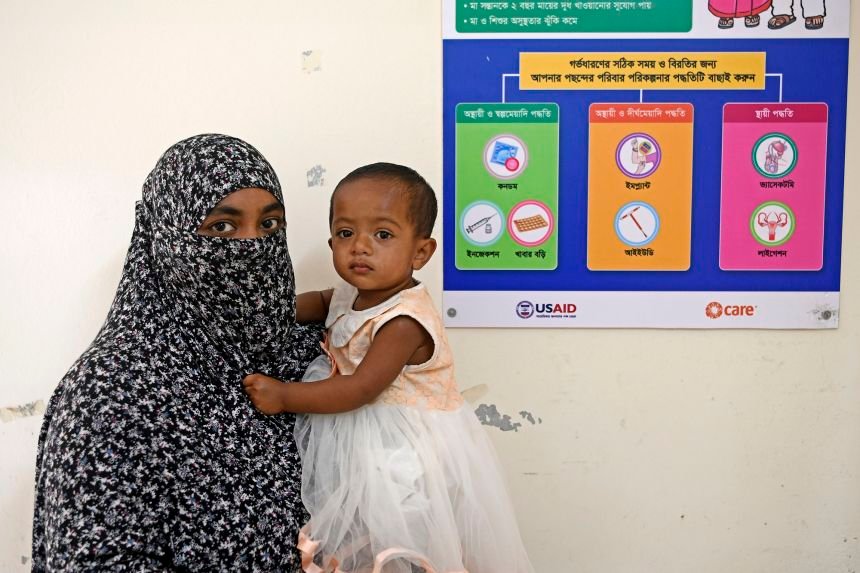
For decades, US family planning aid has provided millions of women overseas with modern contraceptives to give them the ability to prevent or space out pregnancies, which research shows improves maternal mortality rates, family incomes and babies’ health.
In fiscal year 2024 – before Trump came back to office – US investment in global family planning is estimated to have prevented 34,000 maternal deaths, according to the Guttmacher Institute.
The budget plans also reveal steep reductions in US health assistance for most countries when compared to 2024 funding levels, according to an analysis of the leaked budget document conducted by Public Citizen, a nonprofit consumer advocacy organization. Their analysis, which was shared exclusively with CNN ahead of its publication Saturday, was conducted in conjunction with the nonprofit organizations Partners In Health (PIH) and Population Action International (PAI), a reproductive rights advocacy organization.
The countries with the largest funding decreases for health programs are South Africa, Tanzania and Zimbabwe, which have all been hit with more than $100 million in cuts. Eight countries – Afghanistan, Central African Republic, Gambia, South Africa, Somalia, Sudan, Timor-Leste and Yemen – have had their health funding cut to zero since 2024.
Asked about the funding diversions, a State Department spokesman told CNN that “the administration is consistently evaluating the use of foreign assistance to ensure it is used to meet critical needs, including unanticipated contingencies such as the current global energy crisis, within the context of its annual appropriated budget and the authorities available to the president and the secretary.”
Asked about the department’s diversions of family planning funding, the spokesman said: “Our focus is on implementing life-saving care, including in HIV/AIDS, tuberculosis, malaria, and maternal and child health, through new, landmark bilateral global health MOUs (memoranda of understanding).”

Vincent Lin, associate director of health policy and advocacy at PIH, told CNN that the latest budget moves are “counter to what Congress has put in the appropriations bills.”
“To see dollars that have been fought for and written into the law by Congress moved away or siphoned away to energy security needs, or to US private companies with a profit margin, or out of really important public health programs … I think it is devastating to see that happen,” Lin said.
“The executive branch is flagrantly not spending the money that Congress has written into law for a very specific purpose,” Lin told CNN. “On the family planning side … this is the clearest situation of the executive branch ignoring and or violating the Congressional will.”
In the last two years, the State Department has made several efforts to assume more control over US global health funding and make spending reductions, including by not transferring certain funds to the Centers for Disease Control. CNN has also previously reported on the administration’s redirection of $1.35 billion in funding intended for global health programs to cover the cost of closing the US Agency for International Development (USAID).
Many of those changes have lacked public announcements or transparency.
Public Citizen has sued the State Department in an effort to force the release of records surrounding those bilateral global health agreements, which the administration has largely kept confidential. That lawsuit is ongoing in federal court, but some of the documents have been released following Freedom of Information Act requests by watchdog groups.
Congresswoman Lois Frankel (D-FL), who serves on the House Appropriations Committee, said: “The Trump administration’s refusal to spend Congressionally-appropriated funds for international family planning, as required by law, is shameful and dangerous.”
“These decisions have real, life-changing consequences for women’s health, economic security, and opportunities, as well as the well-being of their families and communities,” Frankel said in a statement to CNN.
In a memo to Congress signed by Secretary of State Rubio – which was obtained by CNN and first reported on by The New York Times – he said he authorized the redirection of up to $125 million in foreign aid to support “energy security needs.”
More than $48 million of that would be taken from family planning aid, according to the memo.
The memo also spelled out multi-million-dollar diversions away from other US programs, including peacebuilding initiatives between Palestinians and Israelis and overseas assistance for civilian victims of war.
In the memo, Rubio invoked a law that allows the government to use existing foreign assistance funds to address unanticipated crises, saying that funding would be used to “support exigent energy security needs for partners facing coercive supply cutoffs, market disruptions, and inflated costs – particularly due to the deliberate, extortionary actions of Russia, China, and Iran.”
It comes as the war in Iran has disrupted energy markets and led to a huge increase in global oil prices.
The State Department memo didn’t give further details on how the money diverted for energy security would be spent.
A Democratic Congressional aide told CNN the funding diversion is “an authority that they do have, but it is unlike it’s ever been used before.”
Separately, the State Department budget document shows that another $32 million originally allocated for the United Nations Population Fund is also being diverted into other health programs.
And a further $524 million in family planning aid is being withheld without a justification given, according to the analysis by Public Citizen, PIH and PAI. That funding is listed in the State Department budget document as “To Be Programmed.” Other publicly available budget documents list that sum as “unallocated,” which analysts said suggests the funds have not been made available for spending.
“This decision is not consistent with the congressional history of bipartisan support for family planning and reproductive health care,” said Nabeeha Kazi Hutchins, president and chief executive of PAI. “It is Congress that holds the power of the purse, and the actions of this administration and the statements of this administration raise very serious concerns about whether the executive branch is exceeding its constitutional authority.”
“For us, this is not just an isolated budgetary decision,” she told CNN. “This is part of a much broader policy direction that’s increasingly restricting women’s health and wellbeing.”
It’s not the first time the Trump administration has indicated it does not plan to spend money on family planning or reproductive health aid, despite the bipartisan allocations made by Congress. Last year, Rubio said in his testimony before the House Committee on Appropriations that with regards to family planning programs, “we’re not going to be in that business globally.”
The Trump administration has also previously conflated certain kinds of contraception with abortion – something that medical professionals have refuted.
The 2026 budget document also showed plans to move $888 million of global health funding into an “innovation fund” that backs US companies working in science, technology and medicine.
At the same time, more than $1.6 billion is being cut from global health funding for foreign countries, according to the analysis by Public Citizen, PIH and PAI.
The move comes after the Trump administration last year launched an overhaul of the way the United States provides health assistance throughout the world, called the “America First Global Health Strategy.” The stated goal of the strategy is to have aid recipient countries further develop their own health systems – and the US decrease its assistance spending.
But Public Citizen, PIH and PAI argue that in reality, the funding cuts and diversions are making it more difficult for countries to bolster their own health systems.
“The administration’s cuts to country level programming takes away resources that support local health systems and services that deliver care and stop diseases from spreading. The simultaneous increase in resources for the innovation fund prioritizes commercial interests over these fundamental global health objectives,” the three organizations said in their analysis.
The administration’s justification of the new “America first” strategy was that NGOs were wasting money and it should go directly to foreign governments instead, according to Peter Maybarduk, who directs Public Citizen’s initiative on access to medicines. “But the reality is, we’re going to take money from the governments and the NGOs and give it to big corporations,” he said.
Public Citizen’s report also raised concerns about a lack of transparency regarding how government contracts will be awarded through the “innovation fund” of $888 million, which is far more money than when the fund was first created in 2025.
The administration originally set aside $60 million for the innovation fund, according to FY 2025 budget documents.
“The State Department has not clarified how it will solicit and review awards under the (innovation) fund,” wrote Public Citizen, PIH and PAI in their report, which also criticized the department for “increasingly relying on non-competitive sole-source awards.”
The State Department spokesman told CNN: “The Trump administration is continuing to explore ways to identify and leverage American innovations to save lives, and to do so more cost-effectively while working with Congress.”
The department did not respond to CNN’s question regarding the specific process for awarding contracts through the innovation fund.
CNN has previously reported on the Trump administration’s use of no-bid contracts in other areas of government, particularly surrounding the renovation and construction projects in Washington, DC.
There has been little public information about the specific projects and companies that the global health innovation fund will go towards. However, the State Department has recently announced some partnerships that it says promote American innovation, including contracts with the drone delivery company Zipline, the pharmaceutical company Gilead Sciences and SC Johnson.
“Without a transparent and accountable process for new awards, funding could flow not to those with the best proposals for public health impact, but to those with direct, private access to the administration,” the Public Citizen report said. “Moreover, new technologies are not a substitute for direct support to countries.”