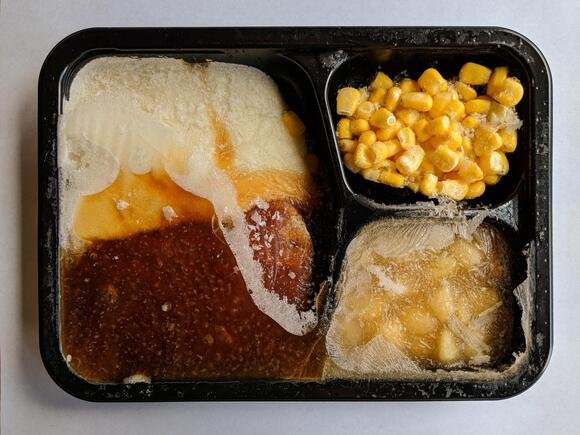
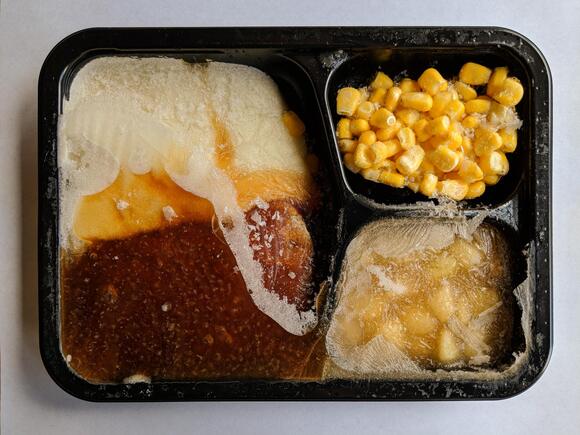
The first Swanson TV Dinner, sold in 1953, was a Thanksgiving dinner in a box: turkey, cornbread stuffing, peas and sweet potatoes, each in its own little compartment, for 98 cents. With Thanksgiving falling on November 26 this year, that original tray is a reminder of how long Americans have been trying to get a holiday meal onto the table with less work.
The meal heated in an ordinary oven and was meant to be eaten in front of the new family television. Over time, the name “TV dinner” became the everyday term for any packaged frozen meal.
What was on the 1953 tray
According to the history of the frozen meal on Wikipedia, C.A. Swanson & Sons introduced the TV Dinner brand in 1953 with a Thanksgiving-style menu. The tray held four things:
- Turkey
- Cornbread stuffing
- Frozen peas
- Sweet potatoes
Each food sat in its own section of an aluminum tray modeled on the trays used for airline meals, and the whole thing was covered in foil. It went straight into the oven, where it cooked for 25 minutes at 425 degrees Fahrenheit. The price was 98 cents, and the first production run was 5,000 dinners.
That compartment tray solved a real kitchen problem. Turkey, stuffing and vegetables did not have to share a pan or be watched on the stove, and there was nothing to wash afterward. For families who remember these meals, the shape of the tray is often the first thing that comes to mind, much like the dishes on this list of foods from the 1960s that boomers loved.
How Swanson turned a turkey dinner into a household name
The C.A. Swanson & Sons entry on Wikipedia traces the company back to Omaha, Nebraska, where Swedish immigrant Carl A. Swanson became a partner in a commission business in 1899 that bought and sold eggs, cream, butter and meat.
The launch went fast. After the first 5,000 dinners in 1953, the company reported selling more than 10 million about a year later. Campbell Soup bought Swanson in April 1955. The name played on how many homes were adding a television set, and Swanson’s national ad push tied the meal closely to the screen in the living room.
The furniture followed. The TV tray table, a folding metal stand with a removable tray, was first advertised nationally in 1952, about a year before the TV dinner arrived. The two became a pair, and a set of four trays on a wall rack was a familiar sight in 1950s and 1960s homes, along with the other items in this look at what nearly every 1960s living room had because of the television.
How the trays changed after 1953
The original turkey dinner did not stay alone for long. Over the next few decades, the frozen dinner aisle grew around it:
- Main courses: Fried chicken, Salisbury steak, spaghetti and Mexican-style combinations joined the lineup in later years.
- 1960: Desserts such as apple cobbler and brownies were added, which meant a new four-compartment tray.
- 1969: Swanson released its first TV breakfasts.
- 1973: Hungry-Man dinners arrived with bigger portions.
- 1986: Microwave-safe trays reached stores, and Wikipedia credits Campbell Soup Company with introducing them.
The aluminum tray eventually gave way to plastic and coated cardboard made for the microwave, and the 25-minute oven wait shrank to a few minutes. The little dessert square, though, is what many people still picture first. It sits alongside other kitchen memories found in this list of things found in nearly every American kitchen of the 1970s and this roundup of forgotten household items from the past.
Where the TV dinner stands now
The Swanson frozen dinner line changed hands several times. Campbell spun it off in 1998, the business later became part of Pinnacle Foods, and Conagra Brands bought Pinnacle in October 2018. Pinnacle moved the frozen meals under the Hungry-Man name while keeping Swanson on pot pies.
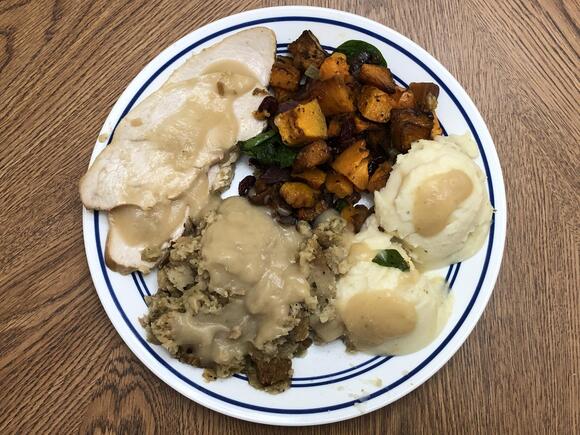
The basic idea still holds up on Thanksgiving week. A frozen turkey dinner remains the easy answer for a cook working the holiday, a college student far from home or anyone who would rather not roast a whole bird for one or two. Families who do cook the full meal end up making their own version of the 1953 tray with leftovers. The FoodSafety.gov cold food storage chart lists cooked poultry leftovers at 3 to 4 days in the refrigerator and 2 to 6 months in the freezer, with freezer times set for quality.
Reheating is the step where a homemade tray differs most from the 1953 version. Swanson’s dinner was built to go from freezer to a hot oven in one step. Leftover turkey, stuffing and vegetables packed together should be heated until steaming throughout, and a food thermometer is the simplest way to check. Dense stuffing in the middle of a container often warms more slowly than the meat around it, so stirring partway through or heating it in a shallow layer helps everything finish at the same time. Shallow containers also cool faster when the leftovers first go into the fridge, which keeps the holiday cleanup simple.
Portioning turkey, stuffing and a vegetable into divided containers before freezing gives a homemade TV dinner that is ready for a busy December night. It is one of the small habits, like those in this list of little rituals from the 1980s and 1990s, that carry a bit of the past into the present, 73 years after Swanson put Thanksgiving on a 98-cent tray.
This article was produced with AI assistance and edited for accuracy against the sources linked above.
Image: Campbell Soup Company – CC BY 4.0/Wikimedia Commons
The post Swanson’s First TV Dinner in 1953 Was a 98-Cent Thanksgiving Tray of Turkey, Cornbread Stuffing, Peas and Sweet Potatoes appeared first on Timeless Dishes.