An analyst who called the dot-com crash thinks stocks are heading for a period of pain.
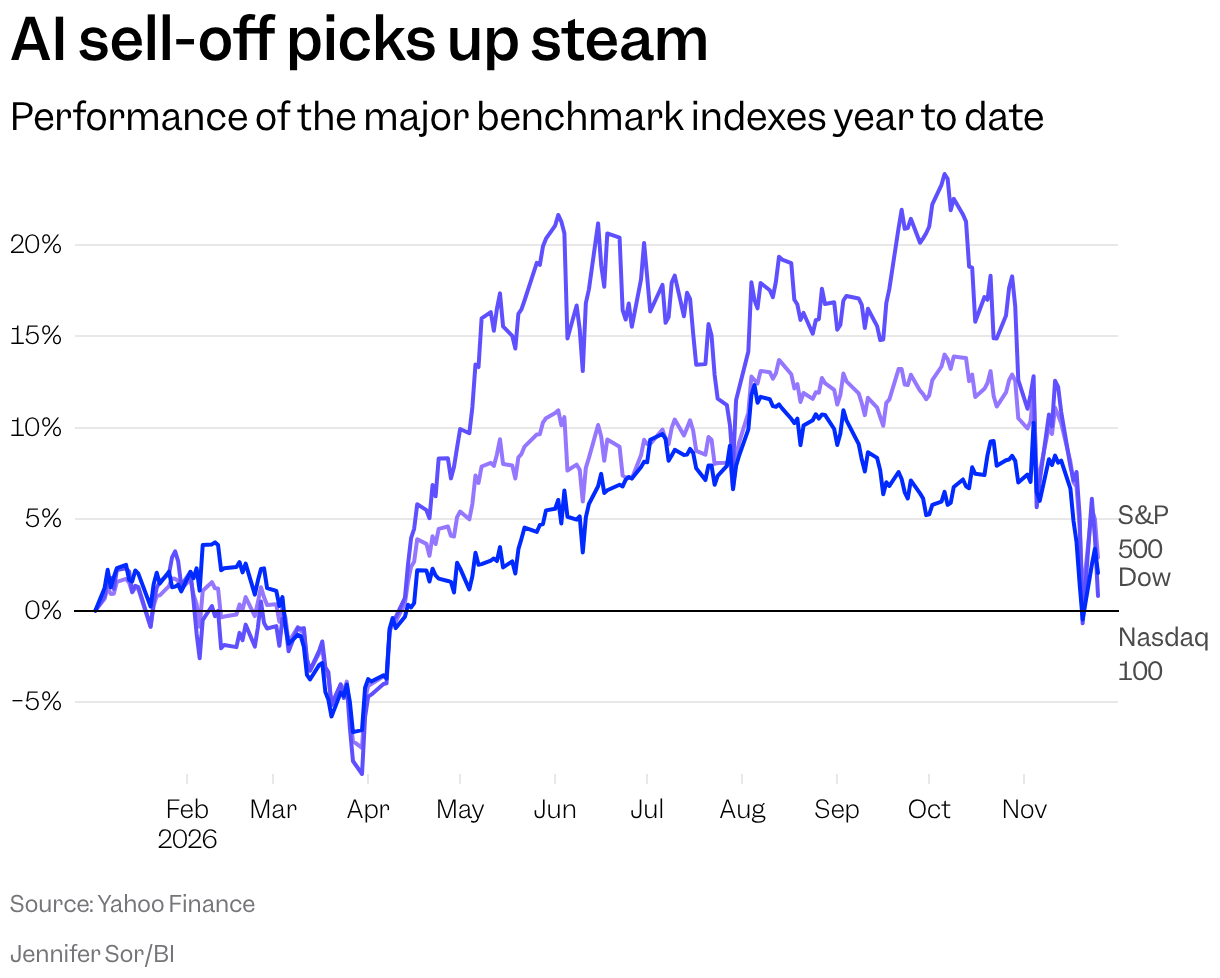
Albert Edwards, the in-house permabear at Société Générale, is flagging the risk of another steep drop in equity prices as the AI sell-off picks up steam. In a note to clients on Wednesday, the longtime analyst said he saw signs of “The Great Unwind,” a moment in markets when risk assets fall after years of “unusually high valuations” driven by lower rates and “super-loose” monetary policy.
Edwards didn’t specify how much he saw stocks and other risk assets falling in The Great Unwind. Speaking on The Mel Faber Show earlier this month, he outlined one scenario where bond yields see a sharp rise, leading the S&P 500 to crash 50% to 60%.
On the podcast, he pointed to the surge in bond yields in recent months amid worries about about inflation and the US’s growing deficit. Tech stocks, meanwhile, have been battered lately as investors panic about Nvidia’s future and whether capex spending will continue to power the AI trade. Chatter about the end of the AI boom, which Edwards has long cautioned investors about, is also building.
The Nasdaq 100 is teetering on the edge of a bear market, with the tech-heavy index down 19% from its latest peak.
“I think we’re already there. Higher bond yields now mean lower equity prices,” Edwards said.
In the note, Edwards pointed to a few worrying signs in markets that supported his broader thesis of an asset-price unwind. Here are some of the signals he’s looking at:
Metal prices have collapsed
Popular metals associated with the AI trade have cratered from their recent highs, one sign that liquidity is being drawn out of the market. Copper, one economic bellwether lumped into the broader AI trade, has crashed more than 20% from its latest peak.
Here’s how other metals associated with the data center buildout are performing:
“There is an underlying theme here that explains all these trends, namely that the liquidity tide is going out,” Edwards wrote.
Liquidity is declining
Excess liquidity in the markets of G10 nations has started to fall sharply, Edwards said, citing analyses from other strategists in the industry.
Excess liquidity tends to be a leading indicator for stock performance, with equity prices following liquidity changes with a 3 to 6-month lag, according to an analysis from Bloomberg.
“The key is that the Ice Age (secular stagnation) thesis, where excess saving drove real yields lower and increased excess liquidity, has now turned around 180 degrees,” Edwards added.
The pace of earnings upgrades in the tech sector are falling
Datastream/SocGen
The pace that tech firms are upgrading their earnings-per-share estimates has started to contract sharply, Edwards said, citing his analysis of data from Datastream.
The market’s price-to-earnings ratio when using long-term EPS growth forecasts, or the market’s PEG ratio, has also fallen sharply, he noted.
“Liquidity weakness is coinciding with a weakening of the profit impulse of the US tech universe, ie the slowdown in the yoy change in profits momentum (second derivative). That’s likely another reason why equities are struggling,” Edwards added.
Economic growth is weakening
GDP growth has started to cool, which tends to follow weaker profit margins, Edwards said.
The US is expected to expand at a 2.9% pace for the fourth quarter, according to the Atlanta Fed’s latest GDPNow reading. The estimate is down sharply from the 4.3% yearly GDP growth estimated in the third quarter, per the Bureau of Economic Analysis.
“We are now in the midst of ‘The Great Unwind’. Equities have been slow to reflect the new reality but are catching up fast,” Edwards wrote.
