During the seven-day National Day holiday, Chengwu County in east China’s Shandong Province blended pastoral scenery with local folk culture in a packed program of activities, attracting both domestic and international visitors who came to soak in the countryside atmosphere.
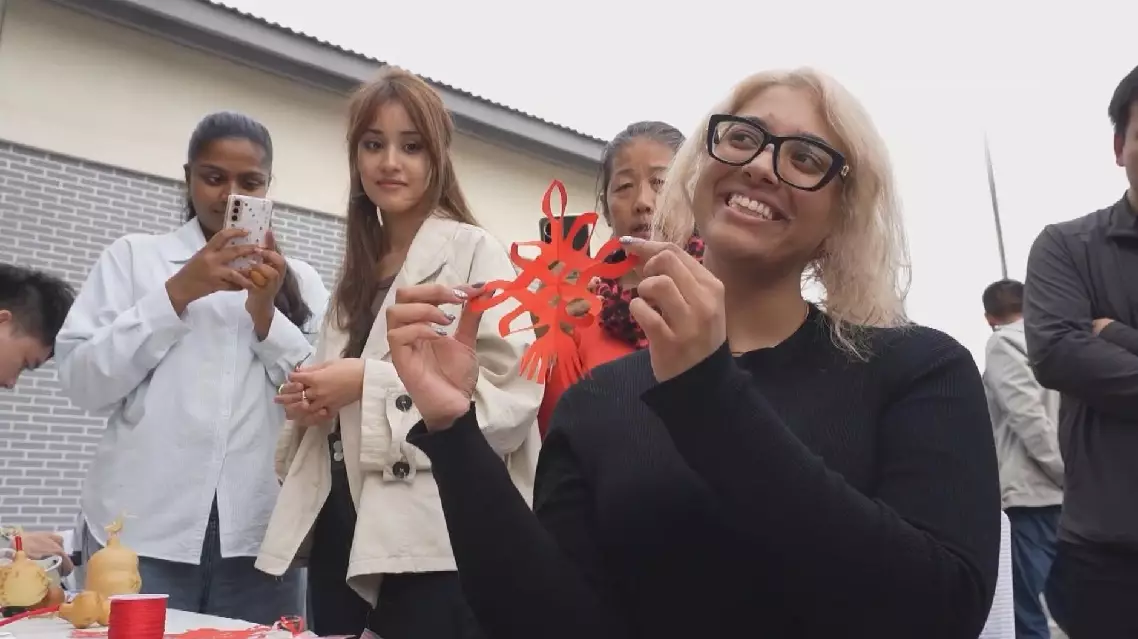
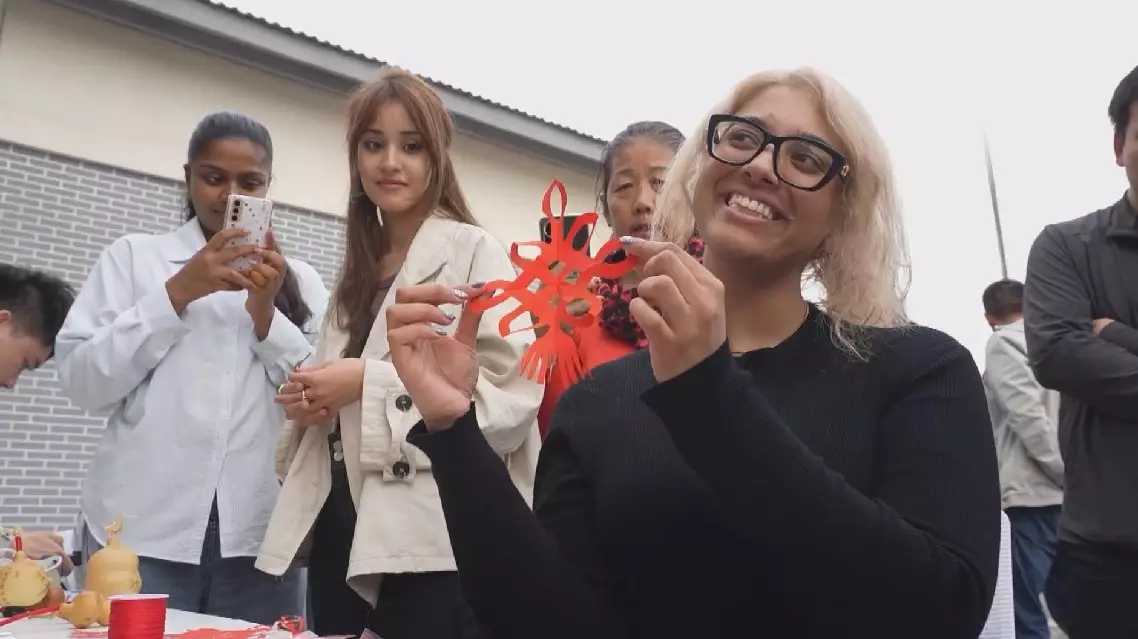
In the county’s Jiunyuji Township, local authorities launched a one-stop tour route combining countryside walks, farmhouse cuisine and heritage crafts, where visitors could take in performances and try their hand at black pottery making, paper-cutting and gourd pyrography — the art of scorching designs onto a gourd with a heated iron.
Many international visitors also came to experience the crafts, taste local dishes, and immerse themselves in traditional Chinese culture.
“The people here have been so nice. The trip to the village has been spectacular and the food here has been amazing. We really loved our trip here and everything we saw was beautiful,” said Ahla Faisal Arain, a Canadian visitor.
“This is the first time I’m coming to a Chinese village. Today I experienced so many local foods, which are very tasty, and it’s very surprising. People are so nice and I enjoyed it a lot here,” said Rodrigo, a visitor from Sri Lanka.
As night fell, lively performances brought even more energy to the small town. A selection contest for “rural partners” — most of them returning entrepreneurs — saw contestants present their hometowns through talent performances and personal stories, treating visitors to a cultural showcase.
During the contest, Sadina — who married into a Chinese family — said China has become her second home and she wants to do more to promote its beauty.
“I’m a foreign daughter-in-law who married into a Chinese family. I like recording China’s countryside with my camera. In the future, I hope to use my phone to promote my second hometown even more,” she said.
Rural cultural events in east China county draw crowds during National Day holiday
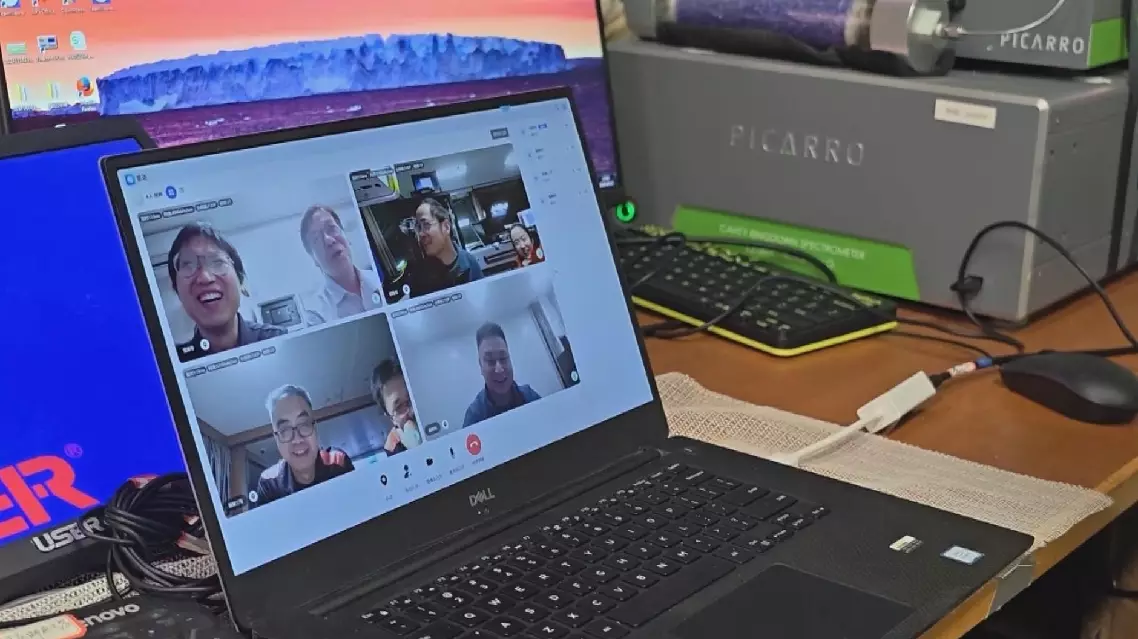
China’s 16th Arctic Ocean expedition achieved the country’s first video call spanning the North and South Poles on September 25, coinciding with the Mid-Autumn Festival, using a domestically developed satellite system with a delay of no more than one second.
The expedition deployed four vessels — Xuelong, Xuelong 2, Jidi, and Tansuo 3 — to study extreme environmental changes in the Arctic amid accelerating global warming. On September 29, China’s research icebreakers Xuelong and Xuelong 2 returned to Shanghai after completing their missions, while Jidi and Tansuo 3 continue their expedition tasks and are expected to return in mid-October following a three-month journey.
The expedition team held a satellite video conversation with China’s Antarctic Qinling Station, extending festive greetings to their polar scientific research counterparts and testing a large-scale constellation designed to provide global broadband internet and support integrated space-Earth 6G networks.
“This is the first time that China has used a domestically developed communications satellite system to make a video call across the largest latitude span,” said Liu Feng, a senior engineer at the National Marine Data and Information Service.
The around-13,000-satellite GW constellation, led by China Satellite Network Group (SatNet), is China’s first mega low Earth orbit satellite internet project. During the polar test, the maximum uplink and downlink speed reached around 30 megabits per second, equivalent to taking about 10 minutes to download a 1GB file. The equipment can also be used for emergency rescue and maritime communications.
“During the test period, it also supported real-time communications among Xuelong, Jidi, Tansuo 3, the National Marine Data and Information Service and the Polar Research Center. After Jidi and Tansuo 3 entered ice zone operation areas, their communication could not be guaranteed. So file transfers and navigation logs had to be transmitted through the SatNet equipment,” said Zhang Bin, an engineer at the National Marine Data and Information Service. The successful test of the domestically produced satellite communication equipment marks China’s independent control over polar region communications. The equipment ensures that data remains within the country, effectively safeguarding data security.
China holds first video call between North, South Poles via homegrown satellite system