Russian President Vladimir Putin has four bets on how to win the war in Ukraine. Two of them—that Ukraine’s army will break, or that the Trump administration will force Kyiv to submit to Moscow’s terms—are going badly.
But Putin’s other two bets have a better chance of succeeding by next year: paralyzing Ukraine’s economy with relentless missile and drone strikes, and waiting for European support to falter as political parties that oppose aid for Kyiv gain popularity.
This week’s U.S.-mediated talks in Abu Dhabi showed that the Kremlin remains committed to its original war aims: dismembering and subjugating Ukraine while rewriting Europe’s post-Cold War order. “All the objectives we have set ourselves will be achieved,” Moscow’s lead negotiator Vladimir Medinsky told Russian state TV on Wednesday.
Putin will likely wait to see how his stratagems play out in early 2027, most observers say, before deciding whether to stay the course or adjust it.
“The spring is what the Russians will be waiting for. They want to see what this missile campaign delivers,” as well as who wins France’s coming presidential election, said Hanna Notte, Eurasia director at the James Martin Center for Nonproliferation Studies in Monterey, Calif. “And then they’ll take stock.”
Even then, Russia is more likely to review its strategy than give up its goals, Notte says.
No Trump card
After President Trump returned to the White House last year promising to end the war in a day, the Kremlin hoped he would force Ukraine into territorial and other concessions. Trump told Ukrainian President Volodymyr Zelensky: “You don’t have the cards right now.”
But despite U.S. pressure, Kyiv rejected Putin’s demands to hand over territory that Russian forces had failed to conquer. Trump’s early move to end nearly all U.S. military and financial aid for Ukraine also reduced the White House’s leverage.
The U.S. can still pressure Ukraine. Zelensky said on Thursday that Ukrainian forces are experiencing disruptions to their military-grade Starlink satellite internet service, provided by Elon Musk’s SpaceX in coordination with the Pentagon. Musk also limited Ukraine’s military Starlink in October, amid tensions between Trump and Zelensky.
Moscow has worked to persuade the White House to lift sanctions, even without a ceasefire in Ukraine. The Kremlin has dangled the prospect of lucrative business deals to U.S. investors in the orbit of Trump and his peace envoys.
The economic initiatives have largely failed to gain traction, despite the White House relaxing some sanctions and U.S. officials advocating for economic deals with Russia as part of a peace drive. The Democratic takeover of Congress after this month’s U.S. midterm elections could make it harder for the Trump administration to ease sanctions further.
Despite Trump’s overtures to Putin, the Kremlin was hoping for more, and Russian officials haven’t hidden their disappointment with Ukraine’s continued resistance.
Putin’s chief foreign-policy adviser, Yuri Ushakov, said in late October that the Americans had “precious little” to offer on the negotiating table.
“Putin is painfully aware of Trump’s limitations at the moment, which is why he will continue fighting until the situation in Ukraine changes or he sees some sort of shifts in Europe,” said Tatiana Stanovaya, founder of Russia-focused consulting firm R.Politik.
War on the cities
Russia this year has had its worst performance on the battlefields of eastern Ukraine since 2022. Efforts to encircle Ukraine’s defensive bastions in the eastern Donetsk region failed. Russia is making one last push for a breakthrough before winter makes advancing even harder. But so far, Ukraine’s army is holding, despite its chronic manpower shortages.
Russia has suffered more than 450,000 military deaths since the start of the war, according to data from Russian official statistics agency Rosstat obtained by hackers linked to Ukraine and the Belarusian opposition. Even those numbers omit many soldiers killed since mid-2025, and the total could be closer to 600,000 now, some analysts said.
Earlier this year, Russia replaced senior army commanders inside Ukraine, partly in response to criticism of the massive casualties. But Russia’s offensive efforts continue to struggle under a sky filled with drones, a revolution in warfare that, for now, favors the defender.
“Winter is usually the best time for Russia’s advancing troops, but the Ukrainian drone presence on the front line is now so overwhelming that only periods of poor weather, which limit drone operations, are likely to allow Russian forces to make significant advances,” said Konrad Muzyka, founder of military analysis firm Rochan Consulting, based in Poland.
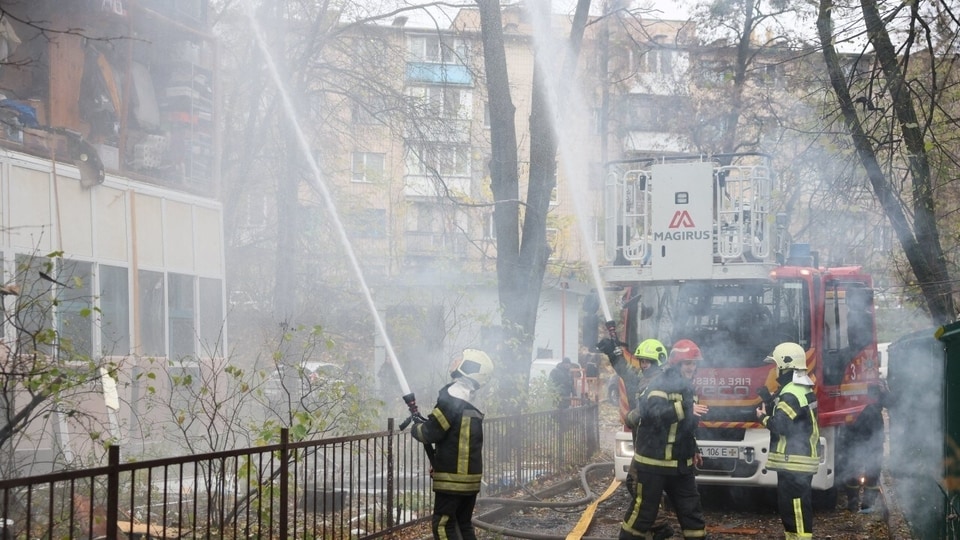
With the battlefield largely stagnant, Moscow has escalated its campaign of missile and drone strikes against Ukraine’s cities and critical infrastructure, from power plants and warehouses to Black Sea grain ports and the bridges over the wide Dnipro River that bisects the country.
The campaign is threatening to leave Ukrainian cities with little electricity, heating or running water ahead of winter. Surveys suggest it isn’t making Ukrainian society any more willing to capitulate, despite the growing hardships.
But if relentless missile strikes lead to a humanitarian crisis and bring Ukraine’s economy to a standstill, they could leave the country evermore dependent on European financing to cover the rising cost of the war.
The European front
The Kremlin has realized that Europe is now Ukraine’s crucial supporter—and its potentially weak underbelly.
Putin’s hopes of victory rest in large part on European political support for Ukraine fragmenting before the strains of the war become unsustainable for his regime in Russia.
Europe’s low economic growth, strained social-welfare programs and high energy bills are hurting the popularity of its incumbent governments, most of which support Ukraine. Voter support is rising for left- and right-wing populists, who often show greater sympathy for Russia.
In France, nationalist candidate Marine Le Pen, who opinion polls suggest is the favorite to win the country’s presidential elections next spring, has vowed to curtail French and European funding for Ukraine.
Germany’s most popular party, the far-right Alternative for Germany, has championed buying large amounts of Russian gas once more, reversing the country’s efforts to break its energy dependence on Moscow. In Italy, which must hold national elections next year, both the center-right government and the left-leaning opposition contain parties that oppose Ukraine aid.
But so far, Europe’s governments have held the line, despite an energy-supply squeeze made worse this year by the U.S.-Iran war.
Putin has said he wants to work with Europe in further peace talks, but only if the continent speaks with one voice. That challenge is likely to exacerbate existing divisions over who would represent it.
“We would like the Americans to work with the Europeans so that they finally decide what they want—peace or war in Ukraine,” Putin said following a meeting with Trump envoy Steve Witkoff on Thursday.
Russia’s economic stamina isn’t endless either. The Kremlin is struggling to cover its rising financial deficit as military outlays grow to one-third or more of government spending. Cash-strapped regional authorities have slashed payments to the families of dead soldiers.
“We’re dealing with a very unstable system,” said Alexandra Prokopenko, senior fellow at the Carnegie Russia Eurasia Center, a think tank based in Berlin.
Write to Thomas Grove at thomas.grove@wsj.com and Marcus Walker at Marcus.Walker@wsj.com