JAKARTA, KOMPAS – Indonesian President Prabowo Subianto and Chinese President Xi Jinping are set to hold a bilateral meeting during the 2026 Asia-Pacific Economic Cooperation (APEC) summit. Both countries are currently reviewing the agenda for discussions, which will include the Indonesia-China Comprehensive Economic Partnership Agreement (IDC-CEPA).
The APEC Summit is set to take place from November 18 to 19, 2026, in Shenzhen, China. As the host, China has chosen the theme “Building an Asia-Pacific Community to Prosper Together.” A total of 21 countries are members of the forum.
President Prabowo will attend the event alongside several officials, including Foreign Minister Arrmanatha Nasir and Coordinating Minister for Economic Affairs Airlangga Hartarto. He specifically plans to participate in the APEC CEO Summit on November 18 and the APEC Economic Leaders’ Meeting (AELM) on November 19.
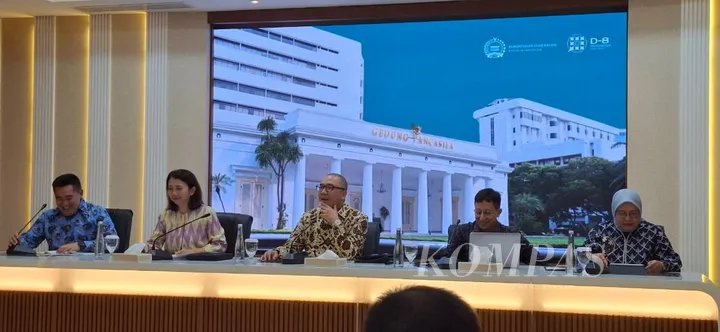
The Director General for Asia Pacific and Africa at Indonesia’s Ministry of Foreign Affairs, Santo Darmosumarto, stated that during the APEC Summit, the President of Indonesia will hold several bilateral meetings with other economic leaders. One of the scheduled meetings is with Xi.
“The meeting plans are still being finalized, including the timing and the agenda for the discussions,” Santo said at a press conference in Jakarta on Wednesday (11/11/2026).
Santo explained that the meeting between the two heads of state will emphasize the significance of the economic partnership between Indonesia and China, including the importance of a favorable investment climate. Additionally, Xi and Prabowo will discuss Indonesia-China cooperation in the region.
Indonesia and China share a common perspective on the importance of strengthening the multilateral trading system, particularly through the World Trade Organization (WTO). This is crucial given the efforts to undermine the system in recent years.
“Indonesia, along with China and other countries, aims to prevent this from happening. Our economy is growing due to our participation in multilateral trade. Therefore, we hope to lead reforms at the WTO to better address the concerns of developing countries like Indonesia,” Santo stated.
CEPA Discussion
Regarding the Indonesia-China Comprehensive Economic Partnership Agreement (IDC-CEPA), both heads of state are still discussing the approval to initiate dialogue on the formation of the agreement. Both countries have committed to addressing this issue.
“There is no concrete form yet, but both parties have a good intention to discuss positively about the establishment of a CEPA,” Santo said.
According to the press statement of the Indonesian Coordinating Ministry for Economic Affairs, September 2026, RI-China have agreed to accelerate preparations for IDC-CEPA negotiations in a meeting in Beijing, September 26, 2026. For Indonesia, IDC-CEPA is part of RI’s efforts to expand market access and strengthen international economic cooperation.
China is a key economic partner for Indonesia. Throughout 2025, China is projected to be Indonesia’s largest non-oil and gas export destination, with a value of $64.82 billion, marking a 7.11 percent increase from 2024. In terms of investment, China and Hong Kong rank among the top three foreign direct investment sources in Indonesia, with investments of $7.5 billion and $10.6 billion, respectively.
Despite this, Indonesia and China have yet to establish a bilateral trade agreement. So far, trade cooperation between the two countries has operated within the frameworks of the ASEAN-China Free Trade Area (ACFTA) and the Regional Comprehensive Economic Partnership (RCEP).
“This is the right moment for Indonesia and China to strengthen economic ties through the CEPA. We want the CEPA to emphasize complementary cooperation rather than competition, so that both parties can reap its benefits,” said Edi Prio Pambudi, Deputy for Economic Cooperation and Investment Coordination at the Coordinating Ministry for Economic Affairs.
China welcomed the invitation. Chen Chao, the Director General of the Department of International Trade and Economic Affairs at the Ministry of Commerce of China, expressed optimism that the CEPA will bring benefits to businesses in both countries. Indonesia and China plan to outline the scope of cooperation within the agreement.
Resilience issues
Santo continued, there are several other things that Prabowo will convey at APEC 2026. Prabowo plans to raise the issue of resilience.
“This resilience is not only related to food security but also to energy security and the resilience of people across various economies in the region. Additionally, it is essential for all economies to maintain a positive environment for the continued growth of the economy in the Asia-Pacific region,” Santo said.
The Asia-Pacific region is a key engine of global economic growth. This forum represents approximately 38 percent of the world’s population, 61 percent of global gross domestic product (GDP), and nearly half of global trade. Indonesia has been a member of APEC since 1989.
According to Santo, Indonesia will also address the importance of regional connectivity and maintaining smooth supply chains amid a slowdown in global economic growth. The International Monetary Fund (IMF) projects that global economic growth will slow to 3.1 percent in 2026 before recovering to 3.4 percent in 2027.
The slowdown in global economic growth is attributed to several factors, including armed conflicts, the impact of artificial intelligence (AI), and fiscal vulnerabilities.
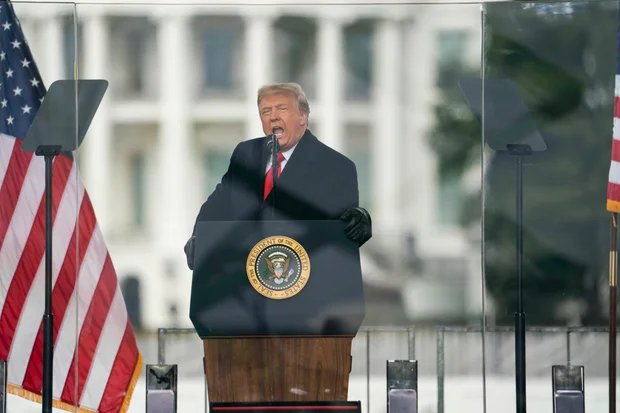
In addition, trade tensions, including those between the United States and China, are also having an impact. U.S. President Donald Trump is likely to attend APEC and meet with Xi.
Santo explained that APEC member economies must leverage the forum to drive sustainable economic growth. Additionally, APEC plays a crucial role in advancing the region’s peace agenda.
“So, we must be able to see how APEC is a forum for cooperation, not a forum for displaying rivalry,” Santo concluded.
Serial Artikel
China Ajak AS Cari Solusi Konkret di KTT APEC 2026
Daripada bersitegang tak menguntungkan, China akan ajak AS bicara kerja sama perdagangan yang menguntungkan untuk semua.
Read Article