Before Osama bin Laden was the face of international terrorism, there was another world’s most wanted terrorist.
Known by the press and the general public as Carlos, or Carlos the Jackal, this internationally known terrorist and cold-blooded murderer was part myth and part reality.
His public persona began in Vienna on December 21, 1975, when five men and one woman entered the offices of the Organization of the Petroleum Exporting Countries (OPEC) and took the oil ministers hostage.
The six terrorists simply walked past the lone police officer on guard and entered the building. The receptionist looked up and saw a gun in her face. The woman hostage-taker asked a man in the office if he were a policeman. When he replied yes, the woman fired a round into the officer’s back of his neck. The Austrian police sent in a unit, but after some initial gunfire traded with the terrorists, the police unit was withdrawn.
The six terrorists were fully in control within 30 minutes of their attack. The terrorists took 62 hostages, making them lay down on the floor of the conference room. Nothing like this had ever happened before. The hostages all took notice of the leader of the terrorists, a striking figure in a leather coat, light beard and rakish cocked beret. The look gave him a resemblance to Ernesto “Che” Guevara, the Argentine Cuban revolutionary, which was the intention of the young terrorist.
The man in the beret was clearly comfortable with killing, the hostages noted, as minutes earlier he had emptied his pistol in the back of a wounded man. But he also allowed a crying secretary to go free as he said she was too beautiful to be a hostage.
“I am the famous Carlos,” the man in the beret told the oil ministers.

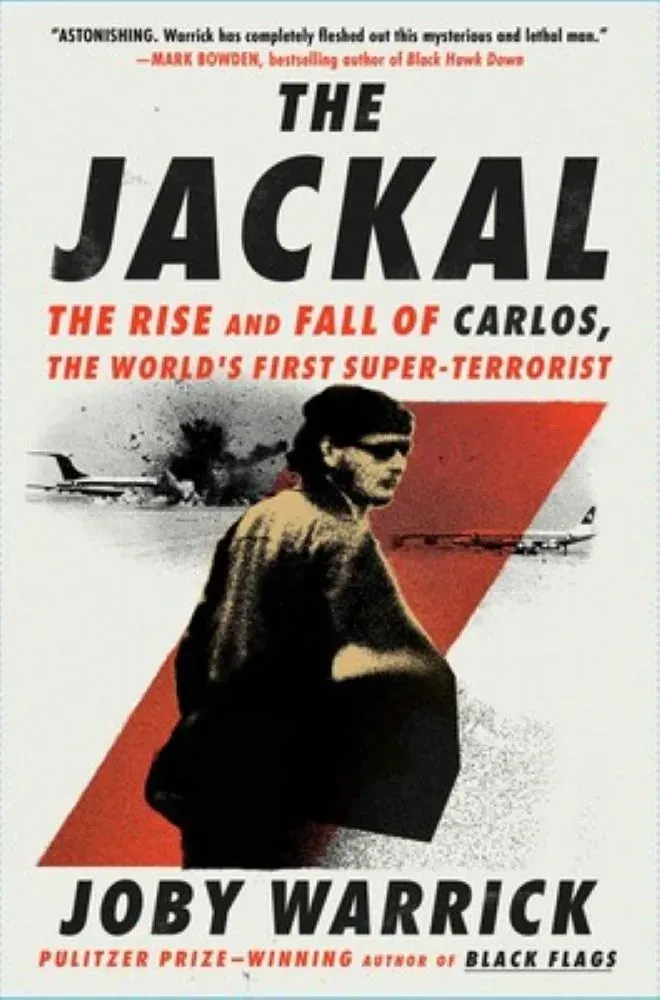
As author Joby Warrick notes in his “The Jackal: The Rise and Fall of Carlos, the World’s First Super-Terrorist,” his fine book on Carlos the Jackal, he was not famous just yet, despite a singular act of hostage taking that was audacious.
In the months after the OPEC terrorist attack, Ilich Ramirez Sanchez, a Venezuelan, was the mysterious young terrorist initially identified as Carlos Martinez, a name on one of his false passports. The name was linked to a string of targeted killings in the United Kingdom and France.
When a paperback copy of Frederick Forsyth’s great thriller, “The Day of the Jackal” was found in an apartment that Ramirez had abandoned, the press, already calling him “Carlos,” began calling him “Carlos the Jackal.” Ramirez did not seem to mind at all. (Frederick Forsyth did mind, stating that Ramirez was nothing like his fictional competent assassin).
Ramirez became known for his glamorous lifestyle and romances, and he would eventually gain public attention as the first world’s international super-terrorist. News coverage of his terrorist acts made a fictional Carlos become the go-to super villain on many movies and TV shows.
According to Warrick, the real Carlos mattered, not just because of his fame, but because he became the human face of a dangerous new form of international terrorism that emerged in the 1970s and 1980s. This, Warrick explains, became the template for later terrorist groups such as al Qaeda and the Islamic state.
Ramirez was present at nearly every step in the early evolution of a violent movement that changed the way people traveled and congregated, and “brought terrorist spectacles into the living room of ordinary citizens around the world.”
Ramirez became a Palestinian guerrilla at the moment when Palestinian militant groups began to internationalize their struggle against Israel. After Arab armies were defeated by the Israelis in 1967, leaders of the movement shifted the battle to a new arena: commercial aviation.
Ramirez came of age as a terrorist at a time when airlines and airports everywhere suddenly became targets, even in places with no discernible connection to the strife in the Middle East.
Ramirez would form his own terrorist gang and became the archetype of a new kind of state-sponsored terrorism. “Skillfully harnessing rivalries between governments to gain access to weapons, sanctuaries and money. Carlos lived freely and lavishly in the capitals of Eastern Europe where communist leaders blinded by their own hatred knowingly allowed him to shed innocent blood in Western countries and sometimes abetted his efforts,” Warrick notes.
Ramirez was also not above serving as a mercenary for some of the Middle East’s cruelest dictators.
His brand of violence, sometimes effective and other times not, would shake western governments and test the capabilities of their intel and security organizations, as well as their policies for dealing with terrorism.
Warrick details all of Ramirez’s terrorist acts, covering the success of some and the buffoonery of others. From the OPEC attack to the tossing of a grenade into a Paris restaurant, to attempting to shoot down an Israeli airliner with a rocket propelled grenade.
Ramiriz’s rich and famous outlaw lifestyle came to an end when, aided by the CIA, French authorities arrested him in Sudan and sentenced him to prison for murder.
“Fifty years after Carlos’ most infamous crime in Vienna, the story of how it all happened can be told with new authority,” Warrick writes. “In addition to the foundational research by numerous first-rate biographers, journalists and historians, this book grows from a wealth of original source material that only recently has become available.”
According to Warrick, this trove includes extensive interview notes and dispositions taken by police and prosecutors; declassified CIA cables, videotaped the briefings in German and Arabic of Carlos’s close associates and accomplishes, as well as memoirs written by them; newly translated records from secret police archives in the former countries of East Germany, Czechoslovakian Hungary and Romania, and author interviews with a variety of individuals who knew Carlos as a friend and comrade, or as an adversary they relentlessly pursued.
“Additional insight, although often misleading, or self-serving, came from Carlos himself during our meetings at his prison and in a transcript of a dozen hours surreptitiously recorded phone interviews obtained by filmmaker Yaron Niski and generously provided to this author.
“While he claimed to be a revolutionary, Carlos was at his core, a criminal narcissist. He killed seemingly without feeling, often wanton. His cruelty towards his targets — and occasionally his allies — issued from a brain that also craved celebrity and assisted in living a life of luxury and dissolution. In his prison cell years after his capture, his lingering regrets weren’t about the innocents he killed, but rather, his failure to punish those whose betrayal cost him his freedom. “I should have killed a few more people.” he said.
Paul Davis’s On Crime column appears here each week. He can be reached via pauldavisoncrime.com.