Oracle (ORCL -9.24%) shares have plunged about 15% since Wednesday’s close, when the tech giant held its investor day and was worth about $437 billion. It’s now worth about $372 billion, marking a steep loss of over $60 billion in less than a week. The latest leg down came on Monday, as shares fell another 6% after Oracle launched a $10 billion stock offering and a separate $10 billion bond sale at the same time.
The timing is what stung. At its investor day, Oracle said it was “committed to limiting additional capital raises through FY30 to $20 billion, excluding refinancing of existing debt.” Five days later, the firm has gone to market for all of it at once, all while the sentiment around AI spending remains precarious.
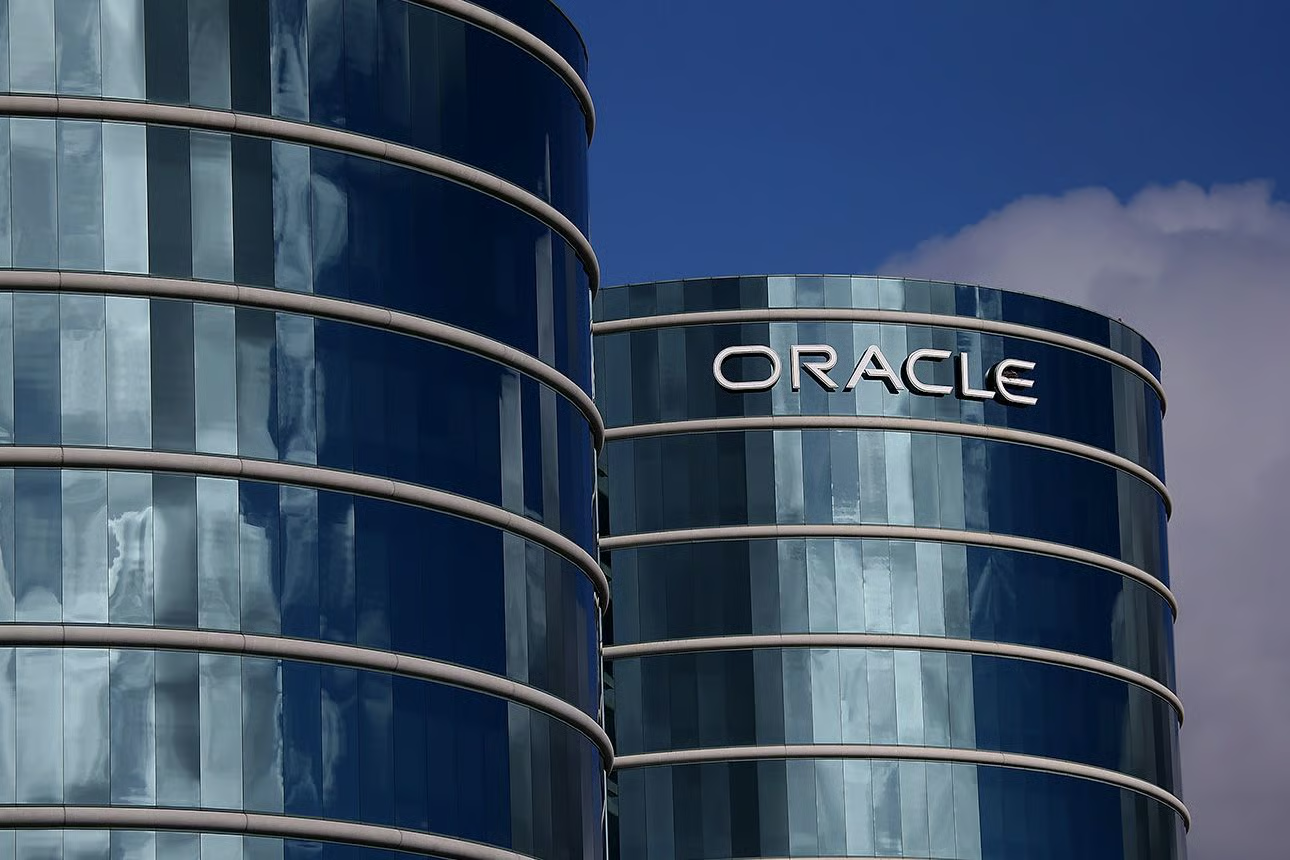
Image source: Getty Images.
What Oracle Is Selling
The stock sale is for $10 billion of common stock. Oracle’s preliminary prospectus assumes it sells about 76.5 million shares at $130.67, Friday’s closing price, which would take its share count from about 3.02 billion to about 3.10 billion. That’s roughly 2.5% more shares, and because the stock has fallen since Friday, the final number could likely be higher.
The $10 billion of bonds is a separate deal, and neither depends on the other closing. Oracle says the money will go to “general corporate purposes, which may include capital expenditures, repayment of indebtedness,” as well as possible investments, acquisitions, dividends or buybacks.
This also isn’t Oracle’s first trip to the well this year. The new $20 billion is on top of a $20 billion at-the-market stock sale it completed in the first quarter of fiscal 2027.
Why Investors Are Nervous
Oracle is spending heavily to build data centers for AI customers, and it has been borrowing to do it. As of Aug. 31, it had about $236.1 billion of consolidated debt outstanding, according to the prospectus, plus the ability to borrow up to another $19.7 billion under its revolving credit facility.
That puts Oracle at the center of perhaps the biggest worry in the market right now: that the money pouring into AI infrastructure will take longer to pay off than investors hoped. Selling new stock dilutes current shareholders, and every new bond adds to an already large debt load. Oracle’s own prospectus warns that new share sales “could dilute the ownership interest of holders of our common stock.”
The Case for Buying the Dip
So, what might the market be missing? The $20 billion Oracle just launched isn’t a surprise. It’s the full amount it laid out last week, split exactly the way it said, $10 billion in equity and $10 billion in debt. If Oracle sticks to its cap, the overhang of more stock and bond sales hanging over the shares through fiscal 2030 is largely behind it, outside of refinancing existing debt.
And the targets Oracle set at its investor day are big. It’s aiming for more than $225 billion in total revenue in fiscal 2030, which it says would be more than 35% annual growth from fiscal 2026, and it’s also looking at positive free cash flow in the second half of fiscal 2028, along with $30 billion or more of free cash flow in fiscal 2029.
And for investors who may be worried about capital spending, the firm said it sees the investments peaking in fiscal 2027 and 2028, then stepping down in fiscal 2029, when it says growth will be self-funded. It also sees net debt below 3.5 times adjusted EBITDA in fiscal 2029, with the firm aiming to keep its investment-grade credit ratings and its dividend.
For this fiscal year, Oracle reaffirmed revenue of at least $90 billion and adjusted earnings per share of $8.10. Finally, by fiscal 2030, it’s targeting adjusted earnings per share of $21 or more.
Is Oracle Stock a Buy?
Ultimately, the risk here is clear. Oracle is laying out targets that have, of course, yet to materialize, and the plan only works if AI customers keep paying for the capacity it’s building. If demand slows, or if Oracle needs more money than it promised, investors will likely punish the stock again.
But for long-term investors who believe AI cloud demand has years to run, the math has shifted in their favor. Oracle has now gone to market for the money it said it needs to get through its peak spending years, and the company is about $65 billion cheaper than it was on Wednesday. Investors who can be patient through fiscal 2028, when Oracle expects free cash flow to turn positive, are getting a chance to buy into that plan at a lower price.